

You have the data, the spreadsheets, and the pros-and-cons lists, yet you still refuse to pull the trigger. The fear of making the wrong call is causing decision fatigue, delayed projects, and missed deadlines. You do not need another week to research; you need a rigid system to act on the information you already possess.

The Hidden ROI of Fast Decisions
High-achievers often operate under a false assumption: more time spent analyzing equals a better outcome. This is a mathematical error. Every decision carries an invisible cost—the time and cognitive bandwidth spent making it.
When you spend four days researching the best project management software, you have lost four days of actual project management. Overthinking decisions destroys your momentum. The diminishing returns of information gathering mean that after a certain point, every new data point you collect adds zero value to the actual outcome but exponentially increases your anxiety.
To fix this, you must treat your decision-making process as a quantifiable resource. You have to learn how to make decisions faster, not by being reckless, but by applying mental models that force action and bypass the emotional friction of perfectionism.

Productivity Frameworks to Break the Cycle
Breaking out of a paralyzed state requires overriding your default behavioral patterns. You cannot simply tell yourself to "stop thinking." You must replace your unstructured worrying with structured decision frameworks.
The "Two-Way Door" Matrix
Popularized by Amazon's leadership principles, this framework forces you to evaluate the reversibility of a choice. Most professionals treat every choice as a high-stakes, life-altering event. In reality, very few are.
- One-Way Doors (Irreversible): These are major, structural choices. Selling your company, signing a massive multi-year enterprise contract, or quitting a job. These require deep analysis, consultation, and careful pacing.
- Two-Way Doors (Reversible): These are choices you can undo if things go south. Testing a new marketing channel, changing the color of a landing page, or selecting a vendor with a 30-day cancellation policy.
If a decision is a Two-Way Door, you should make it the moment you have 70% of the information you need. Waiting for 90% or 100% means you are moving too slowly. If you walk through the door and do not like what you see, turn around and walk back out.

If you want a deeper look at how the world's most efficient companies utilize concepts like the Two-Way Door matrix, understanding Amazon's internal culture is a great starting point. The framework of moving fast while mitigating risk is a core philosophy there. For those looking to implement these exact leadership principles and operational strategies into their own daily workflow, there is an excellent guide written by two former Amazon executives that breaks down how to make rapid, high-quality decisions at scale.
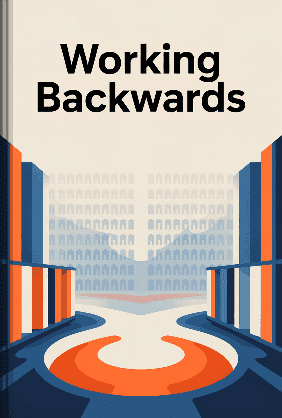
Working Backwards
Colin Bryar, Bill Carr, et al.
 21 Duration
 7 Key Points
 4.8 Rate
The Satisficing Model
The link between perfectionism and overthinking is rooted in maximizing behavior. Maximizers need to examine every single option on the market to ensure they are getting the absolute best outcome. Satisficers determine their criteria beforehand and choose the first option that meets those criteria.
To implement the Satisficing Model:
- Define the minimum requirements for success before you look at any options.
- Assign a hard limit to the number of options you will review.
- The moment an option hits your predefined baseline, select it. Stop looking.
If your team needs a new email marketing tool, list the non-negotiables: it must integrate with Salesforce, cost under $500 a month, and have automated sequencing. The first software you test that hits all three marks is the winner. Close the remaining browser tabs.
Struggling to transition from a maximizing mindset to a satisficing one? You are not alone. Our modern world bombards us with an endless array of options, making it incredibly difficult to just pick one and move on. Understanding the psychological toll of this choice overload can completely change how you approach everyday decisions. If you want to learn more about why having fewer options actually leads to greater satisfaction and less anxiety, this groundbreaking behavioral science book is an absolute must-read.
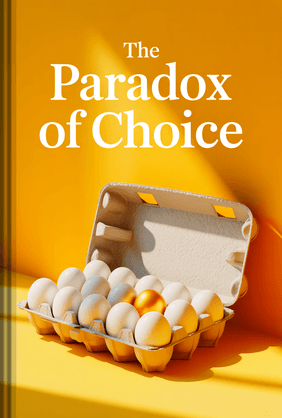
The Paradox of Choice
Barry Schwartz, Ken Kliban, et al.
43 Duration9 Key Points4.3 RateTimeboxing and Parkinson’s Law
Parkinson’s Law states that work expands to fill the time allotted for its completion. If you give yourself a month to decide on a Q3 strategy, it will take a month. If you give yourself 48 hours, you will have a strategy in 48 hours.
Timeboxing forces you to cap your analysis. Block off a specific window on your calendar—say, 90 minutes. During this block, you review the data. When the timer hits zero, the analysis phase is permanently closed, and you must state your choice. Treat this deadline with the same severity as a board meeting or a tax filing.
Tactical Steps to Stop Overthinking at Work
Overthinking at work rarely happens in a vacuum. It is usually a product of poor boundaries, data overload, and a fear of peer judgment. You can structurally eliminate the friction that causes you to freeze.
Enforce the Rule of 3
A primary driver of paralysis is choice overload. The human brain struggles to compute the variables of more than a handful of options at once. Whenever you face a complex scenario, brutally cut your options down to three before you begin deep evaluation.
If a vendor sends you a catalog of 20 services, do not analyze all 20. Do a rapid, superficial sweep to eliminate 17. Once you only have three options on the table, a side-by-side comparison becomes mathematically manageable.

Applying these frameworks is a great start, but sometimes the habit of overthinking itself needs to be addressed directly.
Sever the Link Between Decision and Outcome
Perfectionists believe that a good decision guarantees a good outcome, and a bad outcome means a bad decision was made. This is false. A decision is merely a calculation of probabilities based on the information available at that exact second.
You can make a flawless, data-driven choice, and a black-swan market event can still ruin the outcome. You can make a terrible, rushed choice and get lucky. Your job is to optimize the process of deciding, not to act as a psychic predicting the future. Grade yourself on how efficiently you made the call, not just the eventual result.
Detaching the quality of your decision from the final outcome is one of the hardest mental shifts for high-achievers to make. Since we cannot predict the future or control random market fluctuations, we have to start treating our choices like calculated wagers rather than guaranteed formulas. Former professional poker player Annie Duke provides a masterclass on this exact concept. Her work teaches you how to embrace uncertainty, assess risks objectively, and stop letting a bad break make you doubt a perfectly sound strategy.
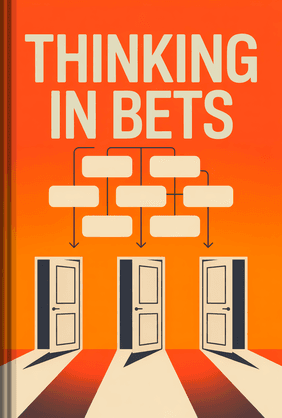
Thinking in Bets
Annie Duke
36 Duration8 Key Points4.6 RateDelegate Micro-Decisions
High-achievers often suffer from control issues, leading them to micromanage trivial choices. If a decision has a financial impact of less than $100, or a time impact of less than one hour, you should not be making it.
Create a system where your team is empowered to make low-impact decisions without your approval. Tell them, "If it costs less than $500 to fix, fix it and tell me on Friday." This protects your cognitive bandwidth for the decisions that actually move the needle.
Protecting your cognitive bandwidth requires a ruthless commitment to only focusing on what truly matters. When you stop sweating the small stuff and let your team handle micro-decisions, you free yourself up to do your best strategic work. If you constantly feel stretched too thin or bogged down by trivial choices, it is time to redesign your priorities. Greg McKeown’s bestselling guide on the disciplined pursuit of less is the perfect resource to help you reclaim your time and concentrate solely on high-impact execution.
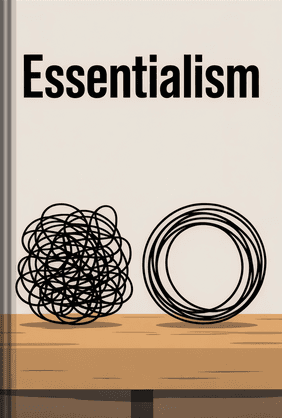
Essentialism
Greg McKeown
32 Duration10 Key Points4.6 RateThis list of books offers powerful frameworks, but the thought of adding four more titles to your reading pile can feel like its own form of paralysis. If you want to absorb these key ideas and put them into action quickly, a book summary app can be a great tool.


Absorb the core lessons from books like Thinking in Bets and Essentialism in just 15 minutes, so you can spend less time analyzing and more time executing.
 LeapAhead
While these workplace tactics are effective, it's also important to recognize when analysis paralysis is a symptom of a deeper issue.
Shift from Analysis to Execution
The longer you sit with a problem, the larger it grows in your mind. Analysis paralysis thrives in stagnant environments. The antidote is motion.
A "B" grade strategy executed aggressively today will almost always outperform an "A+" strategy executed six weeks from now. The market rewards execution, not the elegance of your internal spreadsheets.
When you feel the familiar dread of indecision creeping in, identify the smallest possible action you can take to move the project forward. Send the email. Draft the outline. Buy the initial software license. Action generates real-world data, and real-world data is infinitely more valuable than theoretical projections.
FAQ
How do I stop overthinking small daily decisions?
Establish personal defaults. Automate or standardize choices that do not yield a high return on investment. Wear similar outfits, eat the same breakfast, and standardize your daily schedule. Preserve your mental energy for high-leverage tasks.
Establish personal defaults. Automate or standardize choices that do not yield a high return on investment. Wear similar outfits, eat the same breakfast, and standardize your daily schedule. Preserve your mental energy for high-leverage tasks.
Is analysis paralysis a sign of anxiety?
It is heavily correlated with anxiety, specifically the fear of making a mistake or facing negative judgment. Recognizing this allows you to detach your personal worth from a workplace choice. The decision is just a business transaction, not a reflection of your competence.
It is heavily correlated with anxiety, specifically the fear of making a mistake or facing negative judgment. Recognizing this allows you to detach your personal worth from a workplace choice. The decision is just a business transaction, not a reflection of your competence.
How can I make faster decisions without compromising quality?
Define what "quality" actually means for the specific task. Often, 80% of the value is achieved with 20% of the effort. Set clear criteria for what constitutes a successful outcome upfront, and execute the moment an option meets those baseline criteria.
Define what "quality" actually means for the specific task. Often, 80% of the value is achieved with 20% of the effort. Set clear criteria for what constitutes a successful outcome upfront, and execute the moment an option meets those baseline criteria.