


Late nights staring at the ceiling. Replaying a casual conversation from three days ago to find hidden insults. Mentally preparing for the worst possible outcome of a work project that hasn't even started. You aren't just thinking. You are trapped in a mental loop. When your mind refuses to shut off, physical exhaustion takes over.
You want the mental noise to stop. But telling an anxious brain to "just relax" is like telling a smoke alarm to ignore a fire. To regain control, you must understand the mechanical relationship between overthinking and anxiety, and learn how to dismantle the thought structures keeping you paralyzed.
The Psychological Root: Why Do I Overthink Everything?
Overthinking is not a personality flaw. It is a misguided survival mechanism.
At a biological level, your brain is a prediction machine. Its primary job is to keep you safe by anticipating danger. When you experience anxiety, your amygdala—the brain's threat-detection center—sounds an alarm. It floods your body with cortisol and adrenaline.
However, in modern American life, the threats are rarely physical. You aren't running from a predator. You are facing an ambiguous email from your boss, a looming mortgage payment, or social friction. Because your brain cannot physically fight or flee these modern stressors, it tries to solve them.
This is where overthinking begins. Your brain believes that if it analyzes a situation from every conceivable angle, it can prevent bad things from happening. You overthink because your mind is desperately seeking certainty in an uncertain world. The problem? You cannot out-think the future. You just end up spinning your wheels, generating more anxiety.

Understanding this psychological root is the first step, but taking action is what creates change. If you're ready to move from knowing why you overthink to learning how to stop, there are proven strategies you can start using immediately.
If you constantly find yourself trapped in these exhausting mental loops, understanding the nature of your inner voice is the first step toward relief. Our brains are hardwired to talk to us, but that internal dialogue can quickly turn toxic when we face modern stressors. If you want a deep dive into why our minds get stuck on negative loops and how to harness that inner voice for good, Ethan Kross offers phenomenal insights in his research. It's a must-read for anyone looking to turn their inner critic into a helpful coach.
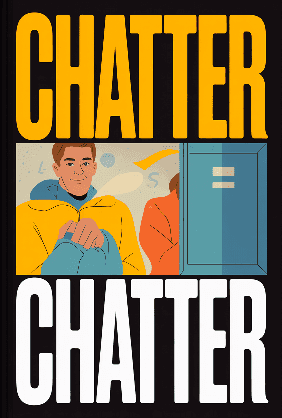
Chatter
Ethan Kross, Ph.D.
 23 Duration
 10 Key Points
 4.3 Rate
Reading books like Kross's is a powerful step, but when you're already feeling exhausted by anxiety, starting a new book can feel like another daunting task.


Absorb key insights from powerful psychology books like *Chatter* in just 15 minutes, making it easier to learn new coping skills without the pressure of a full read.
 LeapAhead
Overthinking vs Anxiety Disorder: Where is the Line?
Everyone worries. Everyone occasionally replays an awkward moment or stresses over a job interview. So how do you know when your mental loops cross the line from normal stress into clinical territory?
Understanding the boundary of overthinking vs anxiety disorder comes down to three factors: frequency, intensity, and impairment.
Everyday Overthinking:
- Tied to a specific, current stressor (e.g., waiting for medical test results).
- Resolves once the event passes.
- Distracting, but does not prevent you from functioning.
Generalized Anxiety Disorder (GAD):
- Free-floating worry: The anxiety doesn't need a specific trigger. Once one problem is resolved, your brain immediately hunts for a new target to worry about.
- Physical symptoms: Your mental state manifests physically—muscle tension, chronic fatigue, gastrointestinal issues, or a racing heart rate.
- Severe impairment: The worry stops you from living your life. You avoid driving on the freeway, decline social events, or severely underperform at work because your mental bandwidth is entirely consumed by fear.

If your worry is pervasive, lasts for more than six months, and disrupts your daily functioning, you are likely dealing with an anxiety disorder rather than just a bad habit of over-analysis.
The Mechanics of Fear: How to Stop Catastrophic Thinking
The most destructive form of overthinking is catastrophizing. This is a cognitive distortion where your brain immediately jumps to the absolute worst-case scenario.
Scenario: Your manager slacks you at 4:30 PM on a Friday: "We need to chat Monday morning."
Catastrophic thought: "I'm getting fired. I'll lose my health insurance. I won't be able to pay my rent. I'm going to end up homeless."
Catastrophic thought: "I'm getting fired. I'll lose my health insurance. I won't be able to pay my rent. I'm going to end up homeless."
In five seconds, your brain jumped from a vague message to total financial ruin. Learning how to stop catastrophic thinking requires you to interrupt this rapid-fire escalation.
The "Courtroom" Strategy
Treat your catastrophic thought like a defendant in a courtroom. You are the judge, and you demand hard evidence.
Treat your catastrophic thought like a defendant in a courtroom. You are the judge, and you demand hard evidence.
- What is the factual evidence supporting this thought? (Fact: The manager wants to talk).
- What is the factual evidence against this thought? (Fact: I just received a positive performance review last month. Fact: We have a new project starting that requires planning).
- What is the most likely outcome? (Fact: It is probably a routine check-in or a new assignment).
By forcing your brain to look at objective facts rather than emotional predictions, you strip the catastrophic thought of its power.

This kind of thinking often leads to a state of being completely frozen, unable to make a decision for fear of choosing the wrong path. This is especially true in professional settings where the stakes feel high.
Dismantling these catastrophic thought patterns takes practice, especially if your brain has spent years treating every minor issue like a five-alarm fire. Cognitive behavioral therapy principles are incredibly effective at breaking this exact cycle. By learning to identify the "monkey mind" that constantly chatters about worst-case scenarios, you can stop feeding your anxiety the fuel it craves. If you are looking for a practical, step-by-step guide to recognizing these mental traps and retraining your brain to respond with logic instead of panic, this book is an excellent resource to keep on your nightstand.

Don't Feed the Monkey Mind
Jennifer Shannon
21 Duration8 Key Points4.4 RateRewiring the Brain: Cognitive Behavioral Therapy for Overthinking
You cannot stop a thought by simply trying to block it out. Psychology shows that thought suppression actually increases the frequency of the thought. Instead, you need a systematic approach to reframe it.
Cognitive behavioral therapy for overthinking (CBT) is the gold standard for treating anxiety. CBT operates on a simple premise: your thoughts, feelings, and behaviors are interconnected. Change the thought, and the emotion will follow.
Here is a practical CBT framework you can apply immediately: The Thought Record.
Step 1: Catch the Cognitive Distortion
Anxious brains lie. They rely on faulty filters known as cognitive distortions. Common ones include:
- Mind Reading: Assuming you know what others are thinking ("They think I'm incompetent").
- Fortune Telling: Predicting a negative future as if it is a guaranteed fact.
- All-or-Nothing Thinking: Viewing situations in black and white ("If I don't get this promotion, my career is completely over").
When you catch yourself spiraling, label the distortion. Say to yourself, "I am not failing; I am just fortune telling."
Step 2: Create Distance
Instead of saying, "I am going to fail," change the phrasing to: "I am having the thought that I am going to fail." This subtle linguistic shift creates psychological distance. It reminds you that thoughts are just mental events, not facts.
Step 3: Draft an Alternative Thought
Your goal isn't to be overly positive. Toxic positivity ("Everything is going to be perfect!") feels fake and your brain will reject it. The goal is neutrality.
Anxious thought: "I messed up that presentation and now everyone thinks I'm a fraud."
Balanced thought: "I stumbled on one slide, but the rest of the data was solid. People make mistakes, and it does not erase my past competence."
Anxious thought: "I messed up that presentation and now everyone thinks I'm a fraud."
Balanced thought: "I stumbled on one slide, but the rest of the data was solid. People make mistakes, and it does not erase my past competence."
Rewiring your brain with CBT isn't an overnight fix, but practicing these small shifts in how you label and distance yourself from your thoughts will gradually change your default mental state. Getting rid of cognitive distortions is much like detoxing your body—it requires consistency and the right tools. If you want to dive deeper into practical, science-backed strategies for clearing out the mental clutter and stopping the spiral of negative self-talk, clinical psychologist Dr. Andrea Bonior lays out an incredibly actionable roadmap.

Detox Your Thoughts
Andrea Bonior, Ph.D.
18 Duration7 Key Points4.6 RateImmediate Tactics to Anchor a Racing Mind
CBT rewires your brain long-term, but what do you do when anxiety spikes right now?
1. Schedule "Worry Time"
Give your anxiety an appointment. Allocate 15 minutes a day (e.g., 4:00 PM) specifically for worrying. Write down everything bothering you. When you catch yourself overthinking at 10:00 AM, tell yourself, "I am not ignoring this, but I will deal with it at 4:00 PM." This contains the anxiety rather than letting it bleed into your entire day.
Give your anxiety an appointment. Allocate 15 minutes a day (e.g., 4:00 PM) specifically for worrying. Write down everything bothering you. When you catch yourself overthinking at 10:00 AM, tell yourself, "I am not ignoring this, but I will deal with it at 4:00 PM." This contains the anxiety rather than letting it bleed into your entire day.
2. The 5-4-3-2-1 Sensory Grounding Technique
Anxiety lives in the a future. Overthinking lives in the past. To bring your mind back to the present, engage your physical senses. Identify:
Anxiety lives in the a future. Overthinking lives in the past. To bring your mind back to the present, engage your physical senses. Identify:
- 5 things you can see (the color of your coffee mug, a tree outside).
- 4 things you can physically feel (the texture of your shirt, the chair against your back).
- 3 things you can hear (traffic, the hum of the refrigerator).
- 2 things you can smell.
- 1 thing you can taste.
This forces your prefrontal cortex to process immediate sensory data, short-circuiting the amygdala's panic response.
3. Change Your Environment and Consume Differently
When trapped in a mental loop, sitting still is your worst enemy. Physical movement breaks the mental static. Go for a brisk walk. Furthermore, break the cycle of bedtime overthinking by keeping screens out of the bedroom. Instead of doomscrolling, read a physical book or listen to an Audible audiobook to distract your mind enough to let exhaustion take over.
When trapped in a mental loop, sitting still is your worst enemy. Physical movement breaks the mental static. Go for a brisk walk. Furthermore, break the cycle of bedtime overthinking by keeping screens out of the bedroom. Instead of doomscrolling, read a physical book or listen to an Audible audiobook to distract your mind enough to let exhaustion take over.
The challenge of a racing mind is especially common when the day's distractions fade away, leaving you alone with your thoughts in the quiet of the night.
Implementing sensory grounding, scheduling worry time, and staying active will give you the immediate relief needed to get through a tough afternoon. However, to truly build long-term resilience against chronic over-analysis, you need a comprehensive toolkit to manage your daily stress. For those times when you feel entirely overwhelmed and need straightforward, actionable techniques to declutter your mind and find immediate peace, Nick Trenton’s guide is a fantastic addition to your personal library. It is packed with practical exercises to help you finally hit the brakes on a racing mind.
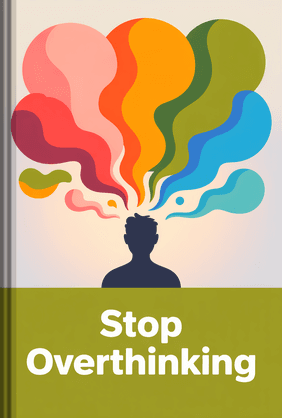
Stop Overthinking
Nick Trenton
50 Duration9 Key Points4.5 RateBuilding a library of mental models from books like these is one of the best long-term strategies for managing anxiety. But when you're already short on time and mental energy, a to-read pile can quickly become another source of stress.
Delivers the core lessons from hundreds of self-help and psychology books in 15-minute audio summaries, so you can learn new coping strategies on your commute or during a walk.
LeapAheadFAQ
Can overthinking cause physical symptoms?
Absolutely. Chronic overthinking keeps your nervous system in a constant state of "fight or flight." This prolonged exposure to cortisol can lead to muscle tension, tension headaches, insomnia, digestive issues, and an elevated heart rate. Your body reacts to imagined mental threats exactly as it would to real physical danger.
Absolutely. Chronic overthinking keeps your nervous system in a constant state of "fight or flight." This prolonged exposure to cortisol can lead to muscle tension, tension headaches, insomnia, digestive issues, and an elevated heart rate. Your body reacts to imagined mental threats exactly as it would to real physical danger.
How do I quiet my mind at night to sleep?
Do a "Brain Dump" before getting into bed. Keep a notepad on your nightstand. Write down every task, worry, and fragmented thought bouncing around your head. By putting it on paper, you signal to your brain that the information is safely stored and it no longer needs to actively remember it, allowing your nervous system to power down.
Do a "Brain Dump" before getting into bed. Keep a notepad on your nightstand. Write down every task, worry, and fragmented thought bouncing around your head. By putting it on paper, you signal to your brain that the information is safely stored and it no longer needs to actively remember it, allowing your nervous system to power down.
Is overthinking a trauma response?
It frequently is. If you have experienced trauma or grew up in a highly unpredictable environment, overthinking develops as a form of hypervigilance. Your brain learned that it must constantly scan the horizon for danger to protect you. In therapy, unpacking this requires recognizing that you are safe now, and the hyper-vigilant scanning is no longer serving your survival.
It frequently is. If you have experienced trauma or grew up in a highly unpredictable environment, overthinking develops as a form of hypervigilance. Your brain learned that it must constantly scan the horizon for danger to protect you. In therapy, unpacking this requires recognizing that you are safe now, and the hyper-vigilant scanning is no longer serving your survival.