

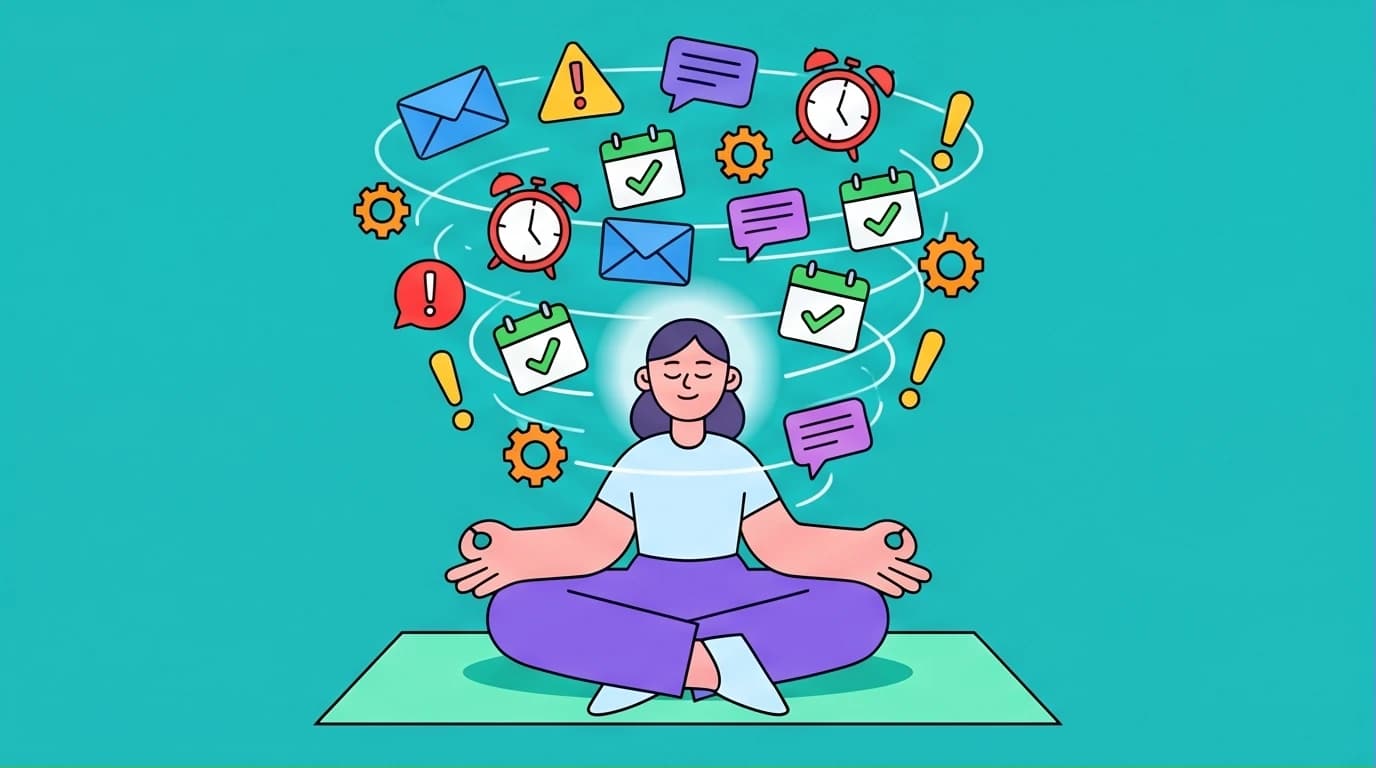
Your alarm goes off, and your brain instantly floods with today's unread emails, scheduling conflicts, and an endless running to-do list. You know meditation is supposed to help quiet this exhausting mental noise, but the mere thought of sitting perfectly still for 30 minutes feels like an impossible chore. You need relief from the overwhelm, not another complicated task to squeeze into your day.
What is Mindfulness Meditation?
Before you try to master the habit, you need to understand exactly what you are trying to do. If you ask most people what is mindfulness meditation, they will likely tell you it is the act of completely clearing your mind of all thoughts to achieve total inner peace.
This is a massive misconception.
Mindfulness meditation is simply the practice of paying attention to the present moment intentionally and without judgment. You are not trying to turn off your brain. Your brain is designed to think, just like your heart is designed to beat. Expecting your brain to suddenly stop producing thoughts is a recipe for instant frustration.
Instead of fighting your thoughts, mindfulness is the act of observing them. You train yourself to sit in the driver’s seat of your mind. When a stressful thought about a looming deadline pops up, you notice it, acknowledge it, and consciously decide to let it pass rather than letting it ruin your morning.

Mindfulness Meditation for Beginners: The Mindset Shift
When approaching mindfulness meditation for beginners, the biggest hurdle is usually intimidation. You might picture a Zen master sitting cross-legged on a mountaintop, wearing flowing robes and chanting.
Erase that image. You do not need to buy a special floor cushion from Amazon, burn expensive incense, or lock yourself in a soundproof room. You do not need to read a dozen thick philosophy books from Barnes & Noble or listen to a 10-hour Audible course to figure this out.
All you need is a chair, a few spare minutes, and the willingness to let yourself be bad at it initially.
Your mind will wander. You will get distracted by an itch on your nose, the sound of a truck driving miles down the highway, or the sudden realization that you forgot to buy milk. This does not mean you are failing. Every time you notice your mind has wandered and you bring your focus back, you are successfully meditating. Think of that return as a bicep curl for your brain. The more reps you do, the stronger your mental focus becomes.
If you're still feeling a bit cynical about the whole meditation thing, you aren't alone. Many busy Americans assume meditation requires a complete lifestyle overhaul or a sudden love for essential oils. If you want a no-nonsense, highly relatable approach to getting started, check out Dan Harris's guide. He strips away the mystical fluff and offers practical, science-backed advice for people who think they can't sit still for two minutes, let alone twenty.
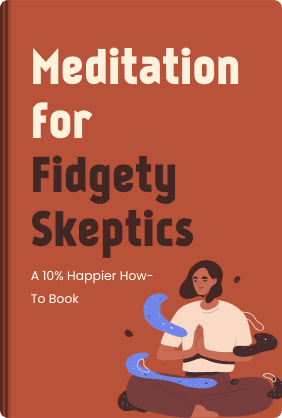
Meditation for Fidgety Skeptics
Dan Harris, Jeff Warren, Carlye Adler
 36 Duration
 9 Key Points
 4.6 Rate
And if even tackling a full book feels like a big first step, you can get the core ideas much faster.


LeapAhead

Listen to the key takeaways from books like 'Meditation for Fidgety Skeptics' in just 15 minutes, making it easy to learn new techniques without the time commitment of a full read.

5 Steps: How to Practice Mindfulness Meditation
Learning how to practice mindfulness meditation is incredibly straightforward. Strip away the fluff and follow these five fundamental steps to get started today.
1. Claim a Small Window of Time
Do not start with an ambitious goal of 20 minutes. Set yourself up for an easy win. Grab your phone or Apple Watch and set a basic timer for just three to five minutes. Choosing a ridiculously short time frame removes the excuse of "I'm too busy today."
2. Find a Comfortable Posture
Sit down. A normal living room chair, the edge of your couch, or even your car seat in a parked garage works perfectly. Keep your feet flat on the floor and let your hands rest gently on your lap. Sit up relatively straight so you stay alert, but do not force your spine into an uncomfortably rigid position. Close your eyes, or if you prefer, lower your gaze to a fixed point on the floor in front of you.
3. Anchor on Your Breath
Your breath is your anchor because it is always with you and always happening in the present moment. Direct your attention to the physical sensation of breathing. Notice the cool air entering your nostrils and the slightly warmer air leaving. Feel the rise and fall of your chest or your belly. Do not try to manipulate the breath or force deep breathing. Just let your body breathe normally and watch it happen.
Your breath is the ultimate anchor because it is the one physical function you carry with you all day long. But despite doing it constantly, most of us have completely forgotten how to breathe properly. If you want to explore just how profoundly your breathing impacts your nervous system, stress levels, and overall health, James Nestor's deep dive into the science of respiration is a fascinating read. It will completely change the way you view a simple inhale and exhale.
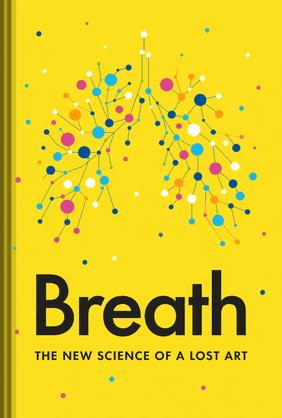
Breath
James Nestor
40 Duration7 Key Points4.6 Rate4. Watch Your Mind Wander
Within about ten seconds, your brain will hijack your attention. You will start thinking about what to make for dinner or replaying a weird conversation you had with a coworker yesterday. Let it happen. The moment you realize you are lost in thought, you are actually experiencing a moment of pure mindfulness. You woke up from the autopilot.
5. Return to the Anchor
When you catch your mind wandering, do not scold yourself. Do not judge the thought or analyze it. Quietly note to yourself, "thinking," and then immediately return your attention to the physical sensation of the next breath. You will repeat this loop—focus, wander, notice, return—over and over until the timer goes off.
Simple Mindfulness Exercises for Real Life
If sitting with your eyes closed still feels like a bridge too far, you can build your focus muscle with active variations. These simple mindfulness exercises allow you to weave the practice into things you are already doing.
The Morning Coffee Ritual
Tomorrow morning, do not scroll through your phone while your coffee brews. Instead, focus entirely on the process. Listen to the sound of the water boiling. Feel the warmth of your favorite mug in your hands. Notice the dark color of the coffee and inhale the roasted scent deeply. Take your first sip and focus solely on the temperature and flavor. If your mind jumps to your morning meeting, gently guide it back to the taste of the coffee.
The Red Light Reset
Commuting is highly stressful, but it offers built-in pauses. When you hit a red light, resist the urge to check your phone or aggressively switch radio stations. Use the red light as a trigger to take three conscious, intentional breaths. Feel your hands gripping the steering wheel. Relax your jaw. Once the light turns green, resume driving with a clearer head.
The Transition Walk
Whether you are walking across the office to use the restroom or walking the dog around the neighborhood, turn the movement into a meditation. Put your phone in your pocket. Pay attention to the physical sensation of your feet hitting the pavement. Notice the rhythm of your steps.
You don't have to retreat to a quiet room to find moments of peace; your ordinary, daily routine provides countless opportunities to practice presence. Whether you are stuck in rush hour traffic or waiting in line at the grocery store, you can choose to be fully there. To further master the art of weaving mindfulness into the messy reality of your everyday schedule, Jon Kabat-Zinn’s classic guide is an absolute must-read. It beautifully illustrates how every mundane moment can become a profound meditation.

Wherever You Go, There You Are
Jon Kabat-Zinn
19 Duration8 Key Points4.6 RateStarting a Daily Meditation Practice That Lasts
Understanding the mechanics is only half the battle. The real challenge is starting a daily meditation practice and actually sticking with it when life gets chaotic.
Utilize Habit Stacking
The easiest way to build a new routine is to attach it to a firmly established habit you already do every single day without fail. This is known as habit stacking. For example: "After I brush my teeth in the morning, I will sit on the edge of my bed and meditate for three minutes." The existing habit (brushing your teeth) becomes the automatic trigger for the new behavior.
Do Not Break the Chain
Consistency matters far more than duration. Meditating for three minutes every day is infinitely better than meditating for 40 minutes once a month. Use a simple visual cue to track your progress. You can use a calendar app, or simply put a large red 'X' on a paper wall calendar for every day you complete your practice. Watching that unbroken chain grow provides immense psychological motivation.

Forgive the Missed Days
Life happens. You will oversleep, get sick, or face a morning emergency with the kids. When you miss a day, do not throw in the towel and declare that you failed. The golden rule of habit formation is to never miss twice. Acknowledge the skip, drop the guilt, and get back to your three-minute timer the very next day.
Concepts like "habit stacking" and the "never miss twice" rule are the bedrock of building a routine that actually sticks, rather than one you abandon a few weeks in. If you want to master the psychology behind why we fail at new routines and learn the exact framework for making your meditation habit truly automatic, diving into the science of behavioral change is your best next step. James Clear’s groundbreaking work on the subject is essentially the modern playbook for designing a life that effortlessly runs on good habits.

Atomic Habits
James Clear
26 Duration8 Key Points4.7 RateThis article is packed with powerful book suggestions, but finding time to read them all can be a challenge in itself. If you want to absorb the key lessons from these authors without adding to your to-do list, there's a more efficient way.
LeapAhead
Turn your commute into learning time by listening to 15-minute summaries of 'Atomic Habits' and thousands of other personal growth titles, helping you build powerful new routines.
FAQ
Do I need a meditation app to do this right?
No. You do not need any external tools, subscriptions, or guided audio tracks to practice successfully. A simple timer is more than enough. However, if you find that hearing a calm voice helps keep you on track during the first few weeks, guided apps or audiobooks can be a highly effective set of training wheels. Use them if they help, but do not rely on them as a permanent crutch.
What if I keep falling asleep while meditating?
Falling asleep is incredibly common for beginners, especially if you try to meditate in bed or after a long day of work. If this happens frequently, it usually points to a sleep deficit rather than a meditation problem. To fix this, try shifting your practice to the morning, meditating while sitting upright in a firm chair, or keeping your eyes slightly open to stay alert.
How long does it take to see the benefits of mindfulness meditation?
You will often feel a slight decrease in immediate stress or a lower heart rate right after a single session. However, the lasting neurological changes—like improved emotional regulation, reduced background anxiety, and better focus—typically require consistent daily practice for about four to eight weeks. Treat it like going to the gym; you will not see visible muscle definition after one workout, but the internal changes begin on day one.
Can I meditate lying down in bed?
You can, but it is generally not recommended for a traditional mindfulness practice. When you lie down, your brain associates the posture with sleep, making it very difficult to maintain the necessary state of alert, relaxed awareness. Lying down is excellent for a pre-sleep wind-down routine, but if your goal is to train your focus, sit up.