

You walk out of a meeting feeling outmaneuvered, or leave a conversation wondering if you were just subtly insulted. You are dealing with individuals who smile to your face while plotting their next career move at your expense. Navigating office politics or toxic relationships without a baseline understanding of human psychology is like walking through a minefield blindfolded.
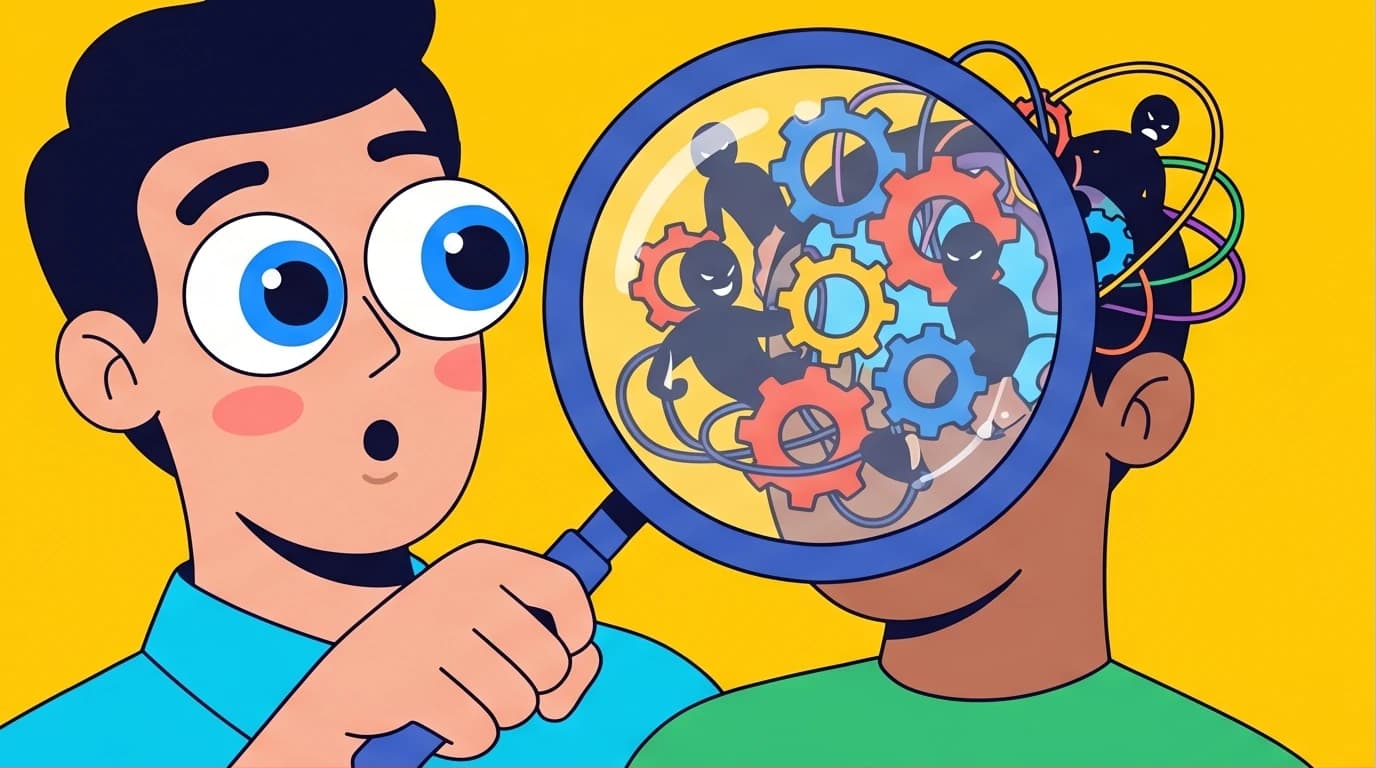
You do not need more positive thinking. You need a reliable framework to decode what people are actually thinking, regardless of what they say.
Drawing heavily from his extensive research, understanding how to read people Robert Greene style requires stripping away your own emotional biases. You must stop judging people based on your own moral compass and start observing them as phenomena of nature. Here is how you execute this analytical approach to survive and thrive.
The Core Principle: Look Behind the Social Mask
People wear masks. Greene refers to this as the "Persona." In professional settings, people project competence, friendliness, and compliance. But beneath every mask lies the "Shadow"—the repressed desires, insecurities, and darker impulses they desperately try to hide.
To read people accurately, you must stop listening to their words and start watching their leakage. Leakage occurs when the Shadow temporarily breaks through the Persona.

Watch for the following nonverbal cues:
- Micro-expressions: A flash of contempt or disappointment that crosses someone's face for a fraction of a second before they force a smile.
- Contradictory behavior: The coworker who preaches team unity but consistently "forgets" to CC you on critical emails.
- Post-stress reactions: How a person behaves when a project fails or their authority is challenged reveals their baseline character.
If you find it challenging to spot these subtle micro-expressions and nonverbal leaks in real-time, learning from a former FBI counterintelligence officer can sharpen your skills tremendously. Understanding the exact physical cues that betray someone's true intentions gives you an immediate advantage in any negotiation or everyday conversation. For a masterclass on decoding these hidden signals, this guide is an invaluable resource.

What Every Body Is Saying
Joe Navarro, Marvin Karlins
 42 Duration
 8 Key Points
 4.5 Rate
Decoding Laws of Human Nature Dark Psychology
Understanding the laws of human nature dark psychology elements is not about becoming a cynic; it is about pure self-preservation. Greene warns that we are all susceptible to dark traits like envy, grandiosity, and irrationality.
When you encounter manipulative peers, they often weaponize these dark traits. They will play on your insecurities or use forced teaming ("We are in this together") to lower your defenses.
Your defense mechanism starts with recognizing the "Law of Irrationality." You cannot read someone else if your own emotions are compromised. Manipulators trigger your anger or fear to make you predictable. Before you can decode their dark psychology, you must detach. Increase your reaction time. When someone sends a passive-aggressive Slack message or email, step away. View their action coldly, like a scientist observing a lab rat. Why are they testing this boundary now? What insecurity is driving their aggression?

The Law of Irrationality is just one of the core principles Greene outlines. To better protect yourself from a wide array of manipulative tactics, it helps to understand the complete framework he provides.
Taking a step back to view human behavior objectively is much easier when you have a systematic framework for analyzing personality types. If you want to bypass the guesswork and learn how to quickly interpret people's core motivations, behavioral tendencies, and underlying fears, you need a practical toolkit. To further develop your ability to speed-read the people around you with pinpoint accuracy, consider adding this insightful read to your library.

Read People Like a Book
Patrick King
41 Duration8 Key Points4.4 RateRobert Greene Narcissism: Identifying the Deep Narcissist
We all possess a healthy level of narcissism—it drives us to succeed and care for ourselves. But in the context of Robert Greene, narcissism takes a destructive turn when it becomes "Deep Narcissism."
Deep narcissists lack a cohesive sense of self. They rely entirely on external validation to feel alive. When you are dealing with a toxic boss or a manipulative partner, you are often dealing with a deep narcissist.

Spotting the Deep Narcissist
- Hypersensitivity to Criticism: They view even mild, constructive feedback as a violent personal attack. They will erupt in rage or play the ultimate victim.
- Monopolizing the Narrative: Pay attention to how they steer conversations. Every story, even your personal tragedies or successes, will magically pivot back to them.
- Lack of Empathy: They cannot imagine how others feel. They view people purely as tools or obstacles.
How to Handle Them
Never challenge a deep narcissist's ego directly. If you call them out, you become their permanent enemy. Instead, flatter their insecurities if you need them to cooperate, or maintain strict emotional distance. Document every interaction if it is a workplace scenario.
While aggressive, overt narcissists are relatively easy to spot, the quiet and passive-aggressive ones often do the most damage before you even realize you are being manipulated. These individuals use subtle guilt trips and disguised sabotage to erode your confidence over time. If you suspect you are dealing with this highly toxic but easily overlooked personality type, equipping yourself with specialized knowledge is the best way to break free and protect your peace of mind.
The Covert Passive-Aggressive Narcissist
Debbie Mirza
18 Duration7 Key Points4.4 RateIdentifying Toxic Types Laws of Human Nature
When identifying toxic types, The Laws of Human Nature serves as a definitive field guide. Greene categorizes specific characters that you will inevitably encounter in your career and personal life. Recognizing them early saves you months of psychological torment.
The Hyper-Perfectionist
They micromanage everything. They mask their deep-seated control issues as "high standards." Working under them leads to severe burnout because nothing is ever good enough.
- The Tell: They cannot delegate without constantly interfering.
- The Defense: Give them minor details to control while you shield the broader project.
The Relentless Rebel
They hate authority and constantly position themselves as the underdog or the maverick. Initially, they seem charismatic and brave. Eventually, you realize they just want to be the tyrant themselves.
- The Tell: They complain about every rule but offer no structural solutions.
- The Defense: Never align yourself with their rebellions; you will be collateral damage when management cracks down.
The Personalizer
They perceive malice in every innocent action. If you do not say good morning with enough enthusiasm, they assume you are plotting against them.
- The Tell: They hold long grudges over microscopic, perceived slights from years ago.
- The Defense: Keep interactions strictly professional and brief. Never joke sarcastically with them.
The Passive-Aggressive Saboteur
They avoid direct conflict at all costs but will ruin your reputation behind your back.
- The Tell: They agree to deadlines they never meet, lose important documents, or spread watercooler gossip under the guise of "concern."
- The Defense: Force everything into the light. Put all verbal agreements in writing. Remove their ability to hide in ambiguity.
These archetypes are drawn from Greene's deep analysis of historical and contemporary figures. To see how these types fit into the book's larger themes, a high-level overview can be incredibly useful.
Recognizing these toxic archetypes is a crucial first step. If you want to continuously build your knowledge on human psychology but are too drained after work to pick up another dense book, there's a more efficient way to learn.


Quickly master the concepts for identifying and handling toxic personalities by listening to key ideas from bestselling psychology books in just 15 minutes.
 LeapAhead
Defending Against Laws of Human Nature Manipulation
Manipulators succeed by keeping you off balance. To counter what we can categorize as laws of human nature manipulation, you need to reverse-engineer their tactics.
First, look at their track record, not their reputation. Greene emphasizes the "Law of Compulsive Behavior." People have deeply ingrained character patterns. If a charming coworker betrayed their last business partner, they will betray you. The circumstances do not matter; the character does.
Second, recognize the envy dynamic. Envy is the ugliest human emotion and the hardest to spot because no one admits to it. If you recently received a promotion or praise, watch your peers closely.
- Do they offer a backhanded compliment? ("Great job on the presentation, I guess the boss was in a really forgiving mood today.")
- Do they suddenly find reasons to avoid you?
- Do they subtly undermine your ideas in group settings?
When you spot envy, tone down your brilliance. Self-deprecate slightly. Deflect praise to the team. Do not let their toxic envy fester into active sabotage.
Whether you are listening to Greene's audiobook on Audible during a tense commute or studying a hardcover copy from Barnes & Noble, the goal remains the same: radical objectivity. You must accept human nature as it is—flawed, self-interested, and often deceptive. Once you drop your naive expectations of how people should behave, you gain immense power over how they actually behave.
Ultimately, achieving this level of radical objectivity requires a deep, unflinching dive into the psychological forces that drive us all. The concepts we've explored barely scratch the surface of Robert Greene's comprehensive framework on human behavior. To fully master the art of defending yourself against toxic individuals and gaining profound insight into your own character, immersing yourself in his unabridged masterwork is an absolute must for your personal and professional development.
The Laws of Human Nature
Robert Greene, Paul Michael, et al.
48 Duration7 Key Points4.5 RateIf you're weighing whether to commit to Greene's dense but rewarding book, it can be helpful to understand how it stands out and what others think about its controversial ideas.
While diving deep into Robert Greene's masterwork is the ultimate goal, not everyone has the time for a 600-page book. To start applying these powerful concepts today, even with a packed schedule, you can get a head start.
Turn your commute into a masterclass on human nature by listening to the key takeaways from The Laws of Human Nature and similar books in minutes.
LeapAheadFAQ
Q: Can you actually learn to read people accurately, or is it just guessing?
Reading people is not psychic intuition; it is pattern recognition. By paying attention to baseline behaviors, micro-expressions, and historical actions rather than verbal promises, you move from guessing to evidence-based observation. It requires practice and dropping your own emotional biases.
Reading people is not psychic intuition; it is pattern recognition. By paying attention to baseline behaviors, micro-expressions, and historical actions rather than verbal promises, you move from guessing to evidence-based observation. It requires practice and dropping your own emotional biases.
Q: How do I deal with a manipulative boss without losing my job?
Maintain emotional detachment. Manipulators feed on your emotional reactions. Respond to provocations with calm, boring professionalism (often called the "Grey Rock" method). Keep meticulous written records of all tasks, directives, and changes in project scopes to protect yourself from gaslighting.
Maintain emotional detachment. Manipulators feed on your emotional reactions. Respond to provocations with calm, boring professionalism (often called the "Grey Rock" method). Keep meticulous written records of all tasks, directives, and changes in project scopes to protect yourself from gaslighting.
Q: Are all narcissists dangerous, and can they change?
Robert Greene notes that everyone has some level of narcissism. However, "Deep Narcissists"—those completely devoid of empathy and dependent on external validation—are highly dangerous to your mental health and career. They rarely change because their condition prevents them from acknowledging their own flaws. Your best strategy is distance, not rehabilitation.
Robert Greene notes that everyone has some level of narcissism. However, "Deep Narcissists"—those completely devoid of empathy and dependent on external validation—are highly dangerous to your mental health and career. They rarely change because their condition prevents them from acknowledging their own flaws. Your best strategy is distance, not rehabilitation.
Q: Why do I keep attracting toxic or manipulative people?
You may be projecting a Persona that signals vulnerability or an overly accommodating nature. Manipulators test boundaries early. If you fail to push back on small disrespects, you signal that you are a viable target for larger manipulations. Establish strong, immediate boundaries to repel toxic types.
You may be projecting a Persona that signals vulnerability or an overly accommodating nature. Manipulators test boundaries early. If you fail to push back on small disrespects, you signal that you are a viable target for larger manipulations. Establish strong, immediate boundaries to repel toxic types.