


You are staring at a 600-page brick of a book sitting on your desk. You know it holds the psychological blueprints to navigate brutal office politics, deal with manipulative clients, and fix your own self-sabotaging habits. But between endless Zoom calls, managing your team, and actually living your life, finding weeks to read it feels impossible.
You do not need endless historical anecdotes right now. You need the tactical framework. You need to know why the people around you act the way they do, and more importantly, how to protect yourself and thrive among them.
This guide serves as your ultimate the laws of human nature summary. We stripped away the fluff to deliver the core psychological principles you can use in the boardroom and in your personal life immediately.
And for busy professionals who want to make this kind of high-impact learning a daily habit, using a book summary app can be a game-changer.


Get the core principles from The Laws of Human Nature and other dense psychology books in 15-minute audio or text summaries you can fit into any schedule.
 LeapAhead
Robert Greene Laws of Human Nature Key Takeaways
Before breaking down individual chapters, you must understand the foundation of Greene’s philosophy. The entire book hinges on three absolute truths about human behavior. Grasping these Robert Greene laws of human nature key takeaways will put you miles ahead of the competition.
1. Character is Destiny
People rarely act out of character. The way a person handles a minor inconvenience at a coffee shop is exactly how they will handle a million-dollar contract dispute. Greene emphasizes that character is deeply ingrained. Stop listening to what people say they will do and start observing their unshakeable behavior patterns.
2. We Are All Emotionally Irrational
You want to believe you are a purely logical thinker. You are not. Every human is driven by deeply rooted emotions, biases, and ego. True rationality is not something you are born with; it is an active skill you must cultivate by forcing a pause between feeling an emotion and acting on it.

3. Empathy is a Tactical Weapon
Most people view empathy simply as a moral virtue. Greene frames empathy as an analytical tool. When you shift your focus outward and genuinely absorb how another person views the world, you gain the ability to anticipate their moves, soften their defenses, and influence their decisions.
Laws of Human Nature Chapter Summary: Core Frameworks
Greene breaks human behavior down into 18 distinct laws. To make this laws of human nature chapter summary actually useful for your daily life, we have organized these laws into four actionable psychological categories.
For a complete breakdown of each principle, it's helpful to see them all in one place.
Category 1: Mastering Your Internal Drive
You cannot influence others if you have no control over yourself. This is where your transformation begins.
- The Law of Irrationality (Master Your Emotional Self): Emotions cloud judgment. When you feel sudden anger or extreme excitement, your brain actively shuts down logical processing. Rule number one: Never make a decision while under the influence of strong emotion. Increase your reaction time.
- The Law of Self-Sabotage (Change Your Circumstances by Changing Your Attitude): Your attitude determines your reality. If you view the world as hostile, you will act defensively, which makes others hostile toward you. Shift to an expansive, optimistic attitude to break this negative feedback loop.
- The Law of Repression (Confront Your Dark Side): Everyone has a "Shadow"—the hidden, aggressive, or selfish desires we repress to fit into society. Acknowledge your dark side and channel its energy into productive ambition and fierce independence instead of letting it leak out in passive-aggressive behavior.
If you want to dive deeper into why we make irrational, emotionally driven decisions despite our best efforts, Daniel Kahneman's groundbreaking work is a must-read. It perfectly complements Greene’s Law of Irrationality by mapping out the two distinct systems that drive the way we think—one fast and emotional, the other slow and logical. Understanding this framework is the ultimate cheat code for mastering your internal drive and forcing that critical "10-second pause" when tensions run high.

Thinking, Fast and Slow
Daniel Kahneman
 53 Duration
 9 Key Points
 4.5 Rate
Category 2: Reading the Masks People Wear
Society requires people to wear masks. Your job is to learn how to see behind them.

- The Law of Role-playing (See Through People’s Masks): People project an image of confidence or humility that rarely matches reality. Pay attention to micro-expressions, posture, and off-hand comments. The body never lies, even when the mouth is speaking perfectly rehearsed words.
- The Law of Compulsive Behavior (Determine Character Strength): Look at how people operate under stress. A person might fake being a team player during a successful quarter, but a missed deadline will reveal their true, compulsive nature. Look for patterns, not isolated incidents.
- The Law of Defensiveness (Soften People’s Resistance): Everyone has a fragile ego. If you attack their ideas directly, they will build a wall. To get what you want, validate their self-opinion first. Make them feel intelligent and respected, and their defenses will melt away.
Learning to see past these masks is a core skill for professional and personal success.
Spotting the cracks in someone's mask takes practice, and there is no better guide for this than a former FBI counterintelligence officer. Joe Navarro's masterclass on nonverbal communication takes Greene’s Law of Role-playing a step further. It teaches you how to speed-read people by decoding subconscious body language, from subtle facial tics to shifts in posture. It's a highly practical resource for anyone looking to negotiate a better salary, read a boardroom, or simply know what the people around them are actually thinking.

What Every Body Is Saying
Joe Navarro, Marvin Karlins
42 Duration8 Key Points4.5 RateCategory 3: Navigating Toxic Traits and Dark Psychology
The world is full of individuals who will drain your energy or actively try to destroy you. You must learn to spot them early.
- The Law of Narcissism (Transform Self-Love into Empathy): Deep narcissists treat others as extensions of themselves. They lack the fundamental ability to see your perspective. Identify them quickly, avoid partnering with them, and never expect them to change.
- The Law of Envy (Beware the Fragile Ego): Envy is the most dangerous hidden emotion. A colleague who constantly undermines your success with "just a joke" or backhanded compliments is operating out of envy. Distance yourself before their envy turns into active sabotage.

- The Law of Aggressiveness (See the Hostility Behind the Friendly Facade): Chronic aggressors mask their need for control behind a friendly or helpless exterior. Do not try to appease them. The only way to deal with an aggressor is to set unmovable boundaries.
Dealing with envy, narcissism, and hidden aggression can completely drain your energy, especially in a high-stakes corporate environment. If you frequently find yourself wondering how to communicate with people who seem completely unreasonable, Thomas Erikson’s brilliant behavioral guide is the perfect next step. It categorizes personality types in a way that makes it incredibly easy to identify toxic individuals early on, adjust your communication style to disarm their defenses, and protect your own peace of mind.

Surrounded by Idiots
Thomas Erikson
48 Duration7 Key Points4.6 RateIf your to-read list is suddenly feeling longer, remember that you don't have to read every book cover-to-cover to get its core value. An app can help you quickly grasp the main ideas from these recommended titles and decide which ones are worth a deeper dive.
Tackle your growing reading list by listening to key insights from bestselling psychology and business books while you commute, work out, or take a break.
LeapAheadCategory 4: Mastering Social and Group Dynamics
Individual behavior changes drastically the moment people enter a group.
- The Law of Conformity (Do Not Let the Group Drag You Down): The need to belong is wired into human DNA. When you join a company or a social circle, you will feel an invisible pressure to adopt their blind spots. Maintain your mental independence while physically playing along with the group.
- The Law of Covetousness (Become an Elusive Object of Desire): People do not want what they already have; they want what is just out of reach. In business and relationships, do not be overly available. Create an aura of mystery and scarcity to drive up your perceived value.
The Laws of Human Nature Cliff Notes: Actionable Strategies
Knowing the theory is useless without execution. Here are the laws of human nature cliff notes—three specific strategies you can implement tomorrow morning.
- Deploy the "10-Second Pause": The next time an email from a coworker spikes your blood pressure, step away from the keyboard. Force a minimum 10-second pause to let the emotional wave pass. Ask yourself: "What is the actual outcome I need here?" Respond to the goal, not the insult.
- Audit the "Jokes": Start tracking the sarcastic comments or "teasing" from your peers. Passive-aggression is often the only way insecure people express their envy. If a specific friend or colleague consistently delivers backhanded compliments, downgrade their access to your personal life.
- Validate to Persuade: When pitching an idea to a stubborn boss or client, frame your solution as an extension of an idea they had in the past. People never resist their own ideas.
Physical Book, Audio, or Laws of Human Nature PDF?
When deciding how to consume this content beyond this summary, you might be tempted to search for a laws of human nature pdf online. Here is why you should reconsider.
Greene’s books are famous for their unique formatting. The margins are packed with historical anecdotes, fables, and quotes that provide brilliant context to the main text. Standard, poorly formatted PDFs completely destroy this reading experience, turning a masterpiece into a confusing wall of text.
If you are a visual learner who likes to highlight and take notes, buy the physical hardcover from Amazon or Barnes & Noble. It is a reference manual you will return to for years. If your primary limitation is time, grab the audiobook on Audible. The narration is excellent, and listening during your daily commute is the most efficient way to absorb the sheer volume of psychological wisdom Greene offers.
If you're still on the fence about whether Greene's dense style is for you, getting another perspective can help.
Ready to stop skimming summaries and start mastering the full psychological playbook? Whether you want a gorgeous hardcover for your home office or prefer listening on your daily commute, investing in the complete, unabridged version of Robert Greene's masterpiece is a game-changer. Skip the sketchy PDF downloads and grab the official copy below to unlock every historical anecdote, behavioral strategy, and actionable insight that didn't make it into this brief guide.
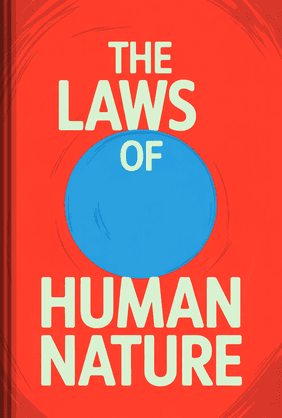
The Laws of Human Nature
Robert Greene, Paul Michael, et al.
48 Duration7 Key Points4.5 RateFAQ
Is The Laws of Human Nature a sequel to The 48 Laws of Power?
Not exactly. The 48 Laws of Power is a ruthless, tactical playbook for acquiring and maintaining control. The Laws of Human Nature is deeper and more analytical. It focuses on understanding the psychological machinery behind why people act the way they do, making it an excellent companion piece to Greene's earlier work.
Not exactly. The 48 Laws of Power is a ruthless, tactical playbook for acquiring and maintaining control. The Laws of Human Nature is deeper and more analytical. It focuses on understanding the psychological machinery behind why people act the way they do, making it an excellent companion piece to Greene's earlier work.
How can I apply these laws without becoming a manipulative sociopath?
Greene emphasizes that empathy is your greatest tool. The goal is defensive awareness, not offensive destruction. You learn to spot toxic behavior so you can avoid it, and you learn to read people so you can communicate more effectively. It is about protecting your boundaries, not manipulating innocent people.
Greene emphasizes that empathy is your greatest tool. The goal is defensive awareness, not offensive destruction. You learn to spot toxic behavior so you can avoid it, and you learn to read people so you can communicate more effectively. It is about protecting your boundaries, not manipulating innocent people.
Which law should I focus on first?
Always start with The Law of Irrationality (Master Your Emotional Self). Until you learn to detach from your own emotional reactions and view situations objectively, you will not have the mental clarity required to analyze or influence anyone else. Self-awareness must come before external observation.
Always start with The Law of Irrationality (Master Your Emotional Self). Until you learn to detach from your own emotional reactions and view situations objectively, you will not have the mental clarity required to analyze or influence anyone else. Self-awareness must come before external observation.