

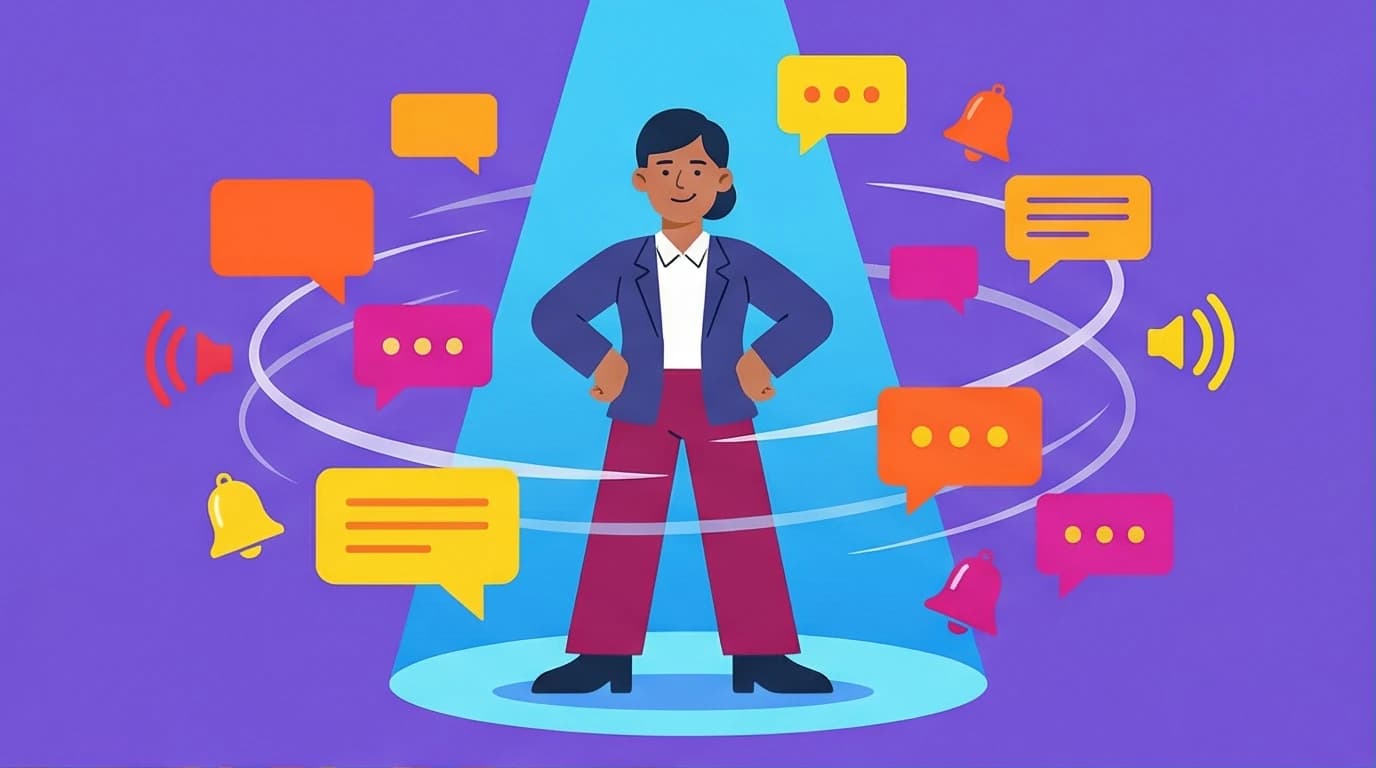
You sit in a glass-walled open office, bombarded by Slack notifications, watercooler chatter, and back-to-back Zoom calls where the loudest voice invariably wins. You know your strategies are solid, but fighting for airtime feels exhausting. The pressure to act like an extrovert is draining your energy and making you question your own executive presence. Stop playing their game. You cannot win by adopting someone else's playbook.
The Myth of the Loud Executive
Corporate America has a longstanding bias. Businesses often conflate quick talking with quick thinking, and volume with authority. If you browse the business section of Barnes & Noble or scroll through Apple Books, you see endless titles about dominating the room and crushing your presentations. But performance is not the same as effectiveness.
If you have ever explored Susan Cain’s landmark work on the topic, you already realize that for true introvert leadership, quiet deliberation is a feature, not a bug.
To fully grasp the research that underpins these ideas, exploring the key arguments from Cain's work is an excellent next step. It provides the foundational "why" behind the quiet leadership movement.
You process deeply. You analyze risks before you speak. You listen to understand rather than just waiting for your turn to talk. These are not flaws you need to fix. They are the exact structural foundations required for sustainable success as an introvert. Trying to out-shout your highly extroverted colleagues only leads to profound burnout. You need to leverage your natural temperament to build influence on your own terms.
If you resonated with the mention of Susan Cain's landmark research earlier, diving into her full exploration of introversion can be incredibly validating. Her groundbreaking work fundamentally shifted how corporate America views quiet professionals, proving that you don't need a loud, booming presence to wield tremendous influence. If you're tired of trying to fit into an extrovert's mold and want to fully understand the biological and psychological strengths of your natural temperament, this is an absolute must-read for your career toolkit.

Quiet
Susan Cain
 40 Duration
 7 Key Points
 4.6 Rate
Executing Quiet Leadership in a Loud Culture
Instead of competing on volume, you must compete on substance, structure, and timing. This is how you execute quiet leadership daily.
Own the Pre-Meeting and Post-Meeting Spaces
Extroverts thrive in the chaos of a live brainstorm. Introverts thrive in the preparation and the synthesis. Do not wait for the meeting to start to assert your influence. Send a structured agenda 24 hours in advance. Formulate your core arguments before you walk into the conference room.
When you speak, you won't need to shout because your points will already be anchored in the agenda you created. If you miss a moment because the conversation moved too fast, send a concise, definitive follow-up email. A message stating, "Based on our discussion today, here is the most logical path forward and our next steps," places the final decision-making power firmly in your hands.
The Interruption Protocol
Introverts in the workplace frequently get talked over. You need a standard, unemotional response ready for when this happens. Do not shrink back, and do not raise your voice in anger. Hold up a hand slightly, maintain eye contact, and say, "I haven't finished my point. Let me wrap this up." Say it with a flat, calm tone. This quiet assertion of boundaries commands immediate respect and forces the room to listen.

Shift the Focus to 1-on-1 Dynamics
You do not need to rally the department with a fiery town hall speech to be an effective manager. Introverted managers excel in intimate, high-stakes conversations. Use your one-on-one sessions to ask targeted questions, uncover hidden roadblocks, and build intense loyalty among your direct reports. Deep, active listening builds trust far faster than a charismatic monologue. When your team knows you genuinely hear them and advocate for them behind closed doors, your influence multiplies.
Leverage Asynchronous Communication
Write clear, strategic briefs. Amazon famously uses six-page written memos instead of PowerPoint presentations—a practice that perfectly plays to the strengths of leaders who prefer to organize their thoughts thoroughly before presenting. Shift discussions to collaborative documents where ideas can be evaluated on merit and logic, rather than on who pitched them with the most enthusiasm.
These tactical approaches work because they align with the inherent strengths of introverted individuals. Understanding the core differences in how introverts and extroverts are wired is crucial for developing an authentic leadership style.
Transitioning from a quiet contributor to a recognized manager can feel intimidating when the corporate playbook is written for extroverts. If you are looking for actionable strategies to command the room without raising your voice, Jennifer Kahnweiler’s insights are game-changing. She provides a practical roadmap specifically designed for introverts navigating high-stakes meetings, team management, and office politics. It’s an excellent resource if you want to elevate your executive presence while staying completely authentic to your quiet nature.

The Introverted Leader
Jennifer B. Kahnweiler
46 Duration9 Key Points4.4 RateAbsorbing the wisdom from game-changing books like these is crucial, but finding the time can be a challenge. If your days are already packed, there's a smarter way to stay on top of your professional reading list without the burnout.


Get key insights from bestselling leadership books in 15-minute audio or text summaries, perfect for learning new strategies during your commute or lunch break.
 LeapAhead
Networking for Introverts: Quality Over Volume
The concept of networking often fills introverted professionals with dread. You picture a noisy happy hour, a stack of business cards, and hours of forced small talk about the weather. Redefine the rules. Networking for introverts is about strategic depth, not superficial volume.

The Micro-Networking Strategy
Focus entirely on one-on-one interactions. Invite a colleague from another department to grab a coffee or schedule a strict 15-minute virtual chat. Your goal is to learn about their current projects and find one specific way to add value to their work. One deep professional relationship is worth more than fifty superficial LinkedIn connections.
Partner with the Connectors
Every organization has natural connectors—highly extroverted people who know everyone from the C-suite down to the newest interns. Build a strong, authentic relationship with one or two of these individuals. Let them do the heavy lifting of introducing you to the broader network. Provide them with great insights, and they will naturally advocate for you in rooms you aren't even in.
Arrive Early, Leave When You Need To
If you must attend a large industry event, arrive 15 minutes early. It is much easier to start a conversation when there are only three people in the room. You can establish a base connection before the noise level rises. Once the room reaches maximum capacity and your social battery depletes, give yourself permission to leave. You made your connections; you do not need to stay until the lights shut off.
Our advice to focus on adding value in one-on-one micro-networking sessions is actually backed by organizational psychology. When you build relationships based on mutual benefit and genuine curiosity rather than superficial ladder-climbing, your professional network becomes infinitely stronger. Adam Grant’s fascinating research on how our interaction styles drive success is perfect for introverts who prefer deep, meaningful connections. It will show you exactly why leading with generosity and focused attention is actually a massive competitive advantage in business.
Give and Take
Adam Grant
26 Duration11 Key Points4.5 RateProtecting Your Energy in an Open-Office Layout
Your social battery is a finite resource. You cannot lead effectively if you are constantly overstimulated by your environment. Energy management is the most critical component of your career strategy.
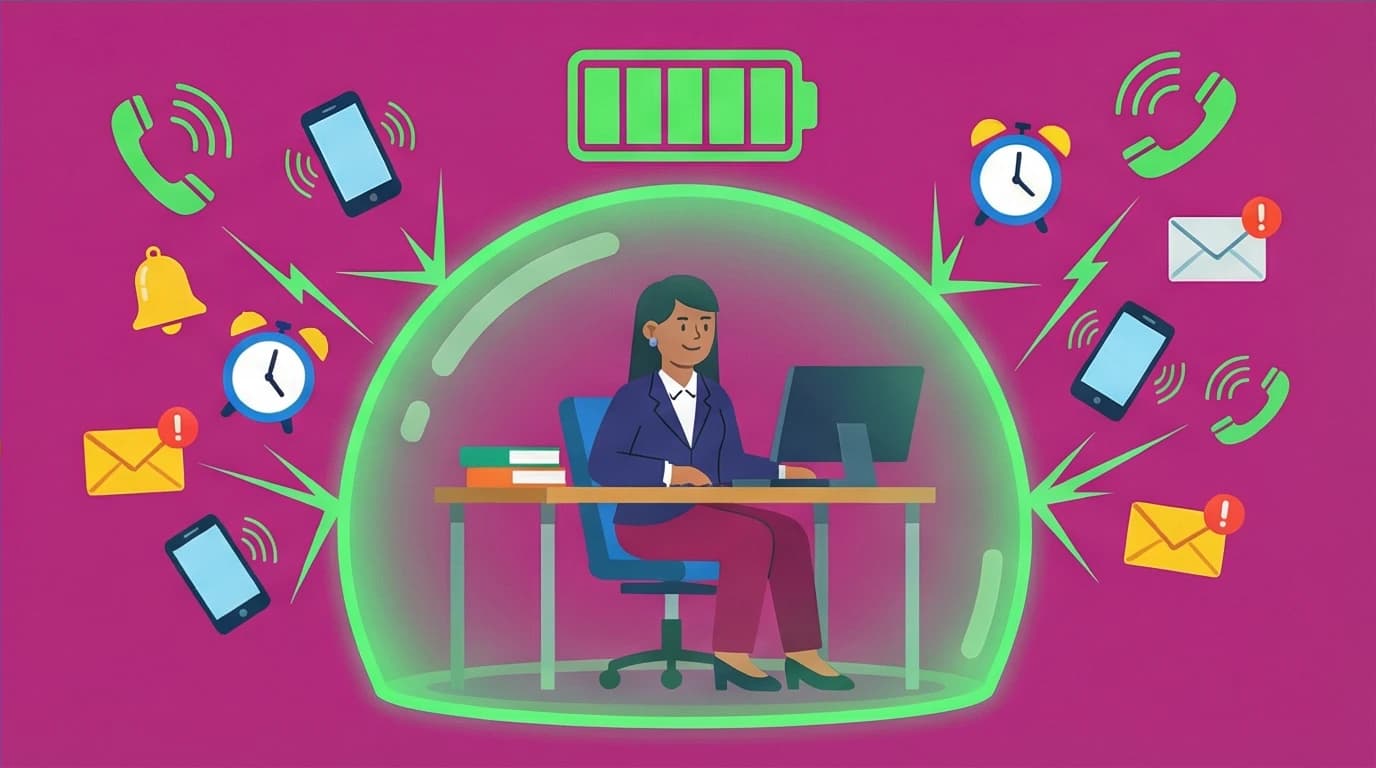
Block out "focus time" on your calendar and defend it ruthlessly. Treat it like a mandatory meeting with your most important client. If your open-office layout is too distracting, book a private huddle room for an hour a day, or invest in high-quality noise-canceling headphones to signal that you are doing deep work. It is far better to be fully present and sharp for three crucial conversations a day than to be half-present and exhausted for ten.
Take actual lunch breaks. Walk a few miles outside, sit in your car, or read a chapter of a book on Goodreads or Audible to reset your mind. Solitude is how you recharge. Do not apologize for taking the space you need to function at your absolute highest capacity.
The ability to focus intensely without distraction is becoming increasingly rare, which makes it one of the most valuable skills you can cultivate in today's noisy, Slack-driven workplace. Your natural inclination toward solitude isn't a weakness; it's the exact environment required to produce elite-level work. If you want to master the art of blocking out open-office noise and structuring your day for maximum cognitive output, Cal Newport’s philosophy will completely transform how you manage your time and energy.
Deep Work
Cal Newport
47 Duration8 Key Points4.6 RateBuilding on these quiet leadership strategies requires consistent learning. If you're often too drained after work to pick up a dense business book, you can still gain the essential knowledge you need to advance your career.
Fit professional growth into your day by listening to the core ideas from top business books on strategy and influence while you recharge on your own terms.
LeapAheadFAQ
Can introverts really make it to the C-suite?
Yes. Many highly successful CEOs are documented introverts. They reach the C-suite not by being the loudest voices in the room, but by making calculated strategic decisions, managing risks effectively, and building highly loyal, competent executive teams who complement their quiet style.
Yes. Many highly successful CEOs are documented introverts. They reach the C-suite not by being the loudest voices in the room, but by making calculated strategic decisions, managing risks effectively, and building highly loyal, competent executive teams who complement their quiet style.
How do I handle an extroverted boss who thinks my quietness means I am disengaged?
Communicate your working style directly and professionally. Say, "I do my best processing after the initial discussion. I will review the data today and bring you my fully developed recommendations by tomorrow morning." Show them through your actions that your silence in a meeting is a sign of deep thinking, not a lack of interest.
Communicate your working style directly and professionally. Say, "I do my best processing after the initial discussion. I will review the data today and bring you my fully developed recommendations by tomorrow morning." Show them through your actions that your silence in a meeting is a sign of deep thinking, not a lack of interest.
What should I do if I freeze when put on the spot during a high-stakes meeting?
Buy yourself time. You never owe anyone an immediate, fully baked answer on the spot. Use a neutral bridging phrase like, "That is an interesting angle. Let me review the numbers and get back to you with a concrete answer by 3 PM." This establishes a boundary, relieves the immediate pressure, and allows you to respond intelligently on your own terms.
Buy yourself time. You never owe anyone an immediate, fully baked answer on the spot. Use a neutral bridging phrase like, "That is an interesting angle. Let me review the numbers and get back to you with a concrete answer by 3 PM." This establishes a boundary, relieves the immediate pressure, and allows you to respond intelligently on your own terms.
How do I make my work visible if I hate bragging?
Let your data and documentation speak for you. Send a concise "Friday Recap" email to your manager detailing what your team accomplished that week and the metrics you hit. You are not bragging; you are providing essential visibility and keeping leadership informed.
Let your data and documentation speak for you. Send a concise "Friday Recap" email to your manager detailing what your team accomplished that week and the metrics you hit. You are not bragging; you are providing essential visibility and keeping leadership informed.