


You walk away from a standard office happy hour feeling completely drained, wondering why you just cannot "turn it on" the way your coworkers do. For years, you might have felt like your preference for a quiet evening at home over a loud networking event was a social deficit that needed fixing. Society constantly pushes you to speak louder, network aggressively, and act bolder. This constant friction leaves you exhausted and questioning your own value.
The exhaustion you feel is real, but it is not a symptom of something being wrong with you. You are experiencing the natural reality of being an introvert living in a world built for extroverts. By understanding the core psychology behind your personality, you can stop fighting your natural wiring and start leveraging your quiet strengths.
Unpacking The Extrovert Ideal
Before you can embrace your personality, you have to understand the cultural water you swim in. In her groundbreaking book Quiet, Susan Cain introduces a concept that explains why introverts often feel inadequate: the extrovert ideal.
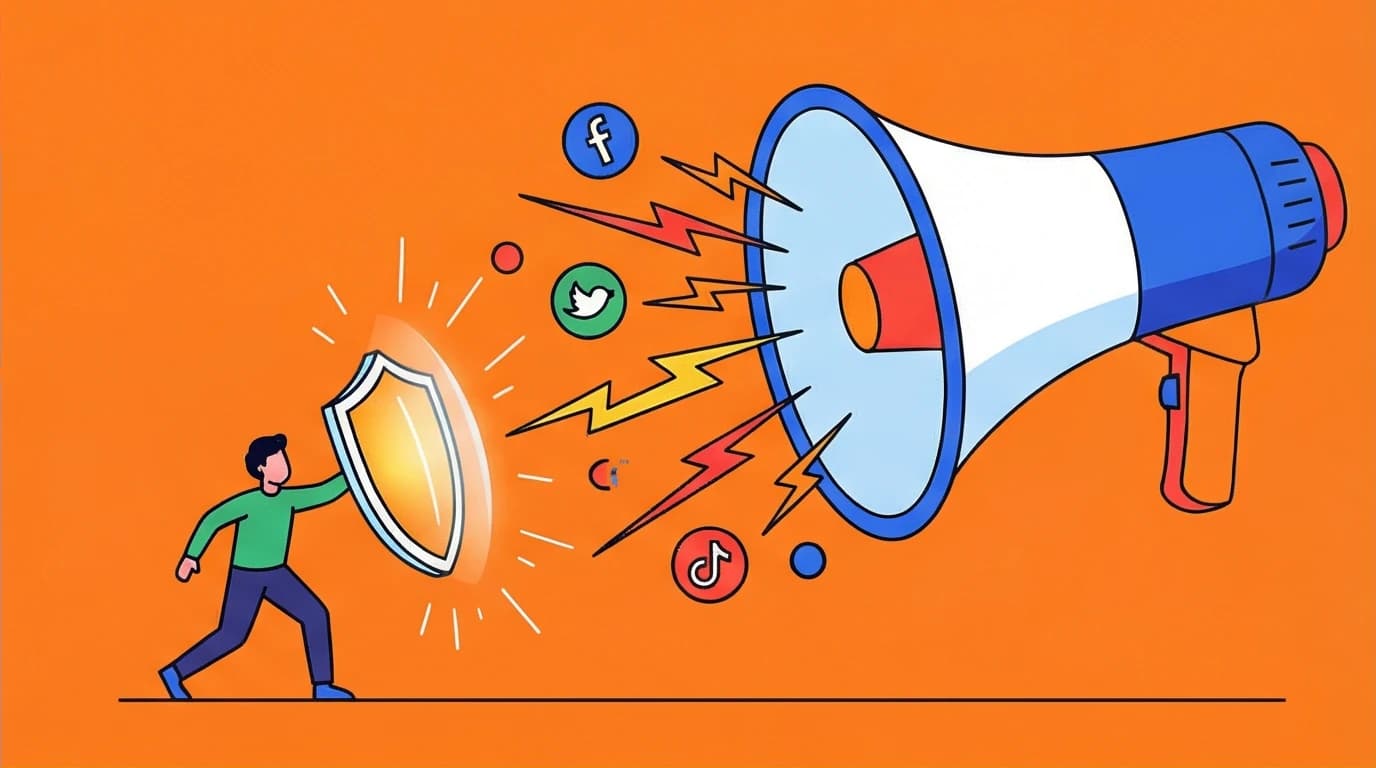
The extrovert ideal is the omnipresent cultural belief—deeply rooted in American society—that the ideal self is gregarious, alpha, and comfortable in the spotlight. Think about the modern workplace. We idolize the charismatic leader who commands the boardroom. We build open-plan offices modeled after Silicon Valley startups, assuming constant collaboration breeds the best ideas. In schools, teachers grade students on classroom participation, equating raising a hand with actual intelligence.
This cultural bias is a central theme in her work. If you're looking for a concise overview of all the major points from her groundbreaking book, a summary can be an excellent resource.
This cultural shift happened during the 20th century when society moved from a "Culture of Character" (valuing quiet integrity, discipline, and honor) to a "Culture of Personality" (valuing magnetism, charisma, and public speaking). The extrovert ideal tells you that being quiet is a second-rate trait.
It is not. Recognizing this bias is your first step toward validation. You are not antisocial; you are simply navigating a culture that systematically rewards the loudest voice in the room.
Since this article explicitly name-drops Susan Cain and her groundbreaking concept of the "extrovert ideal," diving directly into her full work is the best next step. If you want to deeply understand how American society shifted from valuing quiet character to loud charisma—and how to reclaim your confidence in a noisy world—Cain's definitive book is an absolute must-read. It is a profound validation for anyone who has ever been told to "speak up."
Quiet
Susan Cain
 40 Duration
 7 Key Points
 4.6 Rate
If you want to absorb the key lessons from Quiet and other powerful books but find yourself too drained after a long day to pick one up, a book summary app can be a great starting point.


LeapAhead

Get the core ideas from Susan Cain's "Quiet" and other essential reads in just 15 minutes, perfect for when you're too drained for a full book.
The Biology of Introvert Traits Susan Cain Explains
To truly validate your personality, you need to look at the science. The core difference between an introvert and an extrovert is not about how much you like people. It is entirely about how your nervous system responds to external stimulation.
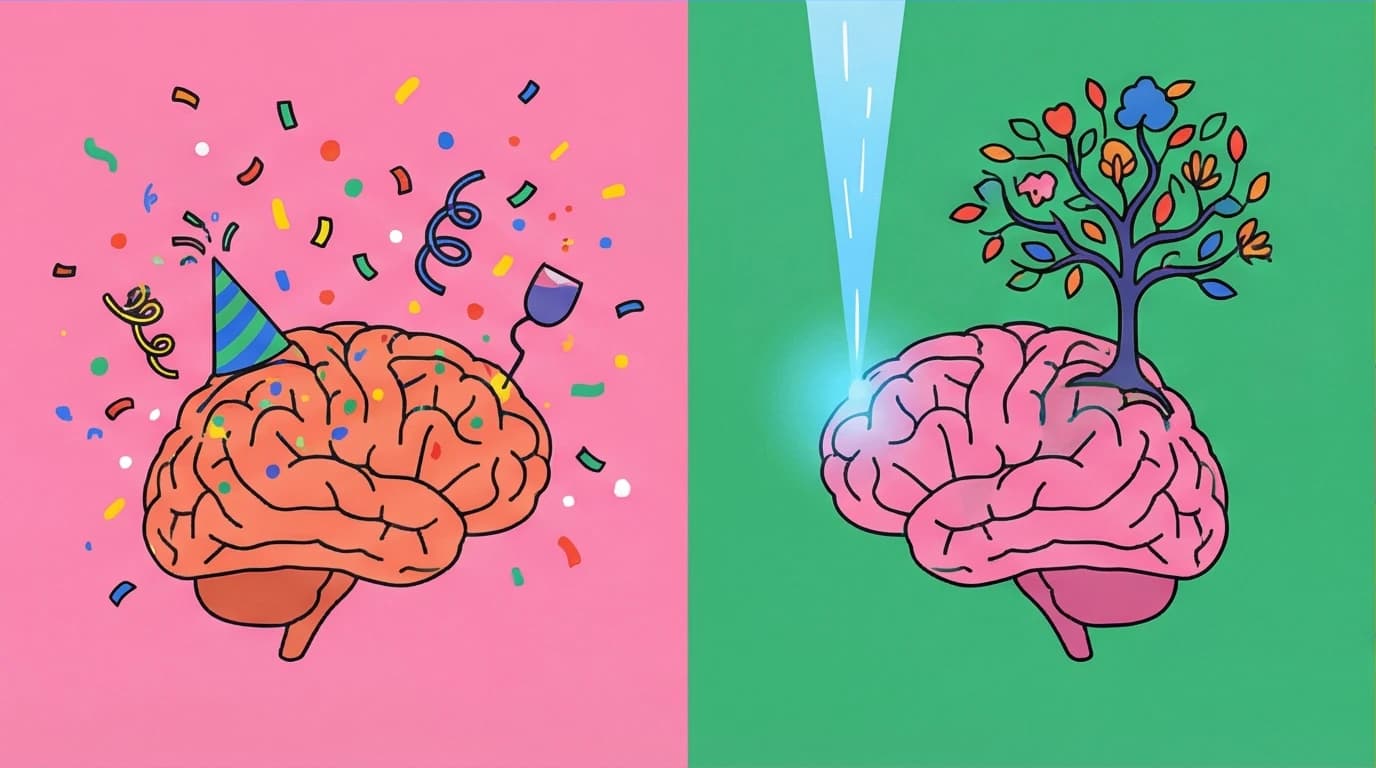
When we look at the introvert vs extrovert Quiet breakdown, it comes down to dopamine. Extroverts have a lower baseline of arousal. To feel alert, engaged, and happy, they need massive amounts of external stimulation—loud music, crowded rooms, fast-paced conversations, and high-risk environments. This floods their brain with dopamine, and they feel great.
Introverts naturally run on a higher baseline of arousal. Your brain is highly sensitive to dopamine. When you are thrown into a loud, crowded, highly stimulating environment, you quickly become overstimulated and overwhelmed. Instead of dopamine, your brain prefers acetylcholine, a neurotransmitter tied to deep thinking, reflection, and focused calm.
You do not hate socializing. You just process sensory input much more intensely than an extrovert does. A quiet dinner with a close friend hits your sweet spot for stimulation; a crowded bar with a DJ pushes your nervous system past its breaking point.
Learning that your brain is physically wired to process sensory input more intensely can be an incredible relief. For many introverts, this biological reality overlaps heavily with being a highly sensitive person (HSP). If you regularly feel overwhelmed by loud noises, crowded spaces, or even the subtle emotional shifts of the people around you, exploring the science of high sensitivity can give you even more tools to navigate your daily life without burning out.
The Highly Sensitive Person
Elaine N. Aron
24 Duration10 Key Points4.6 Rate7 Clear Signs You Are an Introvert
Wondering if you or your partner fit the true psychological definition? Look past the stereotypes of shyness or social anxiety. Here are the true signs you are an introvert based on how you manage your energy.
1. You Experience the "Social Hangover"
You can attend a party, laugh, tell stories, and be entirely charming. But the next day, you feel physically and mentally depleted. You need a day of absolute quiet to recover your baseline energy. Socializing costs you energy, while solitude restores it.
2. You Crave Deep Conversations Over Small Talk
Small talk feels like a frustrating waste of time. Chatting about the weather or weekend errands at the water cooler drains you quickly. You would rather jump straight into deep, meaningful discussions about ideas, psychology, values, or shared passions.
3. Solitude is a Prerequisite for Creativity
You cannot brainstorm effectively in a room full of people shouting out ideas. You do your best, most creative work when you can shut the door, focus deeply without interruptions, and let your mind connect complex dots.
4. You Think to Speak
Extroverts often speak to think, figuring out their ideas as they talk out loud. Introverts process internally. You prefer to gather your thoughts, analyze the information, and only speak when you have something substantial to contribute. In meetings, you are often the one who synthesizes everything at the end.
5. You Notice Things Others Miss
Because your nervous system is highly tuned to external stimuli, you pick up on subtle cues. You notice when a colleague's tone shifts, you observe the dynamics of a room before entering a conversation, and you catch small details in your environment.
6. You Prefer Written Communication
Given the choice between a quick phone call and a detailed email, you will choose the email every time. Writing gives you the space to organize your thoughts clearly and communicate your exact intent without the immediate pressure of a real-time response.
7. You Have a Small, Tight-Knit Inner Circle
You are selective about who gets your energy. Rather than maintaining a massive network of acquaintances, you invest heavily in a few deep, enduring friendships. You are fiercely loyal to this small group.
Seeing these seven signs in yourself might make you realize that your natural habits are actually profound strengths, particularly in a professional setting. While corporate America often elevates the loudest voices, the ability to think before you speak, synthesize complex ideas, and build loyal relationships are the exact traits of exceptional managers. In fact, many of these qualities are hallmarks of a quiet leadership style that can be incredibly effective in modern workplaces.
If you are ready to harness these quiet strengths to advance your career without compromising your authentic self, this resource is an excellent guide.

The Introverted Leader
Jennifer B. Kahnweiler
46 Duration9 Key Points4.4 RateThe Middle Ground: Understanding the Ambivert Meaning
As you read through these signs, you might think, "I relate to a lot of this, but sometimes I actually do want to go to the loud party, and I enjoy pitching to clients."
Personality is not a binary switch; it is a spectrum. Carl Jung, the psychologist who first popularized these terms, famously said, "There is no such thing as a pure introvert or extrovert. Such a person would be in the lunatic asylum."
If you find yourself landing right in the middle, adapting easily to high-stimulation environments but still requiring structured downtime, you might be an ambivert. The ambivert meaning refers to someone who strikes a balance between the two extremes. Ambiverts can flex into an extroverted mode when the situation requires it (like giving a presentation or attending a networking event) but will eventually hit a wall and need to retreat into their introverted mode to recharge.
How to Protect Your Energy and Leverage Your Traits
Validation is powerful, but actionable boundaries change your daily life. Once you accept your introverted nature, you need to structure your life to support it.

Schedule Recovery Time Like Meetings
Treat your downtime with the same respect you give your professional commitments. If you have a massive conference or a family gathering on Saturday, intentionally block out Sunday for zero social obligations. Do not apologize for it.
Treat your downtime with the same respect you give your professional commitments. If you have a massive conference or a family gathering on Saturday, intentionally block out Sunday for zero social obligations. Do not apologize for it.
Create Restorative Niches
Susan Cain talks about "restorative niches"—physical or temporal spaces you can retreat to when overstimulated. At an open-plan office, this might mean booking a conference room just for yourself for an hour, or taking a solitary walk around the block during your lunch break instead of eating in the loud cafeteria.
Susan Cain talks about "restorative niches"—physical or temporal spaces you can retreat to when overstimulated. At an open-plan office, this might mean booking a conference room just for yourself for an hour, or taking a solitary walk around the block during your lunch break instead of eating in the loud cafeteria.
Reframe Your Communication Style
Stop feeling guilty for not being the first to speak in a meeting. Own your processing style. You can say, "I am absorbing all this right now, and I will follow up with an email this afternoon with my thoughts." This sets a professional boundary while honoring your need to think before you speak.
Stop feeling guilty for not being the first to speak in a meeting. Own your processing style. You can say, "I am absorbing all this right now, and I will follow up with an email this afternoon with my thoughts." This sets a professional boundary while honoring your need to think before you speak.
Focus on 1-on-1 Networking
You do not have to "work the room" to be successful. Skip the massive mixer events if they drain you. Instead, invite one key person to coffee or a video call. Introverts excel at building deep, trusting relationships, which is often far more valuable for career growth than handing out fifty business cards.
You do not have to "work the room" to be successful. Skip the massive mixer events if they drain you. Instead, invite one key person to coffee or a video call. Introverts excel at building deep, trusting relationships, which is often far more valuable for career growth than handing out fifty business cards.
Protecting your energy ultimately comes down to one critical skill: boundary setting. It can be incredibly uncomfortable for introverts to say no to social obligations, decline extra meetings, or carve out mandatory recovery time. However, learning to communicate your limits clearly and kindly is the only way to thrive in an extrovert-dominated world. If you struggle with the guilt of turning down invitations or putting your need for solitude first, mastering the art of boundaries will completely transform your mental health.

Set Boundaries, Find Peace
Nedra Glover Tawwab
29 Duration10 Key Points4.5 RateContinuing your personal growth journey should respect your energy, not drain it. For introverts who want to keep learning but are often too exhausted for deep reading, there's a more sustainable way.
LeapAhead
Continue your self-improvement journey by listening to key insights from bestselling books—a perfect low-energy way for introverts to learn and recharge.
Your quiet approach is not a barrier to success. From Rosa Parks to Albert Einstein to Bill Gates, introverts have fundamentally shaped the world because of their ability to focus deeply, listen intently, and think before they act. Give yourself permission to be exactly who you are.
FAQ
Are introversion and shyness the same thing?
No. Shyness is the fear of negative judgment or social disapproval—it is rooted in anxiety. Introversion is simply a preference for environments that are not overstimulating. A shy person might want to join a conversation but is afraid to speak; an introvert might sit out of the conversation entirely because they simply do not feel the need to participate, without any fear involved.
No. Shyness is the fear of negative judgment or social disapproval—it is rooted in anxiety. Introversion is simply a preference for environments that are not overstimulating. A shy person might want to join a conversation but is afraid to speak; an introvert might sit out of the conversation entirely because they simply do not feel the need to participate, without any fear involved.
Can an introvert become an extrovert over time?
You cannot fundamentally change your neurobiology. However, introverts can learn to act like extroverts for specific periods when it serves a core personal or professional goal—what psychologists call a "Free Trait." You can learn public speaking, networking, and small talk, but you will always need quiet downtime to recover afterward.
You cannot fundamentally change your neurobiology. However, introverts can learn to act like extroverts for specific periods when it serves a core personal or professional goal—what psychologists call a "Free Trait." You can learn public speaking, networking, and small talk, but you will always need quiet downtime to recover afterward.
How can introverts survive in open-plan offices?
Surviving an open-plan office requires strict boundary management. Use noise-canceling headphones to block out auditory distractions. Block off time on your calendar for deep work so colleagues know not to interrupt you. Whenever possible, negotiate a hybrid work schedule that allows you a few days of focused work from home.
Surviving an open-plan office requires strict boundary management. Use noise-canceling headphones to block out auditory distractions. Block off time on your calendar for deep work so colleagues know not to interrupt you. Whenever possible, negotiate a hybrid work schedule that allows you a few days of focused work from home.
Do introverts make good leaders?
Absolutely. Research shows that introverted leaders often deliver better outcomes than extroverted leaders when managing proactive employees. Because introverts are prone to listening and lack the desire to dominate the spotlight, they are highly effective at letting talented team members run with their ideas and shine.
Absolutely. Research shows that introverted leaders often deliver better outcomes than extroverted leaders when managing proactive employees. Because introverts are prone to listening and lack the desire to dominate the spotlight, they are highly effective at letting talented team members run with their ideas and shine.