

You sit in an open-plan office, your calendar is flooded with group brainstorming sessions, and performance reviews frequently hint that you need to "speak up more." Society constantly signals that outgoing, highly social behavior is the only path to success. If you feel drained by a world that cannot stop talking, you do not need to fix your personality. You simply need to understand how to operate within a system built for extroverts.

This Quiet Susan Cain summary distills the core arguments of the book, giving you the historical context, the biological science, and the exact strategies you need to leverage your introverted temperament as a distinct advantage.
The Core Problem: The Extrovert Ideal
Before the 20th century, American society operated on the Culture of Character. People were judged by their inner virtue, moral integrity, and quiet discipline. Abraham Lincoln, known for his modest and understated nature, embodied this era.
As the Industrial Revolution pushed people from rural towns into bustling urban centers, individuals suddenly had to prove themselves to crowds of strangers. This triggered a monumental shift to the Culture of Personality. Society began to worship magnetism, charisma, and boldness. Dale Carnegie built an empire teaching people how to win friends and influence people through sheer outgoing charm.
Today, this shift has solidified into the "Extrovert Ideal"—the omnipresent belief that the ideal self is gregarious, alpha, and comfortable in the spotlight. Introversion—often confused with shyness or anti-social behavior—is now wrongfully treated as a second-class personality trait, falling somewhere between a disappointment and a pathology.
Any comprehensive Quiet book summary must center on this reality: the world did not always favor the loudest voice in the room, and the current bias is a cultural construct, not a universal truth.
Susan Cain points out that the shift to the Culture of Personality was heavily influenced by self-help pioneers who championed outward charisma. If you want to understand the exact blueprint that shaped modern corporate America’s expectations—or if you simply want to learn how to navigate a highly social business landscape without compromising your core values—diving into the foundational text of this era is incredibly eye-opening. Dale Carnegie’s legendary guide remains the ultimate playbook for mastering interpersonal skills in an extroverted world.
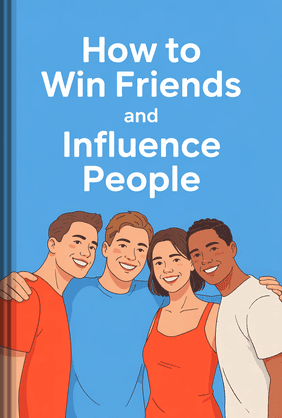
How to Win Friends and Influence People
Dale Carnegie
 21 Duration
 7 Key Points
 4.5 Rate
But if your schedule is already packed, diving into dense foundational books can feel like a daunting task. For a faster way to absorb these big ideas, an app can help.

Grasp the core ideas of influential books like Quiet and How to Win Friends and Influence People in just 15-minute audio or text summaries.

Download LeapAhead App now
Quiet Chapter Summary: Breaking Down the Arguments
To truly grasp Cain's message, we must dismantle the book's core themes. This Quiet chapter summary organizes the author's extensive research into four logical pillars, moving from cultural critique to practical application.
Part 1: The Extrovert Ideal in the Workplace and Schools
Cain targets two main environments where the Extrovert Ideal does the most damage: corporate America and modern education.
Take Harvard Business School. The curriculum heavily relies on group study and rapid-fire classroom participation. Students who speak first and loudest are often perceived as smarter, even when their ideas lack substance. This environment breeds the "New Groupthink," a workflow model that elevates teamwork above all else.
The myth of brainstorming is dismantled here. Decades of psychological research prove that people produce more ideas—and better ideas—when they work alone than when they brainstorm in a group. Open-plan offices, designed to foster spontaneous collaboration, actually reduce productivity, increase stress, and lead to poor concentration. Solitude is a crucial catalyst for innovation. Steve Wozniak invented the Apple I sitting alone in his cubicle at Hewlett-Packard, not in a loud workshop.
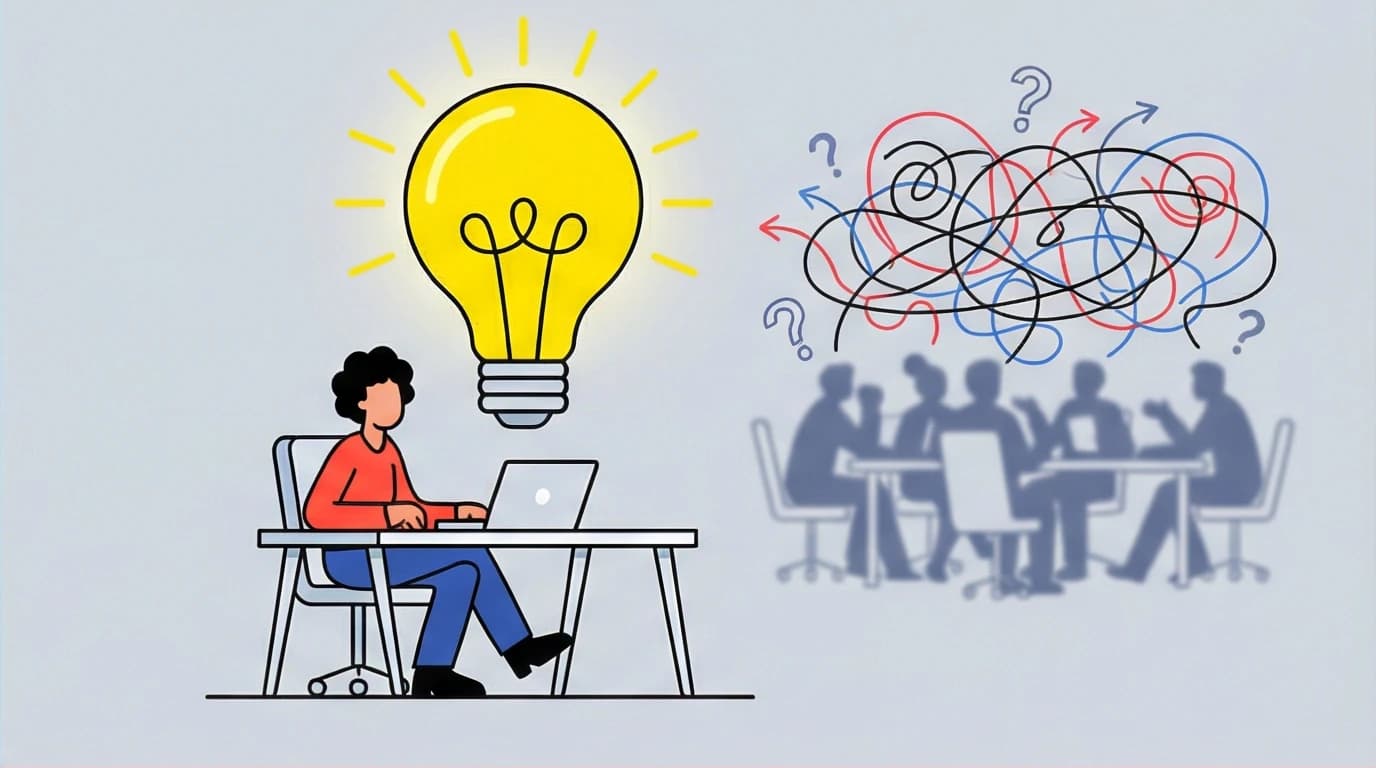
If the noise and constant interruptions of an open-plan office are draining your energy, you aren't alone. As Cain emphasizes, solitude is often the true driver of innovation. To combat the "New Groupthink" and reclaim your focus, it helps to develop rigid strategies that protect your cognitive bandwidth. For those who want to thrive in a noisy, distracted corporate environment, mastering the ability to concentrate without distraction is a superpower. Learning how to carve out blocks of intense, uninterrupted focus can entirely transform your career and daily productivity.
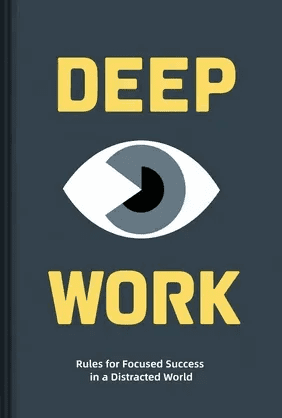
Deep Work
Cal Newport
47 Duration8 Key Points4.6 RatePart 2: The Biology of Introversion
Are introverts born or made? Cain turns to developmental psychologist Jerome Kagan, who conducted longitudinal studies on infants.
Kagan exposed babies to new stimuli—popping balloons, voices on tape, alcohol on cotton swabs.
- High-reactive babies: Thrashed their arms and cried. Their nervous systems were highly sensitive to new information.
- Low-reactive babies: Remained calm and quiet.
Counterintuitively, the high-reactive babies grew up to be introverts. Because their brains process stimuli deeply, they easily become overwhelmed in loud, chaotic environments. The low-reactive babies grew up to be extroverts, needing more external stimulation (loud music, big crowds, fast-paced environments) to feel engaged.
Introverts are not broken extroverts. They simply have a different baseline for dopamine and external stimulation. While the "rubber band theory" of personality suggests we can stretch ourselves to adapt to our environments, we can only stretch so far before our biology snaps us back to our baseline.

Understanding that your reaction to loud, chaotic environments is rooted in your biology can be a massive relief. You aren't "broken"; your nervous system is simply wired to process external stimuli much more deeply. If you resonated with Kagan’s research on high-reactive infants, you might actually fall into the category of a highly sensitive person. Exploring the science behind this trait can help you stop fighting your natural baseline and start structuring a lifestyle that honors your profound emotional and sensory processing capabilities.

The Highly Sensitive Person
Elaine N. Aron
24 Duration10 Key Points4.6 RatePart 3: Cultural Contexts
The Extrovert Ideal is not a global phenomenon; it is distinctly American and Western. Cain explores the Asian-American experience, noting that many Eastern cultures place a premium on quietness, humility, and careful deliberation.
In schools located in areas with high Asian immigrant populations, like Cupertino, California, the dynamic shifts. Hard work and quiet study are celebrated over boisterous classroom dominance. Understanding this cultural divide is essential for global business leaders who must manage diverse teams without forcing Western extrovert norms onto Eastern introverted talent.
Part 4: How to Love, How to Work
If the world is built for extroverts, how do introverts survive without burning out? Cain introduces Free Trait Theory, developed by Professor Brian Little.
Free Trait Theory argues that we are born with certain fixed traits (like introversion), but we can act out of character in the service of "core personal projects." An introverted author can deliver a passionate, extroverted speech because she deeply cares about her book. An introverted parent can be highly social to help their child make friends.
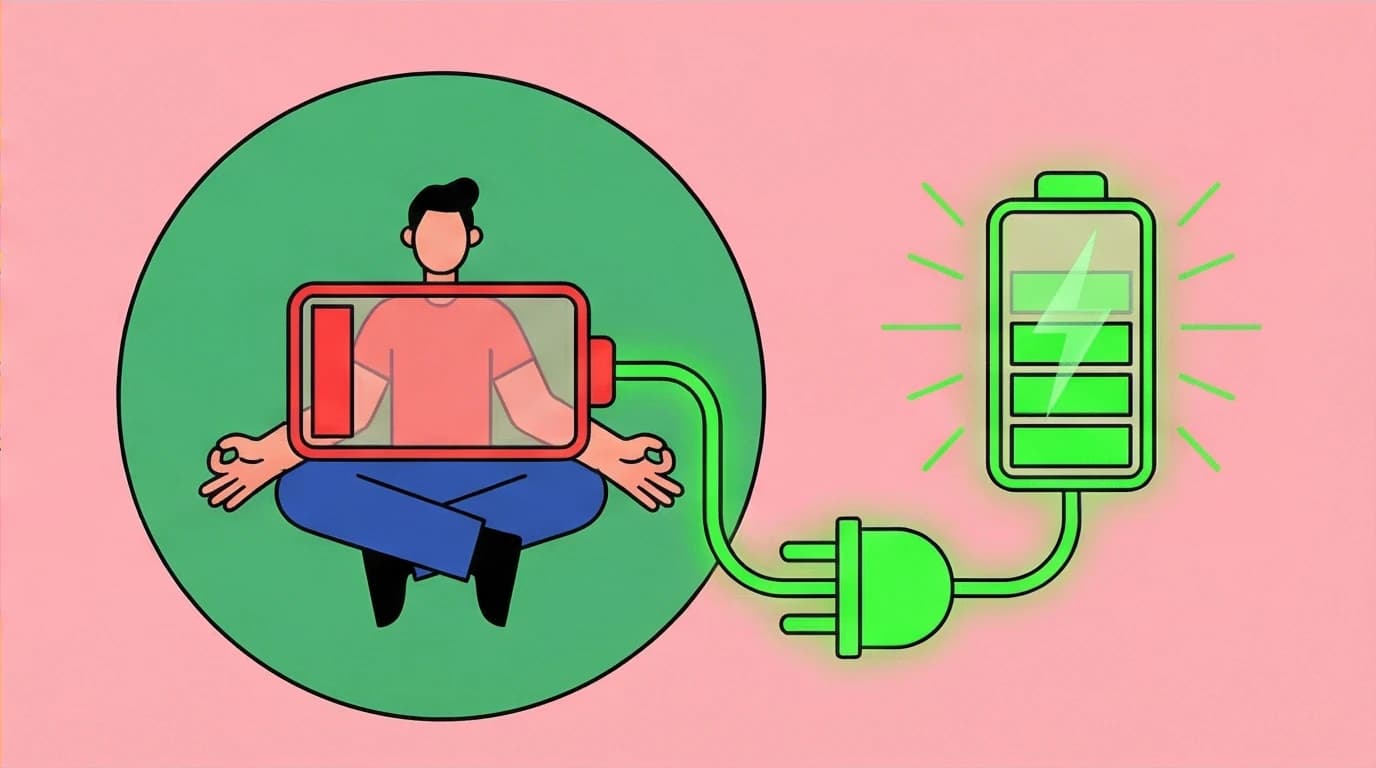
The catch is the Restorative Niche. When introverts act like extroverts, they deplete their energy reserves. They must build restorative niches into their day—a quiet walk around the block, eating lunch alone in the car, or simply closing the office door for 15 minutes. Without these niches, burnout is inevitable.
Top Quiet Book Takeaways for the Real World
If you want to apply Cain's research to your immediate life, here are the most critical Quiet book takeaways for professionals, managers, and students.
- Stop forcing group brainstorming. If you lead a team, send the problem out in an email beforehand. Let people generate ideas in solitude, then use the meeting strictly to evaluate those ideas.
- Audit your restorative niches. Look at your weekly calendar. If you have back-to-back meetings from 9 AM to 5 PM, you will crash. Block out intentional periods of silence.
- Recognize the difference between shy and introverted. Shyness is the fear of negative judgment. Introversion is simply a preference for environments that are not overstimulating. You can be a confident introvert.
- Leverage introverted leadership. Extroverted leaders do well with passive employees who need direction. Introverted leaders excel with proactive employees. They are more likely to listen to suggestions and let talented team members run with their ideas instead of trying to dominate the spotlight.
- Ditch the guilt. Stop feeling bad for leaving the corporate happy hour early or preferring a weekend reading on the couch over a crowded club. Your preference for low-stimulation environments is a biological reality, not a character flaw.
Cain's point about introverted leadership is particularly revolutionary for many professionals. Embracing this style can transform your career, but it requires a different set of strategies than those taught in traditional business schools.
One of the best ways to honor your energy levels is to find smarter, not harder, ways to learn. If you're often too drained after work to pick up a book, you can still absorb key insights through audio during your commute or a quiet walk.
Listen to key insights from bestselling books on leadership and psychology, turning your commute or downtime into a low-energy, restorative learning session.
Download LeapAhead App now
One of the most empowering takeaways from Cain’s research is the revelation that introverts make exceptional, attentive leaders who empower proactive teams. However, stepping into a management role in a society that still favors loud, dominant personalities can feel incredibly daunting. If you want to refine your quiet leadership style and learn actionable techniques for commanding a room, running effective meetings, and influencing executives without having to fake an extroverted persona, there are resources specifically tailored to your temperament.
The Introverted Leader
Jennifer B. Kahnweiler
46 Duration9 Key Points4.4 RateBeyond the Summary: Exploring the Full Text
Many busy professionals and students search for a Quiet by Susan Cain pdf to keep on their devices for quick reference. While a digital file can be convenient for searching specific terms, the full narrative weight of Cain’s work deserves a proper read. Whether you download an ebook from Apple Books, grab a physical hardcover at Barnes & Noble, or listen to the Audible version during your commute, reading the full text provides rich, detailed case studies that a summary simply cannot fit.
If you're looking for a quick dose of inspiration from Cain's work, her most powerful statements can be a great place to start. They perfectly capture the book's empowering message.
If you struggle with imposter syndrome in a corporate environment that demands you to be loud, the full book offers profound validation. It proves that the world's most significant leaps in art, science, and technology were driven by quiet people working in deep focus.
While a summary provides a great roadmap, nothing compares to immersing yourself in the complete narrative of Susan Cain’s groundbreaking work. The full text is packed with fascinating psychological case studies, historical deep dives, and deeply relatable anecdotes that validate the introverted experience. If you are ready to stop apologizing for your quiet nature and want to fully embrace the hidden power of your temperament, adding this modern classic to your bookshelf is the perfect next step.
Quiet
Susan Cain
40 Duration7 Key Points4.6 RateFAQ
What is the main point of Quiet by Susan Cain?
The main point is that modern Western society drastically undervalues introverts, prioritizing an "Extrovert Ideal." Cain argues that introverts possess unique, powerful traits—such as deep thinking, empathy, and focused problem-solving—that are essential for innovation and strong leadership.
The main point is that modern Western society drastically undervalues introverts, prioritizing an "Extrovert Ideal." Cain argues that introverts possess unique, powerful traits—such as deep thinking, empathy, and focused problem-solving—that are essential for innovation and strong leadership.
Does Susan Cain talk about ambiverts?
Yes. Cain acknowledges that no one is entirely introverted or completely extroverted. Carl Jung, who popularized these terms, noted that a pure introvert or extrovert would be in a lunatic asylum. Most people fall somewhere on a spectrum, and "ambiverts" sit right in the middle, possessing traits of both depending on the context.
Yes. Cain acknowledges that no one is entirely introverted or completely extroverted. Carl Jung, who popularized these terms, noted that a pure introvert or extrovert would be in a lunatic asylum. Most people fall somewhere on a spectrum, and "ambiverts" sit right in the middle, possessing traits of both depending on the context.
How can I apply these lessons if my boss is a strict extrovert?
Communication is key. You do not need to change your boss, but you can change how you manage your interactions. Request meeting agendas in advance so you can process the information and prepare your thoughts. Frame your need for quiet time in terms of productivity: "I am going to block out two hours of focus time this afternoon so I can get this report done flawlessly."
Communication is key. You do not need to change your boss, but you can change how you manage your interactions. Request meeting agendas in advance so you can process the information and prepare your thoughts. Frame your need for quiet time in terms of productivity: "I am going to block out two hours of focus time this afternoon so I can get this report done flawlessly."
Is this book relevant if I am actually an extrovert?
Absolutely. Extroverts manage, marry, and parent introverts. Understanding the biological and psychological differences helps extroverts become better leaders and partners. It teaches extroverted managers how to extract the best work from their quietest team members by giving them the space and autonomy they need.
Absolutely. Extroverts manage, marry, and parent introverts. Understanding the biological and psychological differences helps extroverts become better leaders and partners. It teaches extroverted managers how to extract the best work from their quietest team members by giving them the space and autonomy they need.