

You asked your therapist for actionable advice on dealing with a manipulative family member or an overbearing boss. They recommended a massively popular book called Boundaries. You order it on Amazon, flip past the introduction, and suddenly hit a wall of Bible verses. Now you are staring at the page, wondering if you accidentally purchased a theological textbook instead of a practical psychology guide.

This happens constantly. The shock stems from a core misunderstanding of how the book was written and who it was originally for. To decide if this book is right for your specific situation—whether you are a secular reader trying to filter out the theology, or a Christian reader wanting to verify its biblical accuracy—you need to understand how the authors fuse faith and clinical practice.
Is the Book Boundaries Religious?
If you are asking, is the book Boundaries religious, the answer is an undeniable yes. Published by Zondervan, a major Christian publishing house now owned by HarperCollins, the book was written specifically to address a crisis inside the Christian community.
Dr. Henry Cloud and Dr. John Townsend both hold PhDs in clinical psychology from Rosemead School of Psychology at Biola University. Rosemead is famous for its "integrationist" approach, which rigorously trains therapists in standard, evidence-based clinical psychology while actively integrating those concepts with conservative Christian theology.
When they wrote the book in 1992, they noticed a destructive pattern among churchgoers: the "Christian Nice Guy" syndrome. Many believers were taught that setting personal limits was selfish, unloving, and sinful. They were burning out, staying in abusive marriages, and tolerating toxic behavior under the guise of turning the other cheek. Cloud and Townsend wrote Boundaries to systematically dismantle that guilt using the exact religious text that was being weaponized against these people.

This means every psychological framework in the book is intentionally tethered to a scripture verse. God is presented as the ultimate boundary-setter. Sin is framed as a boundary violation.
If you are intrigued by how Cloud and Townsend use scripture to empower readers to say "no," picking up the original text is the best place to start. Whether you are navigating a toxic workplace or an overbearing relative in the United States, this foundational book provides the exact framework needed to break free from the "Christian Nice Guy" syndrome and establish healthy, life-giving limits.
Boundaries
Dr. Henry Cloud and Dr. John Townsend
 47 Duration
 10 Key Points
 4.7 Rate
A Christian Perspective on Boundaries Book
For the religious reader, a Christian perspective on Boundaries book is usually one of immense relief. Many Christians struggle to reconcile self-care with the biblical command to serve others. Cloud and Townsend bridge this gap masterfully.
If you are wondering what does the bible say about boundaries, the authors point directly to the nature of God and the life of Jesus. They build their case on several theological pillars:
- God's Personal Boundaries: From the very first pages of Genesis, God defines his territory. He separates light from darkness and establishes rules for the Garden of Eden. He tells people what he will and will not tolerate.
- The Ministry of Jesus: Jesus constantly set limits. He frequently withdrew from massive crowds to rest and pray, essentially saying "no" to people who desperately needed healing so he could recharge.
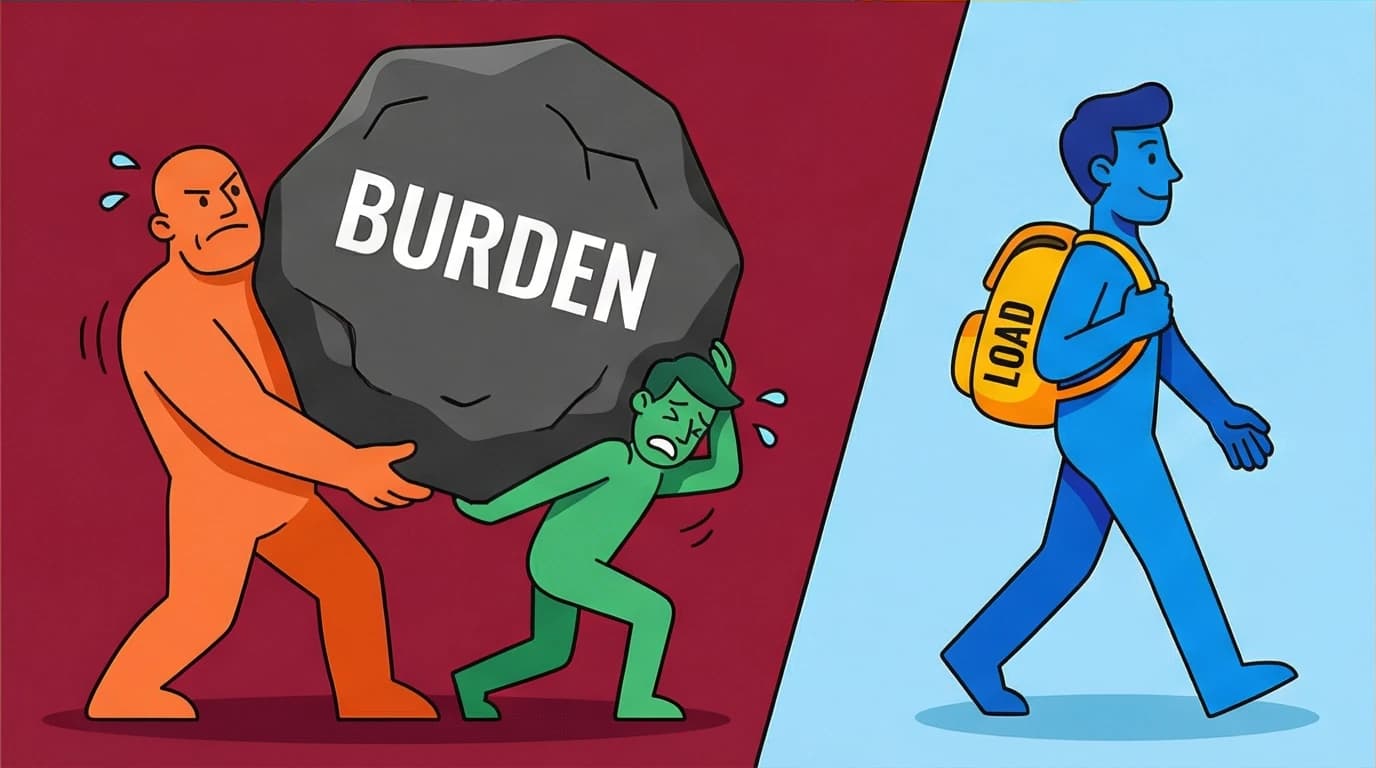
- Galatians 6:2 vs. Galatians 6:5: The authors resolve a classic biblical paradox. Verse 2 says "Carry each other’s burdens," while verse 5 says "each one should carry their own load." Cloud and Townsend use the original Greek text to explain that a "burden" is a crushing weight (like a crisis) that requires help, while a "load" is a daily backpack (your personal responsibilities) that you must carry yourself.
The biblical boundaries Henry Cloud and Townsend outline do not contradict standard Christian orthodoxy. They reinforce it. They argue that you cannot truly love someone if you do not have the freedom to say no. A forced "yes" is built on compliance and resentment, not actual love.
Why Secular Therapists Recommend It
If the book is practically a Bible study, why do completely secular therapists, who have no religious agenda, continually recommend it to non-religious clients?
Because underneath the scriptural language lies a highly sophisticated, incredibly robust framework of cognitive-behavioral psychology and family systems theory. The clinical mechanics of the book are flawless. Cloud and Townsend are not amateur counselors; they are licensed doctors of psychology who built a framework that works for anyone, regardless of their belief system.
Secular professionals look past the theology and see universal laws of human behavior. If you can read past the religious framing, the actual behavioral advice is universally applicable.
Translating the "Laws" of Boundaries
The book outlines "Ten Laws of Boundaries." For a secular reader, these laws easily translate into standard psychological concepts. For a complete look at all of them, our detailed guide provides further clarity.
Here is how you can read some of them without the religious lens:
The Law of Sowing and Reaping
- The Religious Framing: God designed the universe so that actions have consequences. "A man reaps what he sows."
- The Clinical Reality: This is the principle of natural consequences. If you constantly rescue an irresponsible sibling from financial ruin, you interrupt the natural consequences of their actions. They never feel the pain of their choices, so their behavior never changes.

The Law of Responsibility
- The Religious Framing: We are called to love one another, but we are only responsible for our own spiritual walk.
- The Clinical Reality: We are responsible to others, but not for others. You can offer empathy to a friend going through a hard time, but you cannot fix their emotional state. Taking ownership of someone else's feelings is textbook codependency.
The Law of Power
- The Religious Framing: You do not have the power to change others; you only have the power to repent and submit to God.
- The Clinical Reality: You possess an internal locus of control. You cannot control your spouse's anger, but you can entirely control how you respond to it, whether you stay in the room, or what behaviors you accept.
Understanding your locus of control is crucial, especially if you have a habit of taking on other people's emotional baggage. If the clinical reality of codependency resonated with you in this section, you might want to dive deeper into how to stop trying to control others and start caring for yourself. Melody Beattie's groundbreaking work is a must-read for anyone ready to break the cycle of over-functioning in relationships.
Codependent No More
Beattie Melody
19 Duration8 Key Points4.6 RateDeciding If You Should Read It
Your decision to read Boundaries depends entirely on your tolerance for religious language and your current emotional state. To help weigh the pros and cons from a different angle, getting a broader perspective can be useful.
For the Non-Religious Reader
If you have experienced religious trauma, or if reading Bible verses instantly makes you defensive, put the book down. The constant references to God, sin, and scripture will distract you from the clinical advice. You will spend more energy fighting the premise than absorbing the tools. It is not worth your time when modern alternatives exist.
However, if you view religious texts neutrally—perhaps seeing them as historical metaphors or ancient philosophy—you will extract immense value from this book. Treat it like reading Marcus Aurelius or a book on Stoicism. You do not have to believe in the Roman gods to benefit from Stoic philosophy. You just have to apply the behavioral framework to your daily life.
For the Christian Reader
This book is arguably mandatory reading. It will give you the exact theological vocabulary you need to stop feeling guilty for protecting your mental health. It proves that allowing people to abuse, drain, or manipulate you is not a sign of spiritual maturity.


Unsure which book on boundaries is right for you? Get the key ideas from all of them in 15-minute summaries with LeapAhead.
 LeapAhead
Taking back your autonomy often requires unlearning years of deeply ingrained people-pleasing behaviors. If the idea of setting a limit still makes you feel overwhelmingly guilty or "mean," you are not alone. Dr. Aziz Gazipura offers a highly practical, no-nonsense approach to shedding the anxiety of what others think so you can communicate your true needs with confidence and grace.
Not Nice
Dr. Aziz Gazipura
17 Duration7 Key Points4.4 RateSecular Alternatives to Boundaries
If you decide the religious undertones are too heavy, you still need to learn how to establish limits. The publishing world has caught up since 1992, and there are now phenomenal, entirely secular books available at Barnes & Noble or any local bookstore.
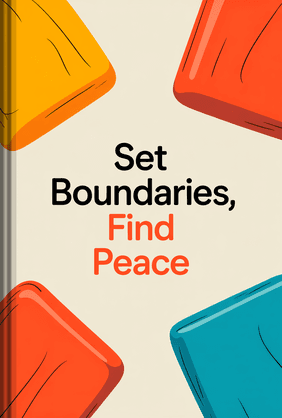
The most widely respected modern alternative is Set Boundaries, Find Peace by Nedra Glover Tawwab. Tawwab is a licensed clinical social worker who covers the exact same relational dynamics—dealing with toxic family members, saying no at work, protecting your energy—without a single mention of theology. Her language is highly accessible, direct, and completely secular.
For those who prefer a purely clinical, straight-to-the-point approach to relationship dynamics, Tawwab's work is an absolute game-changer. It strips away the religious context entirely, leaving you with actionable scripts and exercises to handle toxic family members, demanding bosses, and draining friendships without losing your peace of mind.
Set Boundaries, Find Peace
Nedra Glover Tawwab
29 Duration10 Key Points4.5 RateAnother excellent option is The Disease to Please by Dr. Harriet Braiker, which focuses heavily on the cognitive behavioral steps to stop people-pleasing.
For those whose busy schedules make committing to a full book difficult, LeapAhead offers a modern, app-based solution. It's a microlearning app that provides 15-minute audio and text summaries of over 30,000 bestselling non-fiction books. This approach allows you to absorb the core principles of Boundaries and its secular alternatives during a commute or workout. While these summaries don't replace the depth of a full read, they serve as a powerful tool to explore key concepts, compare different authors' frameworks, and build a daily learning habit without feeling overwhelmed.
Boundaries by Cloud and Townsend changed the landscape of popular psychology. It gave millions of people permission to take their lives back. The packaging is undeniably Christian, but the psychological tools inside the box work for anyone willing to use them.
Master the art of setting healthy limits on the go. Listen to summaries of books like *Boundaries* and *Set Boundaries, Find Peace* with LeapAhead.
LeapAheadFAQ
Do Cloud and Townsend have a secular version of this book?
Not exactly. They have never re-written the core Boundaries book to strip out the religion. However, their subsequent business-focused books, like Boundaries for Leaders, heavily tone down the theological language and focus almost entirely on organizational psychology and leadership dynamics.
Not exactly. They have never re-written the core Boundaries book to strip out the religion. However, their subsequent business-focused books, like Boundaries for Leaders, heavily tone down the theological language and focus almost entirely on organizational psychology and leadership dynamics.
Will this book make me feel guilty for saying no?
It does the exact opposite. The entire premise of the book is designed to dismantle false guilt. The authors use scripture to prove that setting limits is a healthy, necessary, and morally correct action, effectively removing the guilt trip often placed on people who try to establish autonomy.
It does the exact opposite. The entire premise of the book is designed to dismantle false guilt. The authors use scripture to prove that setting limits is a healthy, necessary, and morally correct action, effectively removing the guilt trip often placed on people who try to establish autonomy.
Can I skip the Bible verses and still understand the book?
Yes. The structural formatting of the book makes it easy to spot the core psychological advice. The stories, case studies, and clinical explanations hold up completely on their own even if you skim past the biblical exegesis.
Yes. The structural formatting of the book makes it easy to spot the core psychological advice. The stories, case studies, and clinical explanations hold up completely on their own even if you skim past the biblical exegesis.
Why did my therapist recommend this if I am not religious?
Your therapist likely recommended it because, for nearly two decades, it was the only mainstream, comprehensive manual on the mechanics of boundary-setting. Many older or highly experienced therapists learned from this specific framework and trust its clinical outcomes, often forgetting how jarring the religious language can be to a new secular reader.
Your therapist likely recommended it because, for nearly two decades, it was the only mainstream, comprehensive manual on the mechanics of boundary-setting. Many older or highly experienced therapists learned from this specific framework and trust its clinical outcomes, often forgetting how jarring the religious language can be to a new secular reader.