

You have seen the ads. Every major YouTube creator, productivity guru, and design influencer seems to be sponsored by Skillshare. They promise a massive library of high-quality courses that will transform your career or launch your next side hustle.
But when you are a busy professional working 40 to 50 hours a week, the financial price of a subscription is only half the equation. The real cost is your time. You need to know if spending your limited weekend hours on this platform will actually yield a return on investment, or if it is just a dressed-up version of free YouTube tutorials.
Let's cut through the marketing noise. We are going to break down the true value of the platform, analyze the real-world utility of its courses, and help you determine if handing over your credit card makes strategic sense for your personal and professional growth.

The True Skillshare Cost: Unpacking the Subscription
Before analyzing the content, we have to look at the numbers. Understanding the exact skillshare cost is your first step in determining ROI.
Currently, Skillshare operates entirely on a subscription model, much like Netflix or Amazon Prime. They moved away from selling individual courses years ago.
- Annual Premium: Billed at roughly $165 per year (prices can fluctuate slightly based on promotions or region). This breaks down to about $13.75 per month.
- Monthly Premium: If you refuse to commit to a year, a month-to-month option exists, usually hovering around $32 per month.
From a pure cost-analysis perspective, the month-to-month plan is a financial trap. If you stay on it for just five months, you have basically paid for the whole year. The annual plan is the only logical choice if you plan to use the platform seriously.
But is $165 a good deal? Compare it to the alternatives. A single specialized course on Udemy might run you $15 to $20 on sale. A university-backed certification on Coursera costs $39 to $49 a month. A premium design bootcamp can cost thousands. Skillshare gives you unrestricted access to thousands of classes for the price of about ten Udemy courses. If you take and actually complete more than three high-quality classes a year, the financial ROI is mathematically positive.
The real question is whether the content inside is good enough to justify the time you will spend watching it.
For a more detailed breakdown of how Skillshare stacks up against its main competitors, it's worth exploring a side-by-side comparison.
If you are weighing the cost of a Skillshare subscription specifically to launch a new passion project or secondary income stream, you might want to map out your business strategy first. Before you dive into hundreds of hours of video tutorials, reading up on how to efficiently test and launch ideas can save you both time and money. A highly practical guide for this exact scenario is Side Hustle by Chris Guillebeau. It provides a step-by-step framework to take your creative skills from idea to income in just a few weeks, perfectly complementing any new tools you learn online.

Side Hustle
Chris Guillebeau
 18 Duration
 8 Key Points
 4.5 Rate
A Brutally Honest Skillshare Review: What You Actually Get
To provide an accurate skillshare review, we have to categorize what the platform does well and what it fails at completely. Skillshare is not an academic institution. It is a peer-to-peer learning community heavily skewed toward the creative arts.
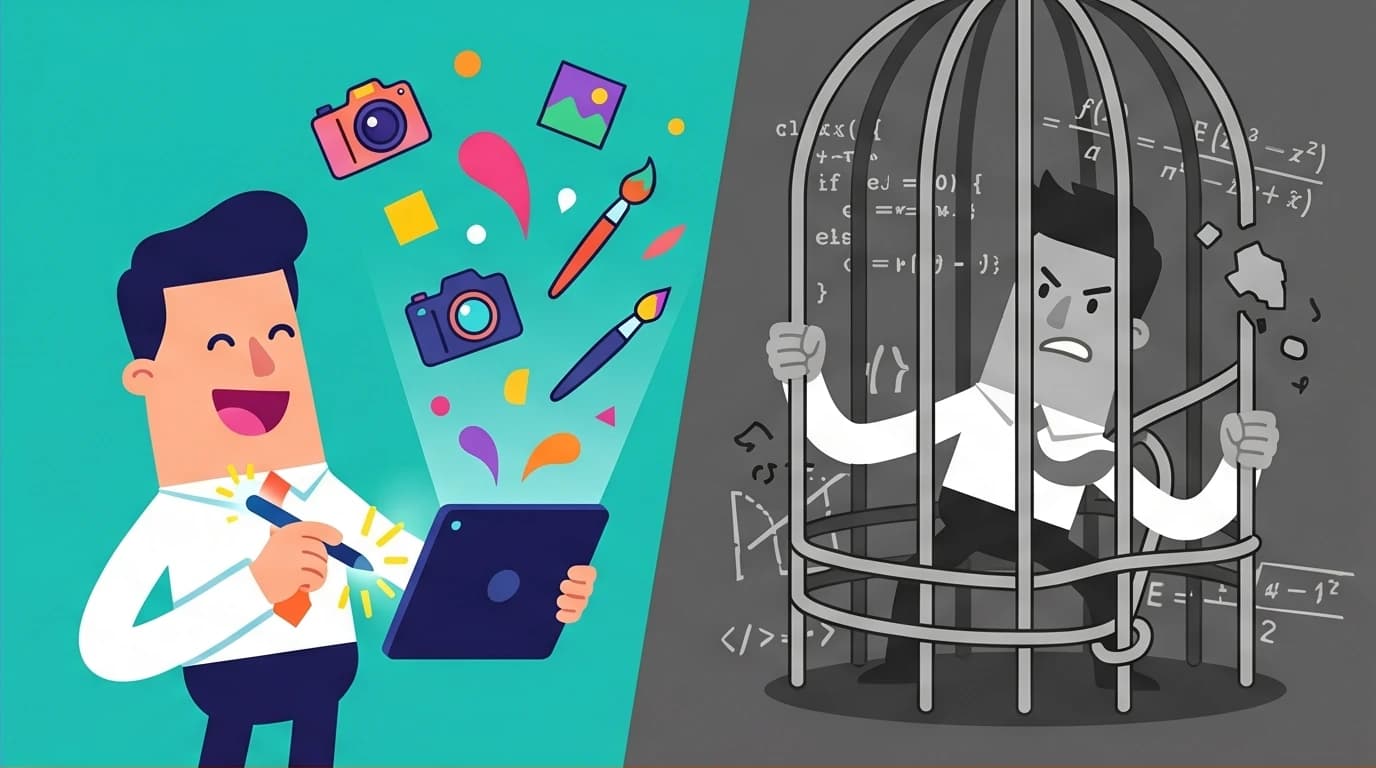
Where Skillshare Dominates: Creative and Tactical Skills
If you want to learn Adobe Illustrator, master Procreate on your iPad, edit videos in Premiere Pro, or understand the basics of freelance photography, Skillshare is arguably the best platform on the internet.
The courses are taught by working professionals—illustrators, graphic designers, animators, and writers. Because the platform mandates a "project-based" approach, you are not just watching theory. You are watching a professional design a logo, and your assignment is to design one alongside them.
Classes in the "Creative" and "Lifestyle" categories often feature incredibly high production values. You get access to resource files, brushes, templates, and a community gallery where peers review your work.
Where Skillshare Fails: Hard Tech and Academics
Do not buy Skillshare to learn Python. Do not buy it to master advanced machine learning, structural engineering, or corporate accounting.
While there are business and tech courses on the platform, they are almost universally surface-level. They are great for a 45-minute overview of what SEO is, but terrible for teaching you to build a complex software architecture. The platform lacks the rigorous testing, structured learning paths, and formal grading required for hard STEM subjects.
If you do need to master complex, hard-tech subjects that Skillshare does not cover—like coding, data science, or advanced mathematics—you will need to develop your own rigorous curriculum. Since you will not have a traditional classroom structure, mastering the art of self-directed study is essential. Ultralearning by Scott H. Young is the ultimate blueprint for this. Young breaks down exactly how to rapidly acquire difficult skills and tackle intense academic subjects on your own, making it an invaluable resource for anyone trying to build a high-level tech career outside of the university system.
Ultralearning
Scott H. Young
32 Duration8 Key Points4.5 RateThe "Guru" Problem
Because anyone can upload a course to Skillshare (subject to basic quality guidelines), the platform is saturated with low-effort productivity and "hustle" classes. You will find thousands of videos of people talking into a camera about how to wake up at 5 AM or how to take notes in Notion. While some of these are produced by top-tier creators, many are repetitive and offer zero practical skills. You must actively filter out the noise to find the high-value, skill-based classes.
Breaking Down the Skillshare Pros and Cons
To make a fast, calculated decision, you need to weigh the distinct advantages against the glaring limitations. Here is the definitive list of skillshare pros and cons.

The Pros
- Unlimited Access: Once you pay the anannual fee, there are no paywalls. You can start a course, realize it is not for you after five minutes, and drop it without feeling like you wasted money.
- High-Quality Creative Niche: Unrivaled content for graphic design, animation, illustration, and video production.
- Project-Based Learning: Every class ends with a tangible project. This moves you out of "passive watching" and into "active doing."
- Efficient Microlearning for Big Ideas: For professionals who need to absorb broad concepts from business or self-development books but lack reading time, an app like LeapAhead is an excellent complement. It provides 15-minute text and audio summaries of bestselling nonfiction. While Skillshare teaches you a specific "how-to" skill, LeapAhead gives you the core strategic "why" from top authors, perfect for a commute or workout.
- Exceptional Mobile App: You can download classes for offline viewing. Listening to a marketing strategy class during your commute or on a flight is a massive productivity win.
- Top-Tier Instructors: You learn from actual industry leaders. Aaron Draplin teaching logo design or Marques Brownlee teaching YouTube production are masterclasses you cannot easily find elsewhere.
The Cons
- No Certificates of Value: Skillshare does not offer accredited certificates. You cannot put a Skillshare class on your resume and expect an employer to care. It is about building a portfolio, not a piece of paper.
- Quality Disparity: Because it is an open platform, a breathtakingly cinematic 3-hour masterclass might sit right next to a 15-minute video recorded on a cheap webcam.
- Outdated Software Courses: Software updates fast. A class on Adobe After Effects recorded in 2018 is likely missing crucial workflow updates, and Skillshare is sometimes slow to purge old content.
- No Lifetime Access: If you stop paying your subscription, you lose access to everything. You do not "own" any of the courses.


LeapAhead

Struggle to find time for long courses? Try absorbing key ideas from bestselling books in just 15 minutes a day with LeapAhead.
Corporate Training: Is Skillshare Good for Business?
Many managers and founders look at the platform and wonder: is skillshare good for business? Can it be used as a corporate training tool to upskill an entire team?
The answer is highly conditional. Skillshare offers a "Skillshare for Teams" plan, which provides admin dashboards, team billing, and analytics to track employee engagement.
If you run a creative agency, a marketing firm, or an in-house content production team, Skillshare for Teams is a phenomenal investment. Having your junior designers watch advanced typography courses, or having your social media managers learn the nuances of short-form video editing, will yield immediate business returns. The cost of a team license is significantly cheaper than sending one employee to a single weekend seminar.
However, if you run a traditional corporate office, a logistics company, or an IT firm, the ROI vanishes. Your software engineers need Pluralsight or O'Reilly. Your project managers need PMP certification prep. Your HR team needs compliance training. Skillshare offers none of this.
For business owners, evaluate your staff's required competencies. If their output is visual, creative, or marketing-driven, buy the team passes. If their output is technical, regulatory, or code-based, spend your training budget elsewhere.
Once you determine Skillshare is a good fit, the next step is identifying which classes will deliver the most value for your employees' time and your company's goals.
Time ROI: How to Extract Maximum Value
As a busy professional, you cannot afford to waste hours browsing. If you decide to subscribe, you must treat your Skillshare account with ruthless efficiency to guarantee a positive return on investment.

1. Treat it like a library, not a television.
Do not log in and passively watch whatever is trending. Go in with a specific tactical goal. Example: "I need to learn how to color grade my company's promotional videos in Premiere Pro." Search for that exact topic, find the highest-rated course, and execute the project.
Do not log in and passively watch whatever is trending. Go in with a specific tactical goal. Example: "I need to learn how to color grade my company's promotional videos in Premiere Pro." Search for that exact topic, find the highest-rated course, and execute the project.
2. Audit courses in the first 10 minutes.
Because you have unlimited access, you owe no loyalty to a bad instructor. If the teacher speaks too slowly, lacks energy, or the audio quality is poor, close the video immediately. Move to the next one. Your time is worth more than forcing your way through bad content.
Because you have unlimited access, you owe no loyalty to a bad instructor. If the teacher speaks too slowly, lacks energy, or the audio quality is poor, close the video immediately. Move to the next one. Your time is worth more than forcing your way through bad content.
3. Always watch at 1.25x or 1.5x speed.
Most instructors speak at a deliberate, measured pace to accommodate beginners. If you are a professional trying to acquire information rapidly, crank up the playback speed. You can always pause or rewind if they hit a complex technical step.
Most instructors speak at a deliberate, measured pace to accommodate beginners. If you are a professional trying to acquire information rapidly, crank up the playback speed. You can always pause or rewind if they hit a complex technical step.
LeapAhead
Maximize your learning efficiency. LeapAhead turns your commute or workout into productive time with 15-minute audio and text book summaries.
4. Build a portfolio, ignore the credentials.
Since Skillshare gives you no accredited certificates, the only proof you took a class is the project you create. Do the assignments. If you take a UX design course, finish the wireframe assignment and immediately put it in your professional portfolio. The ROI of Skillshare is strictly tied to the tangible assets you produce while watching.
Since Skillshare gives you no accredited certificates, the only proof you took a class is the project you create. Do the assignments. If you take a UX design course, finish the wireframe assignment and immediately put it in your professional portfolio. The ROI of Skillshare is strictly tied to the tangible assets you produce while watching.
These platform-specific tactics are a great start, but true efficiency comes from mastering the core principles of rapid skill acquisition that apply everywhere, not just on one site.
Creating those tangible assets is only the first step; getting people to actually see them is what moves the needle in your career. Once you have built a portfolio from your Skillshare projects, you need to learn how to confidently share your work with employers, clients, or a broader audience. Austin Kleon’s Show Your Work! is a brilliant, encouraging read that teaches creative professionals how to become findable. It is the perfect companion to your new design or video skills, showing you exactly how to leverage your ongoing learning process into real-world networking opportunities.
Show Your Work! 10 Ways to Show Your Creativity and Get Discovered
Austin Kleon
42 Duration9 Key Points4.7 RateThe Final Verdict
So, is skillshare worth it?
For the modern knowledge worker, the barrier to entry for learning new skills has never been lower, but the barrier to finding curated, high-signal content is incredibly high. YouTube is free, but you pay for it with endless advertisements, clickbait thumbnails, and fragmented tutorials that leave out crucial steps.
Skillshare solves the fragmentation problem. It organizes creative and entrepreneurial knowledge into linear, digestible, and actionable formats.
You should subscribe to Skillshare if:
- You want to acquire or sharpen creative skills (design, photography, illustration, video).
- You are building a side hustle or freelance business and need practical, non-academic advice.
- You value structured learning and project-based assignments over random YouTube searches.
- You have at least 2 to 3 hours a week to dedicate to active practice.
You should skip Skillshare if:
- You need formal credentials, college credit, or resume-boosting certificates.
- You want to learn deep programming, data science, or advanced corporate finance.
- You struggle with self-motivation and will simply pay the annual fee without ever logging in.
Ultimately, Skillshare is a tool. It is a highly specialized hammer. If you need to drive a nail into a creative project, it is the best tool on the market. If you are trying to screw in a technical bolt, it is completely useless. Evaluate your personal learning goals, claim a free trial, set a calendar reminder to cancel before you are billed, and test the waters yourself.
Finally, even with the best intentions, the biggest hurdle to online learning is simply finding the hours in your week. If you feel like your schedule is too packed to squeeze in two to three hours of active practice, it might be time to reevaluate how you structure your days. Make Time by Jake Knapp and John Zeratsky offers incredibly actionable strategies to help you reclaim your daily focus from endless distractions. By applying their framework, you can easily carve out the uninterrupted blocks of time needed to actually finish those courses and reach your creative goals.
Make Time
Jake Knapp, John Zeratsky
21 Duration9 Key Points4.6 RateFAQ
Can I put Skillshare courses on my resume?
No. Skillshare is not an accredited educational institution. Employers will not recognize a Skillshare course as a formal credential. Instead of listing the course on your resume, you should put the final project you created during the class into your professional portfolio. The work speaks for itself.
No. Skillshare is not an accredited educational institution. Employers will not recognize a Skillshare course as a formal credential. Instead of listing the course on your resume, you should put the final project you created during the class into your professional portfolio. The work speaks for itself.
How does Skillshare compare to Udemy or Coursera?
They serve entirely different purposes. Skillshare is subscription-based and heavily focused on creative, project-based learning. Udemy forces you to buy individual courses and is better for specific, hard-tech software skills. Coursera partners with actual universities and corporations (like Google and IBM) to provide rigorous academic training and recognized professional certificates.
They serve entirely different purposes. Skillshare is subscription-based and heavily focused on creative, project-based learning. Udemy forces you to buy individual courses and is better for specific, hard-tech software skills. Coursera partners with actual universities and corporations (like Google and IBM) to provide rigorous academic training and recognized professional certificates.
Is the Skillshare free trial a scam? Will they charge me unexpectedly?
The free trial is legitimate, but it requires a credit card upfront. If you do not manually cancel your subscription before the trial period ends (usually 7 to 30 days depending on the promo), you will be automatically charged for the full annual membership. If you are just testing the platform, set a strict reminder on your phone's calendar to cancel 24 hours before the trial expires.
The free trial is legitimate, but it requires a credit card upfront. If you do not manually cancel your subscription before the trial period ends (usually 7 to 30 days depending on the promo), you will be automatically charged for the full annual membership. If you are just testing the platform, set a strict reminder on your phone's calendar to cancel 24 hours before the trial expires.
Does Skillshare still offer free classes?
No. Skillshare transitioned away from its free tier model. Currently, the entire catalog is locked behind the premium subscription wall. You can only browse the class lists and watch short introductory trailers without a paid account or an active free trial.
No. Skillshare transitioned away from its free tier model. Currently, the entire catalog is locked behind the premium subscription wall. You can only browse the class lists and watch short introductory trailers without a paid account or an active free trial.