
Skillshare is great if you want to spend a Saturday afternoon learning watercolor painting or basic video editing. But sitting through a four-hour project-based video course simply does not work when your calendar is packed with meetings, deliverables, and personal obligations. You need online learning platforms that respect your time, fit into a 20-minute commute, and deliver immediate value without the fluff.
If you are looking to upgrade your professional skills, expand your mindset, or dive into new hobbies without sacrificing your entire weekend, you need a platform built for efficiency. Here is a direct breakdown of the best platforms that actually fit a busy lifestyle.
Why You Are Probably Outgrowing Skillshare
Before diving into the platforms, it helps to understand why you are looking for apps like Skillshare in the first place. Recognizing your learning roadblocks will dictate which alternative you should choose.
- The Time Trap: Skillshare courses are heavily video-based and require active attention. You cannot easily consume them while driving miles down the interstate or walking the dog.
- The Content Skew: The platform leans heavily into the creative arts (graphic design, photography, crafts). If you want hard business skills, coding, or leadership strategies, the catalog feels thin.
- Quality Inconsistency: Because almost anyone can upload a course to Skillshare, you often waste time sifting through poorly structured, amateur content to find the gems.
Ultimately, deciding to move on from the platform requires weighing its value against its cost and time commitment.
While Skillshare's reputation is built on creative pursuits, it's not entirely devoid of professional development content. If you're wondering what the platform does offer for your career, it's helpful to know where to look.

You need high-signal, low-noise learning. Let us look at the platforms that actually deliver that.
LeapAhead

For professionals struggling with "reading debt," LeapAhead offers a smarter way to absorb key book insights in just 15 minutes a day.
Best Alternative to Skillshare by Category
1. LinkedIn Learning: Best for Career Advancement
If your primary goal is to get promoted, pivot careers, or organize your workflow, LinkedIn Learning is the undisputed champion. Born from Lynda.com, this platform is hyper-focused on professional development.
- How it respects your time: Courses are broken down into incredibly granular, 2-to-5-minute videos. You can learn how to execute a specific Excel VLOOKUP or structure an agile sprint while waiting for your coffee.
- The Vibe: Corporate, polished, and directly applicable to your 9-to-5.
- Cost: Around $39.99/month (often free through your local US public library or employer).
- Why it beats Skillshare: The courses come with completion certificates that sync instantly to your LinkedIn profile, adding tangible value to your resume.
2. Udemy: Best for A La Carte Hard Skills
Subscription fatigue is real. If you just want to learn Python, master AWS, or figure out how to run Facebook Ads, paying a monthly fee for thousands of courses you will never watch makes no sense.
- How it respects your time: You buy exactly what you need. Udemy courses are highly searchable. You can jump straight to the exact module you need to solve a problem at work today.
- The Vibe: Practical, massive, and highly specific.
- Cost: Pay per course. Never pay full price; they run sales almost weekly where courses drop to $14.99.
- Why it beats Skillshare: Udemy has a massive catalog of technical and business skills that Skillshare simply does not cover. It is the ultimate tool for plugging specific knowledge gaps.
When you're using platforms like Udemy to aggressively target specific knowledge gaps, having a framework to absorb that information quickly makes all the difference. Instead of spending weeks trying to master a new coding language or marketing strategy, you can apply rapid skill acquisition techniques. If you want a proven blueprint to pick up hard skills in a fraction of the usual time, this read is an absolute game-changer.
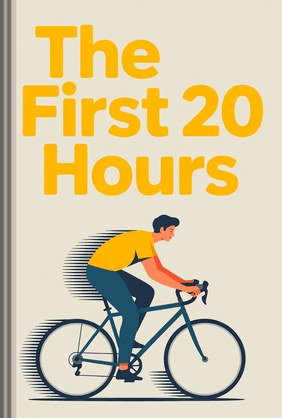
The First 20 Hours
Josh Kaufman
 24 Duration
 11 Key Points
 4.7 Rate
3. MasterClass: Best for High-Impact Inspiration
Sometimes you do not want a tactical tutorial; you want to understand how top-tier performers think. MasterClass treats education like premium entertainment.
- How it respects your time: It replaces your mindless Netflix binge. The production value is cinematic, making it easy to watch on your TV after a long day when your brain is too fried for a traditional lecture.
- The Vibe: Hollywood meets education. Learn negotiation from Chris Voss or cooking from Gordon Ramsay.
- Cost: Starts at $120/year (billed annually).
- Why it beats Skillshare: The instructors are literal legends in their fields, guaranteeing a baseline of quality and insight that crowd-sourced platforms cannot match.
Speaking of MasterClass and its legendary instructors like Chris Voss, there is another way to absorb elite-level expertise without a monthly subscription: going straight to the source material. If Voss’s MasterClass on negotiation caught your eye, diving into his foundational book will give you the complete playbook for high-stakes conversations, whether you are asking for a raise or closing a massive client deal.
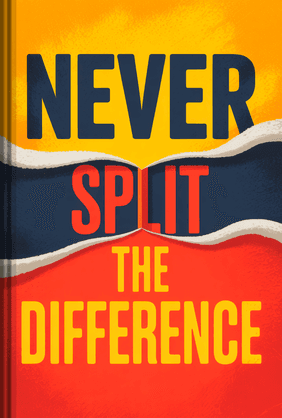
Never Split the Difference
Chris Voss, Tahl Raz
41 Duration8 Key Points4.6 Rate4. LeapAhead: Best for Building a Consistent Learning Habit
This app tackles the "I want to learn, but I'm too tired" problem head-on. LeapAhead is a microlearning platform that distills bestselling non-fiction books into 15-minute audio or text summaries. It's designed not just for quick consumption, but for building a sustainable learning routine through goal-setting and personalization.
- How it respects your time: It turns fragmented moments—your commute, a workout, or a lunch break—into learning opportunities. The 15-minute format ensures you can complete a summary without needing to block out an hour.
- The Vibe: Goal-oriented and supportive. It feels less like a library and more like a guided learning system with curated plans, daily check-ins, and visual aids like infographics to make knowledge stick.
- Cost: Offers monthly and annual subscriptions, plus a generous free tier that provides three free book summaries every day.
- Why it beats Skillshare: It directly solves the time and energy drain. Instead of long-form video, it delivers concentrated knowledge in a format that's easy to consume on the go. Its emphasis on habit-building features helps you stay consistent, turning learning into a daily routine rather than a postponed task.
5. Blinkist & Audible: Best for Audio-First Commuters
If your biggest limitation is screen time, you need to step away from video-based online learning platforms entirely.
- Blinkist: Condenses top non-fiction books into 15-minute audio or text summaries. It is the ultimate hack for busy professionals. You can absorb the core concepts of Atomic Habits or Thinking, Fast and Slow during a quick subway ride.
- Audible / Apple Books: For a deeper dive, audiobooks are your best friend. Listening at 1.5x speed while doing household chores or exercising allows you to consume massive amounts of knowledge with zero extra time added to your day.
- Cost: Blinkist is around $99/year. Audible is $14.95/month.
- Why they beat Skillshare: They turn dead time (driving, cleaning, walking) into productive learning time without requiring your eyes to be glued to a screen.
As mentioned above, Blinkist and audio platforms are fantastic for consuming heavy-hitting behavioral science and productivity books on the go. If you are building a reading list for your commute, you absolutely must include one of the most influential books on human decision-making ever published. It completely rewires how you understand your own biases, making it a must-read (or must-listen) for any ambitious professional.
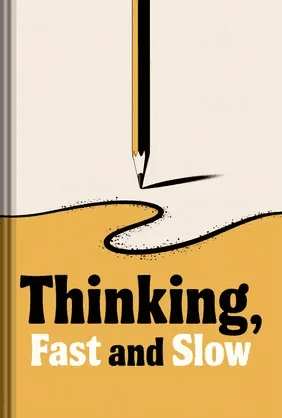
Thinking, Fast and Slow
Daniel Kahneman
53 Duration9 Key Points4.5 Rate
Top Free Skillshare Alternatives
If you are on a tight budget or just want to test the waters before committing to a subscription, the internet is packed with high-quality free resources.
YouTube (The Curated Approach)
YouTube is the most powerful learning engine on earth, provided you know how to use it. The trick is avoiding the algorithm's trap of endless distraction.
- The Strategy: Create a dedicated Google account strictly for learning. Subscribe only to high-value educational channels (like CrashCourse, MIT OpenCourseWare, or industry-specific experts).
- Pros: Entirely free, infinite content, easily searchable.
- Cons: You have to build your own curriculum, and ads can break your focus.
Coursera (The Audit Hack)
Coursera partners with elite universities like Stanford, Yale, and companies like Google and IBM to offer college-level courses.
- The Strategy: While Coursera heavily promotes its paid certificates, almost every course has an "Audit" option hidden in the enrollment popup. Auditing gives you full access to the video lectures and reading materials for zero dollars.
- Pros: Ivy League-level education, highly structured, deep theoretical knowledge.
- Cons: Academic pacing can be slower than micro-learning platforms.
Taking on university-level courses through Coursera or MIT OpenCourseWare requires a serious level of discipline. If you are opting for the self-taught route to career advancement, you need more than just free video lectures—you need a ruthless strategy for retaining complex information. For anyone looking to master hard skills outside of a traditional classroom, this next recommendation provides an incredible framework for intense, self-directed education.
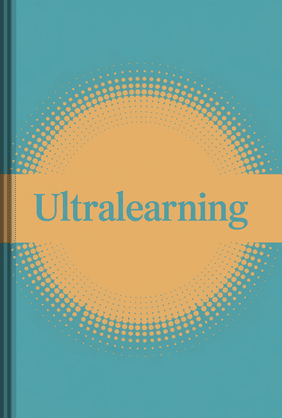
Ultralearning
Scott H. Young
32 Duration8 Key Points4.5 RateKhan Academy
If you need to brush up on foundational skills—math, economics, computing—Khan Academy is a phenomenal, non-profit platform. It is straightforward, entirely free, and highly interactive.
How to Choose the Right Platform for Your Life
Having too many options causes decision paralysis. Use this quick framework to pick your platform today:
- If you have 15 minutes a day: Get Blinkist. Read or listen to one summary during your morning coffee.
- If you learn while driving or at the gym: Get Audible. Dedicate your commute to audiobooks.
- If you need a specific skill for a project due next week: Buy a targeted course on Udemy.
- If you want to pad your resume and your company is paying: Request a LinkedIn Learning subscription.
- If you want to unwind with high-quality content instead of TV: Subscribe to MasterClass.
- If your budget is absolute zero: Audit courses on Coursera or build a disciplined YouTube playlist.
Actionable Tips to Make Self-Guided Learning Work
Signing up for the best alternative to Skillshare means nothing if you do not actually log in. Ambitious professionals fail at self-learning not because they lack intelligence, but because they lack a system.
To make the most of any platform you choose, it helps to first have a solid framework for rapid skill acquisition.
Stop trying to find an hour.
If you wait until you have a free, uninterrupted hour to sit at your desk and learn, you will never do it. The secret to modern online learning platforms is leveraging micro-pockets of time.
If you wait until you have a free, uninterrupted hour to sit at your desk and learn, you will never do it. The secret to modern online learning platforms is leveraging micro-pockets of time.
Stack your habits.
Tie your learning to a habit you already do every single day. Listen to an educational module while brushing your teeth, doing the dishes, or folding laundry. You do not need to carve out new time; you just need to layer learning over mindless tasks.
Tie your learning to a habit you already do every single day. Listen to an educational module while brushing your teeth, doing the dishes, or folding laundry. You do not need to carve out new time; you just need to layer learning over mindless tasks.
If you are struggling to build this kind of seamless learning routine, the problem usually isn't a lack of willpower—it is a lack of systems. The idea of habit stacking is a core concept in behavioral psychology, and mastering it can help you automate your professional growth. To truly understand how to make learning a daily, frictionless part of your life, you need to read the definitive guide on building good habits.

Atomic Habits
James Clear
26 Duration8 Key Points4.7 Rate
Define a clear exit criteria.
Do not learn just to learn. Decide exactly what you want to achieve. "I want to learn enough Excel to automate my weekly sales report." Once you hit that goal, stop watching the course and go execute. You do not need to finish a 10-hour course if the 30-minute module solved your immediate problem.
Do not learn just to learn. Decide exactly what you want to achieve. "I want to learn enough Excel to automate my weekly sales report." Once you hit that goal, stop watching the course and go execute. You do not need to finish a 10-hour course if the 30-minute module solved your immediate problem.
LeapAhead
Turn your commute or coffee break into a powerful learning habit with 15-minute book summaries from LeapAhead, designed for busy schedules.
FAQ
Are there any truly free Skillshare alternatives without hidden paywalls?
Yes. YouTube is completely free, though you pay with your attention to ads. Coursera allows you to audit thousands of university-level courses for free (you only pay if you want the graded assignments and the certificate). Khan Academy is a non-profit and 100% free forever.
Yes. YouTube is completely free, though you pay with your attention to ads. Coursera allows you to audit thousands of university-level courses for free (you only pay if you want the graded assignments and the certificate). Khan Academy is a non-profit and 100% free forever.
Which platform is best if I only have short breaks during my workday?
LinkedIn Learning and Blinkist are built exactly for this. LinkedIn Learning structures its content into 3-to-5-minute micro-videos, perfect for quickly grasping a new software feature. Blinkist gives you the core ideas of entire books in under 15 minutes.
LinkedIn Learning and Blinkist are built exactly for this. LinkedIn Learning structures its content into 3-to-5-minute micro-videos, perfect for quickly grasping a new software feature. Blinkist gives you the core ideas of entire books in under 15 minutes.
Can I get official certificates from apps like Skillshare?
Skillshare does not offer formal, accredited certificates. If certification is important for your resume or performance review, you should switch to Coursera, edX, or LinkedIn Learning. These platforms partner with universities and major corporations to provide recognized credentials upon completion.
Skillshare does not offer formal, accredited certificates. If certification is important for your resume or performance review, you should switch to Coursera, edX, or LinkedIn Learning. These platforms partner with universities and major corporations to provide recognized credentials upon completion.
Is Udemy better than Skillshare?
It depends on your financial preference and goal. Udemy is pay-per-course, making it better for deep dives into specific, technical topics (like learning a programming language) without a recurring subscription. Skillshare’s subscription model is better if you want to explore dozens of different creative hobbies and hop between classes freely. For busy professionals needing hard skills, Udemy is generally the better investment.
It depends on your financial preference and goal. Udemy is pay-per-course, making it better for deep dives into specific, technical topics (like learning a programming language) without a recurring subscription. Skillshare’s subscription model is better if you want to explore dozens of different creative hobbies and hop between classes freely. For busy professionals needing hard skills, Udemy is generally the better investment.