

You are browsing Barnes & Noble or scrolling through Amazon, looking at the iconic black-and-white cover of Walter Isaacson’s Steve Jobs. It is a massive commitment of your time. Before you dive into those 600 pages, a red flag stops you. You remember the headlines from a few years ago: Tim Cook hated it. Jony Ive couldn't finish it.
If the people who knew him best reject the authorized biography, is the Steve Jobs biography accurate at all?
The short answer is yes, the dates, quotes, and product development cycles are meticulously fact-checked. Isaacson conducted over 40 interviews with Jobs himself, alongside hundreds of conversations with friends, foes, and competitors. But factual accuracy does not always equal narrative truth.
To understand the real Steve Jobs, you have to look at what Isaacson captured perfectly, what he missed entirely, and how competing narratives tell a very different story.
With so many conflicting perspectives, it can feel like you need a whole library just to form an opinion. If you're short on time, there’s a smarter way to understand the complete picture.


Summarizes biographies like *Steve Jobs* and *Becoming Steve Jobs* in 15 minutes, so you can quickly grasp the core arguments and decide which book to dive into.
 LeapAhead
The Root of Walter Isaacson Steve Jobs Criticism
Isaacson is a master biographer who previously tackled Benjamin Franklin and Albert Einstein. When Jobs approached him, Isaacson applied his standard historical methodology: gather the data, remain objective, and present the subject unvarnished. Jobs gave him total unprecedented access and explicitly refused any editorial control.
This led to the primary Walter Isaacson Steve Jobs criticism. Isaacson approached Jobs as a historical subject rather than a modern business leader. He focused heavily on the drama. The "reality distortion field," the screaming matches in Silicon Valley boardrooms, and the ruthless firing of employees make for incredible reading.
However, tech industry insiders argue Isaacson lacked a fundamental understanding of why Jobs' products were revolutionary. The book treats the creation of the iPhone almost the same way it treats a messy corporate firing. It prioritizes conflict over the nuances of design, engineering, and business strategy.
If you haven't read the biography that sparked this entire debate, it is absolutely worth experiencing for yourself. Despite the criticisms from Apple insiders, Walter Isaacson’s original work remains a towering achievement in tech journalism. It is built on dozens of unprecedented, unfiltered interviews with Jobs in his final years. For anyone interested in the raw, unvarnished history of Silicon Valley’s most famous founder, this foundational text is the perfect starting point to form your own opinion on his legacy.
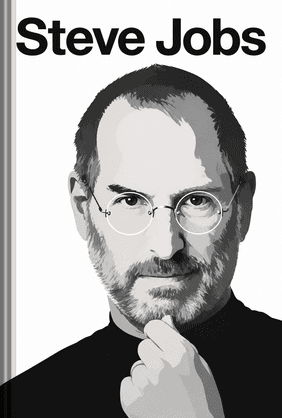
Steve Jobs
Walter Isaacson
 39 Duration
 8 Key Points
 4.5 Rate
The Backlash: Steve Jobs Family Reaction to Book
The most telling indicator of the book's narrative slant is the Steve Jobs family reaction to book, alongside the vocal pushback from Apple's inner circle.
Jobs’ widow, Laurene Powell Jobs, reportedly disliked the book so much that she actively pushed against its adaptation into a Hollywood film. She felt Isaacson captured the worst parts of her husband's temper while missing the joy and passion that drove his work.
Inside Apple, the reaction was equally severe:
- Tim Cook: The Apple CEO famously stated that Isaacson's book did Jobs a "tremendous disservice." Cook argued it presented Jobs as a greedy, selfish egomaniac, completely ignoring the mentor who spent hours coaching his executive team.
- Jony Ive: Apple's former Chief Design Officer and Jobs’ closest friend at the company noted his "regard couldn't be lower" for the biography. Ive felt the book fundamentally misunderstood the creative process they shared.
They felt Isaacson captured the brilliant jerk of the 1980s Macintosh era but entirely missed the seasoned executive who returned to Apple in 1997.
Since Jony Ive was arguably Jobs’ most vital collaborator, understanding their shared creative process is crucial for seeing the full Apple picture. If you want to know what the Isaacson book missed regarding the actual design philosophy that saved the company, diving into the mind of Apple’s legendary Chief Design Officer is a fantastic next step. This deep dive into Ive's career reveals exactly how that iconic partnership functioned behind the closed doors of the design lab.

Jony Ive
Leander Kahney
15 Duration7 Key Points4.7 RateThe Counter-Narrative: Becoming Steve Jobs vs Walter Isaacson
Because the Apple executive team felt so burned by Isaacson’s portrayal, they took an unprecedented step. They threw their full support behind a different book: Becoming Steve Jobs by Brent Schlender and Rick Tetzeli.
If you are weighing Becoming Steve Jobs vs Walter Isaacson, you need to understand the core thesis of each book.
Isaacson’s View (The Unchanging Genius):
Isaacson portrays a man who was born brilliant and flawed, and died brilliant and flawed. In this narrative, Jobs succeeded in spite of his terrible behavior. The focus is on his raw, unapologetic drive.
Isaacson portrays a man who was born brilliant and flawed, and died brilliant and flawed. In this narrative, Jobs succeeded in spite of his terrible behavior. The focus is on his raw, unapologetic drive.
Schlender’s View (The Evolution of a Leader):
Becoming Steve Jobs argues that the young, volatile Jobs of the 1980s would never have been capable of building the iPod, iPhone, or iPad. This book focuses entirely on Jobs’ "wilderness years"—his time at NeXT and Pixar. It shows how learning to manage creative talent at Pixar and surviving the failures of NeXT turned him into a patient, strategic CEO.
Becoming Steve Jobs argues that the young, volatile Jobs of the 1980s would never have been capable of building the iPod, iPhone, or iPad. This book focuses entirely on Jobs’ "wilderness years"—his time at NeXT and Pixar. It shows how learning to manage creative talent at Pixar and surviving the failures of NeXT turned him into a patient, strategic CEO.

For hardcore Apple fans and business students, Becoming Steve Jobs is often considered the more valuable read. It provides a roadmap of personal growth, whereas Isaacson provides a dramatic historical record.
As we mentioned, if you want a roadmap of Jobs' personal and professional growth rather than just a chronological history, this is the definitive counter-narrative. Strongly backed by Apple executives, this biography dives deep into the transformative "wilderness years" that matured him into a truly empathetic leader. It's a must-read for anyone looking to understand how the young, fiery founder evolved into the seasoned CEO who ultimately built the iPhone and iPad.

Becoming Steve Jobs
Brent Schlender, Rick Tetzeli, et al.
16 Duration6 Key Points4.6 RateFact vs. Fiction: Steve Jobs Movie vs Book
The debate over accuracy became even more complicated with the release of the 2015 Aaron Sorkin film, starring Michael Fassbender.
When comparing the Steve Jobs movie vs book, the distinction is critical. Isaacson’s book is a work of non-fiction journalism. Sorkin’s movie is a theatrical play that uses Steve Jobs as a character to explore themes of fatherhood and ego.
The movie condenses Jobs' life into three chaotic product launches (the Mac, NeXT, and iMac). Almost none of the backstage conversations in the movie actually happened the way they are shown. Sorkin took the most dramatic elements of Isaacson’s biography—specifically Jobs' denial of his daughter Lisa—and turned them up to a ten. If Isaacson’s book is accused of focusing too much on Jobs’ flaws, the movie turns those flaws into the entire plot.

The Final Verdict: Which One Should You Read?
If your goal is to know the dates, the product specs, the rivalries, and the raw timeline of Apple's history, Walter Isaacson’s biography is a mandatory read. It is historically accurate and incredibly well-written. You will not find a better repository of direct quotes from Steve Jobs.
If you are a manager, an entrepreneur, or someone who wants to understand how a volatile young man grew into the most effective CEO in modern history, read Becoming Steve Jobs.
Read Isaacson for the what. Read Schlender and Tetzeli for the why.
Want to learn even more about the "wilderness years" that shaped Jobs' second act? One of the most pivotal eras in his evolution was his tenure at Pixar. Written by Pixar co-founder Ed Catmull, this book offers a brilliant, firsthand look at how Jobs learned to nurture creative talent rather than just demanding it. It is an incredible resource for managers and leaders who want to master the delicate art of building a healthy, innovative company culture without losing that competitive edge.

Creativity, Inc.
Ed Catmull, Amy Wallace
45 Duration9 Key Points4.7 RateThat’s a powerful reading list, but finding time for three dense books is a challenge. For those who want to absorb the leadership lessons from Jobs' life without the heavy time commitment, there's a more efficient way.
Use LeapAhead to listen to the key insights from books like *Creativity, Inc.* during your commute, turning downtime into valuable learning about innovation and leadership.
LeapAheadFAQ
Did Steve Jobs read the Walter Isaacson biography before he died?
No. Steve Jobs explicitly asked Isaacson to write the book and promised not to interfere. He never asked to read the manuscript, stating he wanted the book to be an independent, unbiased account of his life.
No. Steve Jobs explicitly asked Isaacson to write the book and promised not to interfere. He never asked to read the manuscript, stating he wanted the book to be an independent, unbiased account of his life.
Why did Apple executives hate the Isaacson book?
Executives like Tim Cook and Jony Ive felt the book focused heavily on Jobs' temper, his blunt feedback, and his early-career mistakes. They believed it failed to capture his empathy, his deep loyalty to his team, and his evolution as a leader during his final decade at Apple.
Executives like Tim Cook and Jony Ive felt the book focused heavily on Jobs' temper, his blunt feedback, and his early-career mistakes. They believed it failed to capture his empathy, his deep loyalty to his team, and his evolution as a leader during his final decade at Apple.
Which Steve Jobs book is the most accurate?
It depends on what you value. For strict historical timelines and raw data, Isaacson's book is factually accurate. For psychological accuracy and a true understanding of his business methods, Becoming Steve Jobs is widely considered by industry insiders to be the more accurate reflection of who he really was.
It depends on what you value. For strict historical timelines and raw data, Isaacson's book is factually accurate. For psychological accuracy and a true understanding of his business methods, Becoming Steve Jobs is widely considered by industry insiders to be the more accurate reflection of who he really was.