

You hit a wall where life feels completely stripped of color and certainty. You are exhausted, facing relentless challenges, and wondering how to keep moving forward when the horizon looks pitch black. Cormac McCarthy captured this exact psychological breaking point in his masterpiece, The Road. He drops a father and son into an ash-covered post-apocalyptic wasteland, removes every modern comfort, and asks one brutal question: Why keep going?
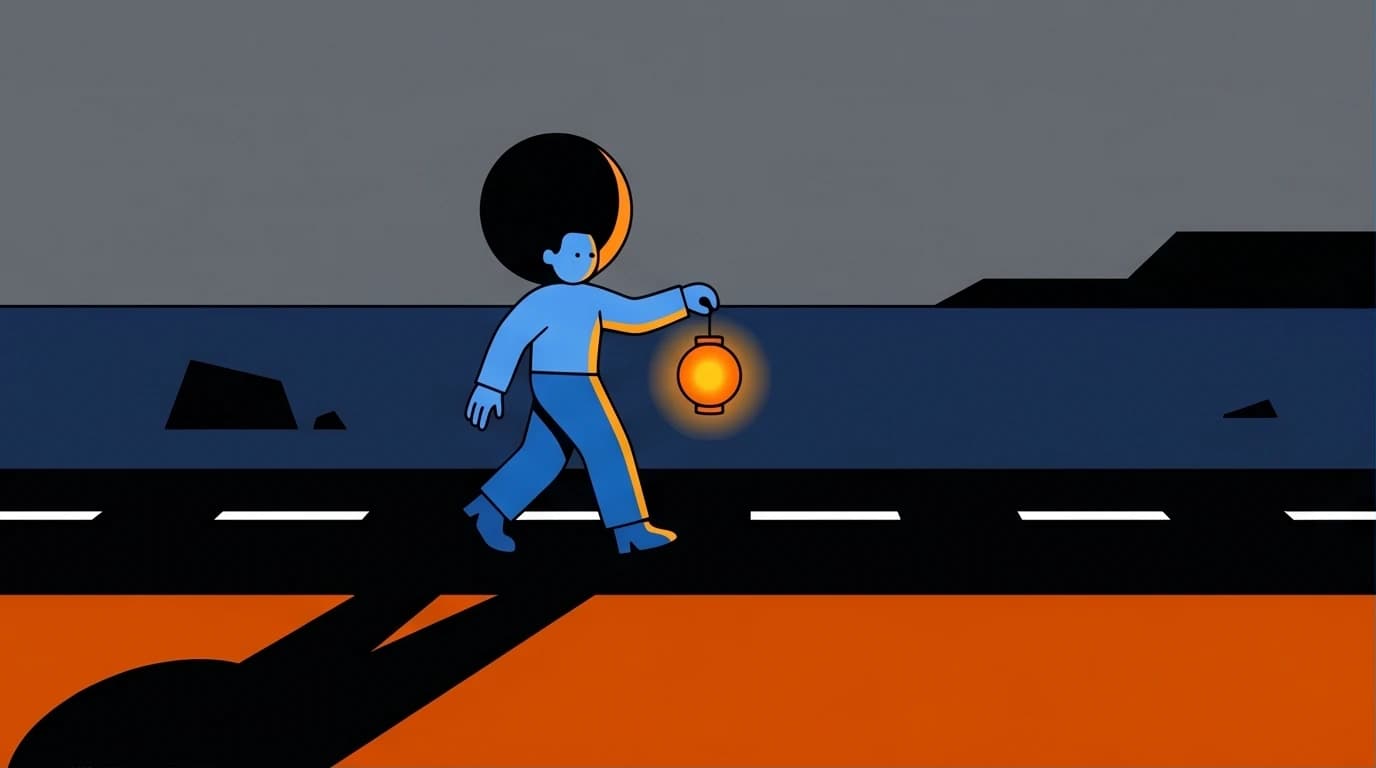
The answer is not a grand, cinematic victory. It is gritty, quiet, and profoundly practical. When you study the text, you realize it is far more than a bleak fiction novel you might pick up at Barnes & Noble or listen to on Audible. It is a manual for mental survival.
The answer is not a grand, cinematic victory. It is gritty, quiet, and profoundly practical. When you study the text, you realize it is far more than a bleak fiction novel you might pick up at Barnes & Noble or listen to on Audible. It is a manual for mental survival.
Surviving Adversity The Road Shows Us
We often think of adversity as a temporary storm we just need to weather. McCarthy dismantles this comforting illusion. In the novel, the environment never improves. The skies stay gray. The temperatures stay well below freezing Fahrenheit. There is no rescue team coming.
This mirrors the hardest phases of real life—chronic illness, long-term financial ruin, or deep grief. You cannot wait for the environment to get better before you decide to live. You have to adapt immediately.
Surviving adversity the road presents means abandoning the expectation of rescue. The father in the story does not waste energy wishing for the world before the fire. He pushes a shopping cart for relentless miles. He scavenges for canned food. He checks his revolver. He focuses entirely on the mechanics of survival.
When you face a crisis, nostalgia is dangerous. Dwelling on how things "used to be" or escaping into your favorite memories saps the energy you desperately need to navigate the present. Acknowledge the ashes. Accept the cold. Then, look at the road directly in front of you and take the next step.
When you're forced to navigate a season of life where the environment isn't getting better—much like the post-apocalyptic landscape McCarthy describes—you have to shift your perspective. Instead of waiting for a rescue team, you must learn how to use the adversity itself as a stepping stone. If you want to dive deeper into this mindset, Ryan Holiday’s modern exploration of turning trials into triumphs is an incredible resource. It teaches you exactly how to transform relentless challenges and roadblocks into your ultimate advantage.
The Obstacle Is the Way
Ryan Holiday
 44 Duration
 7 Key Points
 4.6 Rate
Stoicism in Cormac McCarthy: The Architecture of Mental Toughness
If you want to understand practical philosophy, look at the stoicism in Cormac McCarthy. Long before modern self-improvement podcasts made Marcus Aurelius trendy, McCarthy built characters who embodied the absolute core of stoic thought: the dichotomy of control.
The father cannot control the dead trees falling in the woods. He cannot control the ash turning the snow gray. He cannot control the roving gangs of cannibals on the highway.
What does he control? He controls his rituals. He decides when to make camp. He decides to organize their meager belongings with meticulous care. He decides to bathe his son in a freezing river to wash away the blood and grime, maintaining a strict standard of human dignity.
This is the psychological armor you need when your world collapses. You cannot control the economy, the sickness, or the betrayal. You can control whether you make your bed. You can control how you speak to your family. You can control your immediate physical responses. When chaos reigns outside, you must rigidly organize your internal environment. Every small act of order is a rebellion against despair.
This stoic resilience is a cornerstone of his work, but it's just one facet of his complex worldview. Many of his characters grapple with nihilism, existential dread, and the search for meaning in a seemingly godless universe.
The father’s unyielding grip on what he can control in The Road is the perfect fictional embodiment of stoic philosophy. As mentioned earlier, long before stoicism became a popular topic on self-improvement podcasts, Roman emperor Marcus Aurelius was writing down his private thoughts on resilience, duty, and maintaining mental order amidst chaos. If you are looking for the original blueprint on building this kind of internal psychological armor, his personal journal remains one of the most powerful manuals for mental toughness ever written.
Meditations
Marcus Aurelius
34 Duration7 Key Points4.6 RateIf you're inspired to explore these powerful philosophical texts but struggle to find the time for dense reading, there are tools designed to help.


This app helps you grasp the core ideas from challenging books like Meditations in short, 15-minute audio or text sessions, perfect for when you're short on time.
 LeapAhead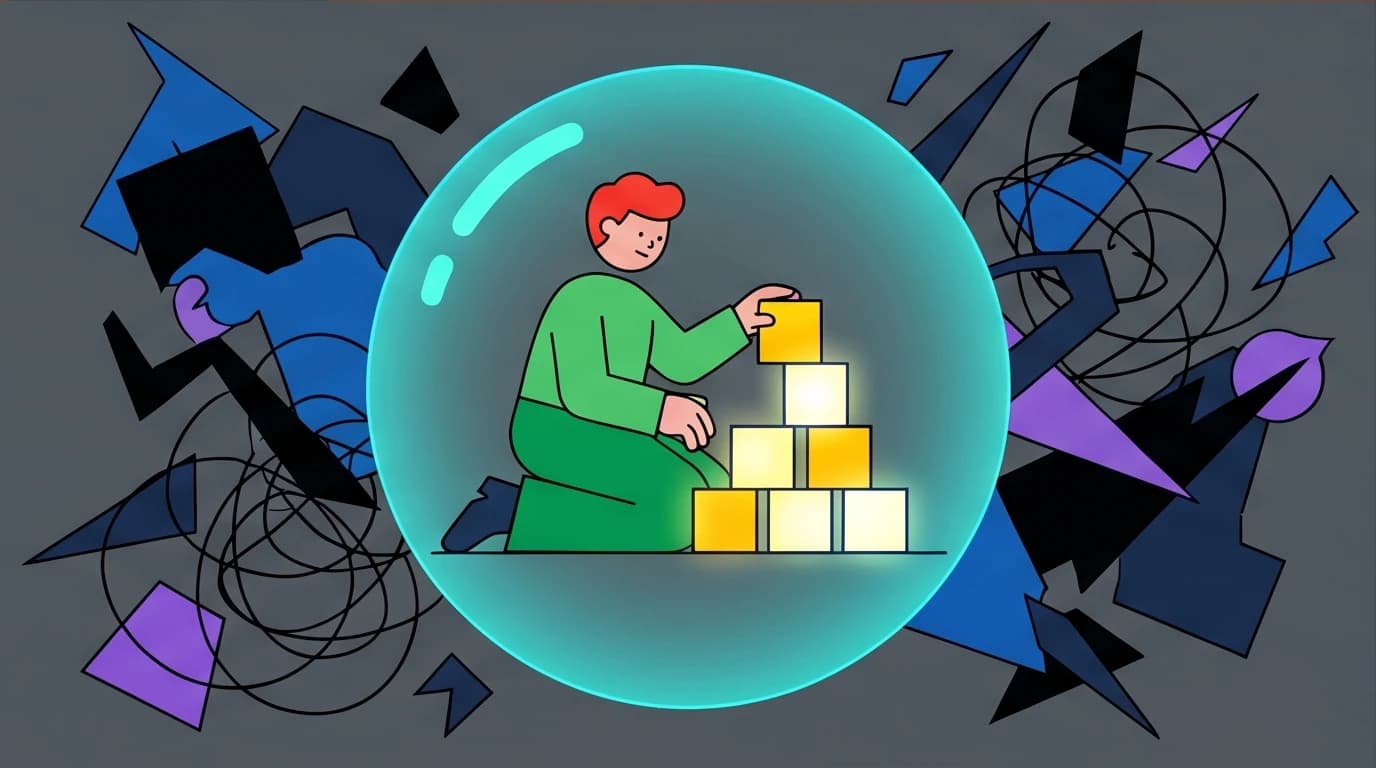
The Psychology of Cormac McCarthy Characters: Good Guys vs. Bad Guys
The deepest psychological friction in the novel is not between the man and the dying planet. It is the internal battle of morality. The psychology of Cormac McCarthy characters reveals how extreme stress fractures human identity.
McCarthy divides the survivors into two camps: the "good guys" and the "bad guys." The bad guys have given in to sheer animal instinct. They eat other humans. They keep slaves. They sacrifice their humanity for a few more days of biological survival.
The man and the boy are the good guys. Why? Because they draw a hard line they refuse to cross. They will not eat people. They will not steal from the innocent.
In your own life, adversity will test your baseline. When money runs out, do you lie to get ahead? When exhaustion peaks, do you take it out on your spouse or children? The psychology of resilience demands a moral baseline. Survival at the cost of your soul is not survival at all. You have to define what you will absolutely never do, no matter how hard the pressure gets. That boundary keeps you human.
Core Lessons From The Road Cormac McCarthy Left Us
Extracting lessons from the road Cormac McCarthy painted requires looking past the horror and focusing on the father's daily operations. Here is how you apply his survival mechanics to modern crises.
1. Keep Your Little Promises
In the novel, the father tells his son: "If you break little promises, you'll break big ones."
When life falls apart, your self-trust is the first casualty. You start letting the small things slide. You skip the workout. You ignore the email. You stop cleaning your kitchen. These seem trivial compared to the massive crisis you are fighting, but they are the structural beams of your psychology.
Keep the little promises you make to yourself. If you say you will walk one meter, walk one meter. If you say you will wake up at 6:00 AM, get out of bed. Every kept promise deposits belief into your psychological bank account. You need that belief to face the bigger monsters on the road.
Rebuilding your self-trust during a crisis always starts at the micro-level. When the world feels overwhelmingly large and chaotic, focusing on tiny, manageable daily actions provides a necessary anchor. Keeping those small promises to yourself isn't just about crossing tasks off a to-do list; it's about fundamentally reshaping your identity so you can endure the heavy lifting ahead. If you're struggling to rebuild that foundational discipline, James Clear offers an exceptional, science-backed framework for creating small routines that compound into massive life changes.

Atomic Habits
James Clear
26 Duration8 Key Points4.7 Rate2. Beware the Pull of Surrender
The boy's mother is a haunting presence in the book. Faced with the reality of their doomed existence, she chooses suicide. She tells her husband that she has taken a new lover, and his name is Death.
McCarthy does not judge her harshly. He presents her choice as entirely rational given the circumstances. It forces the reader to realize that giving up is always an option. It is the easiest option.
The father's refusal to follow her is an active, agonizing daily choice. Resilience is not a passive trait you are born with. It is an aggressive refusal to quit. You have to wake up every morning and consciously reject surrender. You must drag yourself away from the comfort of giving up.
3. Find Absolute Joy in the Micro-Moments
One of the most iconic scenes in modern literature occurs when the father finds an ancient, hidden can of Coca-Cola. He gives it to his son, who has never tasted one. For a brief moment, the grim march stops. The boy experiences the pure, bubbling sweetness of the drink.
When you are going through hell, you cannot wait for the finish line to celebrate. You have to extract joy from the micro-moments. A hot cup of coffee. A decent night of sleep. A kind text message from a friend. Do not brush past these moments. Anchor yourself in them. They are the fuel that will get you through the next few miles.
4. You Have to Carry the Fire
The most enduring motif of the novel is "carrying the fire." The boy frequently asks his father to confirm that they are still the good guys, that they are still carrying the fire.
The fire is not a physical flame. It is the spark of human decency, hope, and love. It is the belief that goodness still matters, even when no one is watching, even when there is no reward for it.
If you are a leader, a parent, or simply a human trying to navigate a dark period, this is your ultimate mandate. You carry the fire for yourself, and you carry it for the people looking up to you. When your children look at you during a family crisis, they are asking the exact same question the boy asks: Are we going to be okay? Are we still carrying the fire?
Your job is to look back at them, no matter how terrified you are, and say yes.
Carrying the fire is ultimately about finding a profound sense of purpose when your external circumstances have been stripped of all comfort and color. When you have a deep enough "why," you can survive almost any "how." This concept isn't just a literary device; it has been proven in the darkest chapters of human history. Viktor E. Frankl’s legendary psychological memoir beautifully illustrates this exact principle, showing how discovering personal meaning and holding onto your inner light can help you survive even the most harrowing forms of suffering.
Man's Search for Meaning
Viktor E. Frankl
44 Duration8 Key Points4.6 Rate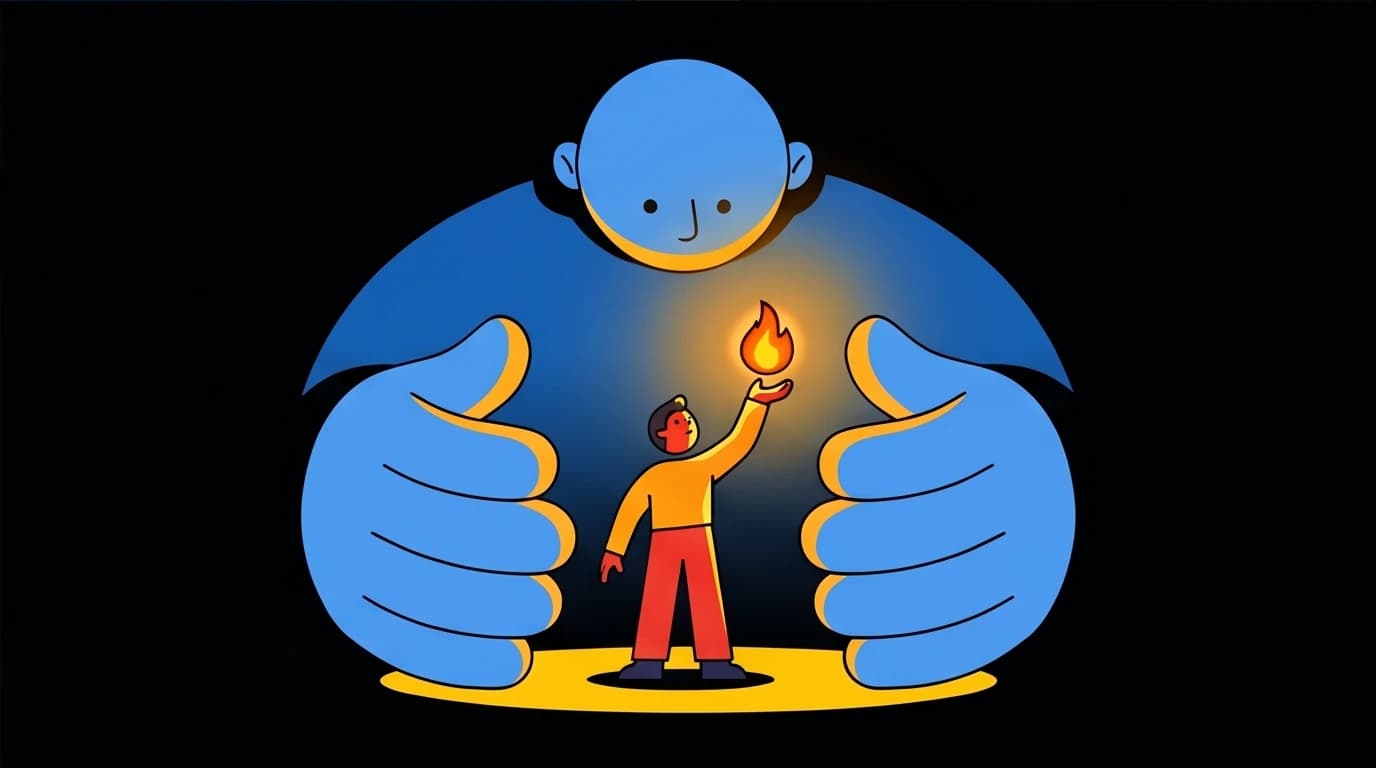
Cormac McCarthy Quotes About Life to Ground You
McCarthy’s prose is razor-sharp. You do not read his sentences; you absorb them. Here are key Cormac McCarthy quotes about life from The Road that serve as immediate psychological anchors.
His distinctive, minimalist prose is as much a part of the experience as the story itself. The lack of quotation marks and sparse punctuation forces the reader into a more immediate and raw engagement with the text.
"You forget what you want to remember, and you remember what you want to forget."
The psychological weight: Trauma hijacks the brain. You will find yourself obsessing over your worst failures while struggling to recall your victories. Recognize this as a biological glitch, not a reflection of reality. You must actively train your mind to focus on the present task rather than being dragged backward into past regrets.
"Keep a little fire burning; however small, however hidden."
The psychological weight: You do not need a roaring bonfire of motivation to succeed. You do not need to feel 100% optimistic. You just need a tiny, stubborn ember of refusal to quit. Protect that small fire at all costs. As long as it is burning, you are still in the fight.
"Just help him, Jesus, he thought. He could barely walk."
The psychological weight: True endurance is unglamorous. It often looks like stumbling, crying, and barely holding it together. Society sells us a pristine version of strength. McCarthy shows us the truth: strength is just moving your feet forward even when you are completely broken.
Final Thoughts on the Journey
You can buy a copy of The Road on Amazon, read it in a weekend, and feel overwhelmed by its darkness. But if you read it closely, you will realize it is a profound testament to love. The father endures freezing rain, starvation, and violence solely out of love for his son.
Putting these lessons into practice often means continuing your education, but finding the energy to read after a draining day can feel like its own battle.
LeapAhead offers 15-minute book summaries you can listen to during a commute or break, making it easier to absorb life-changing ideas without the exhaustion of heavy reading.
LeapAheadAdversity forces you to figure out what you are actually living for. Find your reason. Identify your fire. Protect your moral baseline. When the road ahead is dark, cold, and unforgiving, stop looking for an easy way out. Put your head down, organize your mind, and take the next step.
FAQ
What does "carrying the fire" mean in The Road?
"Carrying the fire" is a metaphor for preserving humanity, morality, and hope in a world that has lost all of its structures. It means choosing to be a "good guy"—refusing to harm others for selfish gain, maintaining basic human dignity, and holding onto love even when survival instincts tempt you to become ruthless.
"Carrying the fire" is a metaphor for preserving humanity, morality, and hope in a world that has lost all of its structures. It means choosing to be a "good guy"—refusing to harm others for selfish gain, maintaining basic human dignity, and holding onto love even when survival instincts tempt you to become ruthless.
How does stoicism apply to the father in the novel?
The father perfectly practices the stoic dichotomy of control. He never wastes emotional energy cursing the dead world or the dropping temperature. Instead, he focuses 100% of his effort on what he can control: scavenging for food, keeping his son warm, maintaining their weapons, and walking the next mile. He accepts reality exactly as it is without demanding it be fair.
The father perfectly practices the stoic dichotomy of control. He never wastes emotional energy cursing the dead world or the dropping temperature. Instead, he focuses 100% of his effort on what he can control: scavenging for food, keeping his son warm, maintaining their weapons, and walking the next mile. He accepts reality exactly as it is without demanding it be fair.
Why is The Road considered a hopeful book despite its bleakness?
While the setting is incredibly grim, the core of the story is the unbreakable bond between a father and his son. The father sacrifices absolutely everything to keep the boy safe. It proves that even in the absence of law, society, and comfort, human love and moral conviction can still exist. The boy’s surviving compassion at the end of the novel suggests that humanity's goodness cannot be entirely extinguished.
While the setting is incredibly grim, the core of the story is the unbreakable bond between a father and his son. The father sacrifices absolutely everything to keep the boy safe. It proves that even in the absence of law, society, and comfort, human love and moral conviction can still exist. The boy’s surviving compassion at the end of the novel suggests that humanity's goodness cannot be entirely extinguished.
How can I apply the lessons of The Road to my own struggles?
Focus strictly on the immediate next step rather than the overwhelming entirety of your problem. Establish non-negotiable daily routines to maintain order in your mind. Define your moral boundaries—what you refuse to compromise on—and stick to them. Finally, find your "fire"—the core reason or person you are fighting for—and let that drive you when motivation disappears.
Focus strictly on the immediate next step rather than the overwhelming entirety of your problem. Establish non-negotiable daily routines to maintain order in your mind. Define your moral boundaries—what you refuse to compromise on—and stick to them. Finally, find your "fire"—the core reason or person you are fighting for—and let that drive you when motivation disappears.