


You read a page of Blood Meridian or The Road and feel an immediate, visceral punch. You want your prose to carry that same biblical weight, so you delete your quotation marks and commas—only to find your writing suddenly looks confusing, disjointed, and amateurish. Emulating this legendary American author is not simply an exercise in deleting grammar. It requires a masterful grip on sentence rhythm, precise word choice, and structural clarity that compensates for the missing punctuation.
To write with that level of stark authority, you must understand the invisible architecture holding his sentences together.
The Foundation of the Cormac McCarthy Writing Style
At first glance, McCarthy’s pages look entirely different from those found in standard paperbacks at Barnes & Noble. The pages are blocks of text interrupted by sparse, unattributed dialogue. His approach blends extreme minimalism in punctuation with absolute maximalism in vocabulary and thematic scope.
The core philosophy of the Cormac McCarthy writing style is that punctuation should never get in the way of the words. He viewed the page as a visual and auditory canvas. To him, weird little marks scattered across the page distracted from the raw impact of the language. This philosophy demands that the writer do the heavy lifting through syntax and word choice, rather than relying on grammatical crutches to tell the reader how to pace their breathing.
Polysyndeton: The Power of "And"
If there is one grammatical device that defines McCarthy’s sentence structure, it is polysyndeton. This is the repeated use of coordinating conjunctions—primarily the word "and"—in quick succession, often without commas.
Instead of writing: The men rode through the desert, tired, hungry, and covered in dust.
McCarthy writes: The men rode through the desert and they were tired and they were hungry and the dust coated them.
McCarthy writes: The men rode through the desert and they were tired and they were hungry and the dust coated them.
This technique achieves two critical outcomes. First, it flattens the hierarchy of events. Everything is happening at once, with equal weight, simulating the indifferent flow of nature and time. Second, it creates a relentless, hypnotic cadence that echoes the King James Bible. When you read it, you feel a forward momentum that cannot be stopped.
To truly appreciate how McCarthy breaks the rules of grammar to create his signature cadence, you first need a rock-solid understanding of the rules themselves. You can't effectively dismantle traditional sentence structures if you don't know the baseline architecture of American English. For writers looking to master the fundamentals of syntax, punctuation, and clear communication before experimenting with polysyndeton, there is no better starting point than this definitive guide. It will help you strip away the clutter so your strongest words can shine.
The Elements of Style
William Strunk Jr., E.B. White
 35 Duration
 10 Key Points
 4.5 Rate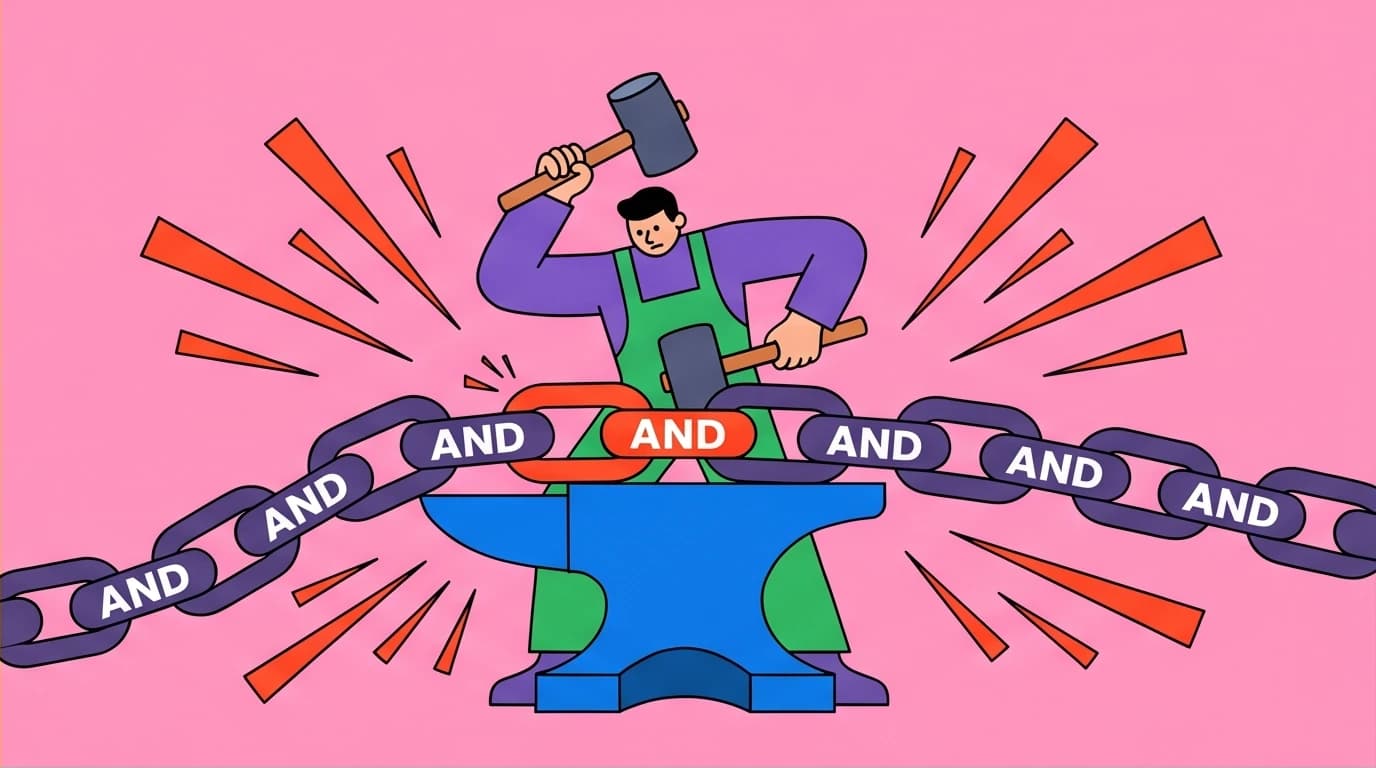
The Cormac McCarthy Vocabulary: High and Low Registers
The true genius of the Cormac McCarthy vocabulary lies in its jarring juxtaposition of registers.
On one hand, his characters speak in blunt, uneducated, working-class dialects. They use contractions, slang, and fragmented sentences native to the American Southwest or Appalachia.
On the other hand, the narrative voice describing the landscape utilizes archaic, highly specialized, and often forgotten English words. He will describe a rocky terrain using terms from geology, architecture, or 19th-century theology (words like salitter, crozzled, rachitic, or chert).
On the other hand, the narrative voice describing the landscape utilizes archaic, highly specialized, and often forgotten English words. He will describe a rocky terrain using terms from geology, architecture, or 19th-century theology (words like salitter, crozzled, rachitic, or chert).
This friction between the dirt-level dialogue of the characters and the god-like, omniscient vocabulary of the narrator creates a unique atmospheric dread. It makes the landscape feel ancient, indifferent, and infinitely larger than the humans crawling across it.
Unpacking Cormac McCarthy Punctuation Rules
McCarthy famously stated that he only believed in capital letters, periods, an occasional comma, and a colon for setting up a list. Understanding the Cormac McCarthy punctuation rules means understanding what he aggressively excluded, and more importantly, why.
Why Doesn't Cormac McCarthy Use Quotation Marks?
If you want to know why doesn't Cormac McCarthy use quotation marks, the answer comes down to page aesthetics and narrative distance. He believed quotation marks were "weird little marks" that cluttered the page and blocked the flow of reading.
By removing quotation marks, the barrier between the narrative description and the spoken word dissolves. The dialogue becomes an organic part of the landscape. A character speaking is given no more visual importance than a rock falling or a horse breathing.
But this creates a technical challenge: how do you prevent the reader from getting lost?
McCarthy solved this by mastering the dialogue beat and distinct character voices. He rarely used "he said" or "she said." Instead, he rooted the spoken words in immediate physical action.
McCarthy solved this by mastering the dialogue beat and distinct character voices. He rarely used "he said" or "she said." Instead, he rooted the spoken words in immediate physical action.
The man sat by the fire. We cant stay here.
The boy looked out into the dark. I know.
The boy looked out into the dark. I know.
Notice how the action assigns the dialogue. The man acts, then the man speaks. The boy acts, then the boy speaks. The context dictates the speaker, demanding active participation from the reader.
The Ban on Semicolons and Exclamation Points
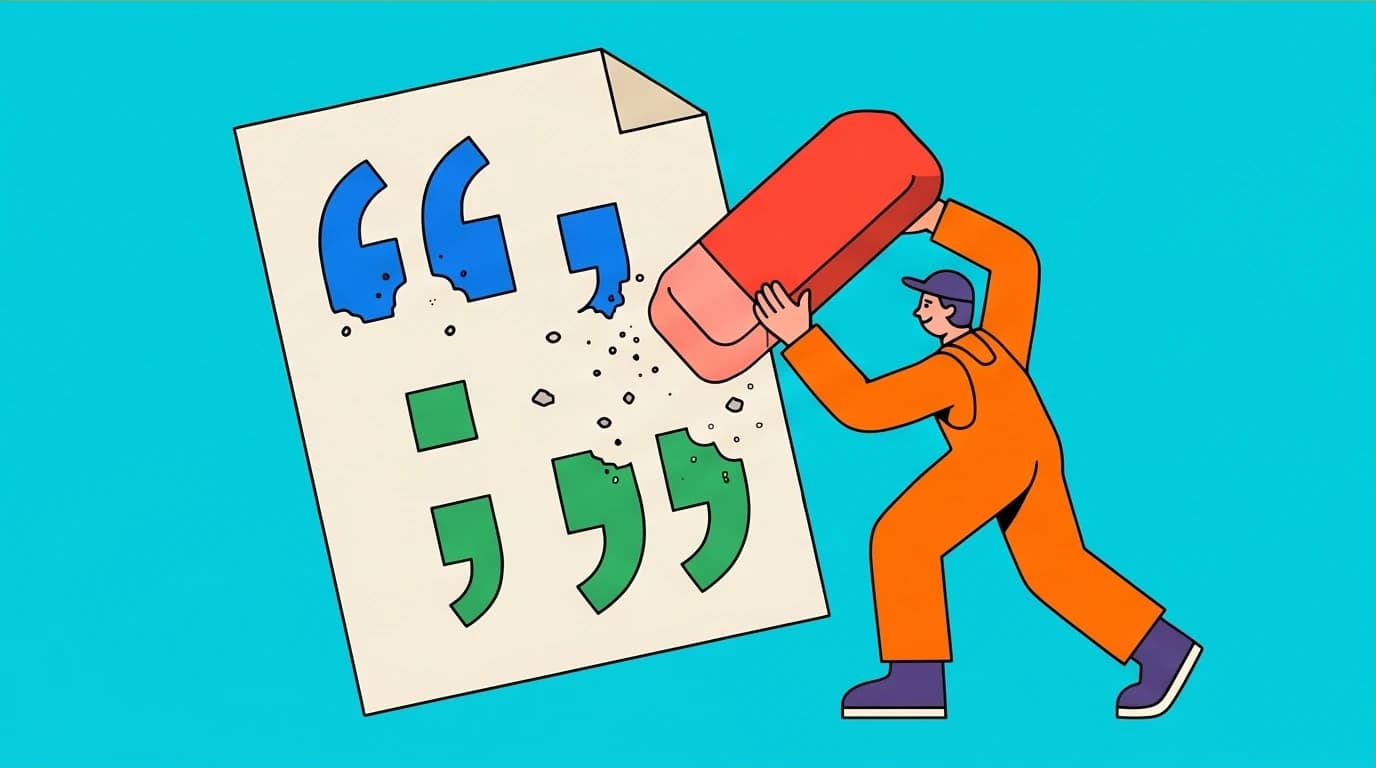
McCarthy viewed the semicolon as a sign of weakness. He believed that if you need a semicolon to connect two thoughts, you either need to rewrite the sentence to make it flow naturally, or you need to use a period and start a new sentence. Semicolons are for essays and academic papers, not for raw, narrative storytelling.
Exclamation points were similarly banished. If the words themselves do not carry the emotional weight or volume of an exclamation, tacking a vertical line and a dot at the end will not save them. The terror of the violence or the urgency of the dialogue must be entirely self-evident in the prose.
McCarthy’s disdain for grammatical crutches like semicolons and exclamation points is a masterclass in trusting your prose. If you're struggling to convey emotion and authority without relying on excessive punctuation, the solution usually lies in editing ruthlessly. Learning to cut the fat and letting your verbs do the heavy lifting is essential for any writer, regardless of genre. If you want to dive deeper into crafting clean, precise sentences that command the reader's attention without unnecessary embellishments, exploring a proven manual on writing mechanics is a great next step.
On Writing Well
William Zinsser
46 Duration10 Key Points4.7 RateHow to Write Like Cormac McCarthy
If you are an aspiring author looking to adopt his minimalist techniques for a manuscript you plan to publish on Amazon Kindle or pitch to a New York publisher, you must proceed with caution. Here is a practical framework for how to write like Cormac McCarthy without alienating your audience.
1. Master the Paratactic Sentence
Begin practicing parataxis. Write sentences where clauses are placed one after another without subordination. Stop using words like although, because, or while to connect ideas.
Standard: Because the storm was approaching, they packed up the camp.
McCarthy style: The storm moved over the ridge and they packed the camp and rode out into the gray light.
McCarthy style: The storm moved over the ridge and they packed the camp and rode out into the gray light.
2. Eradicate Dialogue Tags
Challenge yourself to write an entire scene of dialogue without a single attribution tag (he said, she shouted, they whispered). Rely entirely on paragraph breaks and action beats. If the reader loses track of who is speaking, your characters do not have distinct enough voices, or your action beats are too vague. Fix the scene, do not add the tags.
3. Elevate Your Environmental Descriptions
Treat the environment as an antagonist. Go beyond simple color and shape. Study the specific terminology of the world you are writing about. If you are describing a forest, learn the exact names of the flora, the soil, and the weather patterns. Use highly specific, slightly elevated vocabulary for the setting, but keep the human interactions brutally simple.
4. Pace with "And" Instead of Commas
When you want to speed up a sequence, especially an action sequence, remove the commas and string the actions together with "and." This will force the reader's internal monologue to read faster, mimicking the panic or relentless nature of the event.
Mastering these advanced stylistic choices takes time, practice, and a deep understanding of how storytelling mechanics work behind the scenes. While emulating McCarthy’s stark prose is an excellent exercise in pacing and tone, every aspiring author eventually needs to blend these techniques into their own unique voice. If you're serious about finishing your manuscript and want an unfiltered look at how another iconic American novelist approaches everything from dialogue tags to daily word counts, gaining insight from a master of the craft is incredibly valuable.

On Writing
Stephen King
42 Duration8 Key Points4.5 RateAbsorbing the wisdom from masters like Strunk, Zinsser, and King is crucial, but it can be a huge time commitment for any busy writer. If you struggle to find the energy for dense craft books after a long day, you can get the core lessons in a format that fits your schedule.

Fit the essential lessons from bestselling writing and literature guides into your commute or break, turning small pockets of time into powerful learning sessions.

Download LeapAhead App now
Common Pitfalls When Emulating the Style
Many writers attempt the McCarthy style and end up with unreadable manuscripts. Avoid these specific traps:
- The Run-On Mess: McCarthy's sentences, even when they run for half a page, are grammatically tight. They have a rhythm. Do not just delete commas from a poorly constructed sentence and assume it is literary. Read your sentences out loud. If you run out of breath in a way that feels awkward rather than intentional, the sentence is broken.
- The Thesaurus Syndrome: Throwing big, archaic words into your text randomly will make you look pretentious. McCarthy’s obscure words are always terrifyingly precise. If you use a word like tenebrous or crepuscular, it must perfectly match the exact lighting and mood of the scene.
- Confusing the Reader on Purpose: McCarthy did not want to confuse his readers; he wanted them to pay closer attention. If a beta reader tells you they genuinely do not know what is happening in your scene because of the lack of punctuation, you have failed the execution.
FAQ
Will literary agents or publishers reject my manuscript if I don't use quotation marks?
It depends on the execution. Traditional publishing is highly risk-averse. If your lack of quotation marks feels like a gimmick or makes the story difficult to read, agents will reject it immediately. However, if your control over rhythm and action beats is masterful and the formatting serves the specific tone of your story (like a gritty western or post-apocalyptic thriller), it can stand out as a bold, literary choice.
It depends on the execution. Traditional publishing is highly risk-averse. If your lack of quotation marks feels like a gimmick or makes the story difficult to read, agents will reject it immediately. However, if your control over rhythm and action beats is masterful and the formatting serves the specific tone of your story (like a gritty western or post-apocalyptic thriller), it can stand out as a bold, literary choice.
How do readers know who is speaking without quotation marks or dialogue tags?
You must adhere to the "one speaker per paragraph" rule strictly. Precede the spoken words with an action performed by the character who is about to speak. Additionally, the dialect, vocabulary, and worldview of the characters must be distinct enough that a reader can identify them purely by what they are saying.
You must adhere to the "one speaker per paragraph" rule strictly. Precede the spoken words with an action performed by the character who is about to speak. Additionally, the dialect, vocabulary, and worldview of the characters must be distinct enough that a reader can identify them purely by what they are saying.
Did Cormac McCarthy invent this style of punctuation?
No. While he popularized this specific flavor of rugged minimalism, he was heavily influenced by James Joyce, whom he considered a literary idol. Gertrude Stein and Ernest Hemingway also pioneered the stripping away of "unnecessary" punctuation and reliance on parataxis long before McCarthy published his first novel.
No. While he popularized this specific flavor of rugged minimalism, he was heavily influenced by James Joyce, whom he considered a literary idol. Gertrude Stein and Ernest Hemingway also pioneered the stripping away of "unnecessary" punctuation and reliance on parataxis long before McCarthy published his first novel.
Can I use this style for genres other than Westerns or Post-Apocalyptic fiction?
Yes, but the tone must match the mechanics. This style strips away warmth and artificially speeds up the reading pace while flattening emotional hierarchy. It works beautifully for noir, crime, horror, and existential literary fiction. It will likely fail if applied to a lighthearted romance or a fast-paced, commercially structured young adult fantasy.
Yes, but the tone must match the mechanics. This style strips away warmth and artificially speeds up the reading pace while flattening emotional hierarchy. It works beautifully for noir, crime, horror, and existential literary fiction. It will likely fail if applied to a lighthearted romance or a fast-paced, commercially structured young adult fantasy.