

Modern professionals drown in notifications, personal branding, and endless networking. You are told that to succeed, you must be visible. Cormac McCarthy rejected all of it. For over half a century, he produced some of the most enduring American literature by ignoring the literary establishment completely. He did not go to book parties. He did not teach creative writing. He simply sat down at his manual typewriter and worked.

If you are a researcher, creator, or professional trying to do work that actually matters, McCarthy’s approach is a masterclass in focus. His methods go far beyond formatting text on a page. They offer a rigid framework for protecting your time, cross-pollinating your ideas, and cutting away the non-essential.
The Foundation of the Cormac McCarthy Work Ethic
Most creators compromise their long-term vision for short-term gains. McCarthy lived in absolute poverty for years, bathing in lakes and eating beans, rather than take lucrative speaking engagements that would distract him from his novels.
The Cormac McCarthy work ethic is built on a singular premise: the work is the only thing that matters.
He viewed writing as a blue-collar job that required showing up every single day. There was no waiting for a muse. He recognized that cognitive endurance is built through habit. When you treat your creative output or deep research as a sacred, non-negotiable block of time, you eliminate the friction of deciding whether or not to work today.
To adopt his work ethic, you must stop treating your focus as a renewable resource. It is finite. McCarthy protected his mental energy by eliminating superficial professional obligations. He understood that every hour spent explaining his work to a crowd was an hour stolen from actually doing it.
If you find yourself constantly waiting for inspiration to strike before tackling your most important projects, you are likely battling what some call internal resistance. To adopt a blue-collar mindset toward your craft and train yourself to sit down and do the hard work regardless of how you feel, you might want to explore this modern classic on overcoming creative blocks. It’s a fantastic resource for learning how to show up consistently and silence your inner critic.
The War of Art
Steven Pressfield
 37 Duration
 9 Key Points
 4.5 Rate
Interdisciplinary Genius: The Cormac McCarthy Santa Fe Institute Connection
McCarthy famously stated that he did not hang out with other writers. He found their conversations boring. Instead, he spent decades as a fixture at the Santa Fe Institute (SFI) in New Mexico, a theoretical research center dedicated to the complex sciences.
This is where the Cormac McCarthy Santa Fe Institute connection becomes a crucial lesson for any modern professional. He surrounded himself with quantum physicists, biologists, and mathematicians.
Why does this matter for your productivity? Because breakthrough ideas rarely come from inside your own echo chamber.
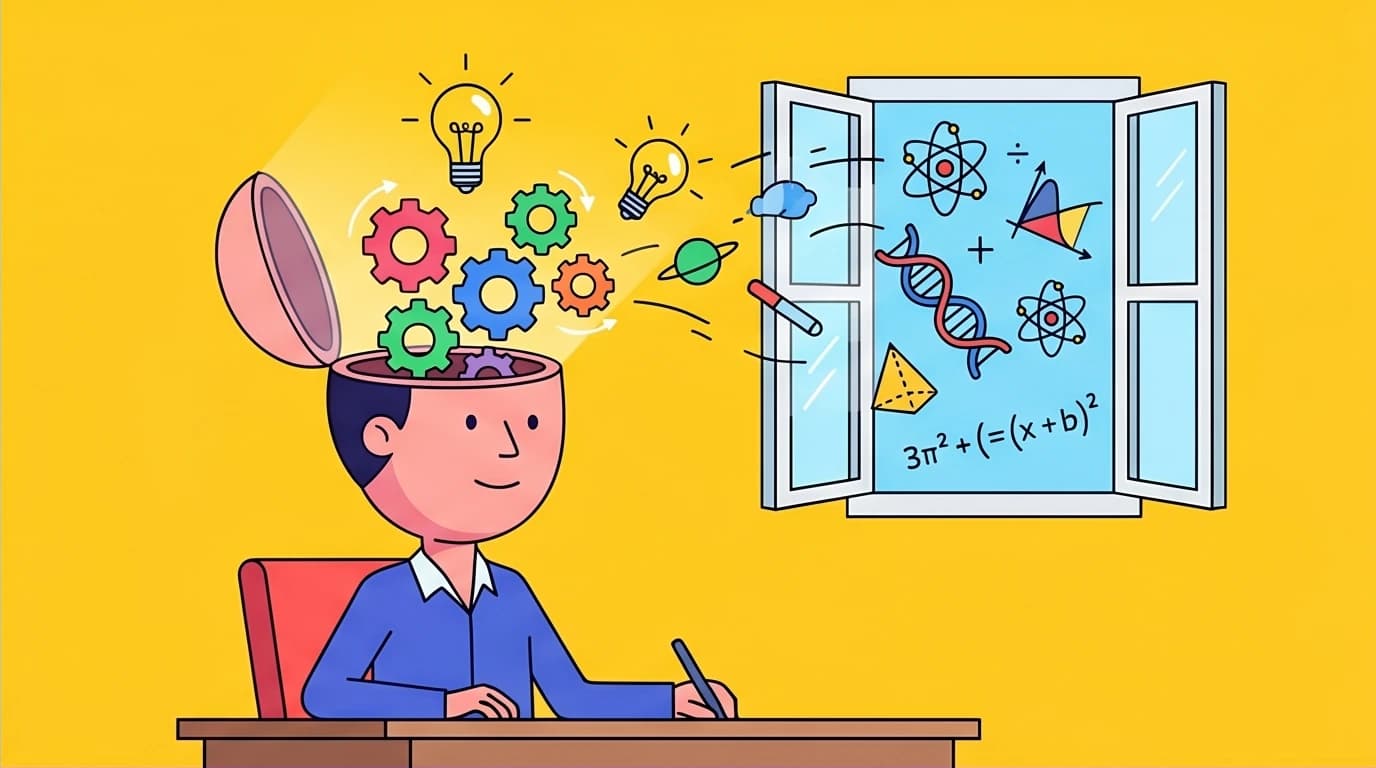
By immersing himself in fields entirely foreign to fiction—like chaos theory and evolutionary biology—McCarthy cross-pollinated his mental models. The scientists at SFI dealt in absolute truths, deep time, and the mechanics of the universe. This perspective bled directly into the stark, geological tone of masterpieces like Blood Meridian and The Road.
If you want to elevate your own output, stop consuming the exact same content as your peers. If you are a marketer, read biomechanics. If you are a software engineer, study behavioral psychology. Innovation happens at the intersection of unrelated disciplines.
The idea that breakthrough innovation comes from stepping outside your specialized lane is a powerful one for any modern professional. If you are intrigued by how generalists and those who sample from a wide variety of fields often outperform hyper-specialists, there is an incredible book that dives deep into this exact phenomenon. It perfectly illustrates why exploring unrelated disciplines can become your greatest competitive advantage in a world obsessed with early specialization.

Range
David Epstein
16 Duration7 Key Points4.8 RateOf course, finding the time to read deeply across multiple new fields is a major challenge for any busy professional. If you want to absorb the core ideas from books like Range and other bestsellers without dedicating weeks to each one, a book summary app can be a fantastic tool.

Grasp the key insights from bestselling books on interdisciplinary thinking and productivity in just 15-minute audio or text summaries, perfect for expanding your knowledge on a tight schedule.

Download LeapAhead App now
Unpacking the Cormac McCarthy Writing Process
McCarthy did not rely on complex productivity software. His physical process was famously analog, relying on an Olivetti Lettera 32 manual typewriter. He typed an estimated five million words on that machine.
The Physical Act of Deep Work
The friction of a manual typewriter forces a slower, more deliberate thought process. You cannot easily hit backspace. You must formulate the sentence in your mind before your fingers strike the keys. This physical constraint naturally enforces quality control at the point of origin.
While you do not need to buy an antique typewriter, you can apply this principle by separating your drafting phase from your editing phase. Turn off your spell-checker. Disconnect from Wi-Fi. Write in plain text. Remove the tools that allow you to endlessly tweak, and force yourself to push forward.
Subconscious Processing
McCarthy believed deeply in the power of the subconscious mind. He viewed the conscious brain as a relatively new, clunky evolutionary tool, while the subconscious was an ancient, powerful engine.
To leverage this in the Cormac McCarthy writing process, you must feed your brain high-quality raw materials (research, reading, observation) and then step away. Put the work down. Let your subconscious connect the dots while you sleep, walk, or perform manual labor. When you return to the desk, you are simply transcribing what your deeper mind has already solved.
Cultivating this kind of intense, distraction-free concentration is increasingly rare in our notification-driven world, yet it remains the ultimate currency for high-level knowledge workers. For a practical framework on how to systematically eliminate superficial tasks and train your brain to achieve extended states of profound focus, this highly recommended guide is practically a survival manual for the modern creator.
Deep Work
Cal Newport
47 Duration8 Key Points4.6 RateRelentless Subtraction: Cormac McCarthy Editing Advice
McCarthy did not just write fiction; he spent years acting as an unofficial copy editor for top-tier scientists at the Santa Fe Institute. He helped theoretical physicists rewrite their papers for publication.
The core of the Cormac McCarthy editing advice is ruthless subtraction. He despised semicolons, calling them "idiocy." He refused to use quotation marks for dialogue, believing they cluttered the page and distracted the reader.
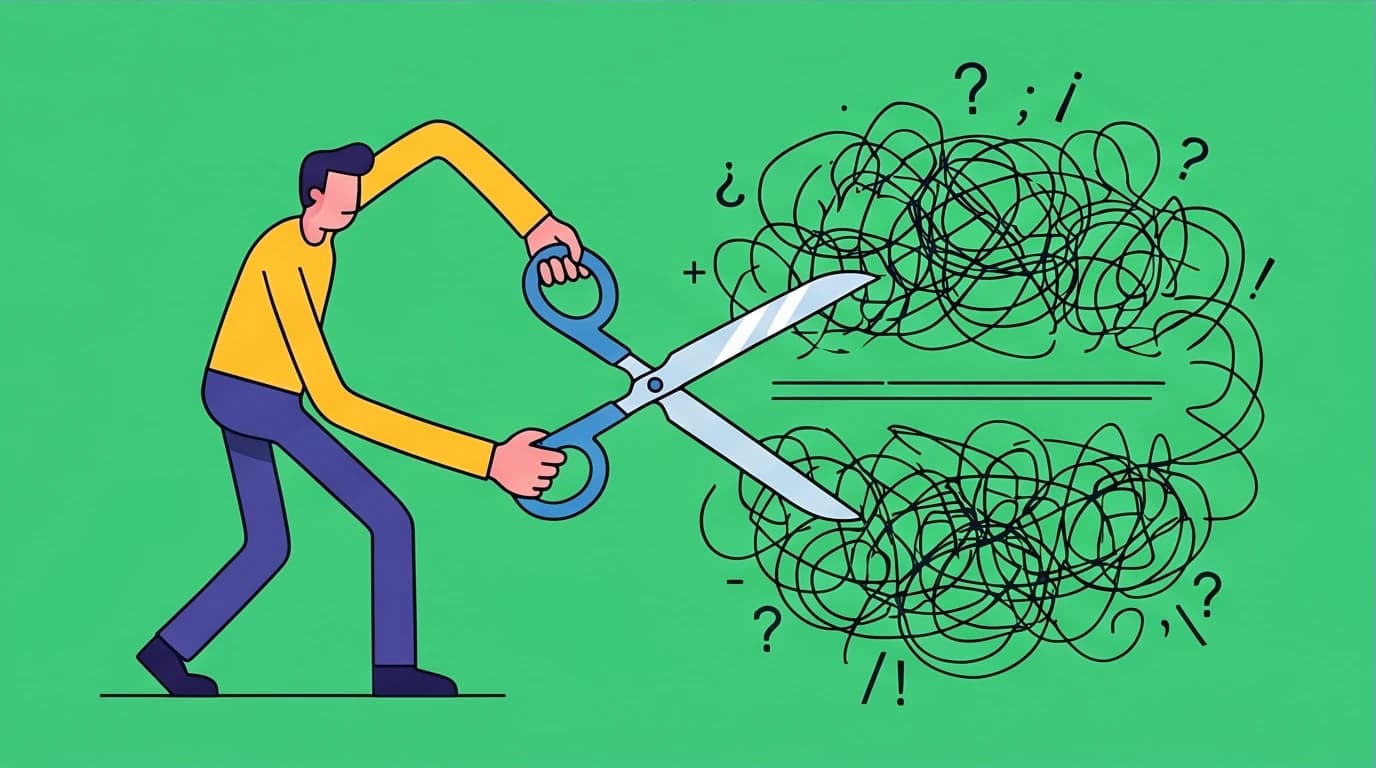
His rules for scientists—which apply perfectly to modern business writing, coding, and content creation—were incredibly strict:
- Remove unnecessary punctuation: If a sentence is written properly, the natural cadence will dictate where the reader pauses. You do not need a comma to do the heavy lifting of bad syntax.
- Delete the jargon: Stop hiding behind complex terminology to sound smart. If you cannot explain your research in plain language, you do not understand it well enough.
- Read it aloud: The ear catches what the eye misses. If a sentence causes you to stumble when spoken, it is structurally flawed. Cut it or rebuild it.
- Trust the reader: Do not over-explain. Provide the necessary data or narrative, and allow the reader's intelligence to bridge the gap.
Great work is not achieved when there is nothing left to add, but when there is nothing left to take away.
McCarthy’s editorial philosophy of ruthless subtraction applies to far more than just stringing sentences together—it is a brilliant approach to managing your time, energy, and commitments. If you want to apply this "less but better" mentality to your entire professional life and learn how to systematically cut away the non-essential clutter, this transformative read will show you how to execute purely on what truly matters.
Essentialism
Greg McKeown
32 Duration10 Key Points4.6 RateLessons from Rare Cormac McCarthy Interviews
Because he preferred isolation, Cormac McCarthy interviews are exceedingly rare. The most notable include his 2007 television interview with Oprah Winfrey and a handful of print conversations with outlets like the Wall Street Journal.
In these rare moments of public reflection, McCarthy reinforced a few vital principles for creators:
- Passion over market trends: When Oprah asked him if he cared whether millions of people read his books, he genuinely indicated he did not. He wrote the books he wanted to read. Chasing the market guarantees mediocrity.
- The necessity of struggle: He acknowledged that the work is supposed to be hard. If you are not wrestling with the material, you are likely skimming the surface.
- Death as a motivator: He frequently mentioned that life is short and the only things worth working on are matters of life and death. This is a severe, but highly effective, filtering mechanism. Before starting a new project, ask yourself if it actually matters. If it does not, drop it.
How to Apply McCarthy’s Routine to Your Own Life
You do not need to move to the desert or write post-apocalyptic fiction to benefit from these principles. You can install his operating system into your daily routine right now.
1. Isolate to create.
Block out two hours of your day where you are completely unreachable. No Slack, no email, no phone. Treat this time with the same reverence McCarthy treated his mornings at the typewriter.
Block out two hours of your day where you are completely unreachable. No Slack, no email, no phone. Treat this time with the same reverence McCarthy treated his mornings at the typewriter.

2. Audit your information diet.
Look at the last five books or articles you read. If they are all from your specific industry, you are suffocating your creativity. Go read a book on a subject you know absolutely nothing about. Force your brain to build new neural pathways.
Look at the last five books or articles you read. If they are all from your specific industry, you are suffocating your creativity. Go read a book on a subject you know absolutely nothing about. Force your brain to build new neural pathways.
3. Edit with a machete.
Open your latest report, article, or email. Delete 20% of the words. Remove the adverbs. Break the long sentences in half. Strip away the corporate speak and formatting tricks. Let the raw ideas stand on their own.
Open your latest report, article, or email. Delete 20% of the words. Remove the adverbs. Break the long sentences in half. Strip away the corporate speak and formatting tricks. Let the raw ideas stand on their own.
McCarthy proved that sustained, legendary output does not require a personal brand, a massive network, or constant optimization. It requires a willingness to sit alone in a room, confront the work, and refuse to compromise.
Putting these principles into practice requires consistent learning, but for many of us, time is the biggest hurdle. To keep up with the essential reading that fuels deep work and new ideas, you might find an app helpful for absorbing key concepts on the go, even when you're too exhausted to sit down with a book after work.
Turn your commute or workout into a productive learning session by listening to 15-minute summaries of the essential books on focus, discipline, and creativity.
Download LeapAhead App now
FAQ
Did Cormac McCarthy outline his novels before writing?
No. McCarthy did not use rigid outlines. He trusted his subconscious mind to guide the narrative. He would start with a core image or a specific scenario and write his way into the story, allowing the themes to reveal themselves naturally through the process of daily work.
No. McCarthy did not use rigid outlines. He trusted his subconscious mind to guide the narrative. He would start with a core image or a specific scenario and write his way into the story, allowing the themes to reveal themselves naturally through the process of daily work.
What typewriter did Cormac McCarthy use?
He famously used a light blue Olivetti Lettera 32 manual typewriter. He bought it in a pawn shop for $50 in the early 1960s and used it for nearly 50 years until it wore out. It was later auctioned for over $250,000, and a friend bought him a replacement of the exact same model for under $20.
He famously used a light blue Olivetti Lettera 32 manual typewriter. He bought it in a pawn shop for $50 in the early 1960s and used it for nearly 50 years until it wore out. It was later auctioned for over $250,000, and a friend bought him a replacement of the exact same model for under $20.
Why did Cormac McCarthy ignore standard punctuation rules?
He believed that the page should look clean and unuttered. He thought that quotation marks, semicolons, and excessive commas distracted from the text itself. He relied on capitalization, periods, and the natural rhythm of well-constructed sentences to guide the reader.
He believed that the page should look clean and unuttered. He thought that quotation marks, semicolons, and excessive commas distracted from the text itself. He relied on capitalization, periods, and the natural rhythm of well-constructed sentences to guide the reader.
How did science influence his writing?
By spending decades at the Santa Fe Institute, McCarthy absorbed the language and concepts of theoretical physics, mathematics, and biology. This scientific grounding gave his prose a unique, objective, and almost geological detachment, elevating his fiction far beyond standard literary conventions.
By spending decades at the Santa Fe Institute, McCarthy absorbed the language and concepts of theoretical physics, mathematics, and biology. This scientific grounding gave his prose a unique, objective, and almost geological detachment, elevating his fiction far beyond standard literary conventions.