

You close the book. You stare at the wall. A heavy, hollow dread settles in your stomach. Whether you just put down a dog-eared paperback from Barnes & Noble or finished an intense listening session on Audible, reading Cormac McCarthy rarely leaves you feeling comforted. He does not write beach reads. He writes brutal, unforgiving landscapes where morality feels like a cruel joke and violence is the only universal language.
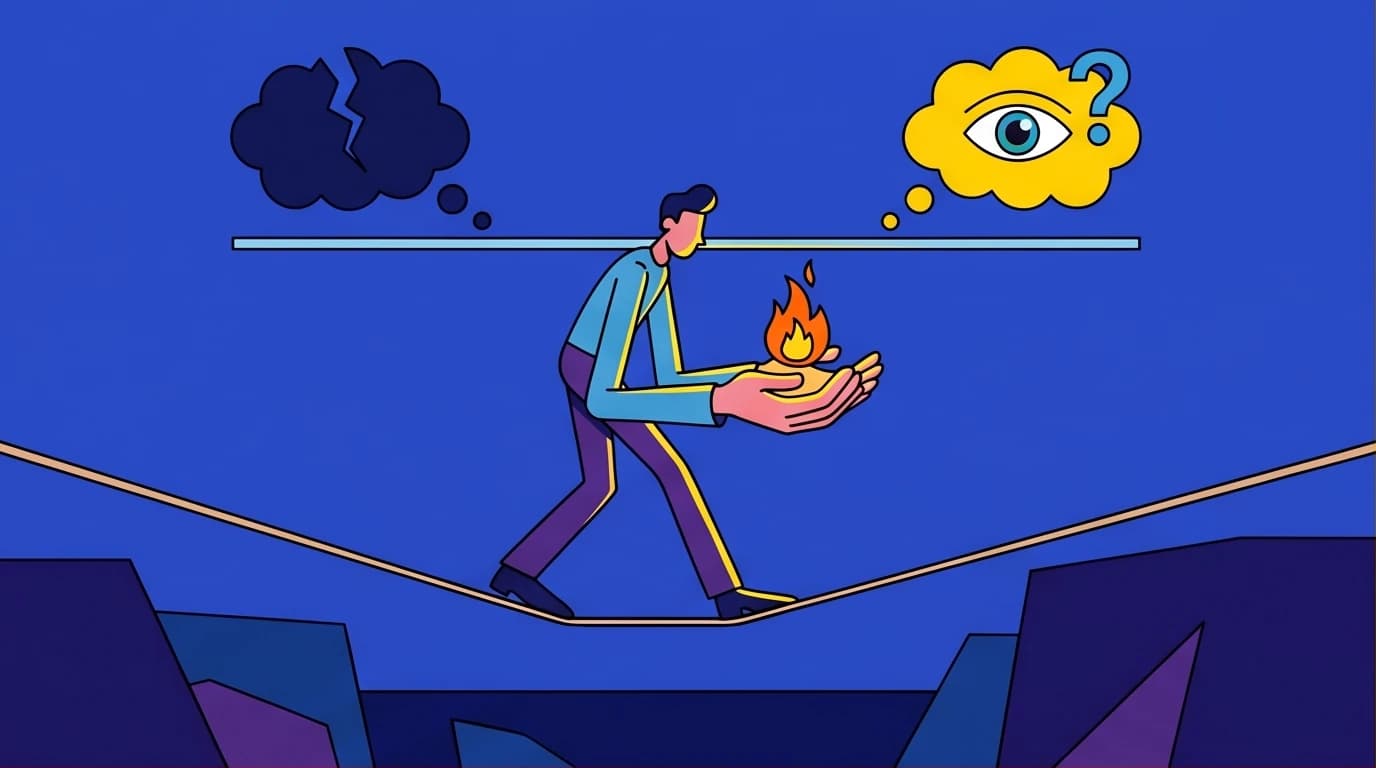
You are left wondering what it all means. Is there a point to the bloodshed? Does he hate humanity? To understand the underlying mechanics of his work, we have to look past the blood on the page. We must examine the philosophical framework that holds his terrifying worlds together.
The power of McCarthy's philosophy is inseparable from his unique, minimalist prose. The way he structures his sentences and famously omits punctuation forces the reader to confront the harshness of his worlds directly.
The Foundation: A Universe Without a Moral Arc
Most Western literature relies on a recognizable moral framework. Good people suffer but eventually triumph. Bad people might win for a while, but justice eventually catches up. The universe, in most fiction, bends toward justice.
McCarthy shatters this illusion.
His universe does not care about you. It is vast, ancient, and entirely indifferent to human concepts of fairness. When you look at the overarching themes in Cormac McCarthy books, the most prominent is this cosmic apathy. A blizzard will freeze a saint just as quickly as it freezes a murderer. A bullet does not ask about a man's moral character before tearing through his chest.
By removing the safety net of a moral universe, McCarthy forces his readers to confront human nature in a vacuum. If there is no God watching, no karma balancing the scales, and no inherent justice, how do we choose to act? This question is the beating heart of his literary catalog.
If McCarthy’s dismantling of traditional morality fascinates you, exploring the philosophical roots of this worldview is incredibly rewarding. Before authors like McCarthy painted these bleak landscapes in fiction, philosophers were already questioning the validity of universal moral codes. Friedrich Nietzsche famously challenged the foundations of Western morality, urging thinkers to look beyond binary concepts of right and wrong. If you want to dive deeper into the idea of a universe stripped of inherent moral structures, this classic philosophical text is an essential read.
Beyond Good and Evil
Friedrich Nietzsche
 32 Duration
 11 Key Points
 4.5 Rate
If diving into dense philosophical texts like Nietzsche's feels daunting, there's a way to grasp the core ideas without getting bogged down.


LeapAhead

This app breaks down the essential arguments from challenging books, helping you understand foundational philosophies in just 15 minutes.
Demystifying Cormac McCarthy Nihilism
Many readers categorize his work as pure nihilism. Nihilism, in a philosophical sense, argues that life is without objective meaning, purpose, or intrinsic value. It is easy to see why this label sticks to him.
Consider Anton Chigurh in No Country for Old Men. He operates as a force of nature, an inevitable wave of death moving across the Texas landscape. He flips a coin to decide who lives and who dies. The coin represents the ultimate nihilistic truth: your life, your goodness, your plans—they mean absolutely nothing in the face of blind, random chance.

However, calling his work strict Cormac McCarthy nihilism is an oversimplification.
McCarthy uses nihilism as the setting, not the conclusion. He paints a nihilistic reality to strip away the comforts of modern civilization, religion, and societal norms. He creates a zero-point baseline. If the world is truly meaningless and chaotic, what happens to the human soul? He forces his characters into this terrifying abyss to see who shatters and who manages to forge their own purpose. He does not champion nihilism; he exposes it as the harsh weather condition his characters must survive.
The Meaning of Blood Meridian: Violence as the Prime Mover
If there is one book that drives readers to search for philosophical answers, it is his 1985 masterpiece. The meaning of Blood Meridian is one of the most debated topics in contemporary American literature.
The novel follows "the kid" as he rides with the Glanton gang, a real historical group of scalp hunters who murdered their way across the borderlands. The violence in the book is numbing, biblical, and relentless. It is not an anomaly. In the world of Blood Meridian, violence is the fundamental organizing principle of existence.
At the center of this carnage stands Judge Holden. The Judge is one of the most terrifying figures in literary history. He is a massive, hairless, highly educated man who functions as the mouthpiece for the novel's darkest philosophies.
The Judge argues that war is the ultimate truth. "War is god," he declares. To the Judge, life is a supreme game, and the only way to test the truth of existence is to stake your life against another's. The Judge believes that trying to impose moral order on a chaotic, blood-soaked world is a delusion. Dominance is the only reality.
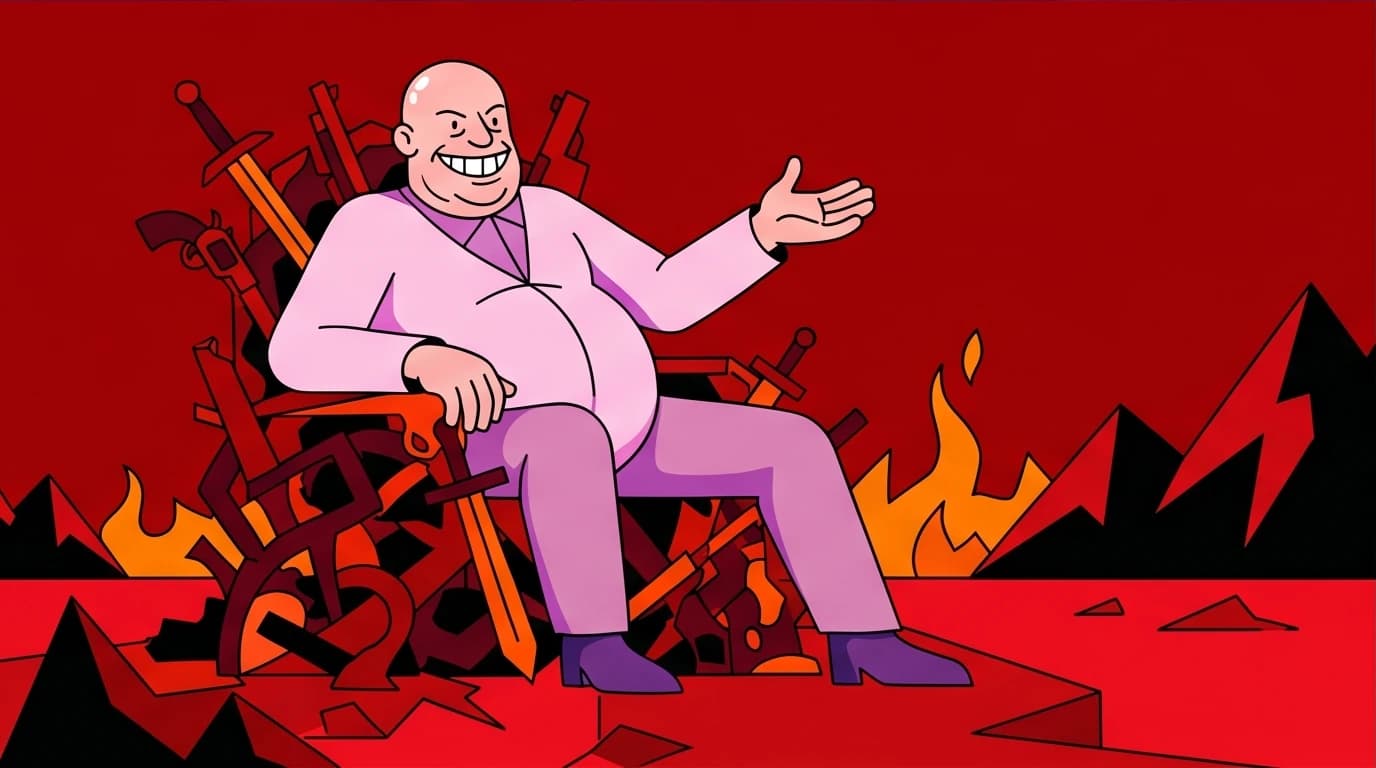
So, what is the meaning of Blood Meridian? It operates heavily on Gnostic principles. In Gnosticism, the material world is inherently corrupt, created by a malevolent false god (an archon). Judge Holden acts as this archon. He is entirely at home in the slaughter because he represents the predatory nature of the material universe.
The kid, despite his own violent acts, ultimately fails to fully embrace the Judge’s absolute philosophy of death. He holds back a small, almost invisible fraction of his soul. That hesitation is his doom, but it is also his only sliver of humanity. The novel forces us to look at the blood soaked into the soil of American expansion and admit that violence is not a departure from human nature—it is our most ancient tradition.
The relentless violence in Blood Meridian often leaves readers wondering if human beings are biologically or culturally wired for destruction. While McCarthy explores this through the brutal lens of fiction, prominent psychologists and social theorists have spent decades analyzing the exact same dark phenomenon in the real world. If you are intrigued by the psychological underpinnings of human cruelty and want to understand why mankind so often defaults to violence, exploring the scientific and historical anatomy of human destructiveness offers profound—and sometimes chilling—insights.
The Anatomy of Human Destructiveness
Erich Fromm
21 Duration8 Key Points4.9 RateCormac McCarthy Existentialism: Carrying the Fire
If Blood Meridian is his darkest assessment of human nature, his later works offer a desperate, beautiful counterpoint. This is where Cormac McCarthy existentialism takes center stage.
Existentialism suggests that while the universe is inherently meaningless, individuals can—and must—create their own meaning through their choices and actions. We are thrown into an absurd, chaotic world, but we possess free will.
Nowhere is this clearer than in The Road.
A father and son walk through an apocalyptic wasteland. Everything is dead. The sky is gray. The temperature is dropping. Cannibals roam the broken highways. There is no hope for a rescue, no society to rebuild, and seemingly no future. Pure nihilism would dictate that they sit down in the ash and wait to die.
Yet, they keep walking.
The father tells the boy that they are the "good guys" because they are "carrying the fire." This fire is not physical. It is the existential choice to retain humanity in an inhuman world. It is a fabricated meaning. The father chooses to love his son, to protect him, and to refuse cannibalism, not because God will reward him, but because making that moral choice is the only thing that separates them from the monsters.
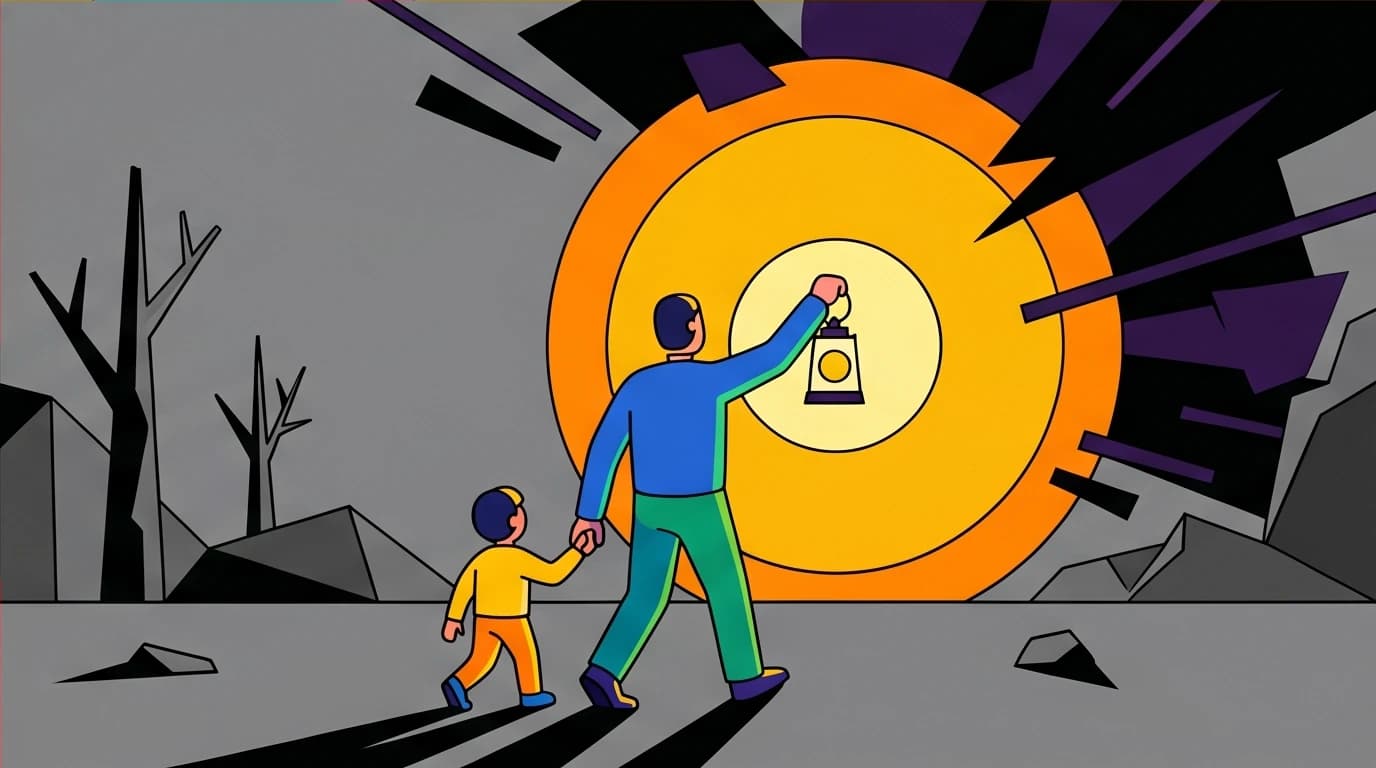
This is the profound beauty of McCarthy’s philosophy. In a universe governed by darkness, light does not exist naturally. You have to strike the match yourself. You have to carry the fire, even if you are the only one left in the dark.
The stark existentialism found in The Road perfectly mirrors the philosophy of absurdism—the idea that even when confronted with a completely indifferent and chaotic universe, the human spirit can still choose to rebel by creating its own meaning. You don't have to wander a post-apocalyptic landscape covered in ash to feel the weight of this existential burden. If you want to explore the philosophical framework behind "carrying the fire" and choosing to push a heavy boulder up a hill just for the sake of living, Albert Camus's exploration of the absurd is a brilliant companion piece to McCarthy’s fiction.
The Myth of Sisyphus
Albert Camus
49 Duration8 Key Points4.5 RateThe father's relentless journey in The Road is a masterclass in existential hope. The book is packed with stoic wisdom and profound observations about survival against all odds.
Core Themes in Cormac McCarthy Books
To fully grasp his philosophical architecture, you can track several recurring themes in Cormac McCarthy books across his entire bibliography:
1. The Hostility of the Natural World
Nature in his books is never a peaceful sanctuary. It is an active antagonist. The unforgiving deserts, the freezing mountains, and the endless plains remind humans of their fragility. You do not conquer nature; you survive it for a few miles at a time.
2. The Illusion of Human Control
Characters who believe they can control their fate usually end up dead. Llewelyn Moss in No Country for Old Men thinks he is smart enough to keep the cartel money. He thinks he understands the rules. He fails to realize that the rules have changed, and chaos cannot be outsmarted. True wisdom in McCarthy's world is recognizing your own powerlessness.
3. The Degraded State of Humanity
His characters are often outcasts, criminals, or survivors operating on the fringes of society. By stripping away civilization, law enforcement, and social expectations, he exposes the raw, unvarnished engine of human desire. We see what people are willing to do when no one is watching.
4. Generational Decay and Nostalgia
Sheriff Ed Tom Bell in No Country for Old Men represents a deep, mournful nostalgia. He looks at the violence around him and feels completely unequipped to handle it. There is a recurring sense that the world is winding down, growing darker, and leaving decent men behind.
These powerful themes run through his entire body of work, making each novel a profound, if challenging, experience. For those wondering where to begin their journey into his literary universe, a curated guide can be invaluable.
The Takeaway: Finding Meaning in the Dark
The Cormac McCarthy philosophy is not for the faint of heart. It demands that you stare into the abyss. It asks you to acknowledge the brutality of human history, the indifference of the cosmos, and the fragile, temporary nature of your own life.
But he does not leave you empty-handed. By tearing down all the fake, comfortable structures we use to hide from reality, he reveals what is truly valuable. If love, decency, and courage can survive in the ash-covered world of The Road or the blood-soaked deserts of the 1850s Southwest, then they are real. They are not just social constructs; they are conscious, defiant choices.
You finish the book. The dread is still there. But so is a sharp, clear realization: the darkness is a given. The fire is a choice.
This article touches on a long list of profound but challenging books. If you're inspired to explore their ideas but struggle to find the time for such dense reading, a more modern approach can help you get started.
LeapAhead
This app distills the key insights from authors like Camus and Nietzsche into brief summaries, making it easier to engage with their core philosophies on a busy schedule.
McCarthy’s fiction forces us to confront the darkest corners of the human experience, but real life has unfortunately produced environments just as bleak. Yet, even in the most horrific historical realities, individuals have found ways to "carry the fire" and construct meaning when all hope seems lost. If you are deeply moved by the idea of forging your own purpose and clinging to humanity in the face of unimaginable suffering, reading about real-world psychological survival in the darkest of times will profoundly change how you view your own life's challenges.
Man's Search for Meaning
Viktor E. Frankl
44 Duration8 Key Points4.6 RateFAQ
Was Cormac McCarthy a nihilist?
No. While he wrote extensively about nihilistic environments where the universe exhibits total indifference to human suffering, his focus was on how individuals respond to that void. Characters who embody pure nihilism (like Judge Holden or Anton Chigurh) act as antagonists. McCarthy’s work ultimately leans toward existentialism—finding or creating your own moral code and meaning despite the darkness.
No. While he wrote extensively about nihilistic environments where the universe exhibits total indifference to human suffering, his focus was on how individuals respond to that void. Characters who embody pure nihilism (like Judge Holden or Anton Chigurh) act as antagonists. McCarthy’s work ultimately leans toward existentialism—finding or creating your own moral code and meaning despite the darkness.
What does it mean to "carry the fire" in The Road?
"Carrying the fire" is an existential metaphor for preserving human goodness, hope, and basic morality in a world that has lost all of these things. It represents the conscious choice to remain human and to act with love and decency, even when survival dictates that you should become a monster.
"Carrying the fire" is an existential metaphor for preserving human goodness, hope, and basic morality in a world that has lost all of these things. It represents the conscious choice to remain human and to act with love and decency, even when survival dictates that you should become a monster.
Why is there so much violence in McCarthy's novels?
McCarthy viewed violence not as a disruption of peace, but as the historical baseline of human existence. He used extreme violence to strip away societal illusions and force his characters into situations where their true nature is revealed. The violence is a structural tool used to test their philosophical and moral limits.
McCarthy viewed violence not as a disruption of peace, but as the historical baseline of human existence. He used extreme violence to strip away societal illusions and force his characters into situations where their true nature is revealed. The violence is a structural tool used to test their philosophical and moral limits.
Is Judge Holden the devil?
Judge Holden from Blood Meridian is often interpreted as a demonic figure, an archon from Gnostic theology, or the physical embodiment of war and human evil. He is immortal in his essence, possessing unnatural knowledge and abilities, making him less of a normal human and more of a cosmic force of destruction.
Judge Holden from Blood Meridian is often interpreted as a demonic figure, an archon from Gnostic theology, or the physical embodiment of war and human evil. He is immortal in his essence, possessing unnatural knowledge and abilities, making him less of a normal human and more of a cosmic force of destruction.