

You want to read one of America's greatest literary giants, but his reputation precedes him. You open a copy at a bookstore, look at a page, and see massive blocks of text. There are no quotation marks. Commas are virtually nonexistent. The vocabulary feels pulled from a 19th-century dictionary, and the subject matter is notoriously bleak. Browsing through Amazon reviews or Goodreads threads often leaves new readers feeling more intimidated than inspired.
The barrier to entry seems high. You do not want to invest hours into a book only to quit halfway through because the prose feels like an insurmountable wall.
You just need a structured path. Cormac McCarthy’s bibliography spans Appalachian gothic tales, sweeping Western epics, and post-apocalyptic survival stories. Not all of his novels require a dictionary and extreme patience. By choosing the right entry point, you can train your brain to understand his rhythm. Once you click with his cadence, the lack of punctuation stops being a hurdle and becomes the very thing that makes his writing so hypnotic. To better understand the rules behind his minimalist approach, it's helpful to explore the reasoning for his famous stylistic choices.
Here is the strategic way to approach his work.
And if you're intrigued by McCarthy's themes but still hesitant about the time commitment for his denser works, getting a preview of the core ideas can be a smart first step.


Quickly grasp the essential themes of challenging books like McCarthy's, so you can decide which masterpieces are worth your time.
 LeapAhead
Where to Start with Cormac McCarthy: The Accessible Entries
If you are wondering where to start with Cormac McCarthy, ignore the literary elitists who tell you to jump straight into his heaviest works. Start here to get accustomed to his style without getting bogged down by extreme structural complexity.

1. The Road (The Emotional Anchor)
The Road won the Pulitzer Prize for Fiction and became an Oprah’s Book Club pick for a good reason. It is McCarthy’s most emotionally accessible and linear novel.
The premise is straightforward: A father and his young son walk alone through a burned, post-apocalyptic American landscape. The temperatures drop well below zero Fahrenheit, ash falls like snow, and starvation is a daily reality. They are pushing south toward the coast in hopes of finding warmth and good people.
Why it works for beginners:
The prose here is stripped down. Unlike his earlier works, which feature sprawling, baroque sentences, the language in The Road is sparse and direct. The dialogue is minimal, making it easy to follow who is speaking even without quotation marks. The intense emotional core—a father trying to protect his child at the end of the world—drives you forward page by page. This simple premise is a vessel for some of McCarthy's most powerful observations on hope and despair.
The prose here is stripped down. Unlike his earlier works, which feature sprawling, baroque sentences, the language in The Road is sparse and direct. The dialogue is minimal, making it easy to follow who is speaking even without quotation marks. The intense emotional core—a father trying to protect his child at the end of the world—drives you forward page by page. This simple premise is a vessel for some of McCarthy's most powerful observations on hope and despair.
2. No Country for Old Men (The Pacing of a Thriller)
Originally conceived as a screenplay, No Country for Old Men reads with the velocity of a modern thriller. Set in the 1980s along the Texas-Mexico border, it follows Llewelyn Moss, a welder who stumbles across a botched drug deal and two million dollars in a satchel. He takes the money, triggering a relentless pursuit by Anton Chigurh, a philosophical and terrifying hitman.
Why it works for beginners:
The plot is incredibly tight. If you have seen the Academy Award-winning Coen brothers adaptation, you already know the narrative beats. This familiarity allows you to focus purely on McCarthy's writing style. The sentences are punchy, the action is visceral, and the dialogue snaps back and forth with grim humor. It proves that McCarthy can write a masterclass in suspense.
The plot is incredibly tight. If you have seen the Academy Award-winning Coen brothers adaptation, you already know the narrative beats. This familiarity allows you to focus purely on McCarthy's writing style. The sentences are punchy, the action is visceral, and the dialogue snaps back and forth with grim humor. It proves that McCarthy can write a masterclass in suspense.
If you find yourself drawn to the relentless pacing and dark, rural American underbelly of No Country for Old Men, you might want to explore other thrillers that capture a similarly gritty atmosphere. Gillian Flynn’s work offers a visceral, character-driven mystery rooted in the bleak heartland of America. It delivers a masterclass in psychological suspense that doesn't pull any punches, making it an excellent palate cleanser between McCarthy's heavier works.
Dark Places
Gillian Flynn
 19 Duration
 7 Key Points
 5 Rate
Advancing to the Border Trilogy
Once you understand how McCarthy handles dialogue and pacing, you are ready to experience his mastery of landscapes and the American West.
3. All the Pretty Horses
This novel won the National Book Award and brought McCarthy mainstream commercial success for the first time. It is the first installment of The Border Trilogy.
Set in the late 1940s, it follows sixteen-year-old John Grady Cole. Facing the sale of his family's Texas ranch, he and his friend saddle their horses and ride hundreds of miles south into Mexico to find work as cowboys. What starts as a romantic boy's adventure quickly devolves into a harsh lesson in reality, violence, and heartbreak.
Why you should read it next:
It introduces McCarthy’s breathtaking descriptive powers. His ability to paint the desert landscapes, the thunderstorms, and the physical act of riding a horse is unmatched. It has a surprisingly tender romance at its center, making it one of his most traditionally satisfying narratives.
It introduces McCarthy’s breathtaking descriptive powers. His ability to paint the desert landscapes, the thunderstorms, and the physical act of riding a horse is unmatched. It has a surprisingly tender romance at its center, making it one of his most traditionally satisfying narratives.
4. The Crossing and Cities of the Plain
If you loved All the Pretty Horses, you should finish the trilogy. The Crossing is a darker, more meandering tale following a different protagonist, Billy Parham, as he makes three distinct journeys into Mexico. Cities of the Plain brings John Grady Cole and Billy Parham together for a tragic, inevitable conclusion.
McCarthy’s Westerns are renowned for stripping away the romanticized myths of the frontier to reveal a much harsher, unforgiving reality. If you are fascinated by the brutal, real-life history of the American West and its complex collision of cultures, diving into narrative nonfiction is a rewarding next step. David Grann’s acclaimed historical epic chronicles a dark, gripping chapter of American history that perfectly echoes the themes of greed, lawlessness, and survival found throughout the Border Trilogy.
Killers of the Flower Moon
David Grann, Will Patton
20 Duration7 Key Points4.6 RateConfronting the Most Difficult Cormac McCarthy Books
When you feel ready for a challenge, it is time to face the most difficult Cormac McCarthy books. These are the novels that cemented his legacy as the heir to Herman Melville and William Faulkner. They require patience, focus, and a willingness to sit with ambiguity.
5. Blood Meridian, or the Evening Redness in the West
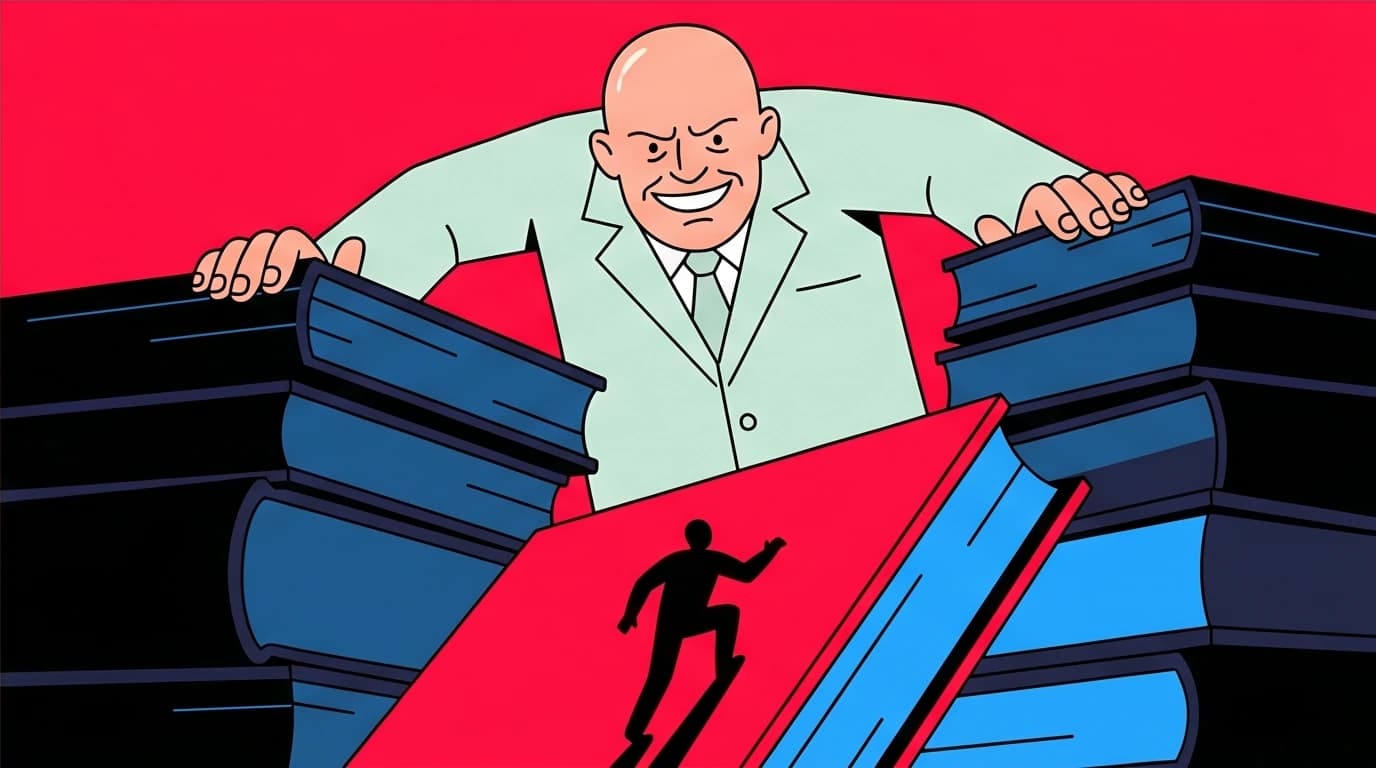
Many critics consider this the Great American Novel. Based on historical events from the 1850s, it follows a teenage runaway known only as "the kid" who joins the Glanton gang—a real-life group of scalp hunters who massacred Native Americans and Mexican villagers for bounty.
Presiding over the carnage is Judge Holden, a massive, hairless, terrifyingly articulate polymath who represents war, philosophy, and perhaps the devil himself.
The Challenge:
Blood Meridian is brutal. The violence is relentless, apocalyptic, and vividly described. But the real challenge is the prose. McCarthy utilizes archaic vocabulary and massive, biblical sentences that run for paragraphs. You will likely need to reread pages multiple times. Do not rush it. Treat it like a long, dark poem. The book's brutal narrative is a vehicle for exploring deep, often nihilistic, philosophical questions that run through much of his work.
Blood Meridian is brutal. The violence is relentless, apocalyptic, and vividly described. But the real challenge is the prose. McCarthy utilizes archaic vocabulary and massive, biblical sentences that run for paragraphs. You will likely need to reread pages multiple times. Do not rush it. Treat it like a long, dark poem. The book's brutal narrative is a vehicle for exploring deep, often nihilistic, philosophical questions that run through much of his work.
6. Suttree
Set in the early 1950s in Knoxville, Tennessee, Suttree is McCarthy’s most personal and semi-autobiographical novel. Cornelius Suttree has abandoned his wealthy family to live on a houseboat on the Tennessee River, surviving by catching catfish and associating with a bizarre cast of drunks, thieves, and outcasts.
The Challenge:
Unlike his Westerns, Suttree lacks a propulsive plot. It is an episodic, highly atmospheric slice of life. The vocabulary is arguably even denser than in Blood Meridian. However, it is also McCarthy’s funniest book, filled with dark humor and deeply empathetic character portraits.
Unlike his Westerns, Suttree lacks a propulsive plot. It is an episodic, highly atmospheric slice of life. The vocabulary is arguably even denser than in Blood Meridian. However, it is also McCarthy’s funniest book, filled with dark humor and deeply empathetic character portraits.
Surviving McCarthy's darkest worlds often means watching deeply flawed characters battle unforgiving elements and their own primal instincts. If you appreciate raw, uncompromising stories of survival in brutal environments, it might be the perfect time to revisit one of the greatest American frontier classics. Jack London's legendary tale explores the untamed wilderness with a stripped-down, brutal elegance that arguably paved the way for modern literary survival epics like Blood Meridian and The Road.
The Call of the Wild
Jack London
43 Duration9 Key Points4.5 RateThe Ultimate Cormac McCarthy Reading Order
To maximize your enjoyment and minimize frustration, follow this specific progression. This Cormac McCarthy reading order gradually scales up the complexity of his prose and themes.
- Phase 1: The Hook. Start with No Country for Old Men. It trains your eyes to read his unpunctuated dialogue while keeping you glued to a thriller plot.
- Phase 2: The Heart. Read The Road. It strips away the complex vocabulary and focuses on raw, devastating emotion.
- Phase 3: The Landscape. Read All the Pretty Horses. You now understand his style; it is time to appreciate his sprawling environmental descriptions and Western motifs.
- Phase 4: The Masterpiece. Tackle Blood Meridian. You are now fully equipped to handle his heaviest, most profound work.
- Phase 5: The Deep Cuts. Move on to Suttree, or his final philosophical duology, The Passenger and Stella Maris.
Quick Cormac McCarthy Book Summaries for Easy Reference
If you are browsing a bookstore right now and need to make a quick decision, here are the core Cormac McCarthy book summaries.
- The Road: A father and son fight for survival in a frozen, ash-covered post-apocalyptic America. Bleak but deeply moving.
- No Country for Old Men: A Texas welder steals cartel money and is hunted by a relentless, coin-flipping killer. Fast-paced and tense.
- All the Pretty Horses: Two Texas teenagers ride into Mexico in the 1940s looking for cowboy life, only to find harsh realities and romance. Beautiful and adventurous.
- Blood Meridian: A teenage runaway joins a gang of ruthless scalp hunters in the 1850s, led by a demonic, philosophical giant. Epic, violent, and highly complex.
- Suttree: A wealthy man abandons his family to live among drunks and outcasts on a Tennessee river houseboat. Episodic, funny, and beautifully written.
- The Passenger / Stella Maris: A salvage diver haunted by the atomic bomb and his genius, schizophrenic sister grapple with math, grief, and reality. Intellectual and dialogue-heavy.
Seeing all these great titles laid out can be inspiring, but also a bit daunting if your to-read list is already long. If you want to absorb the key takeaways from these and other classics without waiting, a learning app can help.
Get the core insights from bestselling nonfiction books in minutes, helping you clear your reading list and learn on a busy schedule.
LeapAheadHow to Read His Prose: A Survival Guide
McCarthy famously rejected semicolons and quotation marks. He believed that if you wrote well enough, you did not need little marks on the page to tell the reader how to read the sentence.
When you start your first McCarthy book, you will likely feel disoriented. Here is how to adapt quickly:
Rely on Capitalization for Dialogue
Even without quotation marks, McCarthy follows rules. Every time a new speaker begins talking, he starts a new paragraph and capitalizes the first letter. If you lose track of who is speaking in a back-and-forth exchange, just count backward to the last time a character was explicitly named.
Even without quotation marks, McCarthy follows rules. Every time a new speaker begins talking, he starts a new paragraph and capitalizes the first letter. If you lose track of who is speaking in a back-and-forth exchange, just count backward to the last time a character was explicitly named.
Embrace the "And"
McCarthy uses a literary device called polysyndeton. Instead of using commas to separate actions, he repeatedly uses the word "and." (e.g., He saddled the horse and rode out into the cold and the wind was blowing and the sky was dark.) Do not pause where you think a comma should be. Read the sentence with a continuous, rolling momentum.
McCarthy uses a literary device called polysyndeton. Instead of using commas to separate actions, he repeatedly uses the word "and." (e.g., He saddled the horse and rode out into the cold and the wind was blowing and the sky was dark.) Do not pause where you think a comma should be. Read the sentence with a continuous, rolling momentum.
Read Difficult Passages Out Loud
If a dense paragraph in Blood Meridian or Suttree stops making sense, read it aloud. McCarthy’s prose is highly rhythmic. It is meant to sound like a preacher delivering a sermon or a storyteller around a campfire. Your ears will often catch the meaning that your eyes missed.
If a dense paragraph in Blood Meridian or Suttree stops making sense, read it aloud. McCarthy’s prose is highly rhythmic. It is meant to sound like a preacher delivering a sermon or a storyteller around a campfire. Your ears will often catch the meaning that your eyes missed.
Do Not Stop for Every Word
You will encounter words like catamite, hackamore, architrave, and creosote. If you stop to consult a dictionary every time, you will ruin the pacing. Let context carry you through. Understand the mood first; look up the exact definitions later.
You will encounter words like catamite, hackamore, architrave, and creosote. If you stop to consult a dictionary every time, you will ruin the pacing. Let context carry you through. Understand the mood first; look up the exact definitions later.
Tackling dense, challenging literature like McCarthy’s requires a real shift in how you process the written word. If you find yourself wanting to strengthen your reading comprehension or learn how to extract deeper meaning from difficult texts, there are phenomenal resources designed to help you level up your skills. Consider picking up a foundational guide on literary analysis; it can completely transform the way you approach demanding prose, making your journey through the Great American Novels far more rewarding.
How to Read a Book
Mortimer J. Adler, Charles Van Doren
18 Duration8 Key Points4.7 RateFAQ
Why does Cormac McCarthy refuse to use quotation marks?
McCarthy believed that the page should look clean. He felt that quotation marks block the page up with unnecessary clutter. He preferred to rely on the rhythm of the language and paragraph breaks to indicate dialogue, drawing inspiration from James Joyce, who also hated quotation marks.
McCarthy believed that the page should look clean. He felt that quotation marks block the page up with unnecessary clutter. He preferred to rely on the rhythm of the language and paragraph breaks to indicate dialogue, drawing inspiration from James Joyce, who also hated quotation marks.
Is Blood Meridian too violent for a casual reader?
It is extremely violent. The book deals with historical genocide, scalp hunting, and absolute moral depravity. The violence is not glorified, but it is unflinching and constant. If you are sensitive to graphic descriptions of gore and cruelty, you should skip this book and stick to his more grounded works like All the Pretty Horses.
It is extremely violent. The book deals with historical genocide, scalp hunting, and absolute moral depravity. The violence is not glorified, but it is unflinching and constant. If you are sensitive to graphic descriptions of gore and cruelty, you should skip this book and stick to his more grounded works like All the Pretty Horses.
Do I need to read The Border Trilogy in order?
Yes. While All the Pretty Horses (Book 1) and The Crossing (Book 2) feature entirely different protagonists and can theoretically stand alone, the final book, Cities of the Plain (Book 3), brings the main characters from the first two books together. Reading them out of order will spoil the emotional weight and plot resolutions of the earlier novels.
Yes. While All the Pretty Horses (Book 1) and The Crossing (Book 2) feature entirely different protagonists and can theoretically stand alone, the final book, Cities of the Plain (Book 3), brings the main characters from the first two books together. Reading them out of order will spoil the emotional weight and plot resolutions of the earlier novels.
What were the last books Cormac McCarthy wrote?
Before his death in 2023, he released a pair of companion novels: The Passenger and Stella Maris. They deviate from his Westerns and apocalyptic themes, focusing heavily on quantum mechanics, mathematics, the legacy of the atomic bomb, and mental illness. They are fascinating but are generally not recommended as starting points for new readers.
Before his death in 2023, he released a pair of companion novels: The Passenger and Stella Maris. They deviate from his Westerns and apocalyptic themes, focusing heavily on quantum mechanics, mathematics, the legacy of the atomic bomb, and mental illness. They are fascinating but are generally not recommended as starting points for new readers.