


You hit a milestone—a new decade, a career shift, or a sudden change in your personal life—and realize you are living by default rather than by design. The daily grind leaves little room to step back and figure out what you actually want the next ten or twenty years to look like. You feel like you are checking boxes on someone else's timeline while your true ambitions fade. It is time to hit pause, stop reacting to the immediate fires, and start engineering the future you actually want to inhabit.
The Shift to Personal Strategic Planning
Corporations spend months mapping out ten-year trajectories, forecasting risks, and allocating resources to ensure growth. Yet, most individuals spend more time planning a two-week vacation than they do mapping out the next decade of their lives.
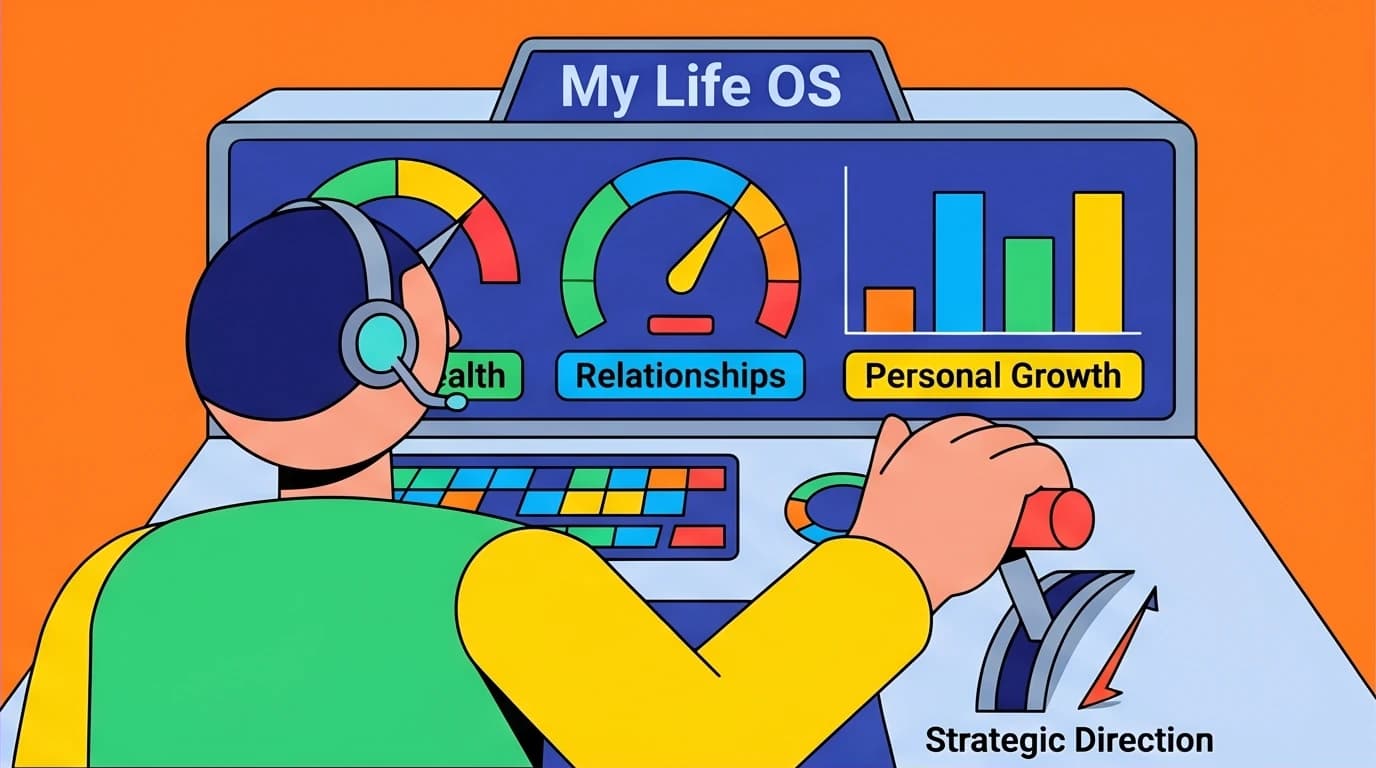
Engaging in personal strategic planning changes this dynamic. It forces you to look at your life as an interconnected system. You are the CEO of your own existence. If your career is booming but your health is deteriorating, your personal enterprise is failing. A long-term strategy gives you a filter for decision-making. When you know where you want to be in 2035, deciding whether to take that promotion, move across the country, or invest time in a new relationship becomes a matter of alignment rather than guesswork.
Designing Your Life: The Four Core Pillars
To build a comprehensive vision, you must look beyond your job title. Designing your life means achieving structural integrity across the four pillars that support human flourishing. Neglect one, and the entire structure eventually collapses.
1. Health and Vitality
Health is the baseline of your future. It dictates how much energy you bring to your career, your family, and your passions. Long-term planning here isn't about losing five pounds for summer; it is about longevity. Ask yourself: Can I hike five miles when I am 70? Do I have the metabolic health to enjoy my retirement? Your strategy should include consistent strength training, cardiovascular endurance, and proactive medical screenings.
If you are serious about optimizing your health span to match your lifespan, you need a blueprint that goes beyond basic diet advice. Understanding the deep science of longevity, metabolic health, and proactive physical training ensures you will actually have the energy to enjoy the future you are planning. For a masterclass on restructuring your physical baseline so you can hike, travel, and thrive well into your later decades, this groundbreaking guide by Dr. Peter Attia is an absolute must-read.
Outlive
Peter Attia, M.D.
 49 Duration
 9 Key Points
 4.6 Rate
2. Wealth and Vocation
This pillar covers your career trajectory and financial independence. Long-term financial planning requires looking at compound interest, maximizing your 401(k), and building skills that make you indispensable. However, vocation goes deeper than a paycheck. What impact do you want to leave? If you are pivoting careers, what skills do you need to acquire over the next three years to make a seamless transition without destroying your financial safety net?
Planning your professional path is a critical part of this pillar. To create a clear roadmap for advancement, promotion, or even a career change, it helps to use specific techniques tailored for the workplace.
3. Relationships and Community
Isolation is a silent threat to long-term well-being. Intentional life design involves curating your inner circle. Are you investing time in a partner who shares your decade-long vision? Are you actively building friendships that challenge and support you? Strong relationships do not happen by accident; they require scheduled maintenance and deep, focused presence.
4. Meaning and Personal Growth
Who do you need to become to live the life you want? This is the foundation for setting personal development goals. It covers your intellectual curiosity, emotional intelligence, and spiritual grounding. Whether it means reading fifty books a year, mastering a new language, or going to therapy to unlearn destructive behavioral patterns, personal growth ensures you do not stagnate.
While reading fifty books a year is a powerful goal, it can feel intimidating with a packed schedule. If you want to absorb the core wisdom from a wide range of nonfiction books to fuel your growth, but struggle to find the time, a microlearning app can be a great tool.


Get the key insights from bestselling personal development books in just 15 minutes, helping you stay on track with your growth goals even on busy days.
 LeapAhead
Highly Effective Life Mapping Techniques
A vision without a blueprint is just a daydream. You need concrete frameworks to translate abstract desires into actionable realities. Here are three powerful life mapping techniques to clarify your overarching life purpose.
The "Perfect Tuesday" Exercise
Forget about planning a glamorous vacation. The quality of your life is determined by the quality of your mundane days. Grab a notebook and map out a perfectly ordinary Tuesday ten years from now.
- What time do you wake up?
- Who is lying next to you?
- What is the temperature outside (is it a crisp 60 degrees Fahrenheit in the Pacific Northwest, or a humid morning in Florida)?
- What do you do for the first hour of the day?
- What kind of problems are you solving at work?
- Who are you eating dinner with?
This exercise strips away societal expectations and forces you to confront your genuine preferences. If your "Perfect Tuesday" involves quiet, focused writing in a cabin, but your current trajectory aims toward a high-stress corporate VP role in Manhattan, you have a massive strategic misalignment.
The Odyssey Plan
Adopted from Stanford's famous design thinking curriculum, the Odyssey Plan asks you to sketch out three completely different five-year timelines.
- Path A: The optimized current path. What happens if you stay in your current field but perform brilliantly?
- Path B: The pivot. What would you do if your current industry disappeared tomorrow?
- Path C: The wild card. What would you do if money and public image were completely irrelevant?
Visualizing these three distinct lives proves that you are not locked into a single destiny. It relieves the anxiety of "making the wrong choice" by showing you that multiple fulfilling futures are possible.
The Odyssey Plan is not just a passing thought experiment; it is the cornerstone of a much broader methodology used to engineer fulfilling careers and lives. If you find the idea of brainstorming multiple possible futures liberating, you will want to dive into the full framework that originated at Stanford University. This book expands on how to apply design thinking to your everyday choices, helping you prototype your way into a career and life that genuinely resonate with your core values.
Designing Your Life
Bill Burnett, Dave Evans
27 Duration10 Key Points4.4 Rate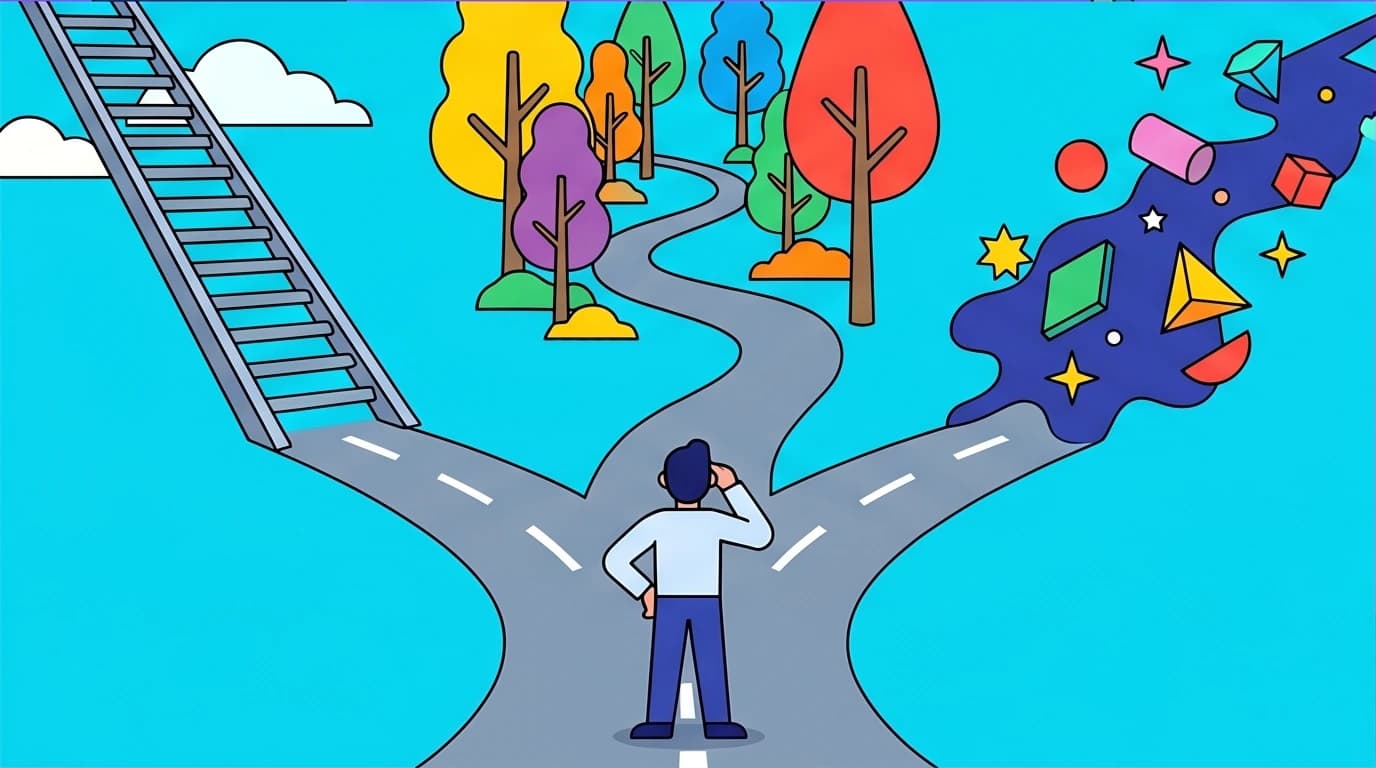
Reverse Engineering the Decade
Pick a specific, audacious goal for exactly ten years from today. Then, work backward.
- Year 10: Publish a bestselling book.
- Year 5: Land a publishing deal with a major house.
- Year 3: Build a dedicated audience of 50,000 readers and self-publish a successful pilot project on Amazon.
- Year 1: Consistently publish high-quality essays every week and pitch guest articles.
- Quarter 1: Set up a website and write the first ten essays.
Working backward prevents you from being paralyzed by the distance between where you are and where you want to be. It clarifies the immediate next step.
Setting Personal Development Goals That Actually Work
Most people fail at long-term planning because they focus purely on achievement goals (make $200,000 a year, buy a house) and ignore development goals. If you do not upgrade your internal operating system, you will sabotage your external achievements.
When establishing your long-term strategy, categorize your development goals into three distinct buckets:
- Skill Acquisition: What hard skills do you need? (e.g., learning data analytics, mastering public speaking). Take a course, listen to expert interviews on Audible, or find a mentor.
- Emotional Resilience: How will you handle the inevitable setbacks? Goals here might include practicing mindfulness, improving conflict resolution, or developing better stress-management techniques.
- Identity Shifts: You must align your habits with your desired identity. If you want to write a book, you must stop identifying as "someone who wants to write" and start identifying as "a writer." A writer sits at the desk every morning, regardless of motivation.
This shift from aspiration to identity is the core of successful goal achievement, but it depends entirely on the daily systems you build. To ensure your long-term ambitions are supported by consistent action, it's crucial to understand how to form and maintain the right behaviors.
Shifting your identity from "someone who wants to write" to "a writer" requires a fundamental change in how you approach your daily routine. Big strategic goals are ultimately achieved through tiny, compounding daily actions. If you find yourself struggling to bridge the gap between setting a decade-long vision and actually sitting down to do the work on a rainy Tuesday morning, you need a proven system for behavior change. This definitive guide to habit formation will teach you exactly how to build the systems required to sustain your new identity.

Atomic Habits
James Clear
26 Duration8 Key Points4.7 RateThe Greatest Pitfall: Rigidity over Agility
The most common mistake high achievers make in long-term planning is holding onto a map that no longer reflects the territory. You draft a ten-year plan at age 30. By age 34, you have a child, your industry goes through a massive technological disruption, and your values fundamentally shift.
If you treat your life plan as a sacred, unchangeable document, you will feel like a failure when life inevitably diverges from it. A true strategic plan is a living compass, not a set of train tracks. You use it to set your direction. When an obstacle appears—or a better opportunity arises—you recalibrate. You update the map.
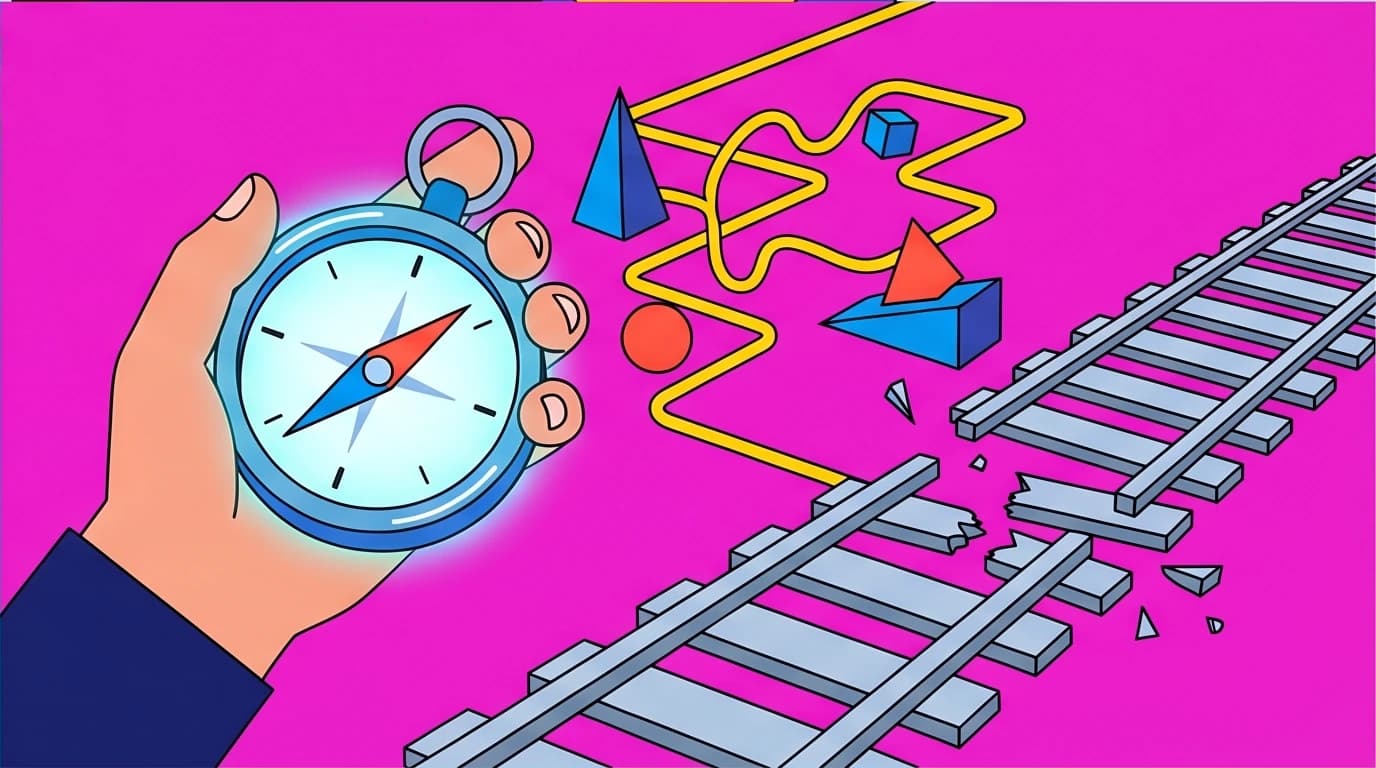
Review your life plan annually. The end of the year is an excellent time to sit down with a cup of coffee, look at your original trajectory, and ask: "Is this still what I want?" If the answer is no, you have the power to redesign it. You are the architect.
Letting go of an outdated ten-year plan can feel incredibly daunting, especially when you have invested years into a specific career path or identity. However, the ability to pivot, unlearn old assumptions, and update your mental models is what separates those who thrive from those who get stuck. If you want to develop the mental agility required to gracefully pivot when your industry shifts or your personal values change, this insightful read will teach you the art of rethinking your most deeply held plans.
Think Again
Adam Grant
38 Duration8 Key Points4.6 RateAll the books mentioned in this guide offer powerful frameworks for designing your future, but fitting them into a busy life is a challenge in itself. To make absorbing these big ideas easier, you can use tools that distill them into key takeaways.
Listen to the core ideas from books like Atomic Habits and Think Again in 15-minute audio summaries, turning your commute or workout into valuable learning time.
LeapAheadFAQ
How often should I review my long-term life plan?
Conduct a deep, comprehensive review once a year—many find late December or their birthday week ideal for this. Additionally, do a light "pulse check" every 90 days. This quarterly review ensures your daily actions still align with your decade-long vision without forcing you to constantly obsess over the big picture.
Conduct a deep, comprehensive review once a year—many find late December or their birthday week ideal for this. Additionally, do a light "pulse check" every 90 days. This quarterly review ensures your daily actions still align with your decade-long vision without forcing you to constantly obsess over the big picture.
What if my goals change completely in three years?
That is a sign of growth, not failure. As you acquire new skills, meet new people, and gather more data about what actually makes you happy, your desires will naturally evolve. Update your plan to reflect your new reality. The purpose of the plan is to give you direction today, not to trap you in a past version of yourself.
That is a sign of growth, not failure. As you acquire new skills, meet new people, and gather more data about what actually makes you happy, your desires will naturally evolve. Update your plan to reflect your new reality. The purpose of the plan is to give you direction today, not to trap you in a past version of yourself.
How do I balance immediate financial needs with a 10-year vision?
You apply the "bridge job" concept. You do not have to quit your current job tomorrow to pursue a massive ten-year vision. Maintain your primary source of income to handle immediate financial responsibilities, but dedicate 10% of your time and resources (a few hours on weekends or early mornings) to aggressively building the foundation for your long-term goal.
You apply the "bridge job" concept. You do not have to quit your current job tomorrow to pursue a massive ten-year vision. Maintain your primary source of income to handle immediate financial responsibilities, but dedicate 10% of your time and resources (a few hours on weekends or early mornings) to aggressively building the foundation for your long-term goal.
I feel overwhelmed by planning out an entire decade. Where do I start?
Start with the "Perfect Tuesday" exercise. Do not worry about a ten-year timeline right now. Just write down what you want an average, highly fulfilling day to look like. Once you know what that day feels like, you can start identifying the one or two habits you need to change today to move one inch closer to that reality.
Start with the "Perfect Tuesday" exercise. Do not worry about a ten-year timeline right now. Just write down what you want an average, highly fulfilling day to look like. Once you know what that day feels like, you can start identifying the one or two habits you need to change today to move one inch closer to that reality.