


Modern life often feels like an endless cycle of unpredictable crises, overwhelming stress, and relentless decision fatigue. You might be facing a brutal financial setback, struggling to steer a business through economic turmoil, or simply feeling crushed under the weight of daily modern anxieties. When the pressure peaks, modern self-help jargon usually falls short. You do not need another life hack. You need a reliable mental anchor. The answers you are looking for lie in the dust, grit, and quiet endurance of classic American westerns.
Louis L'Amour wrote about men and women pushed to their absolute physical and mental limits. Stripping away the folklore of the Wild West reveals a deeply practical operating system for life. Let us break down how this rugged code translates into modern armor.
The Core Blueprint: Stoicism in Westerns
Long before modern podcasts popularized Roman philosophy, readers found profound examples of stoicism in westerns. The heroes in L'Amour’s universe do not waste breath complaining about the weather, the odds, or the unfairness of their situation. When a blizzard hits the Dakotas and drops the temperature to 20 degrees below zero Fahrenheit, you cannot negotiate with the cold. You chop wood, or you freeze.
Radical Acceptance of Reality
The foundation of the Louis L'Amour frontier philosophy is radical acceptance. His characters look at a broken leg or an impending ambush and accept the reality immediately. There is no denial. There is no bargaining.
In a modern context, this means dropping the "why me?" narrative. If your startup funding falls through, or you lose a major client, the stoic response is immediate assessment. You separate what you can control (your effort, your response, your next strategy) from what you cannot (market crashes, competitors, bad luck). The frontier does not care about your feelings, and neither does the free market.
Action Trumps Anxiety
Anxiety lives in the gap between a problem and an action. Frontier philosophy demands motion. You might not have the perfect solution, but doing the next right thing keeps you alive. When stranded hundreds of miles from a settlement, L'Amour’s protagonists do not sit down and wait for rescue. They take a step. Then another. Action breaks the paralysis of fear.
To truly internalize this kind of radical acceptance and bias toward action, you don't necessarily have to read cowboy fiction. You can go straight to the ancient philosophy that inspired these rugged archetypes. If you want a practical, no-nonsense way to build this mental armor into your morning routine, diving into daily stoic meditations is a powerful next step. It trains your mind to automatically separate what you can control from what you cannot, exactly like a pioneer facing a sudden blizzard.

The Daily Stoic
Ryan Holiday & Stephen Hanselman
 48 Duration
 9 Key Points
 4.6 Rate
This stoic philosophy is woven throughout his work, often distilled into memorable lines of dialogue and narration. To see how L'Amour articulated these ideas himself, exploring some of his most powerful thoughts on learning and perseverance is an excellent way to connect with the source.

Cultivating the Mindset of a Pioneer
The frontier was not settled by people looking for guarantees. It was built by those willing to walk into the unknown, armed with nothing but their own competence. The mindset of a pioneer shifts your internal narrative from dependency to absolute ownership.
Self-Reliance as the Ultimate Safety Net
On the Oregon Trail, if a wagon axle snapped, you did not call for roadside assistance. You fixed it yourself, or you died on the trail. This level of self-reliance is desperately missing today. We outsource our thinking, our repairs, and our problem-solving.

To adopt this mindset today, you must become aggressively resourceful.
- Stop waiting for permission: Do not wait for upper management to fix a broken process. Fix it yourself.
- Build broad competence: The pioneer knew how to hunt, build, navigate, and negotiate. Specialize in your career, but maintain a wide base of general skills so you never feel helpless when systems fail.
- Carry your own weight: Never expect someone else to carry your pack. Financial independence, physical fitness, and emotional regulation are your responsibilities alone.
Embracing the Uncomfortable Unknown
Pioneers left comfortable homes to carve a life out of wilderness. They understood that comfort breeds stagnation. If you want to grow, you have to leave the paved roads. Take the job that scares you. Start the business with no safety net. The mindset of a pioneer thrives on the edge of the map, knowing that adversity is just the cost of admission to a better life.
This pioneer mindset wasn't just a theme in his fiction; it was the code he lived by. L'Amour's own life was a testament to relentless self-education and gathering knowledge from the world around him, a story he detailed in his own memoir.
Taking absolute ownership of your circumstances—without waiting for permission or a safety net—is the hallmark of both a successful pioneer and a modern leader. When you stop blaming the market, your boss, or bad luck, you immediately reclaim your power to change the outcome. If you are looking to master this uncompromising level of personal accountability, there are incredible modern resources born from the battlefield that echo this exact same frontier mindset. Learning how elite military commanders approach responsibility will completely reshape how you tackle your career and personal life.

Extreme Ownership
Jocko Willink, Leif Babin
45 Duration7 Key Points4.6 RateForging Iron: Resilience in Louis L'Amour Books
There is a distinct flavor of resilience in Louis L'Amour books. It is not the flashy, chest-beating kind. It is quiet. It is the ability to take a beating, spit out the blood, and get back to work.
The Mechanics of Endurance
In books like Flint or The Daybreakers (staples you can easily find on Amazon or Barnes & Noble), characters are frequently beaten down, starved, and hunted. How do they keep going?
They shrink their timeline.
They shrink their timeline.
When you have 50 miles of desert left to cross without water, thinking about the whole 50 miles will break your mind. You focus on the next ridge. The next rock. The next step.
When you are drowning in debt or navigating a grueling divorce, looking at the years of recovery ahead will crush you. Apply frontier resilience: survive until lunch. Survive until evening. Execute the immediate task in front of you flawlessly. Let tomorrow worry about itself.
Scars as Credentials
L'Amour never wrote about unblemished heroes. His characters carried physical and emotional scars. They made mistakes. They trusted the wrong people. But in the frontier philosophy, a scar is not a symbol of trauma; it is proof of survival. Stop hiding your professional failures or personal missteps. A failed business is a masterclass in market dynamics. A blown project is a lesson in risk management. Own your scars. They prove you have been in the arena.
Owning your scars and pushing through exhaustion requires a deliberate rewiring of how you perceive pain and failure. When you feel like you have absolutely nothing left in the tank, shrinking your timeline and taking just one more step is what separates survivors from victims. If you want to dive deeper into the mechanics of unbreakable endurance and learn how to callous your mind against life's brutal beatings, there are incredible real-world stories of individuals who have mastered this art. Exploring the journeys of those who have pushed past the limits of human suffering will give you the exact tools you need to forge your own iron will.

Can't Hurt Me
David Goggins, Adam Skolnick, et al.
26 Duration10 Key Points4.6 RateIf finding the time and energy to read powerful books like these feels like its own endurance challenge, a microlearning approach can help you absorb their core ideas during your commute or a short break.


Absorb the key ideas from bestselling books on resilience and mental toughness in just 15-minute audio or text sessions, perfect for building your mental armor on busy days.
 LeapAhead
Louis L'Amour Leadership Lessons: Leading When It Counts
Leadership in a L'Amour novel has nothing to do with titles, corner offices, or corporate hierarchy. It is entirely based on quiet competence and moral authority. When the wagon train is surrounded, people do not look to the richest man; they look to the most capable man.
Here are the core Louis L'Amour leadership lessons applicable to any modern manager, executive, or parent:
1. Lead from the Front
The trail boss eats last. He takes the first watch in the rain. He rides into the canyon first to check for danger. If you want loyalty from your team, you cannot manage from an ivory tower. If your team is working over the weekend to meet a deadline, you are there with them. You take the heaviest burdens. Respect is earned in the dirt, not in the boardroom.
2. Quiet Competence Over Loud Ego
The loudest guy in a western saloon is usually the first one to get shot. The dangerous man sits quietly in the corner, observing everything. True leadership requires profound situational awareness. Listen more than you speak. Assess the terrain, understand the capabilities of your team, and make decisions without needing to hear your own voice.
3. Absolute Moral Clarity
L'Amour's heroes live by a strict code. They do not cheat, they do not lie, and they protect those who cannot protect themselves. In an era of gray areas and corporate spin, moral clarity is a massive competitive advantage. Keep your word. If you promise a vendor payment on Friday, the wire hits their account on Friday. A reputation for unshakeable integrity is the strongest currency you can build.
The quiet competence of L'Amour's heroes was a direct reflection of his own meticulous approach to his craft. He grounded his stories in deep historical and practical knowledge, which gave them their signature authenticity.
Quiet competence, leading from the front, and unshakeable integrity aren't just tropes of classic westerns—they are the foundational pillars of effective management in any industry. When you lead by example rather than by ego, people will naturally follow you through the toughest corporate fire drills or economic downturns. If you want to systematically develop these traits and become the kind of leader others instinctively trust when the pressure is on, studying proven leadership frameworks is a fantastic investment. True influence is built on daily habits and clear principles that anyone can learn.
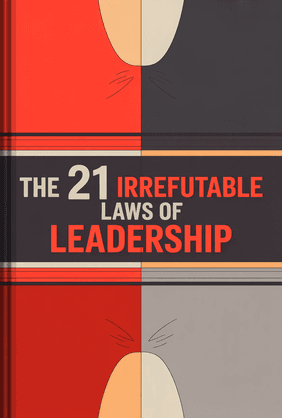
The 21 Irrefutable Laws of Leadership
John C Maxwell
27 Duration11 Key Points4.6 RateCommon Pitfalls: Modern Misapplications of the Code
While the frontier philosophy is powerful, applying it incorrectly in the modern world can lead to disaster. Avoid these traps.
Trap 1: Confusing Independence with Isolation
The pioneer was self-reliant, but they still traveled in wagon trains. Isolation is a death sentence. Do not mistake stoicism for refusing to ask for help when you genuinely need it. Building a network of highly competent, trustworthy allies is exactly what a frontier survivor would do.
Trap 2: Stubbornness vs. Adaptability
There is a difference between staying the course and riding a dead horse. Grit means pushing through hard times. Stupidity means refusing to change directions when the bridge is out. L'Amour’s characters survived because they read the trail and adapted to the terrain. If your business model is failing, pivot. Do not confuse ego with resilience.
Trap 3: The Myth of Emotionless Machinery
Stoicism does not mean you do not feel fear, grief, or anger. L'Amour’s characters feel intense fear. The difference is they do not let the emotion dictate their actions. Acknowledge your stress. Feel the weight of the crisis. Then, set the emotion aside and execute the plan.
Consistently absorbing the wisdom from these kinds of books is the fastest way to build your own frontier philosophy, but a packed schedule can make that difficult.
Get actionable insights from thousands of nonfiction books on leadership, stoicism, and self-reliance, helping you build a resilient mindset in just a few minutes each day.
LeapAheadFAQ
Q: Is the Louis L'Amour frontier philosophy actually relevant if I don't work outdoors or in physical danger?
A: Absolutely. The physical dangers in his books are metaphors for extreme stress. The psychological framework—staying calm under pressure, making decisive choices with limited information, and maintaining unshakeable integrity—applies directly to modern boardrooms, tech startups, and personal relationships. It is about mental survival, not just physical survival.
A: Absolutely. The physical dangers in his books are metaphors for extreme stress. The psychological framework—staying calm under pressure, making decisive choices with limited information, and maintaining unshakeable integrity—applies directly to modern boardrooms, tech startups, and personal relationships. It is about mental survival, not just physical survival.
Q: Which book should I read first to truly understand his stoic mindset?
A: Start with Flint or The Daybreakers. If you prefer audiobooks, grab them on Audible. Both books heavily feature protagonists who face impossible odds, betrayal, and physical exhaustion, relying entirely on their internal grit and strategic patience to survive.
A: Start with Flint or The Daybreakers. If you prefer audiobooks, grab them on Audible. Both books heavily feature protagonists who face impossible odds, betrayal, and physical exhaustion, relying entirely on their internal grit and strategic patience to survive.
Q: How is this "frontier toughness" different from toxic masculinity?
A: Toxic masculinity is driven by ego, dominance, and the need to belittle others. Frontier toughness, as written by L'Amour, is rooted in service, duty, and quiet competence. The true frontier hero uses his strength to protect the vulnerable and build a community, not to inflate his own ego. It is about being dangerous to threats, but gentle to those under your care.
A: Toxic masculinity is driven by ego, dominance, and the need to belittle others. Frontier toughness, as written by L'Amour, is rooted in service, duty, and quiet competence. The true frontier hero uses his strength to protect the vulnerable and build a community, not to inflate his own ego. It is about being dangerous to threats, but gentle to those under your care.
Q: Can I develop the mindset of a pioneer if I naturally struggle with anxiety?
A: Yes. Courage is not the absence of anxiety; it is taking action despite it. You build this mindset through micro-exposures. Start by taking absolute ownership of small daily tasks. Keep your promises to yourself. As you build a track record of competence, your anxiety will gradually be replaced by the quiet confidence that, no matter what breaks, you can figure it out.
A: Yes. Courage is not the absence of anxiety; it is taking action despite it. You build this mindset through micro-exposures. Start by taking absolute ownership of small daily tasks. Keep your promises to yourself. As you build a track record of competence, your anxiety will gradually be replaced by the quiet confidence that, no matter what breaks, you can figure it out.