

Many readers assume historical fiction is just imagination wrapped in a period setting. You might pick up a paperback from Barnes & Noble expecting a simple western escape, often wondering if reading fiction actually teaches you anything real about the past. Most authors invent towns, bend geography to fit their plot, and guess at the technology of the era. Louis L'Amour refused to work this way.
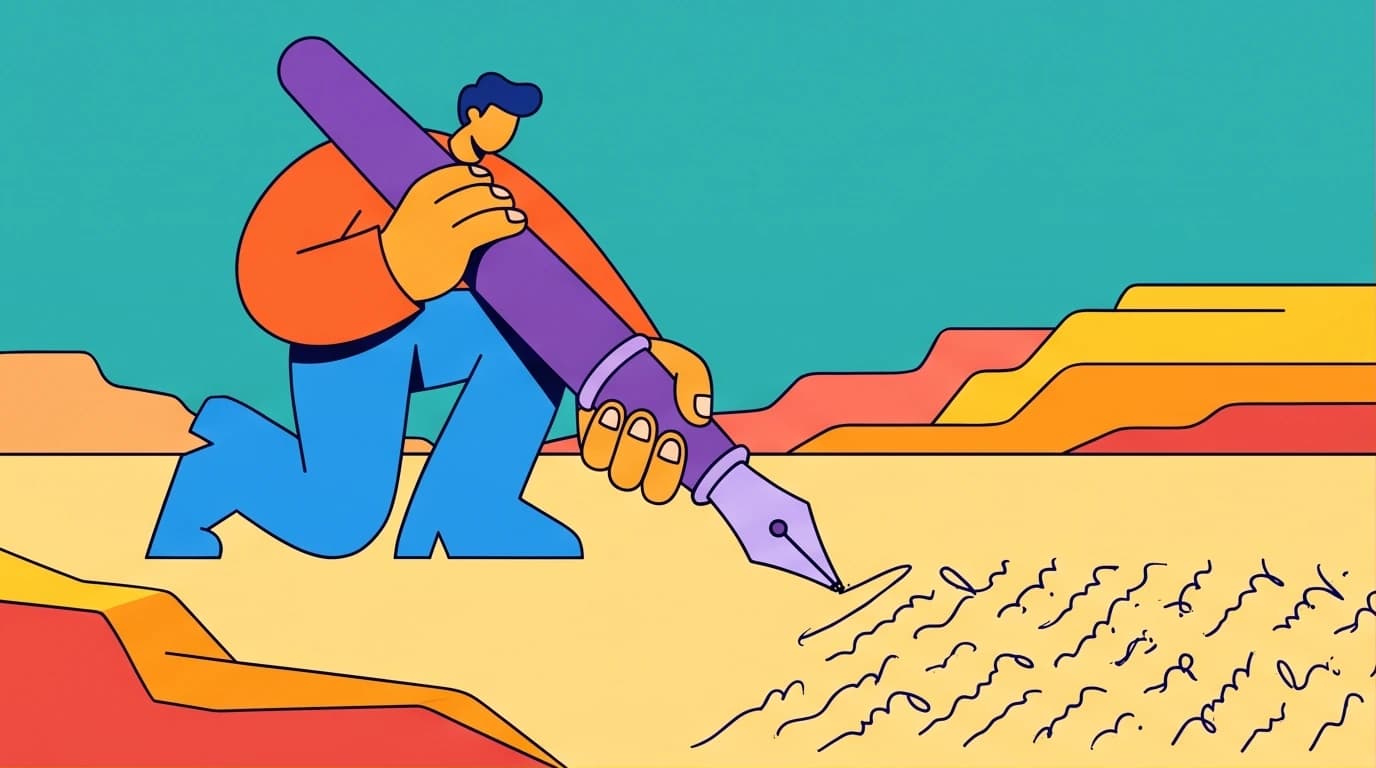
He treated fiction as a vessel for historical truth. If a character drank from a specific desert spring in one of his novels, you could drive out to that exact spot in the American Southwest and find the water. To understand how he achieved this level of precision, we have to tear down the mythology of the "natural storyteller" and look directly at his systems.
The Core of Louis L'Amour Research Methods
L'Amour did not rely on Google or digital archives. His research was entirely analog, requiring massive investments of time, physical travel, and capital. His approach can be broken down into three distinct operational pillars.
1. Boots-on-the-Ground Fieldwork
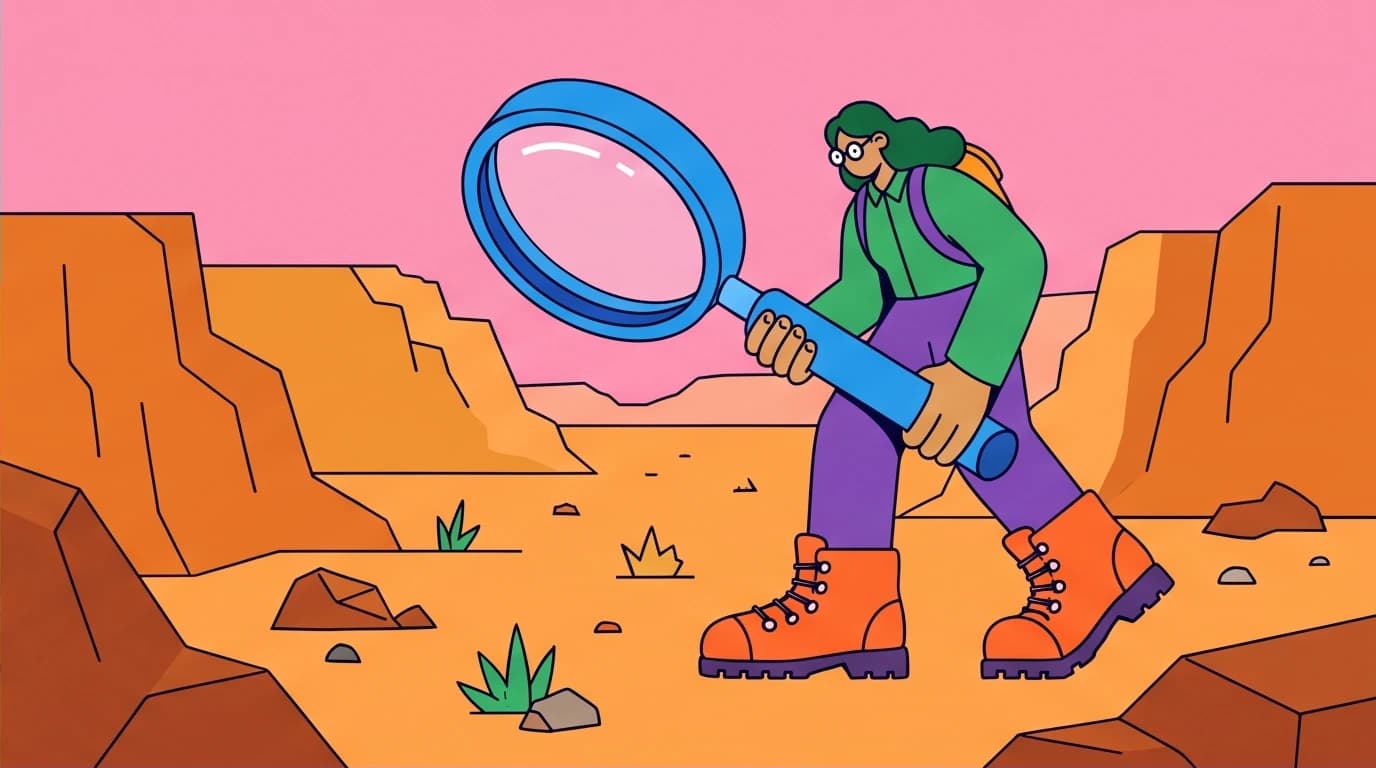
You cannot write accurately about a landscape you have never felt. L'Amour spent years walking the exact trails his characters would take. He drove thousands of miles across the West, hiking into remote canyons and camping in the same conditions as early pioneers.
He needed to know the texture of the soil, the exact color of the rocks at sunset, and how much the temperature dropped when a storm blew over a specific ridge. If a scene required a character to ride a horse from point A to point B in two days, L'Amour verified the mileage and the terrain difficulty to ensure it was physically possible. This physical immersion formed the baseline of his environmental accuracy.
2. Building a World-Class Personal Library
Public libraries were insufficient for his needs. Over his lifetime, L'Amour built a personal library of over 10,000 volumes, many of them rare, out-of-print historical texts.
He did not just collect books; he collected primary sources. His shelves were filled with the diaries of cavalry officers, pioneer journals, mining company records, and old shipping manifests. If he needed to know what a miner ate for breakfast in a Colorado boomtown in 1881, he consulted the actual grocery store ledgers from that specific town. This habit of buying and organizing source material meant he always had immediate access to undisputed facts.
L'Amour's ability to extract specific details—like a Colorado boomtown miner's grocery list—wasn't just about owning thousands of books; it was about knowing exactly how to dissect them. He read with purpose, treating each text as a mineable resource rather than casual entertainment. If you want to upgrade your own reading comprehension and learn how to extract primary data like a master researcher, you need a systematic approach to cracking open historical texts. This classic guide is an excellent starting point for anyone looking to read more deeply and efficiently.

How to Read a Book
Mortimer J. Adler, Charles Van Doren
 18 Duration
 8 Key Points
 4.7 Rate
3. Rigorous Cross-Referencing
Finding one source is not enough. Relying on a single pioneer’s journal can lead to biased or exaggerated information. L'Amour applied a rigorous cross-referencing system. If a diary claimed a winter was incredibly harsh, dropping below zero Fahrenheit for weeks, he would cross-reference that claim with military weather logs or local newspaper archives from the same month.
He organized his data meticulously. He kept filing cabinets full of topographical maps, town plats, and notes on regional flora and fauna. When he sat down to write, he was not guessing; he was translating a heavily organized database of facts into narrative prose.
This intense preparation was the foundation of a famously productive and structured daily regimen that enabled his massive output.
Achieving Louis L'Amour Historical Accuracy
The ultimate goal of this exhaustive process was absolute authority. Louis L'Amour historical accuracy became the main selling point of his career. Readers trusted him.
Geography as a Character
In a L'Amour novel, the environment is never a painted backdrop. The geography dictates the action. If a character hides from a posse in a specific cave, that cave exists. The flora mentioned in the scene—whether it is ponderosa pine or sagebrush—is botanically correct for that exact elevation and region.
This geographical precision served a dual purpose. It heightened the tension of the story because the survival stakes were grounded in reality, and it educated the reader. He forced his audience to respect the harsh realities of the frontier environment just as the early settlers did.
Authentic Material Culture
L'Amour obsessively tracked the material culture of the 19th century. He knew exactly when a specific model of a Winchester rifle or Colt revolver was manufactured, how it was loaded, and what its ballistic limitations were.
He applied this same scrutiny to clothing, saddlery, and transportation. Characters did not just wear generic "cowboy clothes." They wore the specific fabrics imported to that region at that time. If a character bought a ticket for a stagecoach, L'Amour knew the actual route that stage line took, the cost of the ticket, and the names of the waystations.
Elevating American Frontier History
Because of these stringent standards, his books transcend the standard pulp western genre. They serve as accessible entry points into American frontier history.
Historians, geographers, and even scientists have praised his work for its documentary value. He documented the westward expansion, the development of the railroad, the cattle drives, and the mining booms with an unvarnished, factual lens. He did not romanticize the West; he reported it through a fictional medium.
When you read his work, you encounter the real mechanics of how a gold mine operates, how to track cattle across hard rock, and how indigenous tribes actually lived and fought. He replaced the Hollywood myths with historical realities, proving that the truth of the frontier was far more compelling than the invented tropes.
L'Amour's dedication to an unvarnished, factual lens proved that the true history of the American frontier was far more complex and captivating than the sanitized Hollywood tropes of the 1950s. If reading about his commitment to authentic westward expansion and indigenous realities sparks your curiosity, diving into non-fiction historical accounts is the perfect next step. To truly understand the frontier without the romanticized mythology, it helps to examine the history of the United States from the perspective of the original inhabitants who lived through these dramatic transformations.

An Indigenous Peoples' History of the United States (ReVisioning History)
Roxanne Dunbar-Ortiz
30 Duration9 Key Points4.8 RateThe Framework of Louis L'Amour Continuous Learning
L'Amour left school at age fifteen. He never received a formal college education. Yet, he is regarded as one of the most educated authors of his era. This was the result of a lifelong commitment to self-directed study.
Louis L'Amour continuous learning offers a blueprint for modern creators and professionals. His mindset was simple: education does not end when you leave a classroom; it is an everyday, lifelong pursuit.
He chronicled this journey of self-education in his own memoir, offering a powerful look into the mind of a lifelong learner.
Read Widely and Aggressively
He was famous for reading 30 to 40 books a year across drastically different disciplines. He did not just read history. He studied geology, biology, anthropology, and economics. He understood that to write accurately about a silver mine, you need to understand both the geology of the rock and the economics of the silver market.
While reading 40 books a year like L'Amour might seem daunting, you don't need endless hours to start building a similar breadth of knowledge. If you're often too exhausted after work for heavy reading, you can still learn the essential ideas from important books during your commute or a short break.


LeapAhead

Absorb the key ideas from nonfiction bestsellers in just 15 minutes, making it easy to learn from multiple disciplines even on your busiest days.
Modern learners can adopt this by stepping outside their immediate niche. If you want to master a subject, study the adjacent fields that influence it.
L'Amour's habit of reading dozens of books a year across drastically different disciplines is a masterclass in self-directed education. By refusing to let his lack of formal schooling hold him back, he effectively designed his own curriculum. If you want to adopt this aggressive, self-taught mindset to master complex subjects outside your immediate niche, you don't need a university degree—you just need the right strategy. There are proven methods to accelerate your learning and tackle difficult skills independently.
Ultralearning
Scott H. Young
32 Duration8 Key Points4.5 Rate
Document and Organize Knowledge
Reading is useless if you cannot retrieve the information. L'Amour treated his reading like data collection. He annotated, indexed, and filed the facts he uncovered.
Today, whether you use digital tools like Notion or physical notebooks, the principle remains exactly the same. Build your own database. When you encounter a valuable piece of data, organize it so you can weaponize it later in your own work.
While L'Amour relied on physical filing cabinets and handwritten index cards to catalog his geographical notes and historical facts, modern creators have a distinct advantage. We can build entirely digital knowledge bases that travel with us anywhere in the world. However, the core principle remains identical: you need a reliable system to capture, organize, and retrieve information. If you're looking to transform your scattered notes and highlights into a searchable, actionable database that fuels your writing and research, modern digital organization strategies are an absolute game-changer.
Building a Second Brain
Tiago Forte, André Santana, et al.
46 Duration9 Key Points4.4 RateLearning History Through Reading Fiction
The ultimate triumph of L'Amour’s methodology is that it completely validates learning history through reading fiction.
Look at reviews on Amazon or Goodreads, or listen to discussions on Audible, and you will consistently see fans saying the same thing: “I learned more about history from this novel than I did in school.”
By embedding hard facts inside engaging narratives, L'Amour bypassed the dry, academic delivery of traditional textbooks. He proved that humans learn best through stories. When facts are tied to the emotional survival of a character, those facts stick in the reader's memory. You remember how to find water in the Mojave Desert because you read about a character desperately applying that exact method to avoid dying of thirst.
If you are a writer, researcher, or avid learner, the lesson from L'Amour is clear: respect your audience enough to give them the truth. Do the heavy lifting in the research phase. Walk the ground, read the primary sources, and build a system to organize your knowledge. The quality of your output will always be determined by the depth and rigor of your input.
L'Amour's method proves that deep knowledge is the foundation of great work, but many of the foundational books he might have read can feel dense and time-consuming. If you want to quickly grasp the core arguments of major historical or scientific works before committing to a full read, a summary can be an effective starting point.
LeapAhead
Understand the key arguments from complex nonfiction books in minutes, making it easier to decide which titles are worth a deeper dive for your research.
FAQ
Did Louis L'Amour ever make historical mistakes in his books?
While his accuracy rate was exceptionally high, he was not infallible. Occasionally, minor chronological errors or slight geographical shifts appeared, usually in his earlier, faster-written pulp stories. However, in his mature novels, finding a factual error regarding geography, weaponry, or historical timelines is incredibly rare.
Can I actually learn accurate history just from reading his novels?
Yes. While the main characters and specific plots are fictional, the environment, historical events happening in the background, technology, and survival methods are highly accurate. Many readers use his books as a gateway to studying the real American West.
How long did it take him to research a single book?
The actual writing of a book often took him only a few weeks to a few months, but the research behind it was the culmination of decades of continuous learning. He did not start researching from scratch for each book; instead, he pulled from the massive, organized library and fieldwork knowledge base he had been building his entire adult life.
What is the best way to apply his research methods today?
Start by prioritizing primary sources over secondary summaries. If you are researching a historical event or a technical subject, read the original documents, journals, or data. Second, go to the actual location if possible. Finally, create a personal, organized index (digital or physical) where you store verifiable facts for quick retrieval.