

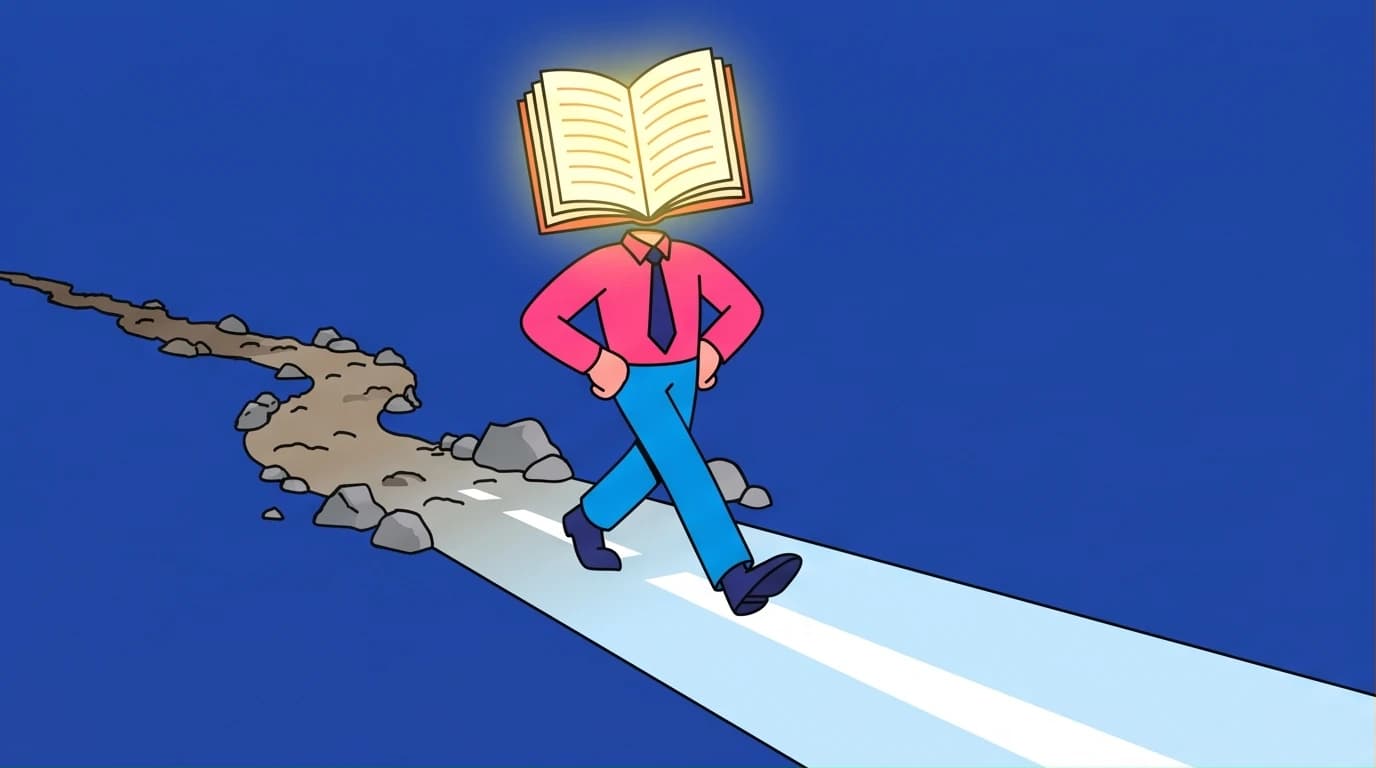
You want to build a deep, versatile intellect. You know reading is the path, but traditional education systems feel rigid, and finding time seems impossible with your current schedule. You look at your stack of unread books and wonder if solitary reading can truly replace structured university courses.
Louis L'Amour faced a much harsher reality. He left school in the tenth grade. He didn't have money, a permanent address, or a mentor. He spent his youth working as a mine mucker, a lumberjack, and an merchant seaman. Yet, he became one of the most prolific, highly educated, and bestselling authors in American history. He did it entirely through self-directed reading.
Here is the breakdown of how he managed it, and how you can apply his methods to your own life today.
The Core of the Louis L'Amour Autobiography: School is Optional, Learning is Not
Most memoirs focus on the events of a person's life—who they met, what they built, how they made their money. Education of a Wandering Man is entirely different. This Louis L'Amour autobiography is an intellectual roadmap. It chronicles not just where he went, but what his mind was consuming while he was there.
In the 1920s and 30s, L'Amour traveled across the United States and the world. He rode freight trains alongside hobos. He skinned cattle in Texas and survived shipwrecks in the West Indies. He was performing brutal, physical labor. Yet, his primary concern was always finding his next book.
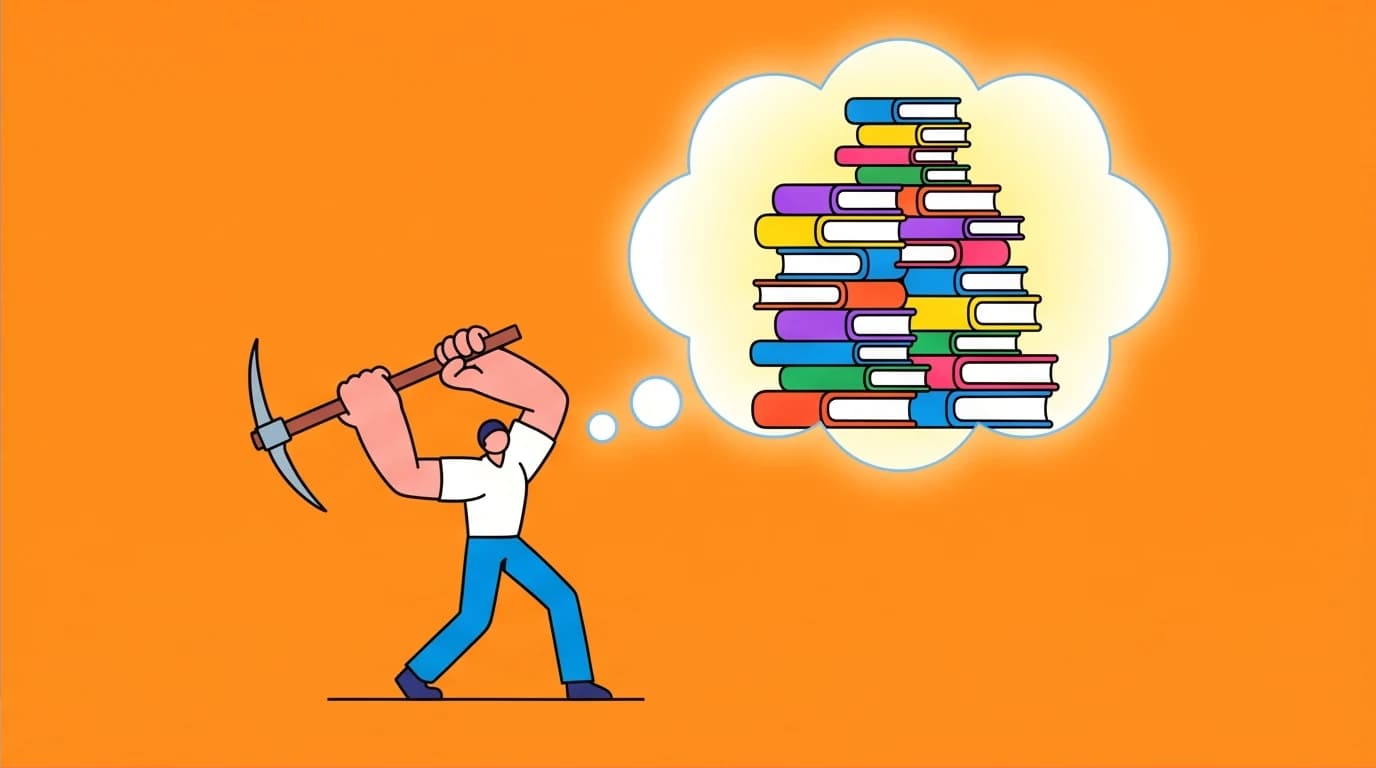
He proves a harsh but liberating truth: a lack of formal schooling is never a valid excuse for a lack of education. Education is not something done to you by a teacher. It is something you claim for yourself.
If L'Amour's journey resonates with you, you will likely find modern parallels just as inspiring. For a contemporary take on reclaiming your own intellectual destiny against all odds, consider Tara Westover's remarkable memoir. Her story of growing up without a formal education in rural Idaho and eventually earning a PhD from Cambridge University mirrors L'Amour's core philosophy: true education is something you passionately claim for yourself, regardless of where you start.
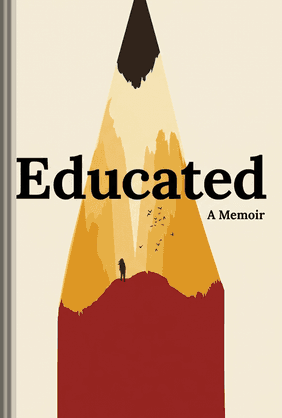
Educated
Tara Westover
 25 Duration
 8 Key Points
 4.5 Rate
Unpacking the Strategy: 4 Laws of the Wandering Mind
If you are looking for actionable takeaways from this lifelong learning memoir, L'Amour’s approach boils down to four distinct rules.
1. Turn Every Idle Moment into a Classroom
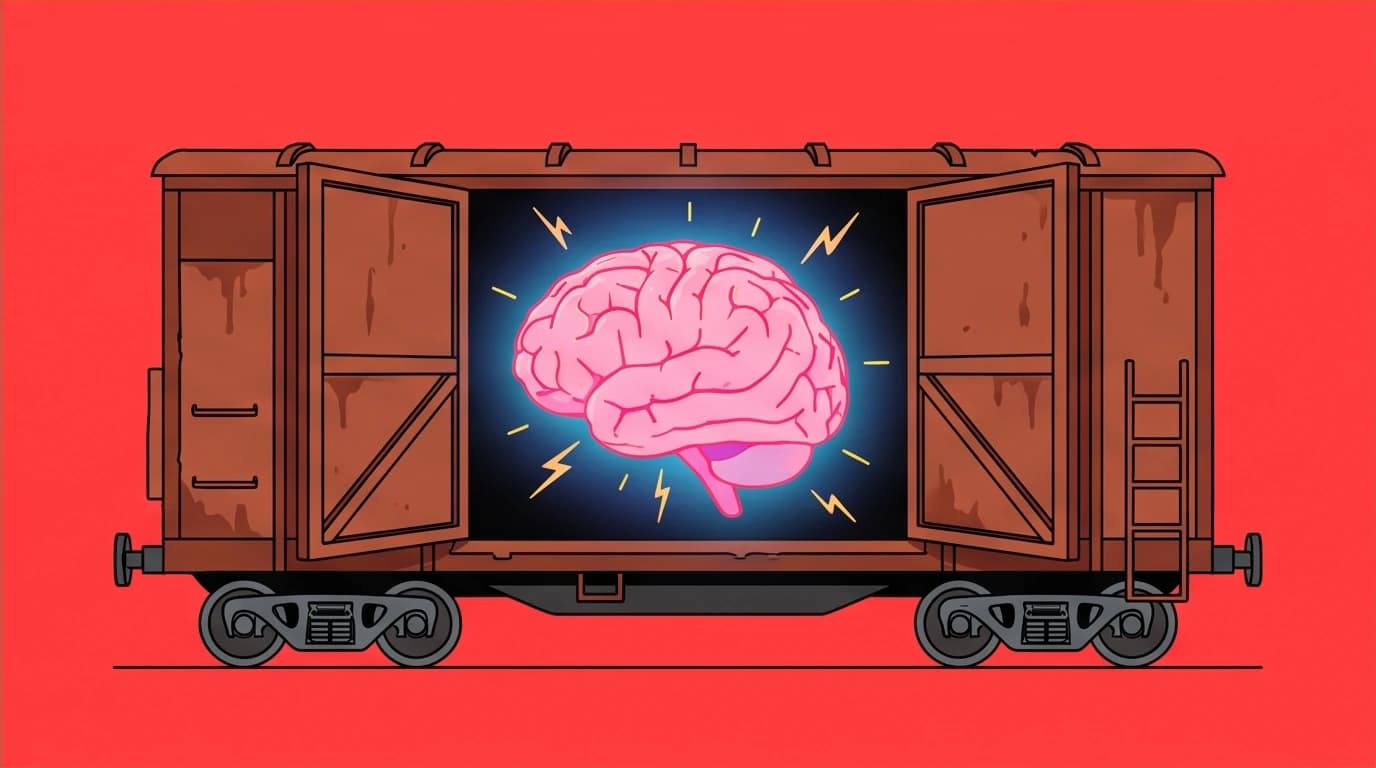
Time is the most common excuse people use for not reading. L'Amour destroyed this excuse. He read while waiting for ships to load cargo. He read in boxcars crossing the desert. He read in the forecastle of freighters by the light of a single bulb.
He understood that waiting time is wasted time unless you have a book. You do not need a quiet, oak-paneled library to learn. You need a book and ten spare minutes. If you can read a few pages while waiting in line at the grocery store, or during a commute, those pages compound.
L'Amour carried physical books everywhere, but today's technology makes it even easier to turn those spare moments into structured learning sessions.

Absorb the key ideas from bestselling nonfiction in 15-minute audio or text summaries, perfect for turning your commute or a short break into valuable learning time.

Download LeapAhead App now
2. Cross-Train Your Brain with Broad Subjects
Many self-education books today tell you to niche down and hyper-specialize. L'Amour did the exact opposite. He read fiction, history, philosophy, geology, and poetry. He read Shakespeare and Nietzsche while working on tramp steamers.
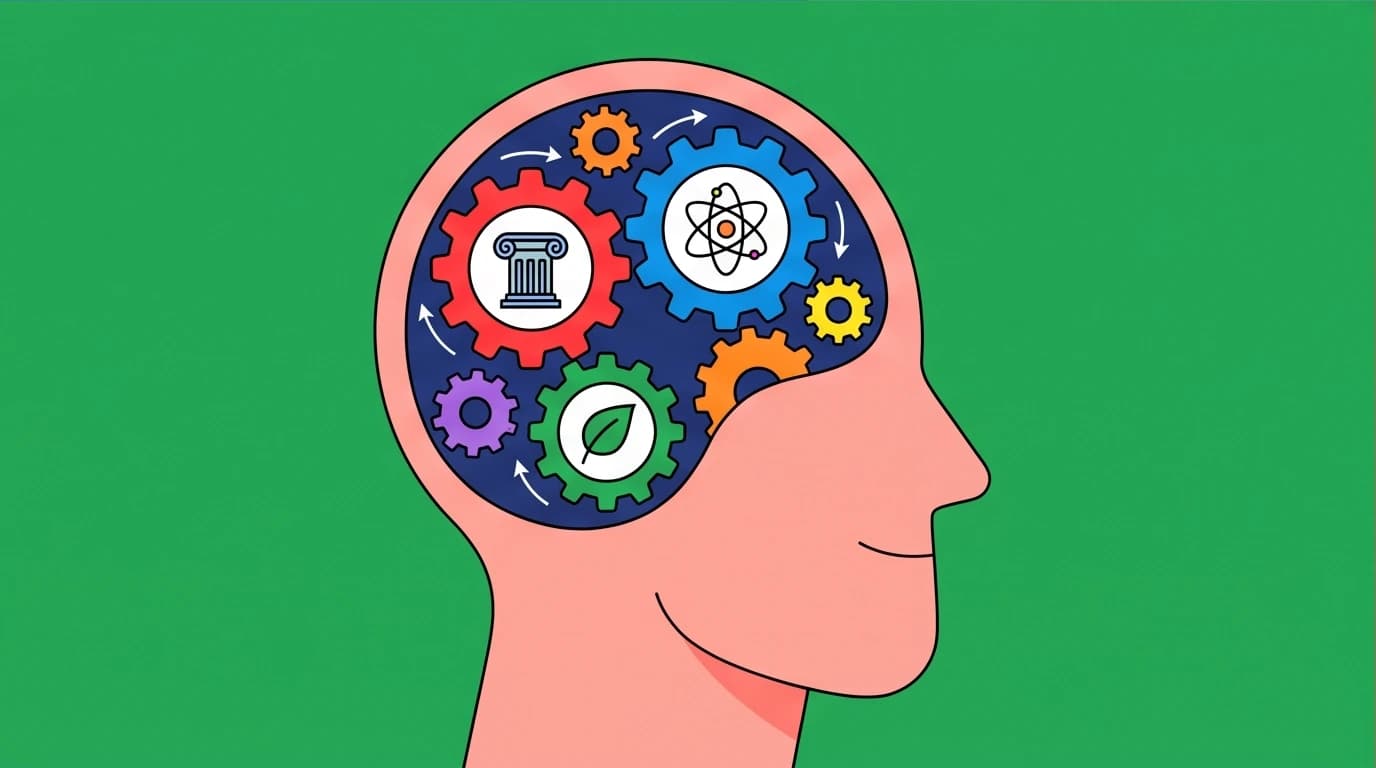
Reading outside your immediate area of interest forces your brain to make new connections. If you only read business books, you think like everyone else in business. If you read history, biology, and classic literature, you develop a distinct, unpredictable intellect. L'Amour’s success as a Western novelist came precisely because he understood history, geography, and human nature far better than his peers.
This commitment to authenticity was the cornerstone of his craft. For a closer look at how he applied his vast knowledge to his stories, see our article on Louis L'Amour's research methods and his deep dive into historical accuracy.
As L'Amour proved, pushing your boundaries means tackling challenging philosophical texts that force you to view the world through a completely different lens. He regularly absorbed the heavy-hitting works of philosophers like Nietzsche to expand his intellectual horizons while working grueling manual labor jobs. If you want to take a page directly out of his playbook and truly challenge your core assumptions about morality, society, and human nature, diving into one of Nietzsche’s most foundational works is an excellent starting point.
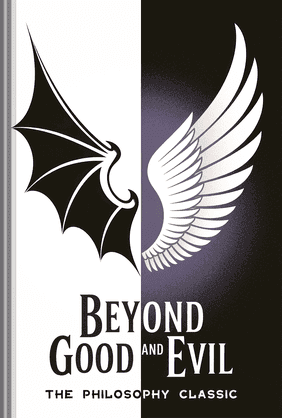
Beyond Good and Evil
Friedrich Nietzsche
32 Duration11 Key Points4.5 Rate3. The Books Must Go With You
For L'Amour, books were survival gear. He sacrificed space for clothes or food in his seabag to carry heavy hardcovers. He treated access to knowledge as a physical necessity.
Today, we have zero excuses. You carry a smartphone capable of holding the entire Library of Congress. Between Kindle apps, Audible, and Apple Books, you have instant access to every classic piece of literature ever written. The barrier to entry has vanished. The only thing missing is the intent.
4. Track Your Intellectual Diet
One of the most fascinating aspects of this book is the meticulous record-keeping. L'Amour kept detailed lists of every book he read, noting where he was and what he was doing at the time. He lists hundreds of titles at the back of the memoir.
Tracking your reading does two things. First, it holds you accountable. If you look at your list for the month and see zero books completed, the data doesn't lie. Second, it allows you to trace the evolution of your own thoughts.
This same methodical discipline was the engine behind his incredible output as a novelist. To understand how he applied this structure to his professional work, you can explore the legendary Louis L'Amour writing routine.
Building Your Own Louis L'Amour Reading List
You cannot copy L'Amour's exact life, but you can replicate his intellectual diet. The famous Louis L'Amour reading list found in the back of his memoir includes everything from Greek classics to dry historical texts about the American frontier.
To build your own version today:
- Go Heavy on History: Understand how the world was built. Read about empires, wars, and migrations. History provides the context for everything happening today.
- Embrace the Classics: Don't just read books published in the last five years. Read books that have survived for centuries. If a book has been in print for 300 years, it contains fundamental human truths.
- Read the Physical Landscape: L'Amour read books about rocks, weather, and ocean currents. Learn about the physical world around you. It grounds your abstract thinking in reality.
- Leverage Modern Access: While L'Amour had to scour used bookstores in port cities, you can use Amazon, Barnes & Noble, or local public library apps like Libby. Download the classics for free. Buy used paperbacks. Build your personal library aggressively.
Designing your own intellectual curriculum can feel overwhelming at first, especially if you are used to having teachers hand you a syllabus. If you are serious about adopting a L'Amour-style approach to self-education in the modern world, you need a reliable framework to maximize your efforts. Scott H. Young provides a brilliant blueprint for mastering hard skills and complex subjects outside the traditional university system. It is the perfect companion guide for building an aggressive, self-directed learning strategy that actually gets results.
Ultralearning
Scott H. Young
32 Duration8 Key Points4.5 RateWhy This Book Beats Modern Self-Education Books
Walk into any bookstore, and the self-help section is packed with books on "speed reading" or "how to read 100 books a year." Most of these self-education books treat reading as a race or a metric to brag about on social media.
This Louis L'Amour Education of a Wandering Man summary highlights a massive difference in philosophy. L'Amour didn't speed read. He absorbed. He read because he was violently curious about the world. He read to survive his own ignorance. He didn't read to tell other people he read; he read to build an inner world that no one could take away from him, whether he was broke in a mining camp or standing on the deck of a ship.
This mindset of self-reliance and internal fortitude is a central theme in his life and work. For a deeper understanding of the values that drove him, read about the core principles of Louis L'Amour's frontier philosophy.
Common Pitfalls in Self-Education (And How to Avoid Them)
When attempting to educate yourself without a syllabus, it is easy to fail. L'Amour bypassed these common traps naturally through his lifestyle.
- The Trap of Passive Reading: Do not just pass your eyes over the words. Engage with the text. If you disagree with an author, figure out exactly why. L'Amour read critically, comparing different historical accounts to find the truth.
- The Trap of Comfort Zones: It is easy to only read authors who agree with your existing worldview. L'Amour read widely across different cultures, political spectrums, and eras. Force yourself to read books that challenge your assumptions.
- The Trap of "Waiting for the Right Time": You will never have a clear schedule. Stop waiting for the weekend or a vacation to start that heavy book. Read three pages right now.
When you're too exhausted to tackle a dense book after a long day, listening to the core ideas can be a great way to stay consistent without the heavy lifting.
Overcome the "too tired to learn" trap by listening to book insights during your commute or while doing chores, ensuring you never miss a day of self-education.
Download LeapAhead App now
Dodging the trap of passive reading is perhaps the most critical skill for any autodidact. If you want to ensure you are truly absorbing and analyzing the texts you consume rather than just skimming for completion, there is a legendary guide that has helped generations of readers do exactly that. This classic manual breaks down the precise mechanics of analytical reading, teaching you how to properly interrogate a book, identify its core arguments, and truly make the knowledge your own.
How to Read a Book
Mortimer J. Adler, Charles Van Doren
18 Duration8 Key Points4.7 RateThe Ultimate Takeaway
You do not need a university to become an educated person. You need curiosity, discipline, and a willingness to read hard things. Louis L'Amour proved that an Ivy League intellect can be forged in a boxcar. His life demands that we stop making excuses, pick up a book, and take absolute ownership of our own minds.
FAQ
Is Education of a Wandering Man a standard autobiography about L'Amour's writing career?
No. While it covers his life, it focuses almost entirely on his early years before he became famous. It is an intellectual memoir detailing his travels, the physical labor he endured, and most importantly, the books he read during that time to educate himself.
No. While it covers his life, it focuses almost entirely on his early years before he became famous. It is an intellectual memoir detailing his travels, the physical labor he endured, and most importantly, the books he read during that time to educate himself.
Do I need to be a fan of Western novels to get value from this book?
Not at all. This book is about the pursuit of knowledge. The lessons on self-education, discipline, and curiosity apply to anyone, regardless of what genre of fiction they prefer.
Not at all. This book is about the pursuit of knowledge. The lessons on self-education, discipline, and curiosity apply to anyone, regardless of what genre of fiction they prefer.
How many books did Louis L'Amour actually read?
He estimated that he read around 100 to 120 books a year. Over his lifetime, this amounted to thousands of volumes covering virtually every subject imaginable.
He estimated that he read around 100 to 120 books a year. Over his lifetime, this amounted to thousands of volumes covering virtually every subject imaginable.
Can his method of reading apply to today's busy digital age?
Absolutely. In fact, it is easier now. L'Amour read in stolen moments between heavy physical labor. Today, substituting 30 minutes of scrolling on a phone for 30 minutes of reading a digital or physical book perfectly mirrors his strategy of utilizing idle time.
Absolutely. In fact, it is easier now. L'Amour read in stolen moments between heavy physical labor. Today, substituting 30 minutes of scrolling on a phone for 30 minutes of reading a digital or physical book perfectly mirrors his strategy of utilizing idle time.