

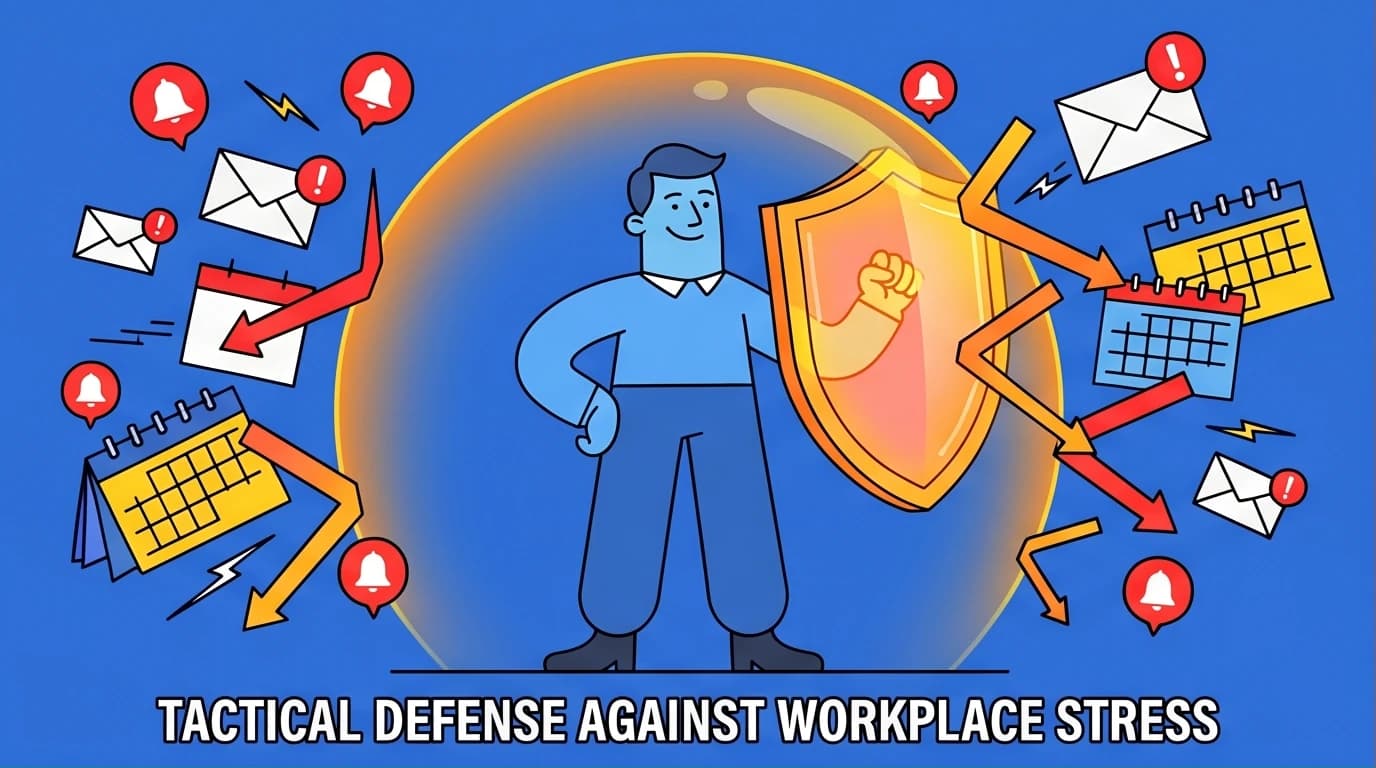
Your inbox is overflowing, your calendar looks like a solid block of conflicting meetings, and every incoming request is tagged "urgent." You are white-knuckling your way through tight deadlines, running on caffeine and adrenaline, secretly wondering how long you can sustain this pace before something breaks. You do not need another corporate wellness seminar on mindfulness; you need a tactical defense system to protect your time, your reputation, and your sanity.
Why Traditional Workplace Stress Management Misses the Mark
Most corporate advice on workplace stress management fails because it treats the symptom rather than the disease. A free subscription to a meditation app or a casual Friday policy will not fix a structurally toxic workload. Stress in the modern American corporate environment is a simple math problem: the volume of incoming demands drastically exceeds your biological and temporal capacity to execute them.
This constant mismatch doesn't just impact your productivity; it takes a significant physical toll. Understanding the long-term consequences is often the motivation needed to make a change. For a deeper look into how chronic pressure impacts your health, explore the science behind
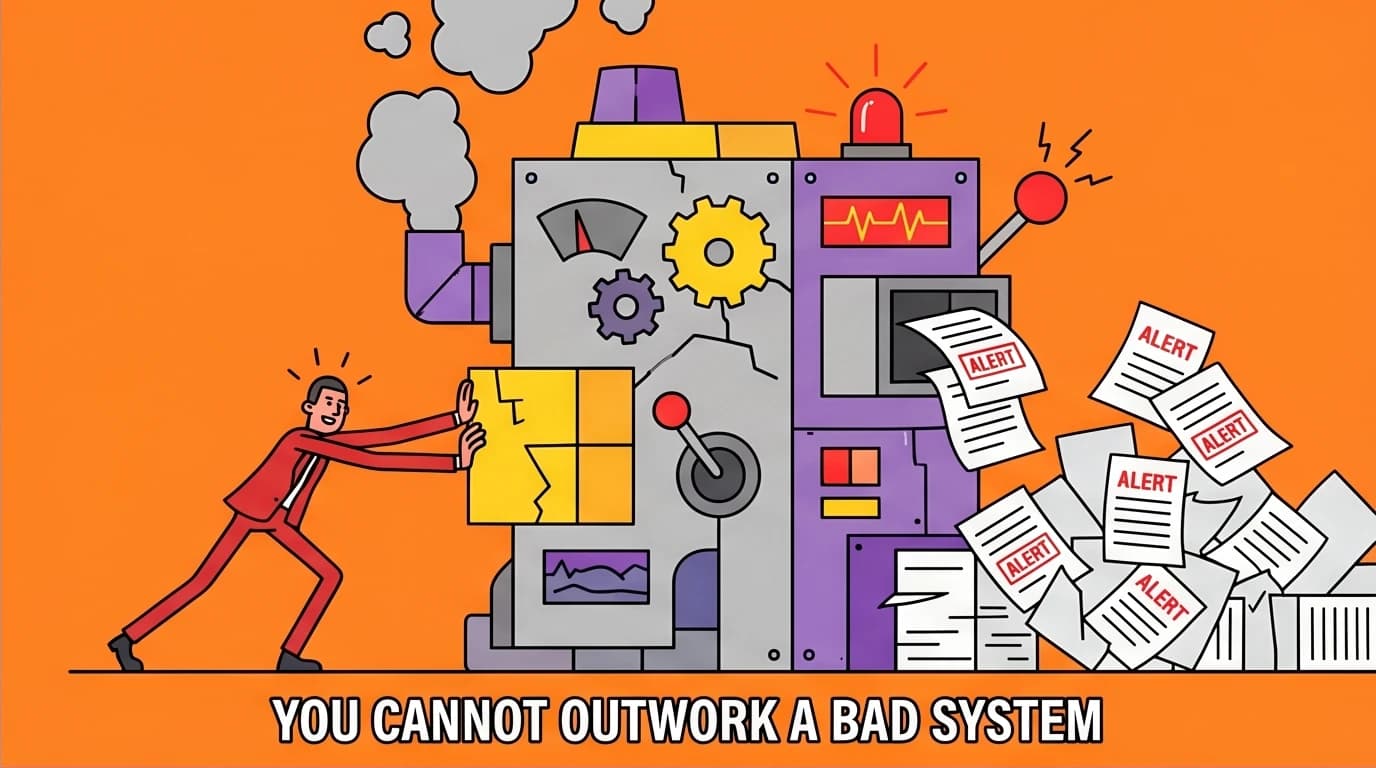
You cannot outwork a bad system. Staying at your desk until 9 PM every night only signals to your organization that you are capable of absorbing more punishment. To survive, you must shift from being a passive order-taker to an active portfolio manager of your own time.
How to Deal with a Stressful Job: Immediate Tactical Defenses
When figuring out how to deal with a stressful job, the first step is stopping the bleeding. You must build friction between incoming requests and your execution pipeline.
The "No, But" Pushback Strategy
The biggest fear professionals face is looking incompetent when turning down work. The solution is never to say a flat "no." Instead, negotiate scope and priority using the "No, But" framework. You make the requester own the trade-off.
If your manager drops a massive audit on your desk on a Thursday afternoon, you respond: "I can prioritize this audit, but that means the Q3 marketing presentation will be pushed to next Wednesday. Which of these two should take priority?"
This forces management to do their job: manage. It shifts the burden of impossible deadlines back onto the leadership team, establishing a clear professional boundary without making you look uncooperative.
Learning to push back against unreasonable requests without damaging your professional reputation is an acquired skill. If you struggle with the guilt of saying "no" or find yourself constantly caving to last-minute demands from your boss, you might need a stronger framework for asserting yourself. Setting clear parameters around your time does not make you a bad employee; it makes you a respected professional. For a deep dive into practical scripts and strategies to protect your energy, this comprehensive guide to establishing healthy limits is an absolute game-changer for corporate professionals.

Set Boundaries, Find Peace
Nedra Glover Tawwab
 29 Duration
 10 Key Points
 4.5 Rate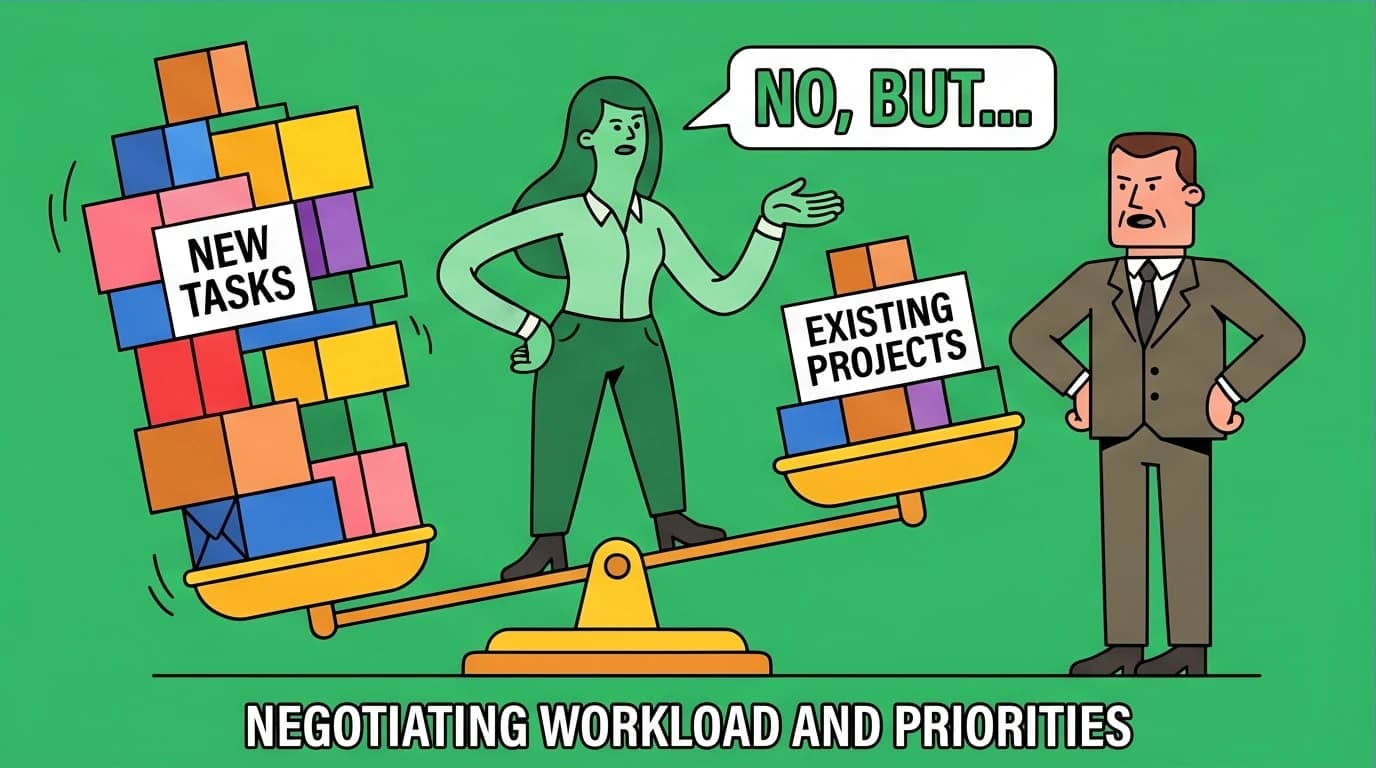
Defensive Calendaring
Your calendar is a battlefield. If you leave white space on it, someone will claim it. Start blocking out 90-minute chunks for deep work and label them "Busy" or "Project Focus."
Implement the 45-minute rule for meetings. Never accept or schedule a a full 60-minute meeting. Cut it to 45 minutes to give yourself a 15-minute buffer to process notes, use the restroom, or simply stare at a wall to reset your nervous system. Back-to-back Zoom calls from 9 to 5 will destroy your cognitive bandwidth before lunch.
Carving out white space on your calendar is only half the battle; what you do with those uninterrupted blocks dictates your ultimate success. In a corporate culture obsessed with immediate responses and constant Slack notifications, the ability to focus without distraction has become a rare and highly compensated skill. If you want to master the art of tackling complex projects quickly and permanently escape the trap of shallow, reactive tasks, mastering this focused approach will completely transform your daily productivity.
Deep Work
Cal Newport
47 Duration8 Key Points4.6 RateWork Life Balance Tips for the Hyper-Connected Professional
The idea of a perfect 50/50 work-life split is a myth. You will have weeks where work demands 80% of your energy, such as during a product launch or end-of-year tax season. The goal is strategic integration and harsh disconnection. Here are highly effective work life balance tips that function in the real world.
The Technology Disconnect
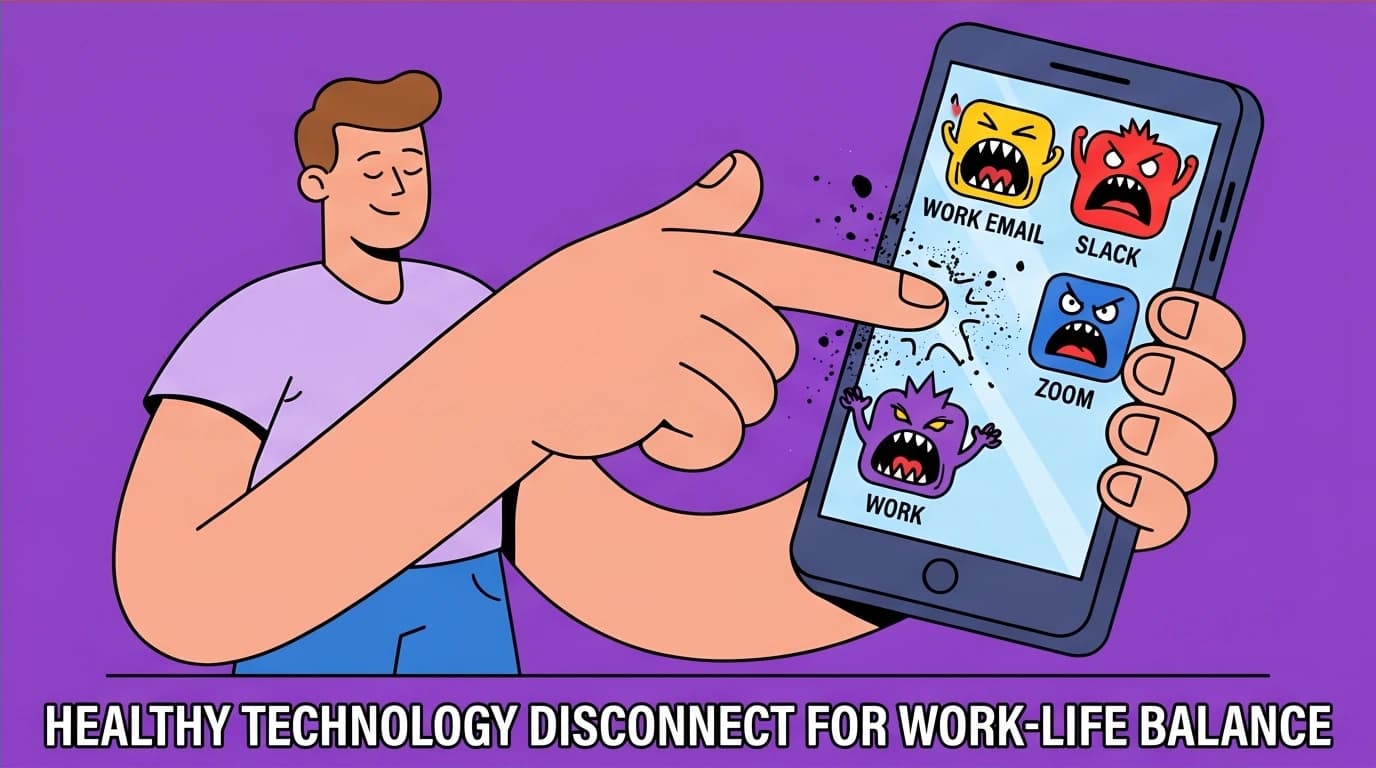
Remove Slack, Microsoft Teams, and your corporate email from your personal phone. If you are a salaried employee, the expectation is that you deliver results, not that you are available via instant message at 10 PM on a Saturday. If there is a catastrophic emergency—the servers are on fire, or a million-dollar account is backing out—someone will find your phone number and call you. Everything else can wait until Monday morning.
The Transition Ritual
The shift to remote and hybrid work has erased the physical commute, which historically served as a decompression zone. You must recreate it. If you work from home, shut down your laptop at 5:30 PM, step out of your front door, and walk a mile around your neighborhood. This physical transition signals to your brain that the workday is officially terminated. When you walk back inside, you are off the clock.
Defending Your PTO
Take your Paid Time Off. Corporate culture often stigmatizes vacations, rewarding those who leave days on the table. This is a fast track to physical collapse. When you take PTO, put up an airtight out-of-office auto-responder that explicitly states you will not be checking email. Do not secretly log in from your hotel room. If you answer emails while on vacation, you train your team to disrespect your boundaries.
The Hard Path to Job Burnout Recovery
There is a distinct difference between being stressed and being burned out. Stress is characterized by over-engagement; you feel that if you just work a little harder, you can fix everything. Burnout is characterized by disengagement; you feel empty, cynical, and completely detached from the outcome of your work.
If you have crossed the line into exhaustion, job burnout recovery must become your primary focus.
Execute an Energy Audit
For one week, keep a notepad next to your keyboard. Draw a line down the middle. On the left side, write down tasks that give you momentum or sense of accomplishment. On the right side, write down the interactions and tasks that drain the life out of you.
You cannot eliminate all the drainers, but you can manage them. If weekly syncs with a specific vendor ruin your morning, move that meeting to Thursday at 4 PM so it does not infect your most productive hours.
Micro-Recoveries Over Macro-Vacations
A two-week trip to Hawaii will not cure burnout if you return to the exact same broken system. Burnout recovery requires daily micro-recoveries. Step away from your monitor every 90 minutes. Eat your lunch away from your desk. Stare out a window. Your brain consumes roughly 20% of your body's energy; it needs scheduled downtime to clear out metabolic waste.
Recognizing that you have hit a wall of exhaustion is the first step, but biologically unwinding that stress cycle requires more than just a few days off. When your nervous system is trapped in a constant "fight or flight" mode from chronic workplace pressure, you have to actively signal to your body that it is safe to relax. If you want to understand the science behind why we crash and how to systematically close the stress loop, this research-backed resource provides a brilliant roadmap for reclaiming your vitality.

Burnout
Emily Nagoski, Ph.D., Amelia Nagoski, DMA
25 Duration9 Key Points4.5 RateOf course, when you're already burned out, the thought of reading an entire book can feel like another exhausting task. A more manageable first step is to absorb the core ideas in a shorter format that fits your current energy level.


Get the key insights from books on burnout and stress management in 15-minute audio sessions, perfect for when you're too drained to sit down and read.
 LeapAhead
Common Traps That Multiply Anxiety
Many professionals actively sabotage their own peace of mind through bad operational habits. Recognizing these traps is half the battle.
Fake Productivity (Multitasking)
You cannot write a strategic brief while half-listening to a conference call and responding to Slack messages. Multitasking is a myth; you are actually rapid-switching your attention, which burns massive amounts of glucose and floods your system with cortisol. Focus on one single screen and one single task at a time.
You cannot write a strategic brief while half-listening to a conference call and responding to Slack messages. Multitasking is a myth; you are actually rapid-switching your attention, which burns massive amounts of glucose and floods your system with cortisol. Focus on one single screen and one single task at a time.
The Hero Syndrome
High performers often believe that if they do not step in, a project will fail. Let minor fires burn. If a low-priority project is running behind schedule because the company refused to properly staff it, let the deadline slip. Failure is sometimes the only metric management understands. If you constantly play the hero and sacrifice your evenings to save under-resourced projects, the company will never fix the underlying staffing issue.
High performers often believe that if they do not step in, a project will fail. Let minor fires burn. If a low-priority project is running behind schedule because the company refused to properly staff it, let the deadline slip. Failure is sometimes the only metric management understands. If you constantly play the hero and sacrifice your evenings to save under-resourced projects, the company will never fix the underlying staffing issue.
Sacrificing Sleep for Preparation
You cannot hack poor time management by sleeping four hours a night. Sleep deprivation mimics the cognitive impairment of alcohol intoxication. You will make worse decisions, take twice as long to complete simple tasks, and shatter your emotional regulation. Protect your eight hours of sleep as if your career depends on it—because it does.
You cannot hack poor time management by sleeping four hours a night. Sleep deprivation mimics the cognitive impairment of alcohol intoxication. You will make worse decisions, take twice as long to complete simple tasks, and shatter your emotional regulation. Protect your eight hours of sleep as if your career depends on it—because it does.
Managing stress at work is an ongoing discipline, not a one-time fix. It requires you to treat your time, attention, and health as finite, highly valuable assets. By establishing clear rules of engagement with your employer, you stop merely surviving the workday and start dictating the terms of your own success.
These tactical defenses are crucial, but the ultimate goal is to develop an internal framework that makes you less susceptible to external pressures. This involves more than just managing your calendar; it's about fundamentally changing your response to stressful situations.
Escaping the hero syndrome and the illusion of multitasking ultimately comes down to one core philosophy: doing less, but doing it better. American corporate culture frequently glorifies the hustle, but true high performers know how to ruthlessly eliminate the trivial many to focus on the vital few. If you are ready to stop stretching yourself a mile wide and an inch deep, adopting a disciplined approach to what truly matters will help you reclaim your career and your peace of mind.
Essentialism
Greg McKeown
32 Duration10 Key Points4.6 RatePutting these principles into practice requires consistent learning, but finding the time for all these essential books can feel like another demand on your already-packed schedule. To keep improving without adding more stress, it helps to have a tool that fits into your day.
Master essential career skills by listening to key ideas from bestselling business books, turning your commute or a short break into a productive learning opportunity.
LeapAheadFAQ
How do I tell my manager my workload is unmanageable without sounding lazy?
Do not use the word "overwhelmed." Frame the conversation around priorities and resource allocation. Bring a visible list of all your active projects. Say: "Here is everything on my plate. I have capacity to execute three of these at a high level this week. Which three align best with our current Q4 goals, and how should we redistribute the rest?" This positions you as a strategic thinker, not a complainer.
Do not use the word "overwhelmed." Frame the conversation around priorities and resource allocation. Bring a visible list of all your active projects. Say: "Here is everything on my plate. I have capacity to execute three of these at a high level this week. Which three align best with our current Q4 goals, and how should we redistribute the rest?" This positions you as a strategic thinker, not a complainer.
What is the difference between normal work stress and severe burnout?
Stress feels like having too much on your plate; it generates anxiety, urgency, and physical tension. You care too much. Burnout feels like having nothing left to give; it generates apathy, cynicism, and exhaustion. You stop caring altogether. If a missed deadline makes you panic, you are stressed. If a missed deadline makes you feel absolutely nothing, you are approaching burnout.
Stress feels like having too much on your plate; it generates anxiety, urgency, and physical tension. You care too much. Burnout feels like having nothing left to give; it generates apathy, cynicism, and exhaustion. You stop caring altogether. If a missed deadline makes you panic, you are stressed. If a missed deadline makes you feel absolutely nothing, you are approaching burnout.
Can I set boundaries if I am new to the company or in a junior role?
Yes, but the execution must be subtle. As a junior employee, you cannot bluntly reject tasks. Instead, focus on aggressive clarity regarding deadlines. When handed a task, ask: "When is the absolute latest you need this?" Often, managers assign work immediately but do not actually need the result for days. Managing expectations is the most effective way to build boundaries early in your career.
Yes, but the execution must be subtle. As a junior employee, you cannot bluntly reject tasks. Instead, focus on aggressive clarity regarding deadlines. When handed a task, ask: "When is the absolute latest you need this?" Often, managers assign work immediately but do not actually need the result for days. Managing expectations is the most effective way to build boundaries early in your career.
How do I stop thinking about work when I am at home?
You need a strict shutdown routine. At the end of the day, spend ten minutes writing down your top three priorities for tomorrow. Close all open browser tabs related to work. Shut your laptop. By writing down tomorrow's tasks, you offload the mental burden from your short-term memory onto paper, signaling to your brain that it is safe to power down for the night.
You need a strict shutdown routine. At the end of the day, spend ten minutes writing down your top three priorities for tomorrow. Close all open browser tabs related to work. Shut your laptop. By writing down tomorrow's tasks, you offload the mental burden from your short-term memory onto paper, signaling to your brain that it is safe to power down for the night.