

You are running a marathon at a sprint pace. Whether you are scaling a tech startup in Silicon Valley, leading a Fortune 500 division, or relentlessly pursuing a personal ambition, the pressure is constant. Conventional advice tells you to step back, slow down, and take a break. But when your goals demand momentum, hitting the brakes is not a viable option. You do not need to learn how to avoid stress; you need to learn how to use it.
The gap between breaking down under pressure and thriving within it comes down to psychological architecture. High performers do not experience less stress than average people. They process it entirely differently.
The Paradigm Shift: Changing Your Relationship With Stress
If you view stress as a toxic force that destroys your health and clouds your judgment, your body will react accordingly. This is the first bottleneck. You must start by changing your relationship with stress.
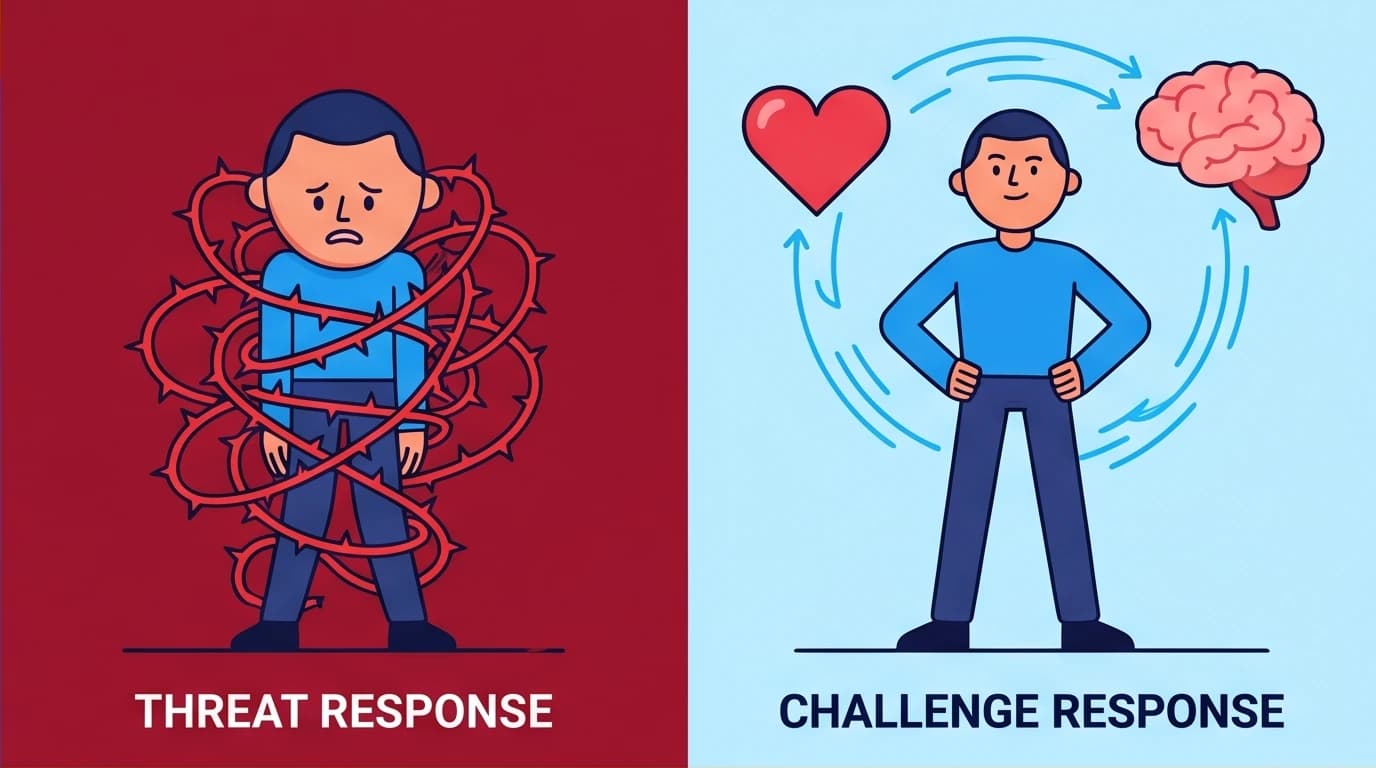
When you perceive a high-stakes situation as a threat, your nervous system triggers a panic response. Your blood vessels constrict. Your focus narrows to survival mode. You become defensive, reactive, and prone to poor decision-making.
But when you perceive that exact same situation as a challenge, your biology changes. Your heart rate still goes up, but your blood vessels dilate, delivering maximum oxygen to your brain. This is the "challenge response." Your body is literally flooding your system with DHEA, a neurosteroid that promotes brain growth and recovery.
Stress is not a signal that you are failing. It is your biology mobilizing energy so you can rise to the occasion. Acknowledging this biological reality is the foundation of high-level resilience.
Understanding this positive reframe is key, but it's also important to recognize what happens when stress becomes chronic and unmanaged.
If you want to dive deeper into the actual biology of how your body processes pressure, you need to understand that the "stress is bad" narrative is outdated. Stanford psychologist Kelly McGonigal dismantles this myth brilliantly. Her work shows exactly how to cultivate that challenge response, proving that the physical signs of anxiety can be your greatest asset when you know how to channel them. It is a required reading for high performers looking to weaponize their body's natural adrenaline.
The Upside of Stress
Kelly McGonigal
 42 Duration
 9 Key Points
 4.4 Rate
The Architecture of Bouncing Back: Cognitive Reframing Techniques
Resilience is not a personality trait; it is a learned skill. At the core of this skill is the ability to control the narrative in your head when everything goes wrong. When a major deal falls through or a product launch tanks, the initial shock is inevitable. The damage happens in the story you tell yourself afterward.
Cognitive reframing techniques allow you to short-circuit the downward spiral of panic.
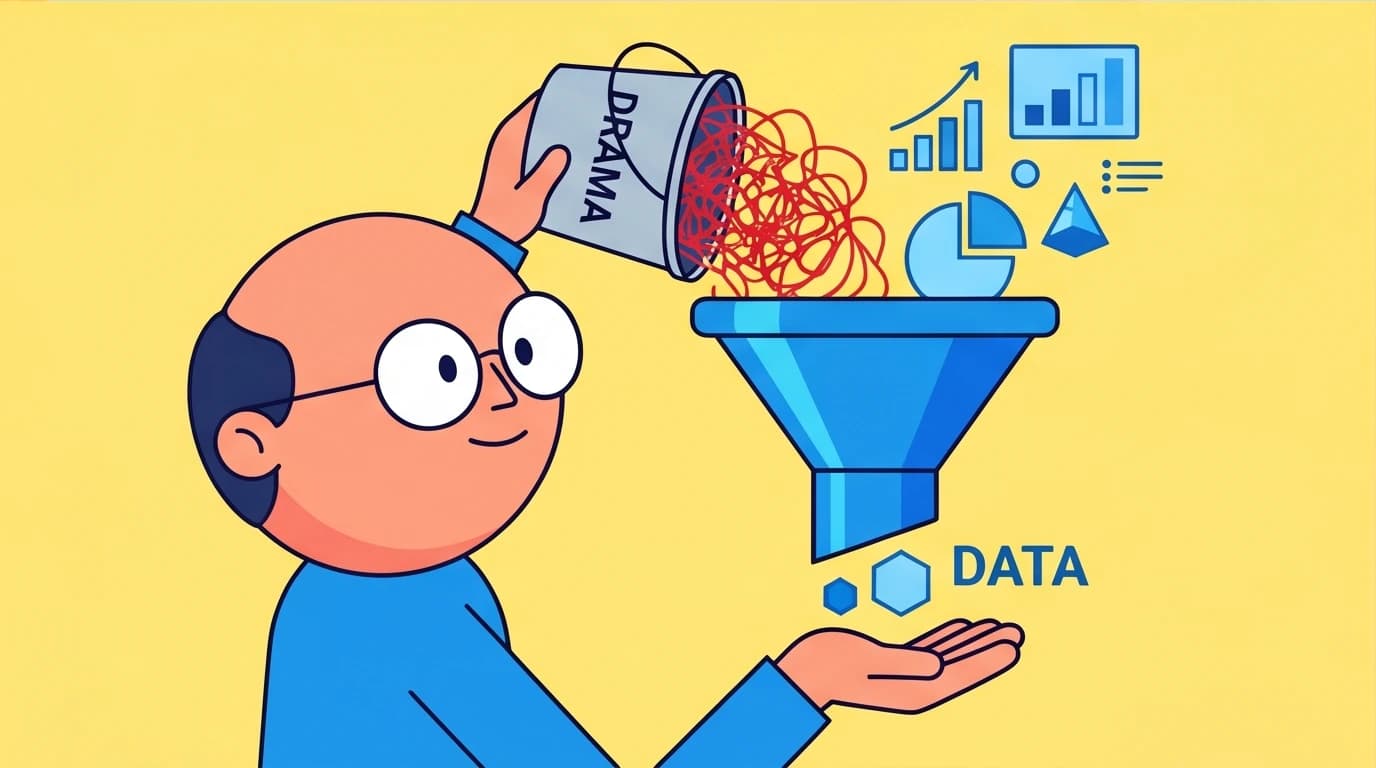
1. The "Data, Not Drama" Filter
When adversity hits, separate the objective facts from the subjective catastrophe.
- The Drama: "The lead investor backed out. The company is going under. I am a failure."
- The Data: "We lost our Series A lead. We have four months of runway left. We need to pitch 20 new firms by next Friday."
Drama paralyzes you. Data gives you a blueprint. Whenever you feel overwhelmed, write down only the undeniable, provable facts of the situation. Strip away the adjectives.
2. The Worst-Case Deconstruction
Ambitious people often run catastrophic scenarios in the background of their minds. Drag those fears into the light. Ask yourself: "If the absolute worst happens, what is my exact step-by-step recovery plan?"
If your business fails, you might have to liquidate assets, lay off staff, and find a job. Write it down. Once the worst-case scenario is practically defined rather than vaguely feared, it loses its power. You realize you can survive it.
If your business fails, you might have to liquidate assets, lay off staff, and find a job. Write it down. Once the worst-case scenario is practically defined rather than vaguely feared, it loses its power. You realize you can survive it.
3. The 10-Year Lens
In the middle of a crisis, your perspective shrinks. A missed target feels like a fatal blow. Force your perspective outward. Ask yourself: "Will this specific problem matter in ten days? Ten months? Ten years?" Most daily fires burn themselves out quickly. If a problem will not matter in ten years, do not give it ten years' worth of emotional energy today.
Mastering these cognitive pivots takes practice, but it is the defining trait of history's greatest leaders. When you hit a wall, you can either let the situation crush you or use it as fuel to pivot. Ryan Holiday's modern take on Stoicism provides a brilliant tactical framework for exactly this kind of reframing. It teaches you how to look at massive hurdles not as roadblocks, but as the actual path forward for your career and personal growth.
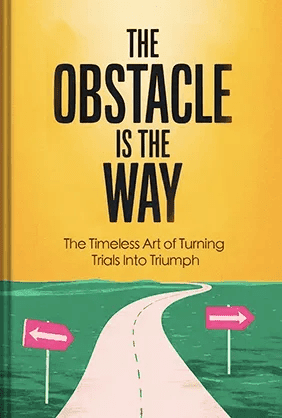
The Obstacle Is the Way
Ryan Holiday
44 Duration7 Key Points4.6 RateEmotional Resilience Training: Hardwiring the System
You cannot out-think every emotion. You need emotional resilience training to build a nervous system capable of absorbing heavy psychological blows without shattering.
Sitting With the Discomfort
Most people try to numb discomfort. They scroll social media, overwork, or pour a drink to escape the tension. Resilient leaders do the exact opposite. They lean into it.
When you feel the knot in your stomach or the tightness in your chest, sit in a chair for two minutes. Do not try to fix the problem. Do not try to make the feeling go away. Just observe the physical sensation. This practice teaches your brain that uncomfortable emotions are not lethal. Once you stop fearing the emotion of stress, you reclaim your executive function.
When you feel the knot in your stomach or the tightness in your chest, sit in a chair for two minutes. Do not try to fix the problem. Do not try to make the feeling go away. Just observe the physical sensation. This practice teaches your brain that uncomfortable emotions are not lethal. Once you stop fearing the emotion of stress, you reclaim your executive function.
Micro-Dosing Adversity
You do not build muscle by resting; you build it by lifting heavy things. The same applies to emotional stamina. Intentionally inject controlled friction into your daily routine.
Run 5 miles when it is raining. Take a 40-degree Fahrenheit cold plunge in the morning. Fast for 24 hours. These artificial stressors train your mind to stay calm while your body screams in panic. When real-world business stress hits, your brain recognizes the state: We have been here before. We know how to stay calm.
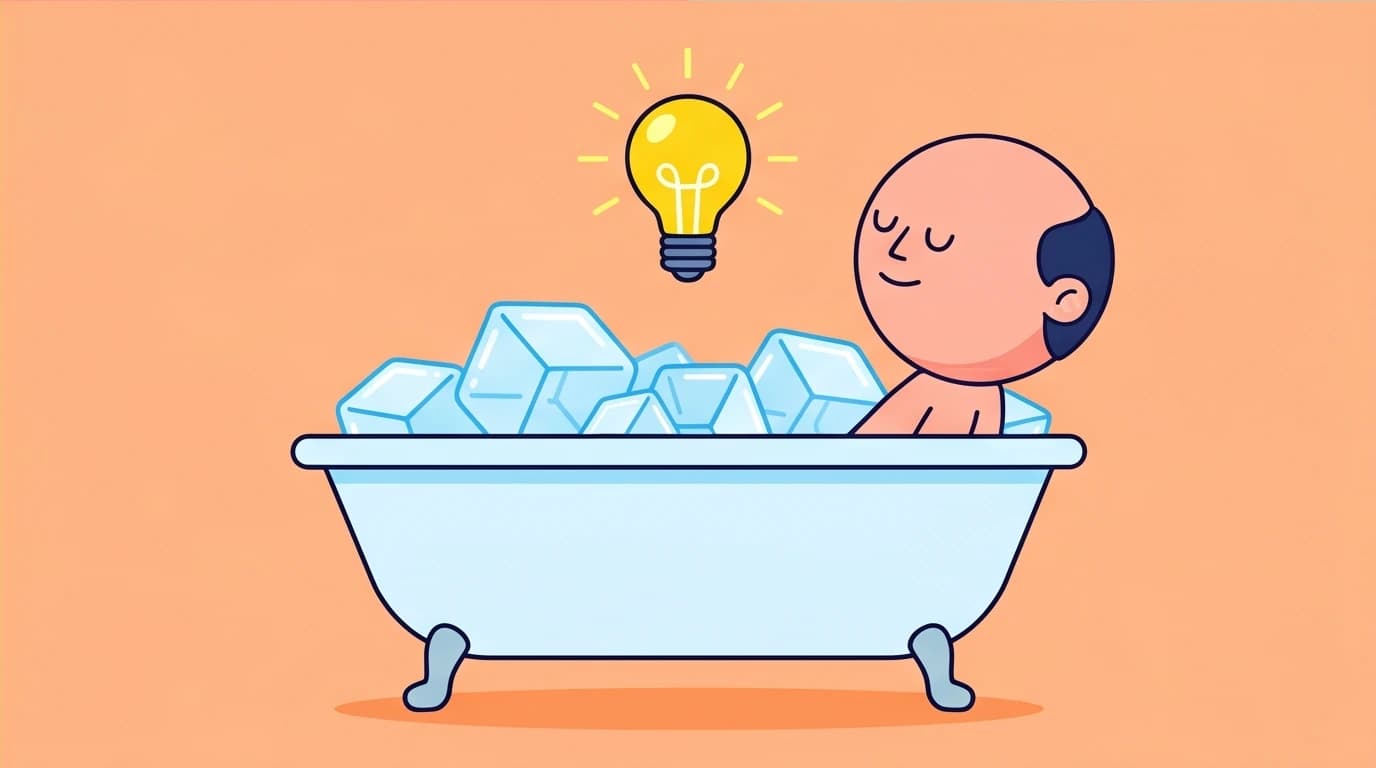
Run 5 miles when it is raining. Take a 40-degree Fahrenheit cold plunge in the morning. Fast for 24 hours. These artificial stressors train your mind to stay calm while your body screams in panic. When real-world business stress hits, your brain recognizes the state: We have been here before. We know how to stay calm.
Audit Your Inputs
Resilience is heavily influenced by the narratives you consume. Skip the generic self-help listicles. Go to Barnes & Noble or open Audible and immerse yourself in the biographies of leaders who navigated catastrophic, world-altering crises—Lincoln during the Civil War, or modern founders who survived the dot-com crash. Study their emotional baselines. You will notice a pattern: relentless pragmatism combined with unshakeable optimism.
These training methods build your internal fortitude. To supplement them, it can be helpful to have a variety of simple, actionable tactics ready for when pressure mounts.
Speaking of studying historical titans, if you want a masterclass in holding the line during unimaginable stress, looking at Abraham Lincoln's presidency is a perfect starting point. The way he managed intense political rivalries, crushing military defeats, and his own battles with depression offers a profound blueprint for modern executives. Donald T. Phillips breaks down Lincoln's pragmatic, highly resilient management style into actionable strategies that you can apply directly to your next board meeting or startup pivot.
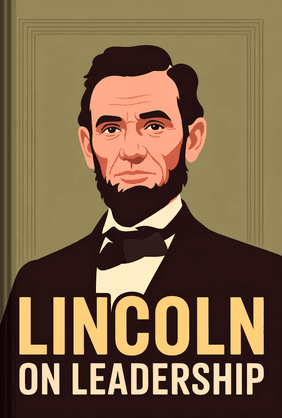
Lincoln on Leadership
Donald T. Phillips
27 Duration8 Key Points4.7 RateThe Action Plan: How to Build Stress Resilience Daily
Understanding the psychology is only step one. Execution is where the shift happens. If you want to master how to build stress resilience, you must integrate a proactive protocol into your life.
Master the Mindset Shift for Stress
The next time your heart pounds before a high-stakes board meeting or a critical negotiation, do not tell yourself to calm down. Telling yourself to calm down signals to your brain that the high-energy state is bad. Instead, tell yourself out loud: "I am excited. My body is preparing me to perform." This simple mindset shift for stress instantly redirects the nervous system from a threat response to a challenge response.
Compartmentalize the Battlefield
Elite operators do not fight every battle simultaneously. They organize the chaos. Divide your current stressors into two categories:
- Variables I can control: Your effort, your strategy, your response, your preparation.
- Variables I cannot control: Market conditions, competitor actions, the past.
Take 100% of your aggressive energy and channel it exclusively into the first category. Ignore the second entirely. Worrying about uncontrollable variables is a massive leak of cognitive stamina.
Implement Ruthless Strategic Recovery
You cannot run a car at 8,000 RPMs indefinitely. High-achievers often confuse resting with quitting. They are not the same. Strategic recovery is a non-negotiable performance requirement.
This does not mean taking a month off. It means engaging in active recovery that clears neurological buildup. Deep REM sleep, intense physical exertion, or completely disconnecting from technology for just two hours on a Sunday. Treat recovery with the same ruthless discipline you apply to your work.
This does not mean taking a month off. It means engaging in active recovery that clears neurological buildup. Deep REM sleep, intense physical exertion, or completely disconnecting from technology for just two hours on a Sunday. Treat recovery with the same ruthless discipline you apply to your work.
Treating recovery as a strategic business metric rather than a guilty pleasure is what separates the elite from the chronically burned out. If you are struggling to implement this kind of disciplined downtime without feeling like you are falling behind, you should check out the paradigm-shifting work by Jim Loehr and Tony Schwartz. They studied world-class athletes and top executives, proving that managing your energy—not your time—is the true secret to sustaining peak performance without destroying your health.
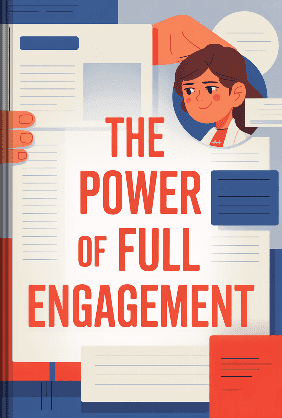
The Power of Full Engagement
Jim Loehr, Tony Schwartz
46 Duration10 Key Points4.4 RateWith a reading list full of powerful but dense books, finding the time to absorb these lessons can be the first hurdle. For high-achievers looking to implement these ideas without the weeks of reading, there are more efficient ways to learn.

Get actionable insights from bestselling books on leadership and resilience in 15-minute audio summaries, perfect for your commute or workout.

Download LeapAhead App now
The Resilience Trap: What High Achievers Get Wrong
The biggest trap ambitious individuals fall into is mistaking toxic endurance for actual resilience.
Enduring a miserable, unoptimized situation through sheer willpower is not resilience; it is a fast track to severe burnout. Resilience is not about how long you can hold your breath underwater. It is about how quickly you can surface, get oxygen, and dive back in with a better strategy.
If your coping mechanism involves sleeping four hours a night and relying on pure adrenaline, you are not building resilience. You are accruing biological debt. True resilience is highly dynamic. It involves recognizing a flawed approach, absorbing the failure, pivoting rapidly, and moving forward with renewed clarity.
This is particularly true in a professional setting, where the line between high performance and burnout is razor-thin. Leaders must develop specific strategies to handle the unique pressures of the modern workplace.
Stop viewing stress as an enemy you have to defeat. It is the friction required to sharpen the blade. Use it.
FAQ
Can anyone learn to be resilient, or is it genetic?
While genetics play a minor role in baseline temperament, resilience is overwhelmingly a set of learned behaviors and cognitive frameworks. Just like learning a new language or mastering a physical sport, the neurological pathways for emotional regulation and cognitive reframing can be built and strengthened at any age through deliberate, consistent practice.
How do I know if I am building resilience or just ignoring burnout?
Resilience results in growth and adaptation; ignoring burnout results in degradation. If you are building resilience, you will face a stressful event, process it, recover, and emerge with a sharper strategy and stable energy. If you are ignoring burnout, you will experience chronic cynicism, emotional numbness, physical exhaustion, and a drop in cognitive performance that does not resolve after a night of sleep.
What is the fastest way to bounce back after a massive failure?
Immediately shift your focus from the narrative to the data. Stop analyzing why you failed as a person, and strictly analyze the mechanics of the failure. Use the "Data, Not Drama" filter to break down exactly what went wrong in the process. Then, identify the single most productive action you can take in the next 60 minutes and execute it. Momentum destroys paralysis.
Does meditation actually help with stress resilience for busy people?
Yes, but you have to understand its purpose. For high-achievers, meditation is not about "finding inner peace" or relaxing. It is a highly tactical exercise to increase the gap between a stimulus and your reaction. Taking just 10 minutes a day to focus on your breath trains your brain to observe thoughts without automatically reacting to them, preventing impulsive, fear-based decisions during high-stress business situations.