

Leading a modern enterprise often feels like managing an empire under constant siege. Between volatile markets, unpredictable supply chains, and internal organizational friction, executives face a relentless barrage of high-stakes decisions. When the pressure peaks and the temperature in the boardroom feels like 100 degrees Fahrenheit, traditional management frameworks often fall apart. You do not need another corporate buzzword. You need a battle-tested operating system for the mind.

Marcus Aurelius ruled the Roman Empire for nearly two decades. He faced pandemics, wars, betrayals, and economic ruin. Yet, he is remembered not for ruthless domination, but for his profound emotional intelligence and restraint. His private journal, now known as Meditations, outlines an approach to power that remains highly relevant for today's founders and managers.
Since the article explicitly introduces his private journal, this is the perfect time to dive straight into the source material. If you want to understand how a Roman emperor managed the weight of absolute power, economic crises, and war without losing his center, reading his personal diary is a must. It's surprisingly accessible and serves as an unmatched operating system for modern American executives looking to build mental resilience.

Meditations
Marcus Aurelius
 34 Duration
 7 Key Points
 4.6 Rate
The Core of the Philosopher King Marcus Aurelius
History refers to him as the last of the "Five Good Emperors." The concept of the philosopher king marcus aurelius represents a leader who holds absolute authority but refuses to be corrupted by it. In a corporate context, absolute power might look like a founder with super-voting shares or a CEO operating with zero board oversight.
Power amplifies personality flaws. It makes insecure leaders tyrannical and anxious leaders paralyzing. Marcus Aurelius bypassed this trap through constant self-reflection. He viewed leadership as a duty of service, not a platform for self-aggrandizement. He understood that while he controlled the known world, the only thing he truly mastered was his own reaction to external events.
For modern executives, this mindset shift is critical. When your company faces a public relations nightmare or a sudden drop in quarterly revenue, your team looks directly at you. They do not just listen to your strategy; they absorb your emotional state. If you panic, the organization fractures. If you remain grounded, the organization stabilizes.
This shift from external chaos to internal control is the essence of his philosophy. To build a solid foundation in these principles, it's helpful to understand the broader context of his Stoic beliefs.
High-Impact Marcus Aurelius Leadership Lessons
To translate his philosophy into actionable business strategy, we must break down the specific marcus aurelius leadership lessons that apply directly to team management and corporate growth.
1. The Dichotomy of Control in the Boardroom
The foundational rule of Stoicism is distinguishing between what you can control and what you cannot. You cannot control macroeconomic shifts, competitor product launches, or a sudden change in vendor pricing. You can control your product quality, your internal resource allocation, and your response to the market.
Wasting executive bandwidth complaining about an unfair market creates a toxic culture of victimization. A Stoic leader looks at a missed Q4 target, strips away the emotional frustration, and asks: What part of this was under our direct control, and how do we fix that specific mechanism?

2. Strict with Yourself, Tolerant with Others
Marcus Aurelius wrote extensively about expecting the best from himself while anticipating flaws in others. He expected people to be difficult, selfish, and misguided. When they acted exactly as expected, he did not get angry. He adjusted his management approach.
If a direct report fails to deliver a project on time, a conventional manager might lash out. A leader practicing this Stoic principle looks inward first. Did I set clear expectations? Did I provide the necessary resources? You hold yourself to an unforgiving standard of clarity and support, while treating your team's missteps as coaching opportunities rather than personal insults.
The emperor’s private writings are filled with potent reminders about personal accountability and human nature.
This principle of self-accountability is a deep topic. For busy leaders wanting to explore this and other core leadership skills without getting bogged down after a long day at the office, modern tools can help bridge the gap.


Grasp key ideas from books on leadership and psychology in 15-minute summaries, turning your commute into a masterclass in management.
 LeapAhead
3. Objective Judgment Over Emotional Reaction
Every business crisis comes wrapped in heavy emotion. When a major client churns, the immediate reaction is panic or defensiveness. Marcus Aurelius trained himself to see things exactly as they are, without the narrative spin. A lost client is just a lost client. It means revenue dropped by a specific percentage. It does not mean the company is failing or the product is useless.
By stripping the emotional narrative from the raw facts, you can see miles down your strategic roadmap without your vision being clouded by fear.
This ability to detach from emotional narratives is particularly powerful for leaders who struggle with high-stakes pressure and the anxiety that comes with it.
Stripping the emotional narrative from raw business facts requires a high degree of self-awareness. If you struggle with knee-jerk reactions when a major client walks away or quarterly numbers dip, improving your emotional baseline is critical. To master this type of objective judgment and keep your executive vision clear under pressure, exploring the science behind how our brains process stress can be a game-changer.

Emotional Intelligence
Daniel Goleman, Ph.D.
46 Duration8 Key Points4.6 RateImplementing Stoicism in Leadership
Applying stoicism in leadership requires practice. It is not about suppressing emotions; it is about refusing to let those emotions dictate your strategic actions. Here is how you execute this in daily corporate life.
Reframe Obstacles as Strategic Accelerators
The phrase "the obstacle is the way" originates directly from Marcus Aurelius. When a massive hurdle appears—such as a competitor launching a feature you spent six months developing—most teams freeze.
Stoic leadership demands a pivot. The competitor's launch is no longer a disaster; it is free market research. You now get to see how customers react to their feature, identify its flaws, and release a superior version. You actively turn the negative event into a tactical advantage.
The concept of turning an obstacle into an advantage is a cornerstone of Stoic philosophy that has been widely adopted by top-tier CEOs, professional athletes, and military leaders across the United States. If you are looking to dig deeper into this exact framework and see how historical figures transformed impossible roadblocks into fuel for their success, there is a definitive modern guide that expands beautifully on this concept.
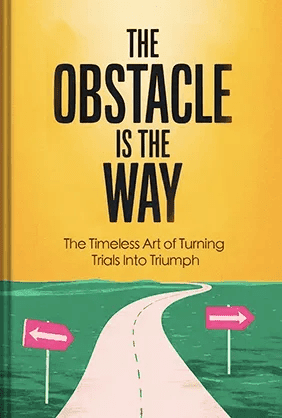
The Obstacle Is the Way
Ryan Holiday
44 Duration7 Key Points4.6 Rate
Practice Negative Visualization (Pre-Mortems)
Before launching a major initiative, gather your leadership team and assume the project has completely failed. It is six months from now, and the product is a disaster. Why did it happen?
This exercise, rooted in Stoic negative visualization (premeditatio malorum), removes the blind optimism that plagues many startups and established corporations. It forces the team to identify single points of failure, supply chain risks, and marketing blind spots before a single dollar is spent.

Essential Stoic Leadership Principles to Adopt Today
If you want to integrate the marcus aurelius leadership style into your daily routine, start with these non-negotiable stoic leadership principles:
- Audit Your Time Ruthlessly: Marcus constantly reminded himself of the shortness of life. Stop attending low-value meetings. Guard your executive focus to ensure you are working on high-leverage problems, not just clearing out your inbox.
- Accept Reality Immediately: When bad news hits, process it instantly. Denying reality or hoping things will magically fix themselves burns precious time. Accept the situation and move straight to problem-solving.
- Lead by Example, Not by Edict: You cannot demand a culture of accountability if you shift blame to the board or market conditions during an all-hands meeting. Own the failures publicly. Your team will mirror your accountability.
- Maintain Perspective: A bad quarter is just a bad quarter. Keep the macro vision intact. Do not let short-term volatility destroy your long-term strategic investments.
The principle of leading by example and owning failures publicly aligns perfectly with modern tactical leadership. When executives stop blaming market conditions and start taking complete responsibility for everything under their purview, the entire corporate culture shifts. For a masterclass in extreme accountability—forged in high-stakes combat and translated seamlessly for the corporate boardroom—this next read is essential for any leader building a resilient team.

Extreme Ownership
Jocko Willink, Leif Babin
45 Duration7 Key Points4.6 RateBuilding a leadership library with books like these is a powerful step, but finding the time to get through them all can be the biggest hurdle for any executive.
Clear your new reading list faster by listening to 15-minute summaries of these essential books and more, fitting powerful leadership lessons into a packed schedule.
LeapAheadLeadership is an exhausting endeavor. The frameworks left behind by Marcus Aurelius provide a mental armor for those tasked with carrying the weight of an organization. You cannot control the market, but you can always control your command of the ship.
FAQ
What is the most important element of the Marcus Aurelius leadership style?
The most critical element is self-mastery. He believed that you cannot lead others effectively until you can control your own impulses, emotions, and ego. In business, this translates to maintaining extreme composure and objectivity during periods of high stress or crisis.
How can a modern manager practice Stoicism at work?
Start by implementing the dichotomy of control. When an issue arises, literally split a piece of paper in half. On one side, list things you cannot control (the economy, a vendor going bankrupt). On the other side, list what you can control (finding a new vendor, adjusting the budget). Ignore the first list and execute relentlessly on the second.
Is Stoic leadership just about hiding your emotions?
No. This is a common misconception. Stoic leadership is not about being cold or emotionless. It is about emotional regulation. You still feel frustration or disappointment, but you refuse to let those emotions dictate your business decisions or how you treat your employees.
Where is the best place to learn about his exact leadership thoughts?
The definitive source is his own journal, Meditations. It is highly accessible and reads like a modern manual for personal resilience. You can easily pick up a copy at Barnes & Noble, order it on Amazon, or listen to various translations on Audible during your commute. Gregory Hays offers an excellent modern translation that resonates well with business professionals.