


You wake up to an urgent email from a frustrated client. On your commute, traffic on the freeway is at a standstill. By noon, the stock market dips, and your mind is spiraling into worst-case scenarios.
This is the default state of modern life: endless input, unpredictable external events, and constant demands on your attention. You feel anxious because you are trying to control a world that ignores your preferences. This is exactly where the teachings of a Roman emperor become your most valuable mental asset.
His philosophy offers a powerful antidote to the overwhelm so common today. For a deeper look at how his principles can be applied directly to managing worry and overthinking, it's worth exploring his specific thoughts on the subject.
What is Stoicism and the Marcus Aurelius Philosophy?
If you want to understand what is stoicism, you need to look past the modern misconception of a "stoic" as someone who acts like a emotionless robot. Stoicism is not about suppressing emotions; it is about recognizing them, understanding their source, and choosing not to be enslaved by them.
The Marcus Aurelius philosophy was forged not in a quiet monastery, but in the trenches of leading an empire, managing wars, and surviving plagues. As the emperor of Rome, Marcus Aurelius was the most powerful man on earth. He could have anything he wanted. Yet, he wrote Meditations—a private journal never intended for publication—solely to hold himself accountable, manage his temper, and stay grounded.
His philosophy is highly practical. It is a set of mental operating instructions designed for high-stress environments. It teaches you to separate external events from your internal judgment about those events.
His real-world experience as a ruler is what makes his Stoic insights so compelling and applicable. Understanding how he balanced immense responsibility with inner tranquility provides a powerful model for modern leaders.
The Core Pillar: The Dichotomy of Control
You cannot practice Marcus Aurelius stoicism without mastering the concept of the dichotomy of control.
Every situation in life falls into two buckets:
- Things you can control: Your opinions, your reactions, your desires, and your daily actions.
- Things you cannot control: The weather, the economy, traffic, what other people think of you, and the past.
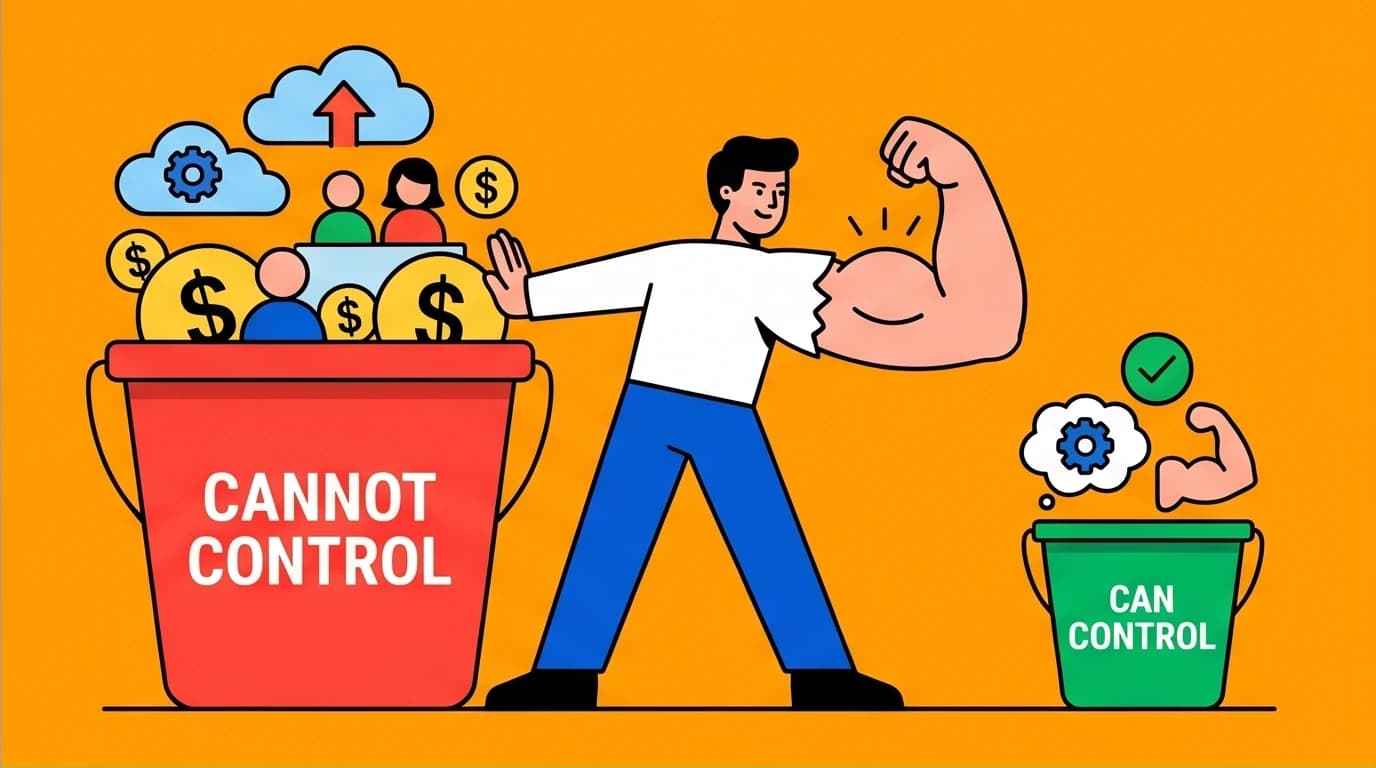
When your flight out of JFK is delayed due to a blizzard, pacing around the gate and shouting at the airline staff accomplishes nothing. The weather is out of your control. The airline's logistics are out of your control. What is in your control? Choosing to open a book, catching up on work, or simply taking a deep breath and accepting the delay.
Anxiety happens when you invest your emotional energy into the second bucket. Freedom happens when you shift 100% of your focus to the first.
Grasping the dichotomy of control is easy in theory, but putting it into practice when you're stuck in rush-hour traffic or facing a career setback takes real grit. If you find yourself struggling to detach from the things you can't control, it helps to follow a step-by-step roadmap for building emotional resilience. A great resource for this is a guide that breaks down how to manage adversity, overcome setbacks, and train your brain to remain calm under pressure. It's a highly actionable read that perfectly complements these ancient Roman philosophies.
The Mental Toughness Handbook
Damon Zahariades
 39 Duration
 9 Key Points
 4.4 Rate

Learn core Stoic principles like the Dichotomy of Control in 15-minute audio and text summaries. Build mental resilience on your commute.
 LeapAhead
How to Be a Stoic: Foundational Mindsets
Learning how to be a stoic requires shifting your default responses. Marcus Aurelius utilized specific mental frameworks to survive betrayal, war, and political chaos. You can apply these exact frameworks to your daily struggles.
Amori Fati: Love Your Fate
It is not enough to merely tolerate bad situations; you must learn to embrace them. If a coworker takes credit for your project, your initial reaction is anger. The stoic reaction is to view it as training. This obstacle is an opportunity to practice patience, to learn how to document your work better, and to fortify your own integrity. Marcus wrote: "The impediment to action advances action. What stands in the way becomes the way." Treat every annoyance as a rep in the gym for your character.
Objective Judgment
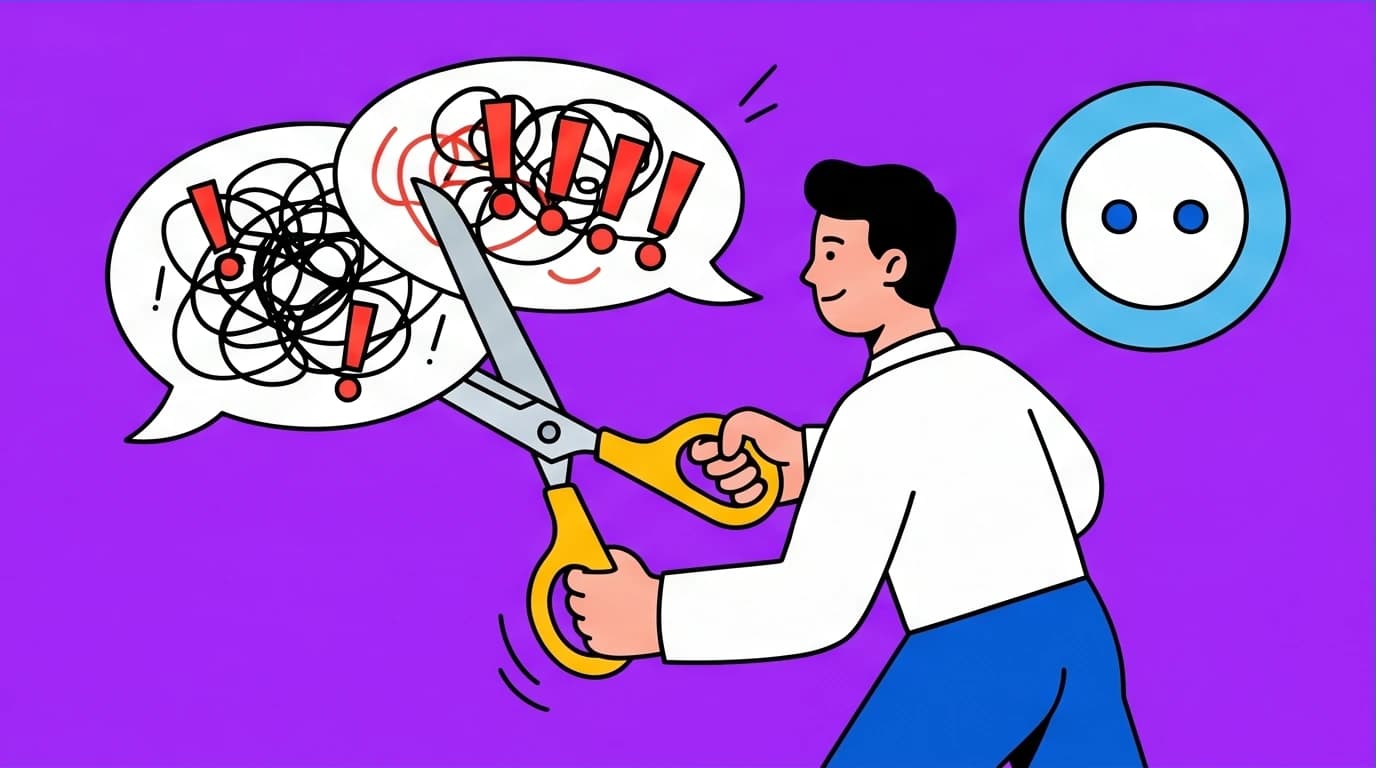
We rarely get upset by facts. We get upset by the stories we tell ourselves about the facts.
- The event: You get laid off from your job.
- Your judgment: "I am a failure, I will never recover, and my career is over."
The event itself is neutral. It simply happened. The emotional pain comes entirely from the subjective judgment you layered on top of it. Strip away the dramatic adjectives. Stick to the raw facts. You lost a job; now you need to update your resume and apply for a new one.
Memento Mori: Remember You Must Die
This sounds grim, but it is actually the ultimate tool for prioritization. You are mortal. Your time is running out. Are you really going to spend your limited hours arguing with a stranger on the internet or stressing over a minor dent in your car? Keeping death in mind puts petty daily frustrations into stark perspective.
Adopting mindsets like Amori Fati and Memento Mori won't happen overnight. To truly rewire your default reactions, you need consistent, daily reminders of these core tenets. Rather than trying to digest dense philosophical treatises all at once, many modern readers find immense value in bite-sized, daily meditations that tie ancient wisdom to present-day challenges. If you are looking for an accessible way to keep these exact perspectives top of mind every single morning, picking up a guided daily reader is one of the best investments you can make in your own personal growth.

The Daily Stoic
Ryan Holiday & Stephen Hanselman
48 Duration9 Key Points4.6 RateDaily Stoic Practices for Modern Life
A philosophy is useless if it stays trapped in a book. To build actual mental toughness, you must integrate daily stoic practices into your routine. Here is a practical, three-step blueprint you can start using today.
1. The Morning Preparation (Premeditatio Malorum)
Before you check your phone, take three minutes to anticipate the friction you will face today.
Marcus Aurelius started his days with this exact practice. He told himself that he would encounter people who were selfish, jealous, and arrogant. By visualizing these encounters in advance, he removed the element of surprise.
How to do it: While drinking your morning coffee, think about your upcoming schedule. Expect the 9 AM meeting to run late. Expect your toddler to throw a tantrum. Expect traffic on the highway. When you mentally rehearse these minor disasters, you act as your own shock absorber. When the friction inevitably happens, you remain calm because you already planned for it.

2. The Mid-Day Stoic Pause
Between stimulus and response, there is a space. Your goal is to widen that space.
When your boss sends a passive-aggressive email, your instinct is to fire back an angry reply immediately. Do not. Step away from the keyboard. Take a breath. Force a gap between the event and your reaction. Ask yourself: "Is getting angry going to solve this problem, or just create a new one?"
3. The Evening Review
Seneca and Marcus Aurelius both practiced nightly journaling. Keep a physical notebook by your bed. Before sleep, run the tape of your day backward.
Ask yourself three questions:
- What did I do wrong today? (Did I lose my temper at the barista?)
- What did I do right today? (Did I hold my tongue when provoked?)
- What duty is left undone? (Do I need to apologize to someone tomorrow?)
This is not about punishing yourself. It is an objective audit of your behavior so you can perform better tomorrow.
Speaking of Seneca, his approach to the evening review and daily reflection remains one of the most accessible entry points into ancient philosophy. While Marcus Aurelius wrote primarily for himself, Seneca wrote letters directly to his friends, offering them practical advice on how to handle grief, wealth, poverty, and success. Reading his correspondence feels like getting a personal masterclass in mental toughness from a wise mentor. If you want to expand your perspective beyond just the emperor's diary, diving into Seneca's practical letters is the perfect next step for your evening reading routine.
Seneca's Letters from a Stoic
Lucius Annaeus Seneca, Classics HQ
38 Duration8 Key Points4.7 RateBuilding Your Own Stoic Library
If you want to go deeper, you need the right materials. Avoid heavy academic textbooks and go straight to the source material.
However, diving into dense philosophical texts can be daunting for a modern schedule. For those who want to absorb Stoic principles but struggle to find dedicated reading time, a microlearning app like LeapAhead can be an effective bridge. This app distills the key ideas from bestselling nonfiction books, including foundational Stoic texts, into 15-minute audio and text summaries. It's particularly useful for internalizing concepts during a commute or workout. The strength of LeapAhead lies in its accessibility and its focus on building a consistent learning habit. That said, those seeking deep, academic-level analysis may find the summarized format a starting point rather than a final destination, and its mobile-first design is best suited for on-the-go learning, not long desktop sessions.
Explore key ideas from Meditations and other Stoic texts in bite-sized lessons. The perfect tool for busy people building a philosophy habit.
LeapAheadYou can find excellent, highly readable translations of Meditations at any Barnes & Noble or on Amazon. The translation by Gregory Hays is widely considered the best modern English version—it drops the archaic "thee" and "thou" language and reads like the private, urgent diary it was meant to be. If you prefer listening during your commute, grab the audio version on Audible.
Make reading a few pages of Meditations part of your daily routine. Treat it like taking daily vitamins for your mindset.
You really cannot overstate the profound impact of reading the actual journal of a Roman emperor who faced pandemics, betrayals, and the heavy burden of absolute power. When you read his unfiltered thoughts, you realize that human struggles haven't changed much in two thousand years. Keeping a copy on your nightstand and reading just a few passages each night will ground you and completely shift your perspective on whatever stressful emails are waiting in your inbox. Grab this foundational text and start building your own personal toolkit for a calmer, more resilient life.

Meditations
Marcus Aurelius
34 Duration7 Key Points4.6 RateFAQ
Is Stoicism just suppressing your emotions?
No. Stoicism is about managing your reactions to your emotions. When something bad happens, a Stoic still feels the initial shock, sadness, or anger. The difference is that a Stoic catches that emotion quickly, applies logic, and decides not to let that emotion dictate their resulting actions.
What is the best translation of Meditations to read?
For modern readers, the Gregory Hays translation (published by Modern Library) is the definitive starting point. It strips away the heavy, outdated academic language and translates Marcus Aurelius’s thoughts into punchy, direct American English that is incredibly easy to digest.
How long does it take to see benefits from practicing Stoicism?
You will experience an immediate shift in perspective the very first time you successfully catch yourself before reacting to anger or anxiety. However, mastering the philosophy is a lifelong pursuit. You will fail, lose your temper, and let external events bother you. The goal is simply to recover your balance faster each time.
Can Stoicism help with severe anxiety or depression?
While Stoic principles like cognitive reframing (separating facts from judgments) are actually the foundation of modern Cognitive Behavioral Therapy (CBT), Stoicism is a philosophical framework, not medical treatment. It is an excellent tool for everyday resilience and stress management, but it should not replace professional therapy or medical intervention if you are dealing with clinical mental health issues.