

You lie awake at 2 AM, your mind racing through worst-case scenarios about an upcoming performance review, your financial situation, or a conversation you had three days ago. Your chest feels tight. The harder you try to stop worrying, the louder and faster your thoughts spiral. You need a reliable mental anchor to stop the bleeding, not another generic self-help platitude.
Two thousand years ago, Roman Emperor Marcus Aurelius felt that exact same crushing weight. He ruled an empire devastated by war, political betrayal, and a plague that killed millions. Yet, he kept a personal journal—now known as Meditations—to coach himself through the chaos. When we look at Marcus Aurelius on anxiety, we do not find theoretical academic philosophy. We find a survival manual for the human mind.
Here is exactly how you can apply his private mental techniques to modern stress.
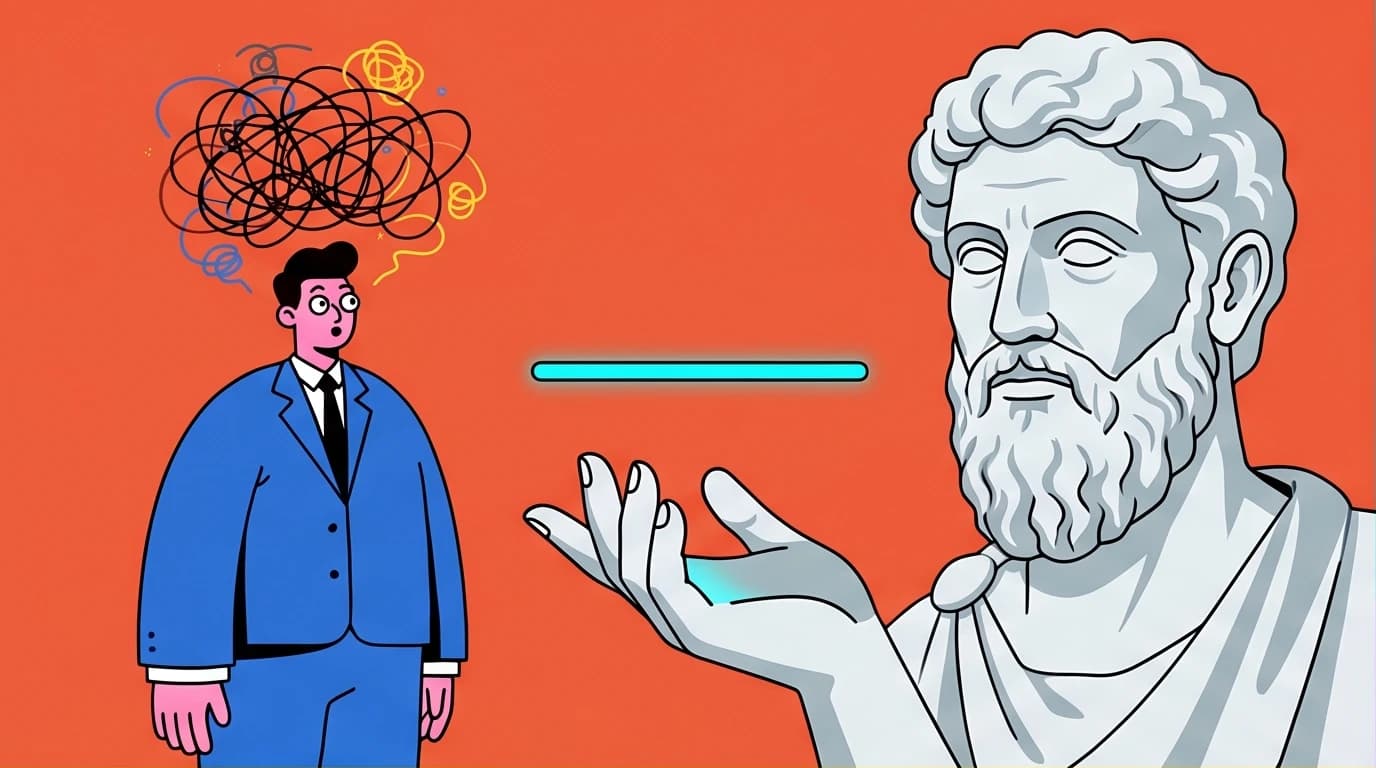
The Foundation: The Dichotomy of Control
Anxiety is almost always a product of trying to control the uncontrollable. You worry about whether a client will sign a contract, what people think of your presentation, or if the economy will crash.
Marcus Aurelius built his mental resilience on one foundational rule: separate everything in your life into two buckets. Bucket A contains things you control. Bucket B contains things you do not.
When researching how to control your mind stoicism, this concept is non-negotiable. You control your opinions, your reactions, your character, and your effort. You do not control the weather, the traffic on Interstate 405, inflation rates, or other people's opinions of you.
When you feel anxiety building, pause and ask yourself: Is this up to me?
If a package you ordered on Amazon is delayed and ruins your weekend plans, getting angry changes nothing about the delivery schedule. It only ruins your mood. You cannot control the logistics network. You can only control your response. Recognizing this simple fact immediately cuts off the fuel supply to your anxiety.
If you want to master the dichotomy of control, there is no better starting point than the emperor's own private journal. Reading his unedited, personal thoughts offers an incredibly grounding perspective—especially when you realize that one of the most powerful men in history struggled with the exact same anxieties we face today. Keeping a copy on your nightstand provides an incredible anchor when life feels overwhelming.
Meditations
Marcus Aurelius
 34 Duration
 7 Key Points
 4.6 Rate
For a concise overview of the book's essential lessons before you dive in, a summary can provide a valuable framework.
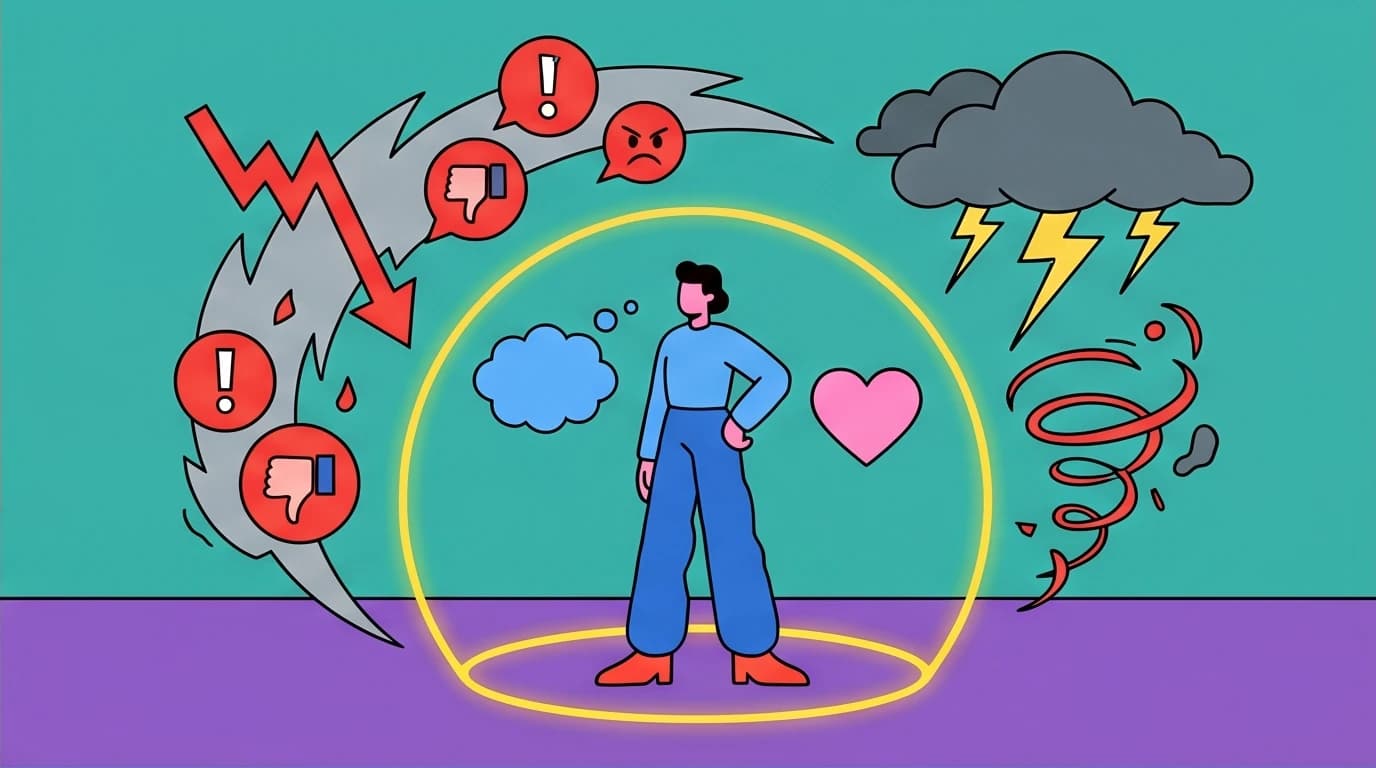
Adopting a Stoic Mindset for Overthinking
Overthinking happens when you add unhelpful narrative to simple facts. You construct elaborate, fictional tragedies in your head about the future. Marcus Aurelius fought this by practicing "objective representation."
He trained himself to see things exactly as they are, stripped of emotional value judgments.
If your boss sends an email saying, "We need to talk on Monday," your anxious brain immediately translates this to: "I am getting fired. I will not be able to pay my mortgage. I am going to lose my house."
A Stoic mindset for overthinking stops at the raw data. The objective fact is: Your boss wants to speak with you on Monday. That is it. Everything else is a story you are writing to torture yourself.
Sticking purely to the facts is a highly effective Stoic habit, but rewiring a brain that has spent decades over-analyzing everything takes time. If you find yourself constantly falling back into catastrophic thinking, it helps to have a modern toolkit to break the cycle. Learning to recognize and dismantle those mental spirals before they take root can save you hours of unnecessary stress and mental exhaustion.
Stop Overthinking
Nick Trenton
50 Duration9 Key Points4.5 Rate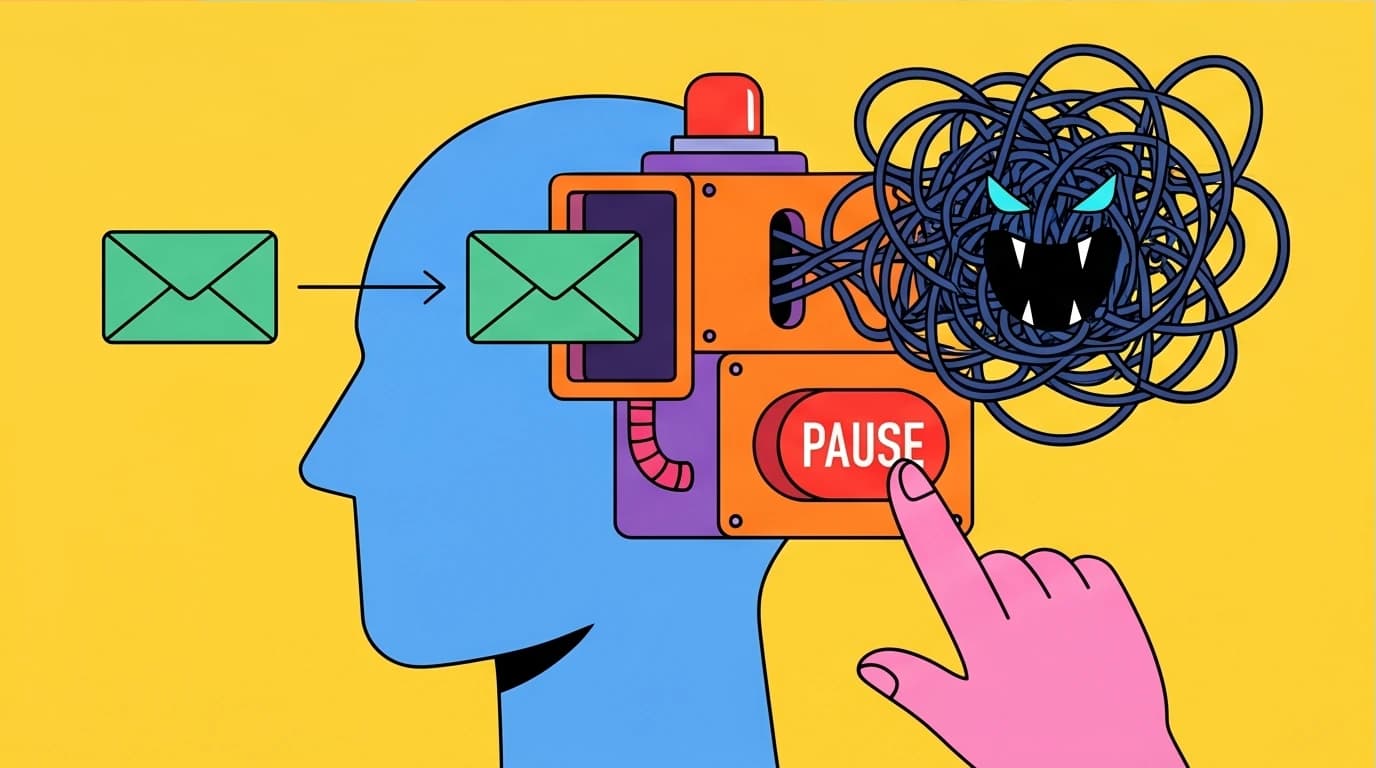
Marcus Aurelius reminded himself constantly to not add to first impressions. Stick to the facts. Deal with the situation when it actually arrives.
Confining Your Mind to the Present
One of the most effective ways Marcus Aurelius dealing with stress was forcing his attention back to the present second. He wrote: "Do not let the panorama of your life oppress you; do not dwell on all the various troubles which may have occurred in the past or may occur in thefuture."
Anxiety lives in the future. Depression often lives in the past. Peace exists right now.
When you feel paralyzed by a massive project or a serious life crisis, you are likely looking at the whole mountain at once. Stop. Look at the ground right beneath your feet. What is the single next step you need to take in the next five minutes?
Shrinking your timeline to the next five minutes is a highly effective way to diffuse panic. If you want to explore this concept deeper and truly learn how to detach your identity from past regrets and future anxieties, there are fantastic resources that focus entirely on mastering the present moment. Shedding the mental weight of "what ifs" allows you to operate with incredible clarity.
The Power of Now
Eckhart Tolle
36 Duration9 Key Points4.6 Rate
If you are overwhelmed by debt, the step isn't "fix all my finances today." The step is "organize my bills on the desk for ten minutes." By shrinking your timeline to the present moment, the anxiety loses its scale and becomes manageable.
Practical Stoicism for Anxiety: Daily Exercises
Philosophy is useless if you do not practice it. Using Stoicism for anxiety requires active, daily mental workouts. Here are three exercises you can start today.
1. The Morning Preparation (Premeditatio Malorum)
Before you look at your phone or check your email, sit quietly for two minutes. Expect things to go wrong today. Marcus Aurelius started his days by reminding himself that he would meet people who were ungrateful, arrogant, and dishonest.
By anticipating trouble, you remove the element of shock. If you know your morning commute might feature terrible drivers and gridlock, you will not lose your temper when someone cuts you off. You prepared for it. It is already priced into your day.
2. The Cognitive Pause
Between an event happening and your reaction to it, there is a tiny gap of time. Anxiety forces you to react instantly. Stoicism teaches you to widen that gap.
When you read a frustrating text message, do not type back immediately. Put the phone down. Walk away for ten minutes. Let the initial rush of cortisol fade. Ask yourself what a rational, measured response looks like. Controlling your mind means refusing to let external events force you into immediate action.
3. The Evening Review
Keep a small notebook by your bed. Before you go to sleep, write down how you handled the day's stress. Where did you lose your temper? Where did you let anxiety win? Where did you successfully focus only on what you could control?
Do not judge yourself harshly. Simply observe the data, recognize where you failed, and plan to execute better tomorrow.
Building a new philosophical habit can feel intimidating, especially when your schedule is already packed. You do not have to reinvent the wheel or read dense academic texts to get your daily mental workout. Having a structured, bite-sized piece of Stoic wisdom to read each morning over coffee can effortlessly guide your daily reflections and set the right tone for your entire day.

The Daily Stoic
Ryan Holiday & Stephen Hanselman
48 Duration9 Key Points4.6 RateIf even a daily reading habit feels like a big commitment right now, you can start absorbing these powerful ideas in a way that fits a busy schedule.


LeapAhead

Get the key lessons from books on Stoicism and overthinking in 15-minute audio summaries, perfect for your commute or workout when you're too tired to read.
What Stoicism is Not: Common Pitfalls
To truly benefit from these practices, you need to avoid misinterpreting the philosophy.
- It is not about suppressing emotions. Being Stoic does not mean acting like a robot. Marcus Aurelius wept when he lost children and felt intense grief. The goal is not to eliminate emotions, but to stop emotions from driving the car. You feel the anxiety, acknowledge it, and then choose your response rationally.
- It is not an excuse for inaction. Accepting that you cannot control the outcome does not mean you stop trying. You still study for the exam. You still prepare for the interview. You still advocate for your health. You just tie your self-worth to the effort you put in, not the final result.
Understanding these nuances is key to effectively applying his teachings. To build a solid foundation, it's worth exploring the core tenets of his philosophy in greater detail.
You do not need to be a Roman Emperor to use these tools. Whether you are dealing with a stressful shift at work, navigating family drama, or just trying to quiet your mind before bed, the rules remain exactly the same. Focus inward. Stick to the facts. Let go of the rest.
FAQ
Does adopting a Stoic mindset mean I should just accept bad situations?
No. Stoicism teaches you to accept the reality of the situation without emotional resistance, so you can clearly see how to fix it. If your car breaks down fifty miles from home, accepting it means you don't waste energy screaming at the steering wheel. Instead, you use that energy to call a tow truck. Acceptance is the first step to effective action.
No. Stoicism teaches you to accept the reality of the situation without emotional resistance, so you can clearly see how to fix it. If your car breaks down fifty miles from home, accepting it means you don't waste energy screaming at the steering wheel. Instead, you use that energy to call a tow truck. Acceptance is the first step to effective action.
Can Marcus Aurelius's teachings cure a medical anxiety disorder?
Stoic philosophy is a powerful cognitive framework that shares many principles with modern Cognitive Behavioral Therapy (CBT). However, it is not a substitute for professional medical treatment. If you have clinical anxiety, use Stoicism as an excellent supplementary tool alongside therapy or medication prescribed by a doctor.
Stoic philosophy is a powerful cognitive framework that shares many principles with modern Cognitive Behavioral Therapy (CBT). However, it is not a substitute for professional medical treatment. If you have clinical anxiety, use Stoicism as an excellent supplementary tool alongside therapy or medication prescribed by a doctor.
Which translation of Meditations is best for a beginner?
If you want to read Marcus Aurelius dealing with stress firsthand, avoid the older, public-domain translations that use archaic language like "thou" and "hath." Look for the modern translation by Gregory Hays. It is direct, highly readable, and available in any Barnes & Noble, on Amazon, or as an audiobook on Audible.
If you want to read Marcus Aurelius dealing with stress firsthand, avoid the older, public-domain translations that use archaic language like "thou" and "hath." Look for the modern translation by Gregory Hays. It is direct, highly readable, and available in any Barnes & Noble, on Amazon, or as an audiobook on Audible.
What if I try to focus on what I can control but my mind still races?
It is completely normal. Your brain has spent years practicing how to worry; it will take time to train it to stay calm. Treat it like lifting weights. The first time you try to catch yourself overthinking, you will probably fail. Just notice it. Gently bring your focus back to the present. The repetition is the actual practice.
It is completely normal. Your brain has spent years practicing how to worry; it will take time to train it to stay calm. Treat it like lifting weights. The first time you try to catch yourself overthinking, you will probably fail. Just notice it. Gently bring your focus back to the present. The repetition is the actual practice.