


You wake up to a flooded inbox, back-to-back meetings, and endless notifications demanding your attention. You know you need better mental defenses, but carving out time to read a dense, ancient text feels impossible. You need the practical tools from Meditations by Marcus Aurelius without spending weeks deciphering second-century philosophy.
While this guide will give you the core ideas, if you're looking for a way to absorb the wisdom of Meditations and other classic texts in just a few minutes a day, an app can be a great starting point.

LeapAhead offers 15-minute audio and text summaries of classics like Meditations, making it easy to learn Stoic principles during a commute or a short break.

Download LeapAhead App now
This guide strips away the historical jargon. We will extract the exact mental frameworks a Roman Emperor used to manage an empire, fight wars, and handle betrayal, adapting them directly for your modern challenges.
The Most Powerful Journal Ever Written
Before jumping into the action steps, you must understand what this document actually is. The famous Marcus Aurelius book was never meant for publication. It has no chapters, no table of contents, and no marketing hook. It is simply a collection of private notes, written by the most powerful man in the world, to himself.
Marcus Aurelius ruled the Roman Empire from 161 to 180 AD. He faced a devastating plague, constant border wars, a struggling economy, and treason from his closest allies. Instead of breaking under the pressure, he sat in his tent at night and wrote reminders on how to stay grounded, act justly, and keep his sanity.
Today, Wall Street executives, Silicon Valley founders, and professional athletes study these exact notes. The core reason is simple: human nature has not changed. The stress of managing a hostile Senate in Rome is psychologically identical to managing a hostile board of directors or an unpredictable market.
The challenges he faced as a ruler offer timeless insights for anyone in a position of responsibility.
If you want to experience the raw, unfiltered thoughts of a Roman emperor, nothing beats reading the original source material. While summaries are fantastic for quick insights, having a physical copy of Marcus Aurelius's personal diary on your nightstand provides daily grounding. It is one of those rare books that you can open to any page, read a single paragraph, and immediately find a practical takeaway for your day. Consider adding the complete text to your personal library.

Meditations
Marcus Aurelius
 34 Duration
 7 Key Points
 4.6 Rate
The Foundational Principle: The Dichotomy of Control
If you take nothing else from this marcus aurelius meditations summary, memorize this single concept. The entire philosophy rests on drawing a hard line between what is up to you and what is not.
You control your choices, your reactions, your desires, and your character.
You do not control the economy, the traffic, what your coworkers think of you, or whether it rains tomorrow.
You do not control the economy, the traffic, what your coworkers think of you, or whether it rains tomorrow.
Suffering happens when you try to control external events. Freedom happens when you focus entirely on your internal response. When a client cancels a major contract at the last minute, you cannot control their decision. You only control your reaction. Will you panic and complain, or will you accept the reality and immediately pivot to finding a new opportunity?

4 Essential Meditations Key Takeaways
Marcus Aurelius approached his problems with specific mental routines. Here are the four primary meditations key takeaways you can use immediately.
1. Your Mind Dictates Your Reality
“Choose not to be harmed, and you won’t feel harmed. Don’t feel harmed, and you haven’t been.”
Events themselves are neutral. It is your judgment of the event that causes anger, anxiety, or sadness. Marcus constantly reminded himself to strip away the emotional narrative he attached to situations.
If your boss sends a critical email, the objective reality is just words on a screen. The stress comes from your internal story ("I am going to get fired," or "They disrespect me"). By removing the subjective judgment, you can look at the feedback objectively, extract any useful information, and ignore the rest. You have absolute power over your own mind, even when outside events are chaotic.
This practice of reframing your thoughts is a powerful technique for regaining control when you feel overwhelmed.
2. Ignore the Noise of Others
“It never ceases to amaze me: we all love ourselves more than other people, but care more about their opinion than our own.”
Marcus was an emperor. He was constantly surrounded by critics, flatterers, and political enemies. He realized early on that chasing popularity was a fool's errand. Fame is fleeting, and the people praising you today will be gone tomorrow.
In a hyper-connected world driven by social media metrics and office politics, this lesson is crucial. Do not tie your self-worth to external validation. If you do the right thing, work hard, and act with integrity, the opinions of others simply do not matter. Stop worrying about how your career timeline compares to a stranger on LinkedIn.
3. Embrace Obstacles as Fuel
“The mind adapts and converts to its own purposes the obstacle to our acting. The impediment to action advances action. What stands in the way becomes the way.”
This is the ultimate formula for resilience. Stoicism does not just ask you to tolerate hardship; it asks you to use it.
When a massive obstacle blocks your path, do not freeze in frustration. View the obstacle as the new path. If a sudden flight cancellation ruins your travel plans, it becomes an opportunity to practice patience, catch up on deep work, or read. Every problem is an opportunity to practice a virtue. Fire needs oxygen to burn; you need obstacles to grow stronger.
Marcus Aurelius’s idea that "what stands in the way becomes the way" is a brilliant framework, but putting it into practice when you are facing a massive career setback or personal crisis can be tough. If you want a modern, actionable breakdown of this exact Stoic principle, Ryan Holiday has written the definitive guide. He takes this ancient concept of turning adversity into an advantage and applies it to historical figures and modern entrepreneurs who used their biggest roadblocks to fuel their ultimate success.
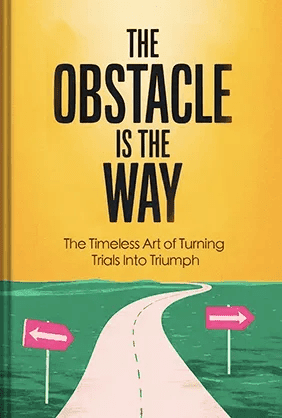
The Obstacle Is the Way
Ryan Holiday
44 Duration7 Key Points4.6 Rate
4. Remember Your Mortality (Memento Mori)
“You could leave life right now. Let that determine what you do and say and think.”
Marcus did not think about death to be morbid. He used it as an organizing principle. Remembering that your time is strictly limited forces you to ruthlessly prioritize.
If you knew you only had a short time left, would you spend an hour arguing with a stranger on the internet? Would you stay in a toxic job out of sheer inertia? Recognizing your mortality kills procrastination. It demands that you focus on essential work, treat your loved ones well today, and stop delaying your life for some imaginary future.
Thinking about your mortality shouldn't fill you with dread; instead, it should bring laser-sharp clarity to how you spend your days. In a modern culture obsessed with inbox zero and endless productivity hacks, it is easy to forget that our time is painfully finite. If you want to explore how embracing your limited lifespan can actually cure your anxiety and help you focus on what truly matters, Oliver Burkeman offers a brilliant, refreshing perspective on time management that perfectly aligns with Stoic philosophy.
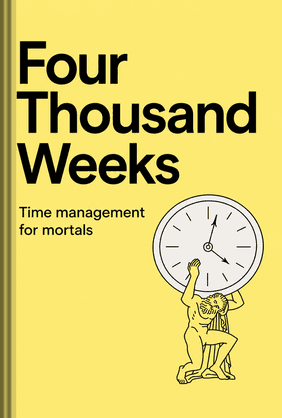
Four Thousand Weeks
Oliver Burkeman
36 Duration7 Key Points4.6 Rate
How to Apply These Lessons Today
Reading the concepts is easy. Executing them requires a system. Here is a practical framework to integrate Marcus Aurelius's wisdom into a busy modern routine.
The Morning Preparation
Start your day with a technique called Premeditatio Malorum (the premeditation of evils). Before you check your phone, expect things to go wrong.
Marcus wrote: “Begin each day by telling yourself: Today I shall be meeting with interference, ingratitude, insolence, disloyalty, ill-will, and selfishness.”
If you mentally prepare for the traffic jam, the difficult client, and the broken coffee machine, you will not be shocked when they happen. You will face them with a calm, prepared mind.
The "Pause" Technique
Between an event happening and your reaction, there is a tiny window of time. Widen that window. When you feel anger rising because of a perceived slight, force yourself to wait. Do not send that email. Take a walk. Realize that reacting emotionally gives the external event power over you. Reclaim your power by responding logically later.
Fast-Track Your Learning
If you want to absorb the book but lack the time for deep reading, leverage modern formats. Grab a meditations audio summary on Audible to listen during your morning commute or while at the gym. If you decide to read the full text, skip the public domain translations from the 1800s—they use archaic language that makes the book feel like a chore. Go to Amazon or Barnes & Noble and pick up the translation by Gregory Hays. It is punchy, modern, and reads like a contemporary self-help manual.
Once you have grasped the basics of Marcus Aurelius, you might find yourself wanting to dive deeper into the minds of other great Stoic thinkers. While Marcus wrote a private journal, other Roman philosophers wrote direct advice to their friends on how to handle grief, wealth, and anxiety. Seneca, a major power broker in Rome, left behind incredibly readable and practical letters that feel like they were written for today's fast-paced world. It is the perfect next step for your Stoic education.
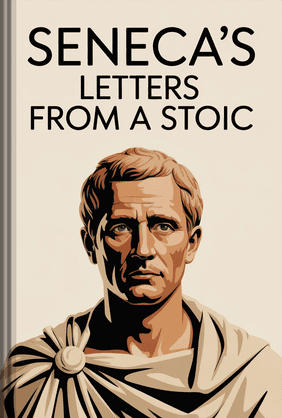
Seneca's Letters from a Stoic
Lucius Annaeus Seneca, Classics HQ
38 Duration8 Key Points4.7 RateIf your goal is to build a consistent learning habit around Stoicism and other self-improvement topics, but your to-read list is already overflowing, an app can help you cover more ground faster.
Use LeapAhead to quickly get the key insights from Seneca, Ryan Holiday, and other great thinkers, turning your daily commute into a powerful learning session.
Download LeapAhead App now
Common Misconceptions to Avoid
When adopting this philosophy, many high-achievers fall into specific traps. Avoid these two common pitfalls.
The "Emotionless Robot" Myth
People often think Stoicism means suppressing all emotions, turning yourself into a cold, unfeeling machine. This is entirely false. Marcus Aurelius loved his children deeply and grieved when he lost them. The goal is not to eliminate emotion, but to domesticate it. You want to eliminate destructive emotions like petty anger, jealousy, and paralyzing fear, making room for positive emotions like joy, gratitude, and a sense of duty.
People often think Stoicism means suppressing all emotions, turning yourself into a cold, unfeeling machine. This is entirely false. Marcus Aurelius loved his children deeply and grieved when he lost them. The goal is not to eliminate emotion, but to domesticate it. You want to eliminate destructive emotions like petty anger, jealousy, and paralyzing fear, making room for positive emotions like joy, gratitude, and a sense of duty.
The "Passive Acceptance" Trap
Because Marcus advises accepting what you cannot control, some assume Stoicism promotes passivity. "If I can't control the economy, why try?" This is a massive misunderstanding. Stoics are incredibly active. They work vigorously toward their goals. The difference is they detach from the outcome. You write the best business proposal possible, put in maximum effort, and hit send. Whether the client signs or not is out of your hands. You accept the result, but you never stop taking vigorous action.
Because Marcus advises accepting what you cannot control, some assume Stoicism promotes passivity. "If I can't control the economy, why try?" This is a massive misunderstanding. Stoics are incredibly active. They work vigorously toward their goals. The difference is they detach from the outcome. You write the best business proposal possible, put in maximum effort, and hit send. Whether the client signs or not is out of your hands. You accept the result, but you never stop taking vigorous action.
FAQ
Do I need to read the entire book from cover to cover?
No. Because it was a personal diary, Marcus repeats himself frequently. You can open the book to random pages and pull out valuable insights. Utilizing a structured guide or reading a curated list of highlights is often a better entry point for busy professionals than forcing a linear reading.
No. Because it was a personal diary, Marcus repeats himself frequently. You can open the book to random pages and pull out valuable insights. Utilizing a structured guide or reading a curated list of highlights is often a better entry point for busy professionals than forcing a linear reading.
Which translation of Meditations is best for modern readers?
The Gregory Hays translation (Modern Library) is universally recommended for US readers. Hays removed the "thous" and "hasts," translating the Greek into direct, sharp American English. It makes the Emperor's thoughts feel urgent and immediately applicable.
The Gregory Hays translation (Modern Library) is universally recommended for US readers. Hays removed the "thous" and "hasts," translating the Greek into direct, sharp American English. It makes the Emperor's thoughts feel urgent and immediately applicable.
Is Stoicism actually relevant to modern workplace stress?
Absolutely. The core drivers of workplace stress—unpredictable leadership, office politics, market shifts, and fear of failure—are external factors you cannot control. Applying Marcus Aurelius's focus on internal control is the fastest way to eliminate career anxiety and focus purely on your own performance.
Absolutely. The core drivers of workplace stress—unpredictable leadership, office politics, market shifts, and fear of failure—are external factors you cannot control. Applying Marcus Aurelius's focus on internal control is the fastest way to eliminate career anxiety and focus purely on your own performance.
Where can I find a good meditations audio summary?
Platforms like Audible, Apple Books, and even Spotify have numerous summaries, analyses, and condensed versions. Look for titles that focus on "Stoicism for modern life" or modern interpretations like Ryan Holiday's work, which frequently dissects Marcus's key points for contemporary listeners.
Platforms like Audible, Apple Books, and even Spotify have numerous summaries, analyses, and condensed versions. Look for titles that focus on "Stoicism for modern life" or modern interpretations like Ryan Holiday's work, which frequently dissects Marcus's key points for contemporary listeners.