

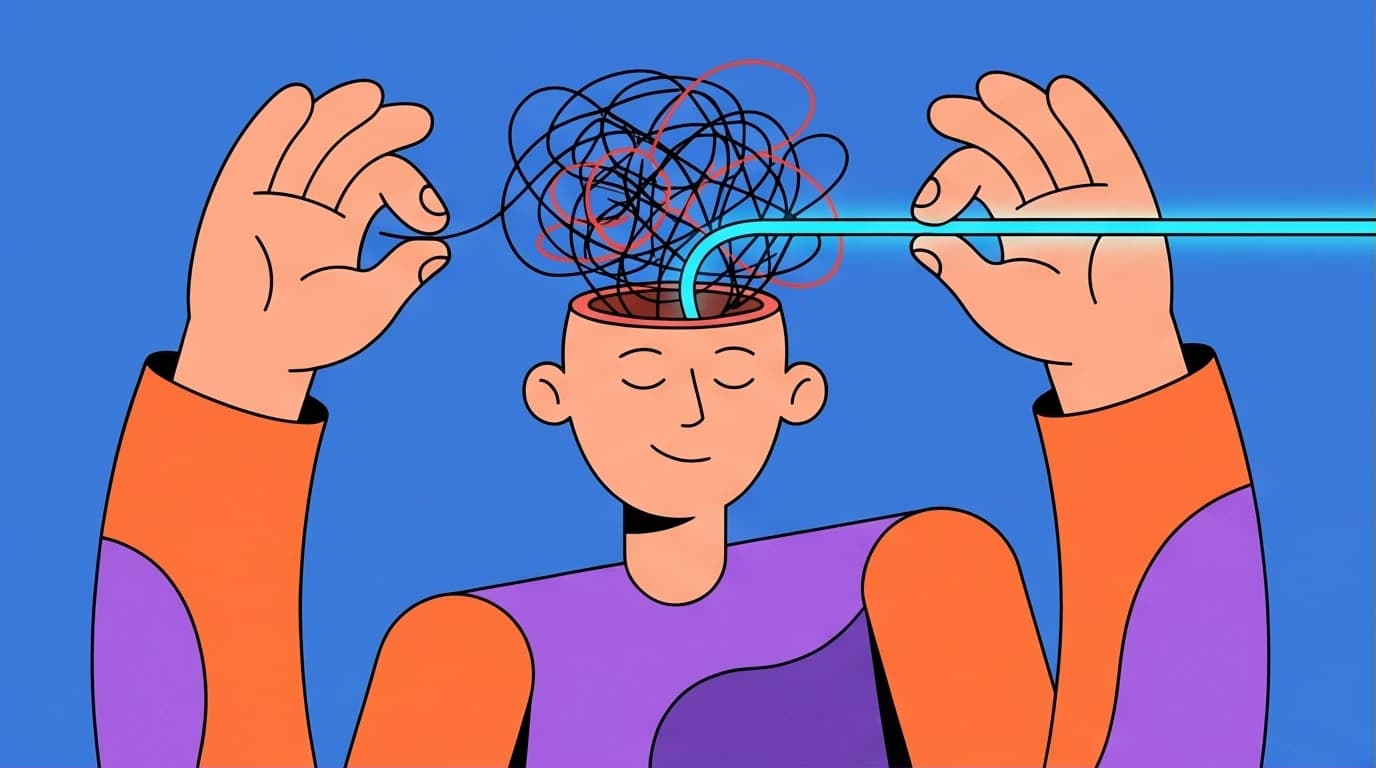
You know the feeling. Your chest tightens, your heart beats a little faster, and your brain starts running through a dozen worst-case scenarios at once. You are physically sitting at your desk or lying in bed, but mentally, you are miles away, trapped in a future that hasn't even happened yet. Anxiety steals you away from the present moment.
When you are spiraling, someone telling you to "just relax" is completely useless. You need a practical mechanism to step out of the mental storm and put your feet back on solid ground. This is exactly where mindfulness for anxiety comes in. It is not about turning off your thoughts or pretending everything is perfect. It is about learning how to observe the noise in your head without letting it hijack your body.
Why Your Brain Needs an Anchor
To understand how to calm the mind, you have to understand what your body is doing when you feel anxious. Anxiety triggers your sympathetic nervous system—your body's fight-or-flight response. Your brain perceives a threat (an upcoming presentation, a missed email, an unexpected bill) and floods your body with adrenaline and cortisol.
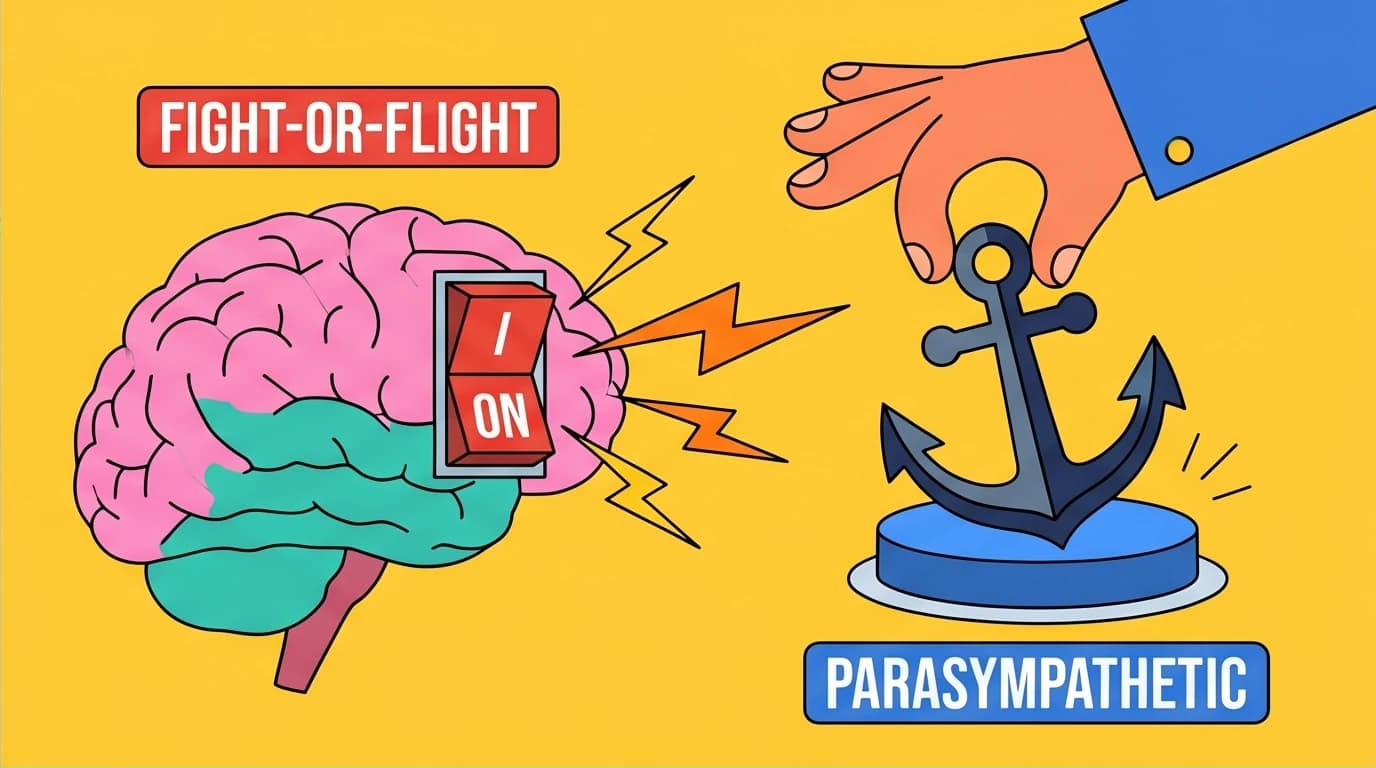
The problem? You cannot punch or run away from an email. The physical energy gets trapped.
Mindfulness acts as the manual override switch. By intentionally directing your focus to a physical sensation—like the feeling of your feet on the floor or the rhythm of your breath—you activate the parasympathetic nervous system. This sends a direct biological signal to your brain that says, "We are safe right now. You can stand down."
If you constantly feel like your brain is running a million miles an hour, learning to manually override those thought loops is a game-changer. For anyone struggling to quiet a racing mind, diving deeper into the mechanics of your mental chatter can be incredibly empowering. Stop Overthinking by Nick Trenton offers fantastic, actionable frameworks for short-circuiting these spirals. It is a highly practical read that complements these grounding concepts, showing you exactly how to rewrite your mental habits and find peace when your brain tries to convince you everything is a threat.
Stop Overthinking
Nick Trenton
 50 Duration
 9 Key Points
 4.5 Rate
If the idea of starting a whole new book feels overwhelming when your mind is already racing, there are ways to absorb these vital concepts more easily.

Get 15-minute summaries of books like this one, so you can learn powerful techniques to manage overthinking without the pressure of a lengthy read.

Download LeapAhead App now
Immediate Relief: Mindfulness Techniques for Anxiety
When you are in the middle of an anxiety spike, you do not have the patience for a long, drawn-out meditation session. You need actionable mindfulness techniques for anxiety that you can deploy right in the middle of a crowded grocery store, a stressful meeting, or during a restless night.
The 5-4-3-2-1 Grounding Method
This is the ultimate circuit breaker for a panic response. It forces your brain to process sensory information from your immediate environment, which crowds out the anxious thoughts. Look around you and identify:
- 5 things you can see: A blue pen on your desk, a coffee mug, a tree outside the window, a crack in the ceiling, the pattern on your phone case.
- 4 things you can feel: The weight of your denim jeans, the cool surface of your laptop, the firmness of the chair you are sitting on, the breeze from the AC.
- 3 things you can hear: The hum of the refrigerator, cars driving by on the street, someone typing on a keyboard.
- 2 things you can smell: The lingering scent of your morning coffee, the fabric softener on your shirt.
- 1 thing you can taste: A sip of water, a piece of gum, or simply the neutral taste in your mouth.
Box Breathing (4-4-4-4)
Used by US Navy SEALs to stay calm in high-stress situations, this technique regulates your oxygen intake and forces your heart rate to slow down.
- Inhale deeply through your nose for a count of 4.
- Hold your breath for a count of 4.
- Exhale slowly through your mouth for a count of 4.
- Hold your breath empty for a count of 4.
Repeat this cycle four times. Focus entirely on counting the numbers.
The "Drop the Anchor" Technique
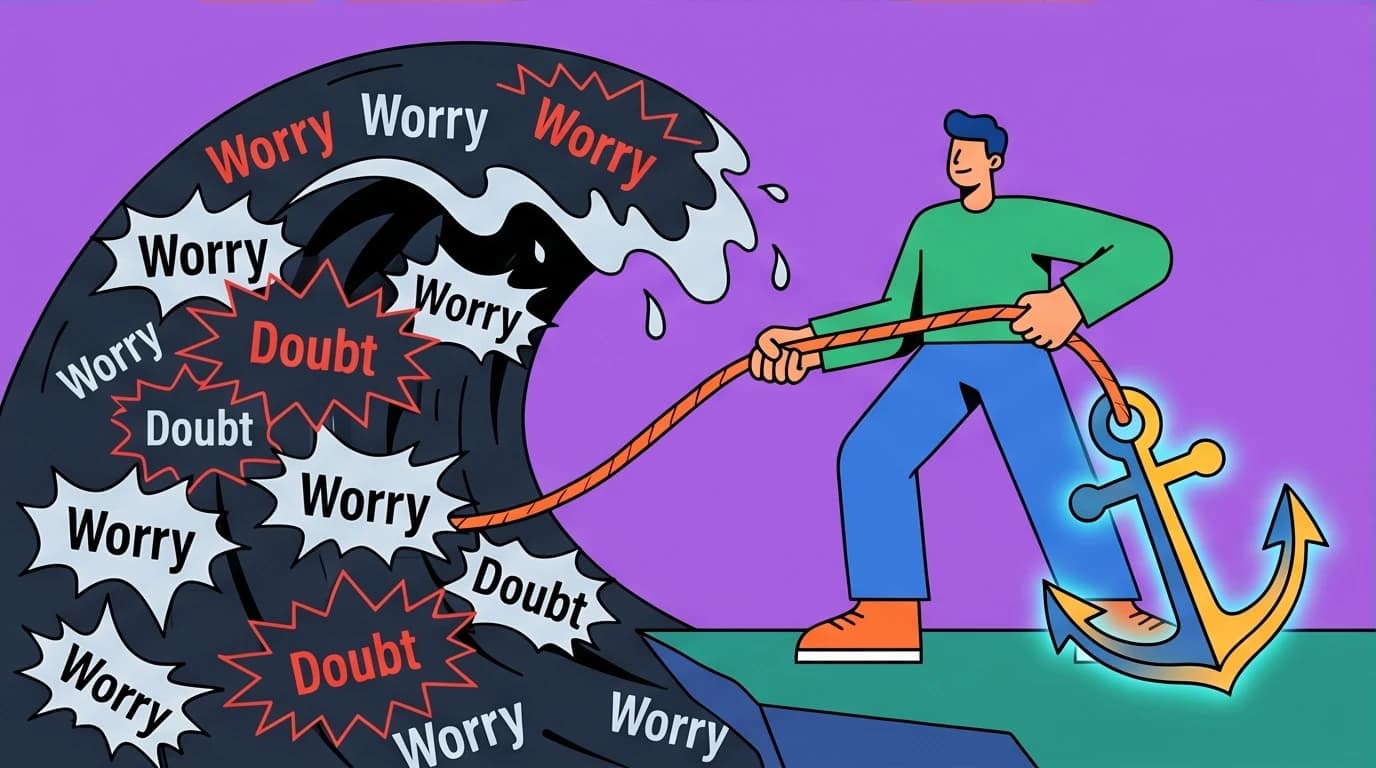
When negative thoughts hit you like a wave, don't fight the wave. Instead, drop an anchor. Plant your feet firmly on the floor. Push down into the ground. Straighten your spine. Roll your shoulders back. Acknowledge the anxious thought out loud (or in your head): "I am noticing that I am having the thought that I will fail this project." Adding the phrase I am noticing that I am having the thought creates a psychological distance between you and the anxiety.
The simple act of regulating your oxygen intake is one of the most underrated, powerful tools for combating sudden anxiety. If the Box Breathing technique resonated with you, there is an entire world of respiratory science waiting to be explored. James Nestor's phenomenal book, Breath, explores how making minor adjustments to the way we inhale and exhale can profoundly transform our nervous system. It is a fascinating look into human biology that will completely change how you view something as automatic as breathing, giving you even more tools to stay calm under pressure.
Breath
James Nestor
40 Duration7 Key Points4.6 RateDaily Mindfulness Exercises for Stress Prevention
Handling a crisis is necessary, but building long-term resilience requires routine. Incorporating short mindfulness exercises for stress into your daily schedule creates a buffer. The goal is to lower your baseline level of stress so that when a trigger happens, you do not immediately hit the red zone.
The 2-Minute Morning Body Scan
Before you check your phone or read the news, take two minutes. Lie flat in bed or sit on the edge of your mattress. Close your eyes. Send your attention down to your toes. Notice any tension. Move up to your calves, your knees, your stomach, your shoulders, and your jaw. Anxiety often lives in a clenched jaw or raised shoulders. Just notice it, and deliberately let the muscles soften.
Mindful Transitions
If you commute to work—whether driving on the freeway or walking down the street—use that time to be entirely present. Instead of listening to a fast-paced podcast on Spotify or reviewing an argument in your head, focus on the mechanics of driving or walking. Feel the texture of the steering wheel. Notice the exact shade of the sky. Feel the strike of your heel against the pavement.
The Mindful Coffee Break
You likely drink coffee or tea every day. Turn this automated habit into a stress relief meditation. Feel the warmth of the mug seeping into your palms. Watch the steam rise. Take a sip and isolate the exact flavor profile—is it bitter, sweet, acidic? By fully experiencing your coffee for just 60 seconds, you are giving your overactive brain a much-needed resting period.
Integrating these small, mindful moments into your daily routine is exactly how you build long-term resilience against stress. You do not need to retreat to a quiet cabin in the woods to find peace; you can find it right in your kitchen or during your morning commute. If you want to master the art of bringing presence into your everyday life, Jon Kabat-Zinn’s Wherever You Go, There You Are is an absolute must-read. It is a warm, accessible guide that beautifully illustrates how to anchor yourself in the present, no matter how chaotic your schedule gets.

Wherever You Go, There You Are
Jon Kabat-Zinn
19 Duration8 Key Points4.6 RateThe Reality of Stress Relief Meditation
There is a massive misconception that stress relief meditation means sitting in the lotus position on a mountain, thinking about nothing. If you sit down to meditate and expect your mind to be perfectly blank, you will only end up frustrated and more anxious.
Your brain is designed to produce thoughts. That is its job.
When you practice meditation, the objective is not to stop the thoughts. The objective is to notice when you have drifted off into a thought, and then gently bring your attention back to your breath.
- Breathe in.
- Breathe out.
- Thought pops up: "Did I pay that Amazon credit card bill?"
- Notice the thought. Say "thinking" in your mind.
- Bring your attention back to the breath.
Every single time you realize you are distracted and bring your focus back, you are doing a mental push-up. You are training the exact muscle needed to break free from anxiety loops in the real world. You don't need a special room. You can set a 5-minute timer on your Apple Watch, sit in your car before heading into the grocery store, and practice.
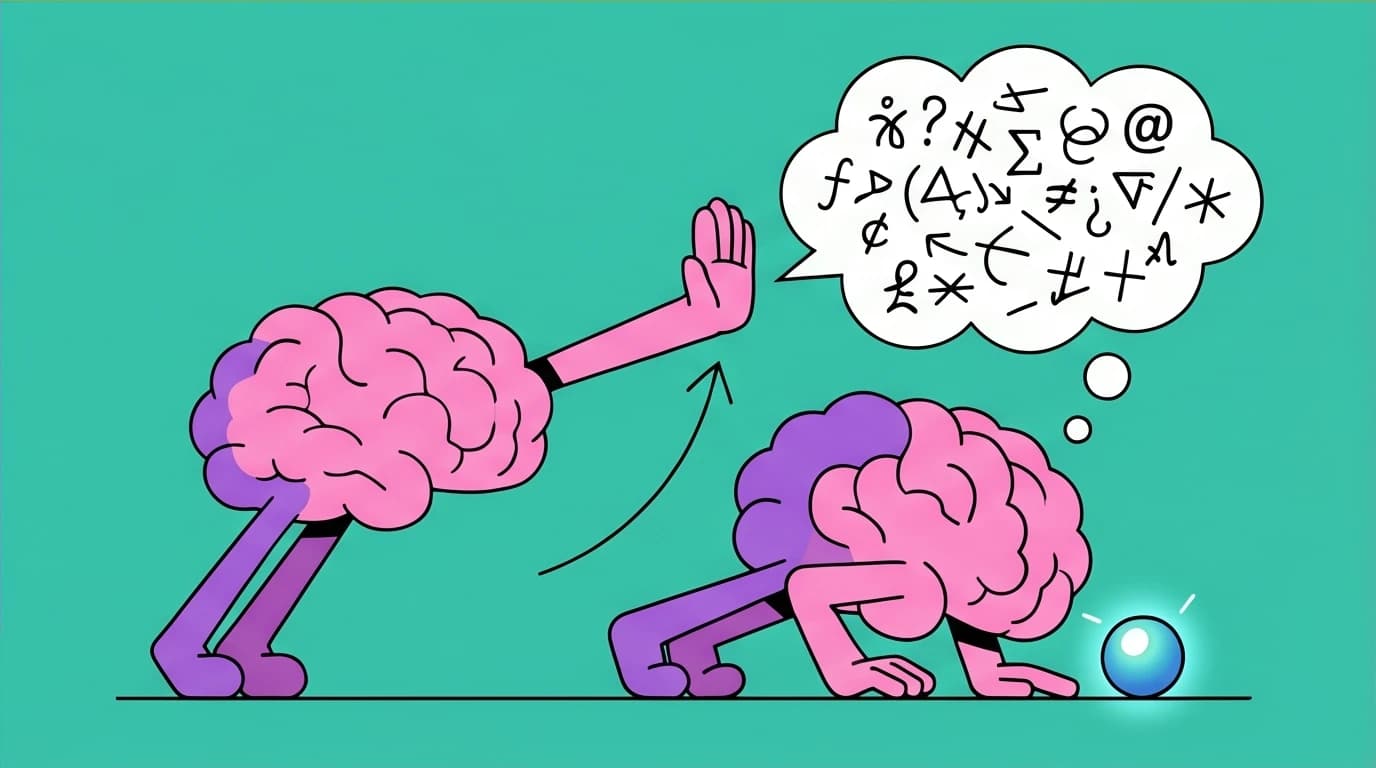
It is completely normal to feel a little frustrated when your mind refuses to quiet down during meditation. Remember, your brain's natural tendency is to produce a constant stream of worries, plans, and "what-ifs." If you want a deeper understanding of how to manage this internal noise without fighting it, Don't Feed the Monkey Mind by psychotherapist Jennifer Shannon is a fantastic resource. She provides a brilliant, easy-to-understand approach based on cognitive behavioral therapy to help you stop fueling your anxiety and start accepting your thoughts without letting them control you.
Don't Feed the Monkey Mind
Jennifer Shannon
21 Duration8 Key Points4.4 RateConsistently absorbing these new ideas is key, but when you're already feeling drained by anxiety, sitting down to read can feel like a monumental task.
Listen to the core insights from bestselling mental health books in just 15 minutes, turning your commute or a short break into valuable learning time.
Download LeapAhead App now
What to Avoid When Practicing Mindfulness
If you are trying to use mindfulness for anxiety and it feels like it isn't working, check to see if you are falling into these common traps.
Forcing yourself to relax.
If you go into a mindfulness exercise demanding immediate calmness ("I need to relax right now!"), you trigger performance anxiety. The goal of mindfulness is observation, not forced relaxation. Let the goal be to simply notice how you feel right now, even if how you feel is anxious.
If you go into a mindfulness exercise demanding immediate calmness ("I need to relax right now!"), you trigger performance anxiety. The goal of mindfulness is observation, not forced relaxation. Let the goal be to simply notice how you feel right now, even if how you feel is anxious.
Judging your distraction.
If you spend a 5-minute meditation session getting distracted 40 times, you did not fail. You succeeded 40 times in recognizing the distraction. Beating yourself up for having an active mind defeats the purpose. Treat your wandering mind like a distracted puppy. You don't yell at it; you just gently pick it up and put it back on the training pad.
If you spend a 5-minute meditation session getting distracted 40 times, you did not fail. You succeeded 40 times in recognizing the distraction. Beating yourself up for having an active mind defeats the purpose. Treat your wandering mind like a distracted puppy. You don't yell at it; you just gently pick it up and put it back on the training pad.
Waiting until you are already panicking.
If you only try to use deep breathing or grounding techniques when you are in the middle of a full-blown anxiety attack, it will be incredibly difficult. Practice these techniques when you are feeling relatively okay, like watching TV or waiting in line. Build the mental muscle memory first.
If you only try to use deep breathing or grounding techniques when you are in the middle of a full-blown anxiety attack, it will be incredibly difficult. Practice these techniques when you are feeling relatively okay, like watching TV or waiting in line. Build the mental muscle memory first.
FAQ
Do I need to sit still with my eyes closed to practice mindfulness?
No. While seated meditation is one way to practice, active mindfulness is just as effective for anxiety. You can practice mindfulness while walking your dog, washing the dishes, or folding laundry. The only requirement is that you are anchoring your full attention to the physical sensations of the present moment.
No. While seated meditation is one way to practice, active mindfulness is just as effective for anxiety. You can practice mindfulness while walking your dog, washing the dishes, or folding laundry. The only requirement is that you are anchoring your full attention to the physical sensations of the present moment.
How long does it take for mindfulness to actually work?
For immediate physical symptoms (like a racing heart), techniques like Box Breathing can slow your heart rate within 60 to 90 seconds. For long-term anxiety reduction and structural changes in how your brain handles stress, consistency is key. Practicing 5 to 10 minutes a day will generally yield noticeable mental shifts within a few weeks.
For immediate physical symptoms (like a racing heart), techniques like Box Breathing can slow your heart rate within 60 to 90 seconds. For long-term anxiety reduction and structural changes in how your brain handles stress, consistency is key. Practicing 5 to 10 minutes a day will generally yield noticeable mental shifts within a few weeks.
Can mindfulness make my anxiety feel worse at first?
Yes, it is possible. When you finally stop moving and pay attention to your body, you might suddenly realize exactly how anxious you actually are. This is called "relaxation-induced anxiety." If focusing on your breath makes you feel claustrophobic or panicky, switch your anchor. Keep your eyes open and focus on external things (like the 5-4-3-2-1 method) rather than internal sensations.
Yes, it is possible. When you finally stop moving and pay attention to your body, you might suddenly realize exactly how anxious you actually are. This is called "relaxation-induced anxiety." If focusing on your breath makes you feel claustrophobic or panicky, switch your anchor. Keep your eyes open and focus on external things (like the 5-4-3-2-1 method) rather than internal sensations.
What if my mind simply won't stop wandering?
Then you have a perfectly normal human brain. The mind is a thought-generating machine. When it wanders, acknowledge it without irritation. You can silently label it as "planning," "worrying," or "remembering," and then gently redirect your focus back to the present. The magic is in the return, not in staying perfectly still.
Then you have a perfectly normal human brain. The mind is a thought-generating machine. When it wanders, acknowledge it without irritation. You can silently label it as "planning," "worrying," or "remembering," and then gently redirect your focus back to the present. The magic is in the return, not in staying perfectly still.