


You are staring at a heavy workload, dealing with a team that fears failure, or looking at Mindset in your Amazon cart, wondering if it is worth the read. You hear leaders constantly buzz about the "growth mindset," but you do not have hours to slog through a 300-page text to find the actionable parts. You need the blueprint right now.
For those who want to absorb the powerful ideas from Mindset and other influential books but struggle to find the time, an app like LeapAhead can be a game-changer.


Get the core lessons from Carol Dweck's *Mindset* and other bestselling nonfiction in 15-minute audio or text summaries that fit into any busy schedule.
 LeapAhead
This comprehensive Mindset Carol Dweck summary strips away the filler. It hands you the exact frameworks, psychological insights, and execution strategies you need to apply Dweck's groundbreaking research to your career, business, and personal life today.
The Core Concept: Fixed vs. Growth Mindset
Dweck spent decades researching achievement and success at Stanford University. Her central finding is remarkably simple: human beings generally operate under one of two core belief systems regarding their own qualities.

Understanding these two mindsets is the foundation of any good growth mindset book summary.
The Fixed Mindset
People with a fixed mindset believe their basic qualities—like intelligence, talent, and personality—are carved in stone. You are either naturally good at something, or you are not.
Because they believe they have a set amount of intelligence, their primary goal becomes proving that they are smart. Every situation is evaluated: Will I succeed or fail? Will I look smart or dumb?
Symptoms of a Fixed Mindset:
- Avoiding challenges to prevent looking incompetent.
- Giving up easily when facing obstacles.
- Seeing effort as fruitless (if you have to try hard, you must not be talented).
- Feeling threatened by the success of others.
The Growth Mindset
People with a growth mindset believe their fundamental abilities can be developed through dedication, strategy, and hard work. Brains and talent are just the starting point.
They do not necessarily believe anyone can become Albert Einstein or Michael Jordan, but they do believe a person’s true potential is unknown. It is impossible to foresee what someone can accomplish with years of passion, toil, and training.
Symptoms of a Growth Mindset:
- Embracing challenges as opportunities to learn.
- Persisting in the face of setbacks.
- Seeing effort as the necessary path to mastery.
- Finding inspiration and lessons in the success of others.
If you find these core differences fascinating and want to dive deep into the foundational research that started it all, reading Dweck’s original work is an absolute must. While this summary gives you the tactical roadmap, the full text is packed with rich, real-world case studies that can fundamentally shift how you view your own potential. It is highly recommended for anyone looking to permanently rewrite their internal dialogue.

Mindset
Carol S. Dweck
 51 Duration
 8 Key Points
 4.6 Rate
These two frameworks are the bedrock of Dweck's work. For a side-by-side comparison with more real-world examples, exploring the nuances between them is a great next step.
Detailed Mindset Book Chapter Summary
If you need a reliable Mindset book chapter summary to grasp how Dweck applies these concepts across different domains, this section distills her arguments phase by phase.
Chapters 1-3: The Mindsets and The Truth About Ability
Dweck lays the groundwork by destroying the myth of the "natural." Society loves the idea of effortless perfection. We idolize the genius who writes a masterpiece on a napkin or the athlete who never practices but wins anyway. Dweck argues this is a dangerous fantasy.
Edison’s lightbulb was not a sudden stroke of genius; it took thousands of failed prototypes. Mozart worked for years before producing anything entirely original. The fixed mindset looks at the finished product and calls it talent. The growth mindset looks at the process and recognizes the grind.
Chapter 4: Sports and the Mindset of a Champion
Why do some naturally gifted athletes choke, while underdogs become hall-of-famers? Dweck contrasts athletes like John McEnroe (fixed mindset) with Michael Jordan (growth mindset).
McEnroe constantly blamed others—the weather, the referees, his racket—when he lost. He could not accept failure because it meant his talent was flawed. Jordan was cut from his high school varsity team. He missed thousands of shots in his career. Instead of making excuses, Jordan analyzed his mistakes, hit the gym, and practiced relentlessly. Character and mental toughness, born from a growth mindset, beat raw talent in the long run.
Michael Jordan’s legendary work ethic perfectly illustrates that raw talent is only a starting line. If you want to understand the exact science behind this kind of relentless persistence, you should explore how passion and long-term perseverance consistently outperform natural ability. Diving into the psychology of mental toughness makes for the perfect companion read to Dweck's theories, showing you exactly how to maintain your drive when the going gets tough.

Grit
Angela Duckworth
18 Duration8 Key Points4.6 RateChapter 5: Business and Leadership Mindset
This is often the most valuable section for busy professionals. Dweck examines corporate culture. Companies led by fixed-mindset CEOs (like Enron under Jeffrey Skilling) create toxic environments. Everyone is desperate to be the "smartest person in the room." Mistakes are hidden, and teamwork dies because everyone is competing for the genius label.
Conversely, growth-mindset leaders (like Lou Gerstner at IBM) transform failing companies. They admit what they do not know. They ask tough questions. They dismantle silos and reward employees who take calculated risks and learn from failure.
Chapter 6: Relationships and Mindsets in Love
Mindsets dictate how we handle rejection and relationship struggles. A fixed mindset believes a good relationship should require no effort. If two people are meant to be, everything should flow naturally. When conflict inevitably happens, the fixed mindset panics: Maybe we just aren't compatible.
The growth mindset understands that strong relationships are built, not magically discovered. Conflict is a tool for deeper understanding. Your partner is not a finished product, and neither are you.
Chapter 7: Parents, Teachers, and Coaches
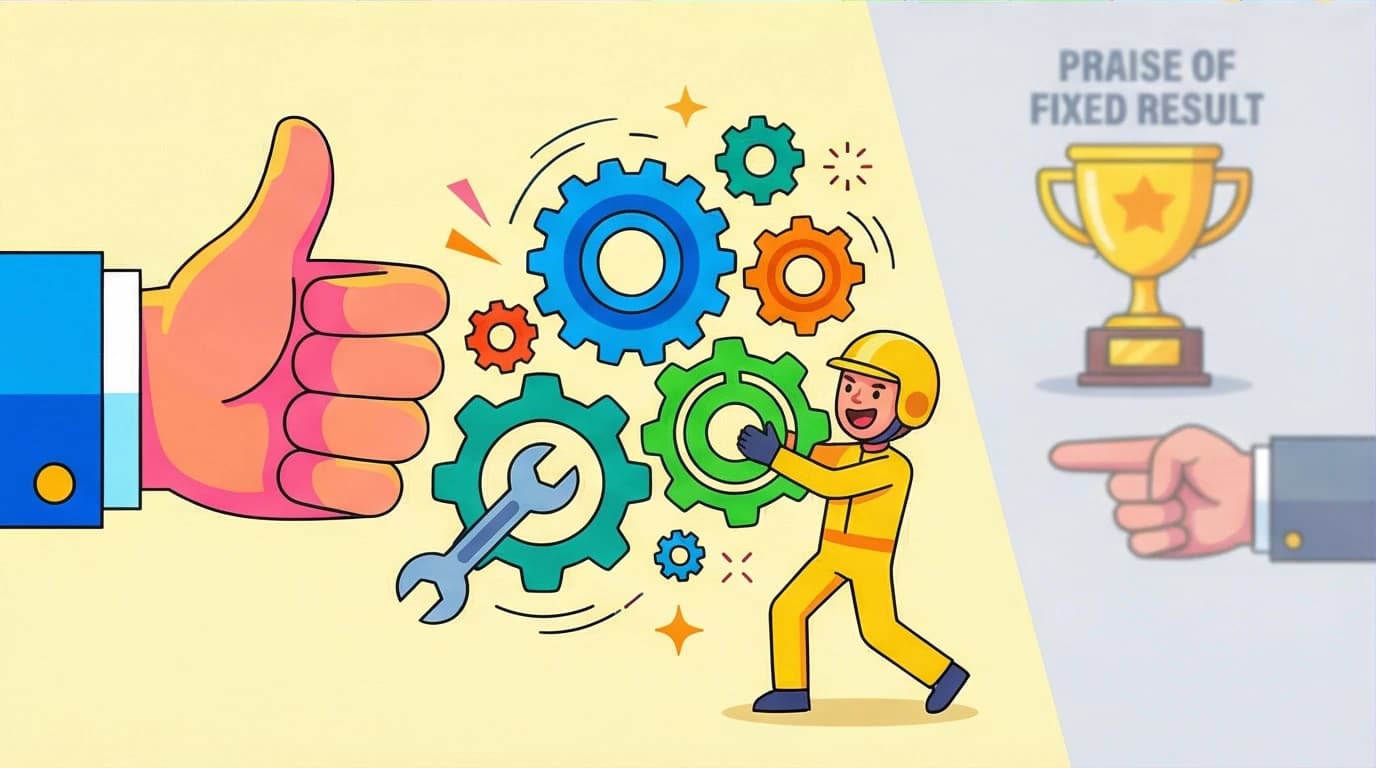
Where do mindsets come from? The messages we send to children. Dweck drops one of her most famous insights here: Never praise intelligence.
When you tell a child, "You got an A, you are so smart," you push them into a fixed mindset. The next time they get a B, they assume they are no longer smart. Instead, praise the process: "You got an A because you used great study strategies and focused hard." This teaches them that effort and strategy dictate the outcome.
Chapter 8: Changing Mindsets
You are not doomed to one mindset forever. Mindsets are just beliefs, and beliefs can be changed. Dweck outlines that the journey starts by listening to your "fixed mindset voice." When you face a new challenge, do you hear a voice saying, Are you sure you can do it? Maybe you don't have the talent. Recognize that voice, but answer back with a growth mindset perspective.
This internal dialogue is a powerful start, but a lasting shift often requires specific, repeatable exercises to reinforce the new belief system.
Recognizing your fixed mindset voice is the first crucial step, but permanently rewiring your daily actions requires more than just willpower. To truly adopt a growth mindset, you need to build reliable systems that reinforce your new, effort-based beliefs every single day. If you are ready to turn your mindset shift into tangible, automatic behaviors, focusing on the science of small, incremental daily changes is the most effective way forward.

Atomic Habits
James Clear
26 Duration8 Key Points4.7 RateCarol Dweck Mindset Takeaways for Daily Execution
Reading a Mindset book summary is useless if you do not alter your behavior. Here are the core Carol Dweck mindset takeaways translated into actionable professional advice.
1. Stop Seeking Validation; Start Seeking Growth
In the workplace, a fixed mindset makes you obsess over looking smart in front of your boss. You hide mistakes. A growth mindset shifts the focus from proving yourself to improving yourself. Ask for feedback aggressively. View criticism as data, not as a personal attack on your identity.
2. Beware the "False Growth Mindset"
Many companies claim to have a growth mindset simply because they are open-minded or optimistic. Dweck explicitly warns against this. A growth mindset is not just praising effort for the sake of effort. It is about praising effort that leads to learning. If a strategy fails, trying the exact same failing strategy harder is not a growth mindset. Pivoting and finding a new strategy is.
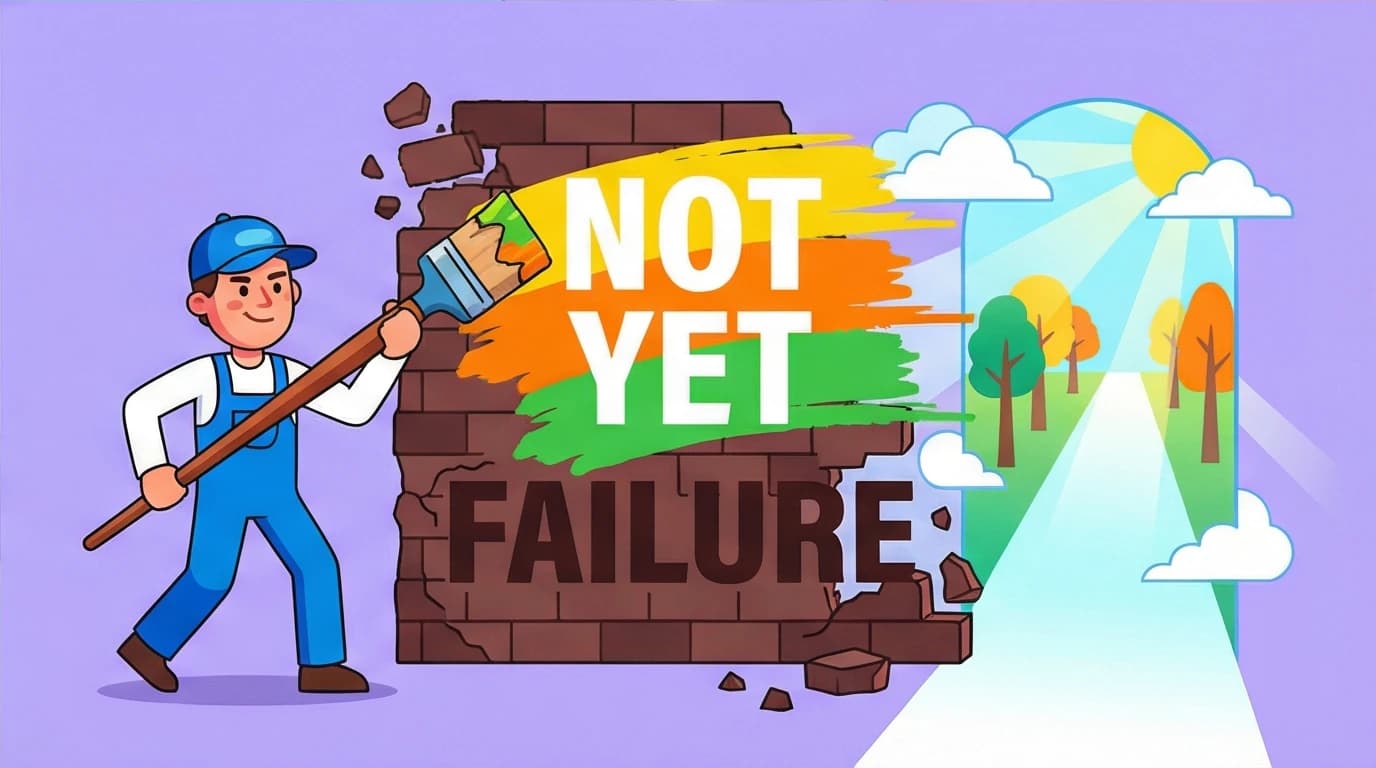
3. Embrace the Power of "Not Yet"
When you fail at a task, your brain processes it as an absolute: I am not a good manager. Shift your internal language. Add the word "yet." I am not a good manager yet. This simple linguistic trick reframes a dead-end failure into a learning curve.
4. Hire for Trajectory, Not Just Pedigree
If you are building a team, stop hunting exclusively for people with flawless resumes from elite schools. Look for individuals who have overcome significant obstacles, demonstrated a capacity to learn rapidly, and show resilience. Trainability beats a static skillset every time.
How to Shift Your Team to a Growth Mindset Today
If you manage people, your most urgent task is auditing your team's culture. You can foster a growth mindset in your organization starting immediately.
Audit Your Reward System
What gets rewarded in your office? If you only reward the final numbers, you incentivize employees to take easy paths and hide failures. Start rewarding the process. Publicly acknowledge the team member who ran a bold experiment that failed, but who extracted a valuable lesson for the company.
What gets rewarded in your office? If you only reward the final numbers, you incentivize employees to take easy paths and hide failures. Start rewarding the process. Publicly acknowledge the team member who ran a bold experiment that failed, but who extracted a valuable lesson for the company.
Normalize Saying "I Don't Know"
Leaders must model vulnerability. If the boss always has to be right, the employees will never take risks. Say "I don't know, but let's figure it out together" in your next meeting. You instantly relieve the pressure of perfectionism across your entire team.
Leaders must model vulnerability. If the boss always has to be right, the employees will never take risks. Say "I don't know, but let's figure it out together" in your next meeting. You instantly relieve the pressure of perfectionism across your entire team.
Rethink Performance Reviews
Move away from rigid annual ratings that label an employee as a "3 out of 5." Frame performance reviews around trajectory. Focus on what new skills they acquired over the last six months and what specific strategies they will use to tackle the next quarter's challenges.
Move away from rigid annual ratings that label an employee as a "3 out of 5." Frame performance reviews around trajectory. Focus on what new skills they acquired over the last six months and what specific strategies they will use to tackle the next quarter's challenges.
Fostering a genuine growth mindset within your organization requires leaders who are willing to be honest about their shortcomings. When you normalize saying "I don't know" and actively encourage open communication about failures, you build a resilient team grounded in trust. For executives and managers looking to master this type of brave, vulnerable leadership, learning how to dismantle workplace perfectionism is an invaluable next step.

Dare To Lead
Brené Brown, Ph.D.
43 Duration9 Key Points4.6 RateIf your reading list is suddenly full of must-reads like Mindset, Grit, and Dare to Lead, you can get a head start on their key concepts without waiting months to get through them all.
Tackle your new reading list by listening to the main ideas from these transformational books, turning your commute or workout into productive learning time.
LeapAheadFAQ
What is the main message of Mindset by Carol Dweck?
The main message is that our beliefs about our abilities heavily influence our success. Believing that intelligence and talent are fixed traits limits potential and creates a fear of failure. Believing that abilities can be developed through effort, strategy, and mentoring (a growth mindset) fosters resilience, learning, and ultimately, higher achievement.
Can a person have both a fixed and a growth mindset?
Yes. Dweck emphasizes that nobody has a 100% growth mindset. We are all a mixture of both. You might have a growth mindset regarding your professional skills but a fixed mindset regarding your artistic abilities or your relationship. The goal is to identify your specific "fixed mindset triggers"—the moments or challenges that make you defensive or afraid—and actively manage them.
Is a growth mindset just about trying harder?
No. This is a common and dangerous misconception. Dweck calls this the "false growth mindset." Effort is crucial, but if you keep running into a brick wall, trying harder is useless. A true growth mindset is about finding new strategies, asking for help, and adapting when your current approach fails.
Why is the growth mindset critical for leadership and business?
Businesses operate in rapidly changing markets. Leaders with a fixed mindset rely on past successes, refuse to adapt, and create cultures of fear where employees hide critical mistakes. Leaders with a growth mindset foster innovation, adapt quickly to new technologies, and build resilient teams that can navigate uncertainty without falling apart.