


You hesitate to take on that high-visibility project at work because you are terrified of messing it up. When you receive critical feedback, your inner voice immediately tells you that you are just not smart enough, feeding that familiar impostor syndrome. You are tired of letting perfectionism dictate your choices, keeping you strictly within your comfort zone where it is safe, but where nothing grows. You do not need another motivational quote. You need a cognitive system update.
The Mechanics of Shifting From Fixed to Growth Mindset
Dr. Carol Dweck introduced the concept of the growth mindset, but knowing the definition is entirely different from living it. A fixed mindset assumes intelligence, character, and creative ability are static givens. A growth mindset thrives on challenge and sees failure not as evidence of unintelligence, but as a springboard for growth.
Shifting from fixed to growth mindset is not about forcing yourself to be happy when you fail. It is a deliberate cognitive behavioral practice. You are fundamentally changing how your brain interprets friction.
When a person with a fixed mindset hits a wall, their brain sends a threat signal: “Hide. You look stupid.” When someone with a growth mindset hits that same wall, the signal is: “This is difficult. I need a new strategy.”

Making this shift requires you to intercept the threat signal before it dictates your behavior.
If you want to truly understand the science behind this cognitive shift, going straight to the source is incredibly helpful. Dr. Carol Dweck’s foundational research on how our beliefs about our capabilities shape our lives is a must-read. Her work dives deep into the psychology of success and explains exactly why brains react to failure as a threat, giving you the tools to consciously rewire that initial defensive response.

Mindset
Carol S. Dweck
 51 Duration
 8 Key Points
 4.6 Rate
But if a dense academic book feels like a heavy lift right now, you can get a head start by grasping its core concepts first.


Understand the foundational ideas of 'Mindset' and other complex psychology books in 15-minute summaries to start applying them today.
 LeapAhead
How to Change Your Mindset: A Tactical Approach
If you want to know how to change your mindset, you must treat your thoughts as hypotheses, not facts. People struggling with impostor syndrome often accept their harshest self-criticisms as undeniable truth. Here is the exact framework to intercept and change that pattern.
Step 1: Map Your Fixed Mindset Triggers
Your fixed mindset does not operate 24/7. It usually flares up under specific conditions. You need to identify these triggers. Common triggers include:
- Reading an impressive post by a peer on LinkedIn and feeling instantly inadequate.
- Getting back a document covered in red edits from your manager.
- Being asked to present a topic you only partially understand.
- Trying a new skill, failing on the first attempt, and feeling immediate shame.
Action: Carry a small notebook or use the notes app on your phone. For one week, write down the exact moments your brain says, "I can't do this" or "I'm going to be exposed."
Step 2: Externalize the Fixed Voice
Give your fixed mindset a persona. When you say, "I am a failure," you internalize the event. If you recognize the voice as a separate entity—an overprotective mental mechanism trying to save you from embarrassment—you strip away its power.
When the voice says, “You are going to blow this presentation,” you can consciously respond, “I hear you, but we are just gathering data right now.”
When the voice says, “You are going to blow this presentation,” you can consciously respond, “I hear you, but we are just gathering data right now.”
Step 3: Audit the Evidence
Cognitive Behavioral Therapy (CBT) relies heavily on reality testing. When your fixed mindset tells you that you are a fraud who cannot learn a new software system, put that thought on trial.
Ask yourself: Where is the hard evidence that I am incapable of learning this? Have I ever learned something complex before? The answer is always yes. You learned to drive a car, you learned your current job, you navigated difficult life transitions. The evidence points to adaptability, not incompetence.
Ask yourself: Where is the hard evidence that I am incapable of learning this? Have I ever learned something complex before? The answer is always yes. You learned to drive a car, you learned your current job, you navigated difficult life transitions. The evidence points to adaptability, not incompetence.
Putting your thoughts on trial is a core component of cognitive behavioral therapy, but it can be challenging to practice on your own when anxiety takes over. If you struggle with pervasive negative self-talk or find that perfectionism constantly feeds your impostor syndrome, learning how to "tame" that inner critic is essential. Jennifer Shannon provides highly practical, CBT-based exercises designed specifically to stop the cycle of overthinking and fear that keeps a fixed mindset firmly in place.

Don't Feed the Monkey Mind
Jennifer Shannon
21 Duration8 Key Points4.4 RateHigh-Impact Growth Mindset Exercises
Reading about neuroplasticity will not rewire your brain. Action does. Integrate these specific growth mindset exercises into your weekly routine to start breaking down the walls of perfectionism.
The "Failure Resume"
This exercise is frequently utilized by professors at top US universities to normalize setbacks. We spend our lives curating our success resumes for LinkedIn, which creates a distorted reality where failure seems rare and shameful.
- Open a blank document.
- List your biggest professional, academic, and personal failures over the last five years. (e.g., "Bombed the Q3 client pitch," "Rejected from the senior manager role").
- Next to each failure, create a column titled: What I Learned.
- Create a third column titled: How This Made Me Better.
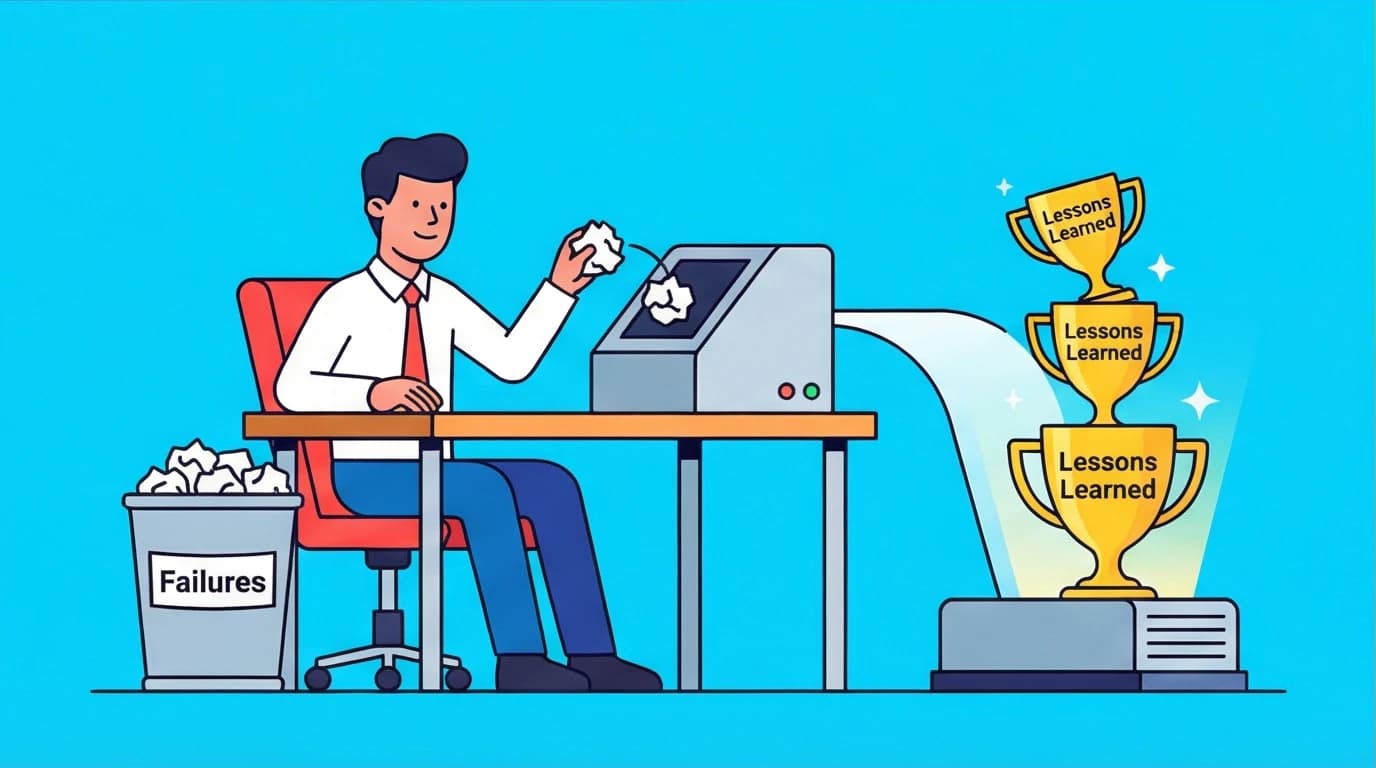
Writing this out forces your brain to extract the ROI from your mistakes. Failure stops being a stain on your character and becomes the tuition you paid for valuable experience.
The Power of "Yet"
This is the simplest, most aggressive tool against a fixed mindset. Whenever you make a definitive negative statement about your abilities, tack the word "yet" onto the end of the sentence.
- “I don't know how to run a pivot table in Excel... yet.”
- “I am not good at public speaking... yet.”
- “I haven't figured out the solution to this coding bug... yet.”
It takes less than a second, but it completely changes the trajectory of your thought process from a dead end to an open road.
The "Process Praise" Audit
We are conditioned to praise outcomes: "Great job hitting that sales target," or "You are so smart." This feeds the fixed mindset. You must retrain yourself to value the process over the outcome.
Audit how you talk to yourself and others. If you finish a tough project, do not just celebrate that it is over. Verbally acknowledge the specific strategies you used: "I am proud of how I organized the timeline and asked for help when I got stuck on the second phase." Praising the process reinforces the behaviors that lead to success, rather than tying your worth to the final score.
Real-World Growth Mindset Activities for Adults
Most literature on this topic focuses on children in a classroom. But what about corporate environments? Here are highly effective growth mindset activities for adults that you can implement in your workplace or personal life.
Host a "Blameless Post-Mortem"
If you lead a team, or even just collaborate closely with a few peers, change how you handle project wrap-ups. When something goes wrong, the default corporate reaction is to find out who dropped the ball. This breeds a culture of fear and hiding mistakes.
Instead, organize a meeting where the explicit rule is that no individual is to blame. The focus is entirely on the system. Ask:
- What part of our process failed?
- What data did we lack?
- How do we build a better safeguard for next time?
This activity actively demonstrates that mistakes are a systemic learning tool, neutralizing the fear of failure for the whole room.
Conduct a "Fear Setting" Session
Tim Ferriss popularized this concept, and it is a phenomenal tool for adults paralyzed by perfectionism. Instead of goal setting, you define your fears.
- Define the exact nightmare scenario if you take an action (e.g., asking for a promotion and getting a hard 'No').
- List exactly what you could do to prevent that scenario from happening.
- List exactly how you would repair the damage if the nightmare scenario came true.
Often, you will realize that the "worst-case scenario" is an emotional bruise, not a fatal career blow. You can survive a bruise. Realizing this dramatically lowers the stakes and allows you to take action.
Tim Ferriss has spent years interviewing world-class performers, and you will quickly notice that the most successful people do not lack fear; they just have better systems for managing it. If the "Fear Setting" exercise resonates with you, diving into the habits, routines, and mental frameworks of billionaires, icons, and world-class athletes can provide you with dozens of other practical tactics to bypass your perfectionism and take meaningful action.

Tools of Titans
Tim Ferriss
22 Duration9 Key Points4.5 RateEmbrace "Public Amateurism"
Perfectionists hate being seen as beginners. To break this, you must intentionally do something you are terrible at, in front of other people.
Take a pottery class. Join a local recreational volleyball league where you do not know the rules. Buy a cheap guitar on Amazon and take group lessons. The goal is not to get good at these hobbies. The goal is to let your brain experience the awkward, messy phase of being a complete beginner and realize that it is entirely safe. Nobody is laughing at you; they are too busy worrying about their own clumsy hands.
The "False Growth Mindset" Trap
As you work to figure out how to develop a growth mindset, you must watch out for the most common pitfall: the False Growth Mindset.
A false growth mindset is simply toxic positivity disguised as psychology. It is telling yourself, "I just need to try harder," when you keep failing at a task. Effort is only half the equation. If you are running south to find a sunrise, running faster will not help you. You need a new direction.

True growth mindset is not just about praising effort; it is about tying effort to strategy and learning. If a strategy is not working, a growth mindset dictates that you stop, pivot, ask for help, and try a different angle. Do not confuse stubbornness with growth.
Another trap is believing you can achieve this shift overnight. You have likely spent twenty, thirty, or forty years reinforcing fixed mindset pathways in your brain. You cannot undo decades of neurological wiring by reading one article or doing one journaling exercise. It is a daily practice. Some days, impostor syndrome will win. You will receive a critical email and spiral into self-doubt. That does not mean you have failed; it means you are in the middle of the process. Acknowledge the setback, apply the word "yet," and try again tomorrow.
Navigating the nuances between a genuine growth mindset and toxic positivity requires a high level of emotional intelligence. You have to be able to sit with the discomfort of failure without letting it define your identity. Dr. Susan David’s groundbreaking work offers a brilliant framework for embracing your most difficult emotions—like the shame or anger that follows a big mistake—and using them as neutral data to pivot your strategy rather than forcing a fake smile.

Emotional Agility
Susan David, Ph.D.
48 Duration8 Key Points4.5 RateImplementing these changes is a journey, and consistent learning is the fuel. But if your days are already packed, adding a stack of books to your to-do list can feel like another opportunity for failure.
Turn your commute or workout into learning time by listening to key insights from the world's best books on psychology and personal growth.
LeapAheadFAQ
How long does it take to develop a growth mindset?
There is no finish line where you permanently graduate. Rewiring cognitive habits usually takes several months of consistent daily practice before the new, growth-oriented thoughts become your brain's default response. Expect it to be a lifelong maintenance practice, much like physical fitness.
There is no finish line where you permanently graduate. Rewiring cognitive habits usually takes several months of consistent daily practice before the new, growth-oriented thoughts become your brain's default response. Expect it to be a lifelong maintenance practice, much like physical fitness.
Can I have a growth mindset in one area but a fixed one in another?
Absolutely. This is incredibly common. You might have a growth mindset regarding your physical fitness—knowing that if you lift weights, you get stronger—but hold a deeply fixed mindset about your math skills or public speaking abilities. The key is to identify the fixed areas and apply the strategies you already use in your growth areas.
Absolutely. This is incredibly common. You might have a growth mindset regarding your physical fitness—knowing that if you lift weights, you get stronger—but hold a deeply fixed mindset about your math skills or public speaking abilities. The key is to identify the fixed areas and apply the strategies you already use in your growth areas.
What do I do when I fail and still feel terrible?
Let yourself feel terrible. A growth mindset does not mean suppressing disappointment or pretending failure does not hurt. It is normal to feel frustrated, angry, or sad. The difference is what you do after the emotion passes. Feel the disappointment, then grab a pen and write out your "Failure Resume" to extract the data.
Let yourself feel terrible. A growth mindset does not mean suppressing disappointment or pretending failure does not hurt. It is normal to feel frustrated, angry, or sad. The difference is what you do after the emotion passes. Feel the disappointment, then grab a pen and write out your "Failure Resume" to extract the data.
Is a growth mindset just positive thinking?
No. Positive thinking assumes things will work out simply because you are optimistic. A growth mindset is highly pragmatic; it acknowledges that a task is exceptionally hard and that you might fail, but it focuses on your capacity to learn and adapt through that difficulty. It is about resilience and strategy, not blind optimism.
No. Positive thinking assumes things will work out simply because you are optimistic. A growth mindset is highly pragmatic; it acknowledges that a task is exceptionally hard and that you might fail, but it focuses on your capacity to learn and adapt through that difficulty. It is about resilience and strategy, not blind optimism.