

You are staring at a blank PowerPoint slide or drafting a Monday morning email to your team. You need to talk about resilience, learning from mistakes, or pushing through a tough quarter. You know the message you want to deliver, but you need the right words to make it stick. You do not have the time to sit down and re-read a 300-page book right now. You just need the exact phrasing that turns a frustrating setback into a learning opportunity.

When Dr. Carol Dweck published Mindset: The New Psychology of Success, she changed how educators, corporate leaders, and parents view human potential. Her research proved that intelligence and talent are not fixed traits. They are starting points.
To save you time, we organized the most powerful quotes about growth mindset from her work. We categorized them by theme and provided exact advice on how to frame these quotes for your audience. Grab your favorite ones, drop them into your deck, and start shifting how your audience thinks about their own potential.
Core Philosophy: Defining the Growth Mindset
These quotes capture the absolute essence of neuroplasticity and the core difference between a fixed and growth mindset. Use these when you need to introduce the concept to an audience that might be unfamiliar with Dweck’s work.
1. "Becoming is better than being."
The Meaning: A fixed mindset obsesses over the current state—how smart or talented you are right now. A growth mindset values the trajectory. The process of getting better is vastly superior to the stagnation of already being good.
How to Use It: Put this short, punchy quote on a single presentation slide. It works beautifully as an opening hook for a corporate training session or a high school syllabus review.
How to Use It: Put this short, punchy quote on a single presentation slide. It works beautifully as an opening hook for a corporate training session or a high school syllabus review.
2. "The passion for stretching yourself and sticking to it, even (or especially) when it’s not going well, is the hallmark of the growth mindset."
The Meaning: True growth mindset behavior only shows up when things get hard. Anyone can be positive when they are winning. How you react when you hit a wall defines your mindset.
How to Use It: Use this during a project kickoff. Remind your team that hitting roadblocks is not a sign of a flawed plan, but the exact moment the real work begins.
How to Use It: Use this during a project kickoff. Remind your team that hitting roadblocks is not a sign of a flawed plan, but the exact moment the real work begins.
3. "Picture your brain forming new connections as you meet the challenge and learn. Keep on going."
The Meaning: This taps directly into neuroplasticity. When you struggle, your brain literally wires new neural pathways. The physical structure of your brain changes based on your effort.
How to Use It: This is highly effective for students or junior employees dealing with imposter syndrome. Remind them that the headache of a tough problem is just the sensation of their brain upgrading its hardware.
How to Use It: This is highly effective for students or junior employees dealing with imposter syndrome. Remind them that the headache of a tough problem is just the sensation of their brain upgrading its hardware.
These quotes lay the foundation for Dweck's philosophy. To fully grasp the implications, it's essential to understand the subtle but powerful ways these two outlooks shape our reactions to everyday challenges. For a deeper analysis, explore the core differences between a fixed vs. growth mindset.
If you are building a presentation around these core concepts, it helps to go straight to the source material. Carol Dweck’s groundbreaking book is required reading for anyone serious about unlocking human potential, whether in a corporate boardroom or a high school classroom. Digging into the full text will give you a wealth of context, scientific backing, and real-world case studies to flesh out your speaking notes and truly inspire your audience to embrace continuous learning.

Mindset
Carol S. Dweck
 51 Duration
 8 Key Points
 4.6 Rate
But if your to-read pile is already overflowing, there's a more efficient way to absorb these powerful ideas on a tight schedule.

Get the core lessons from Carol Dweck's *Mindset* in a 15-minute audio or text summary, perfect for applying growth mindset principles without the long reading hours.

Download LeapAhead App now

Reframing Setbacks: Carol Dweck Quotes on Failure
Failure destroys motivation for people who believe their abilities are static. For those who believe abilities can be developed, failure is just data. These Carol Dweck quotes on failure will help you reframe mistakes for your team or classroom.
4. "Why hide deficiencies instead of overcoming them? Why look for friends or partners who will just shore up your self-esteem instead of ones who will also challenge you to grow?"
The Meaning: Covering up mistakes takes massive amounts of energy. A growth culture removes the stigma of making an error, allowing people to spend that energy on fixing the issue instead of hiding it.
How to Use It: Bring this up during a post-mortem or retrospective meeting after a failed initiative. It sets the tone that the meeting is about growth, not pointing fingers.
How to Use It: Bring this up during a post-mortem or retrospective meeting after a failed initiative. It sets the tone that the meeting is about growth, not pointing fingers.

5. "I don’t mind losing as long as I see improvement or I feel I've done as well as I possibly could."
The Meaning: The definition of success changes based on your mindset. Winning isn't the only metric. Personal development and pushing past previous limits hold equal weight.
How to Use It: Share this with a sales team that missed their quarterly quota but significantly improved their outreach process, or an athlete dealing with a tough loss.
How to Use It: Share this with a sales team that missed their quarterly quota but significantly improved their outreach process, or an athlete dealing with a tough loss.
6. "Did I win? Did I lose? Those are the wrong questions. The correct question is: Did I make my best effort?"
The Meaning: Outcome independence. You cannot control every variable in the market or the classroom, but you have 100% control over the effort you apply.
How to Use It: This is a fantastic prompt for one-on-one coaching sessions. If a direct report is fixated on a missed promotion, use this quote to pivot the conversation toward their actual daily inputs.
How to Use It: This is a fantastic prompt for one-on-one coaching sessions. If a direct report is fixated on a missed promotion, use this quote to pivot the conversation toward their actual daily inputs.
Spotting the Trap: Fixed Mindset Quotes
To truly understand growth, you have to recognize the alternative. Dweck outlines the fixed mindset perfectly. Use these fixed mindset quotes to hold a mirror up to your audience so they can catch themselves when they slip into counterproductive thinking.
7. "Believing that your qualities are carved in stone—the fixed mindset—creates an urgency to prove yourself over and over."
The Meaning: If you believe you only have a set amount of intelligence, every situation becomes an evaluation. You are constantly trying to prove you are smart, rather than actually getting smarter.
How to Use It: Read this aloud when discussing corporate culture. Ask your team: "Are we building a culture where people feel they have to prove themselves daily, or improve themselves daily?"
How to Use It: Read this aloud when discussing corporate culture. Ask your team: "Are we building a culture where people feel they have to prove themselves daily, or improve themselves daily?"
8. "In the fixed mindset, everything is about the outcome. If you fail—or if you’re not the best—it’s all been wasted."
The Meaning: The ultimate trap of fixed thinking. It invalidates the entire journey if the final destination isn't perfect.
How to Use It: Use this as a warning. If you notice a student or employee who is highly talented but terrified of taking risks, share this quote. It helps them realize why they are playing it so safe.
How to Use It: Use this as a warning. If you notice a student or employee who is highly talented but terrified of taking risks, share this quote. It helps them realize why they are playing it so safe.
9. "Why waste time proving over and over how great you are, when you could be getting better?"
The Meaning: Ego is the enemy of development. Guarding your status as the "smartest person in the room" guarantees you will eventually be passed by someone willing to ask dumb questions.
How to Use It: Perfect for leadership retreats. Leaders often suffer from fixed mindsets because they feel pressure to have all the answers. Remind them that their job is to learn, not just to know.
How to Use It: Perfect for leadership retreats. Leaders often suffer from fixed mindsets because they feel pressure to have all the answers. Remind them that their job is to learn, not just to know.
Recognizing these fixed mindset traps is crucial. If you're ready to actively shift your perspective, explore these actionable exercises to build a growth mindset.
Catching yourself or your team in a fixed mindset is only the first step. If you want to dive deeper into the mechanics of unlearning bad habits and maintaining mental flexibility, you need tools to challenge your own assumptions. Adam Grant’s brilliant exploration of mental agility is a fantastic follow-up for leaders trying to foster a culture of curiosity. It will teach you how to celebrate rethinking and keep your ego from getting in the way of your team's ultimate success.

Think Again
Adam Grant
38 Duration8 Key Points4.6 RateEffort and Praise: Essential Mindset Book Quotes
Whether you snagged a physical copy at Barnes & Noble or you are listening to the audiobook on Audible during your morning commute, you likely noticed Dweck's heavy emphasis on how we praise others. Praising intelligence creates fragile egos. Praising effort creates resilience.
Here are the best Mindset book quotes regarding effort, practice, and proper praise.
10. "If parents want to give their children a gift, the best thing they can do is to teach their children to love challenges, be intrigued by mistakes, enjoy effort, and keep on learning."
The Meaning: Protecting people from struggle is not a kindness; it is a handicap. The best gift is the toolkit to handle adversity.
How to Use It: While directed at parents, this translates perfectly to management. Swap the word "children" with "employees" in your head. Managers must teach their teams to be intrigued by mistakes, not terrified of them.
How to Use It: While directed at parents, this translates perfectly to management. Swap the word "children" with "employees" in your head. Managers must teach their teams to be intrigued by mistakes, not terrified of them.
Dweck’s advice for parents is particularly powerful, as these lessons have a lifelong impact when learned early. For more targeted advice on this topic, see these effective strategies for teaching a growth mindset to kids.
11. "No matter what your ability is, effort is what ignites that ability and turns it into accomplishment."
The Meaning: Potential is completely useless without execution. Talent is just a multiplier for effort. If effort is zero, the output is zero.
How to Use It: Drop this into a team email when launching a new, difficult initiative. It levels the playing field. It tells everyone that hard work will outpace raw talent in the coming weeks.
How to Use It: Drop this into a team email when launching a new, difficult initiative. It levels the playing field. It tells everyone that hard work will outpace raw talent in the coming weeks.
12. "We like to think of our champions and idols as superheroes who were born different from us. We don’t like to think of them as relatively ordinary people who made themselves extraordinary."
The Meaning: We romanticize "natural talent" because it lets us off the hook. If Michael Jordan was just born better, we do not have to feel bad about our own lack of discipline. Acknowledging that greatness comes from practice forces us to take responsibility for our own development.
How to Use It: This is a phenomenal storytelling device for a keynote speech. Open your presentation with a story about a famous failure (like Steve Jobs getting fired from Apple), deliver this quote, and then dive into your main topic.
How to Use It: This is a phenomenal storytelling device for a keynote speech. Open your presentation with a story about a famous failure (like Steve Jobs getting fired from Apple), deliver this quote, and then dive into your main topic.
Dweck’s research proves that effort is the true engine of success, but how do we sustain that effort over the long haul? This is where passion and perseverance take center stage. Angela Duckworth’s landmark research perfectly complements the growth mindset by explaining exactly what it takes to stick with difficult challenges year after year. If you want to help your team build the stamina required to push through inevitable slumps and setbacks, this is a must-add to your professional reading list.

Grit
Angela Duckworth
18 Duration8 Key Points4.6 RateThe Power of "Yet"
We cannot curate a list of Dweck's insights without focusing on her most actionable framework: The Power of Yet.
13. "Just the words 'not yet' give kids a path into the future."
The Meaning: When you say "I cannot do this," your brain stops looking for solutions. The loop is closed. When you say "I cannot do this yet," the loop remains open. Your brain automatically assumes a solution exists in the future and begins working toward it.
How to Use It: Make this a mandatory rule in your classroom or office. Whenever someone says "I don't know how to do that," force them to add the word "yet" to the end of their sentence.
How to Use It: Make this a mandatory rule in your classroom or office. Whenever someone says "I don't know how to do that," force them to add the word "yet" to the end of their sentence.
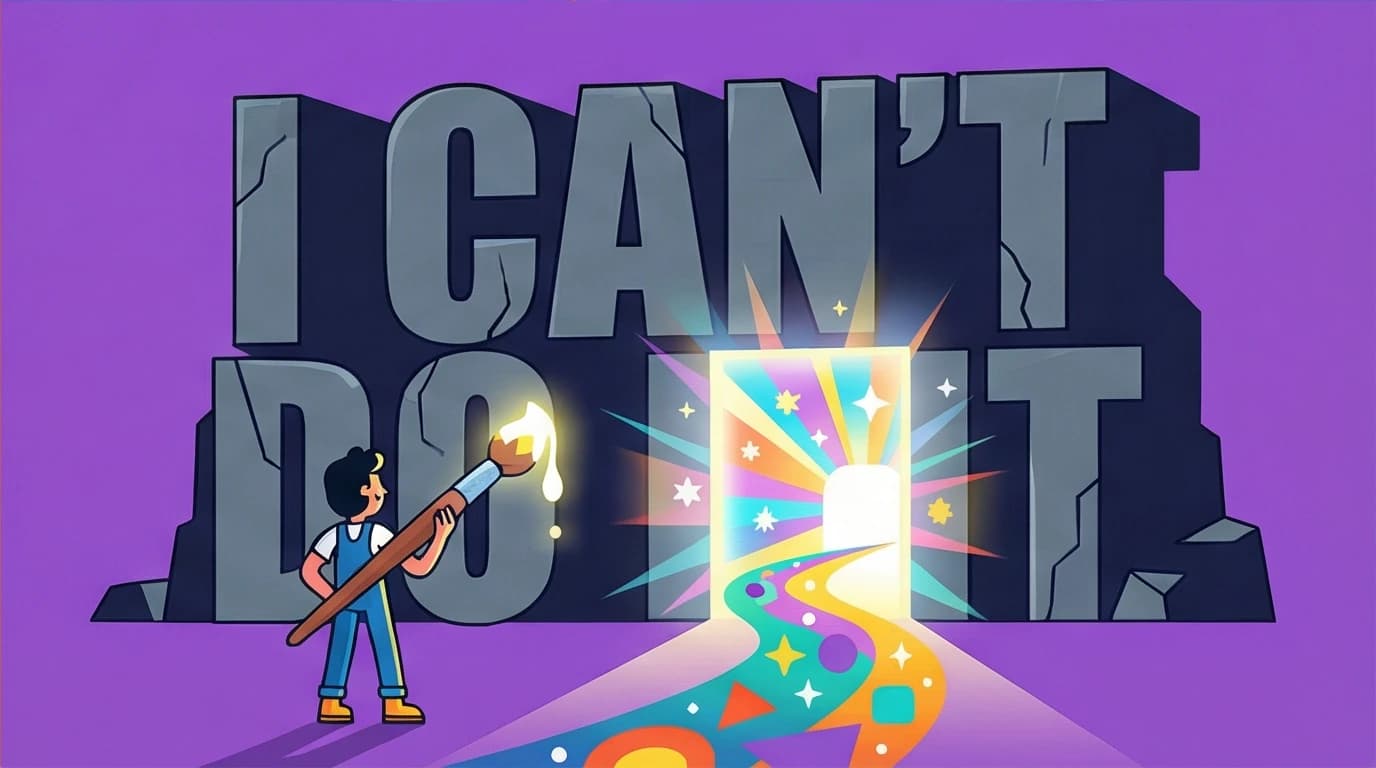
14. "Love of learning, resilience, and the power of 'yet' are essential for great accomplishments."
The Meaning: This is the formula. You need the curiosity to start, the resilience to survive the dip, and the perspective of "yet" to keep the timeline realistic.
How to Use It: If you are building a slide deck, make this your final takeaway slide. It summarizes the entire philosophy into three easy-to-remember pillars.
How to Use It: If you are building a slide deck, make this your final takeaway slide. It summarizes the entire philosophy into three easy-to-remember pillars.
How to Maximize These Quotes in Your Content Strategy
Finding the quote is only half the battle. How you present it dictates its impact. If you want these quotes to resonate with your audience, follow these execution rules.
- Keep the Design Clean: If you are posting these on social media or putting them on a slide, do not clutter the design. Use a bold, highly readable font over a dark background. Let Dweck's words do the heavy lifting.
- Always Provide the "So What": Never just drop a quote and walk away. Read the quote, pause, and then explicitly tell your audience how it applies to the exact problem they are facing today.
- Check Your Own Mindset: You cannot preach growth if you react to feedback with a fixed mindset. Model the behavior. Share a story of a recent mistake you made, read one of the quotes on failure, and explain how you are applying it to your own life.
If you find yourself relying on these concepts often, it is highly recommended to engage with the full text. You can grab a copy on Amazon, read the extensive community discussions on Goodreads, or download it on Apple Books to keep on your phone for quick reference.
You now have the exact quotes you need to inspire a growth mindset, but framing them effectively in your presentation is a completely different skill. If your goal is to deliver a Monday morning email or a keynote that your team actually remembers weeks later, you need to understand the psychology of memorable communication. Chip and Dan Heath break down exactly why some ideas survive and others die, giving you a proven blueprint for crafting messages that stick with your audience long after the meeting ends.

Made to Stick
Chip Heath, Dan Heath
52 Duration9 Key Points4.5 RateIf you're excited to dive into all these books but struggle to find the time, you can get the key insights from all of them in a fraction of the time.
Listen to summaries of *Mindset*, *Grit*, and *Made to Stick* to quickly grasp the big ideas and inspire your team, even on your busiest days.
Download LeapAhead App now
FAQ
What is the most famous quote from Carol Dweck?
While she has many, her most referenced idea is often summarized as: "In a growth mindset, challenges are exciting rather than threatening. So rather than thinking, oh, I'm going to reveal my weaknesses, you say, wow, here's a chance to grow." This perfectly encapsulates her thesis on how we approach difficulty.
While she has many, her most referenced idea is often summarized as: "In a growth mindset, challenges are exciting rather than threatening. So rather than thinking, oh, I'm going to reveal my weaknesses, you say, wow, here's a chance to grow." This perfectly encapsulates her thesis on how we approach difficulty.
What does Carol Dweck mean by the "power of yet"?
The "power of yet" is a psychological framing technique. By adding the word "yet" to the end of a negative statement (e.g., "I don't understand this... yet"), you transform a definitive failure into a learning curve. It signals to your brain that the current lack of knowledge is temporary, encouraging continued effort.
The "power of yet" is a psychological framing technique. By adding the word "yet" to the end of a negative statement (e.g., "I don't understand this... yet"), you transform a definitive failure into a learning curve. It signals to your brain that the current lack of knowledge is temporary, encouraging continued effort.
How do you praise someone using a growth mindset?
You must praise the process, not the person. Instead of saying, "You are so smart," say, "I am incredibly impressed by the strategy you used to solve that problem." Instead of praising natural talent, praise their focus, perseverance, and willingness to try different angles when they got stuck.
You must praise the process, not the person. Instead of saying, "You are so smart," say, "I am incredibly impressed by the strategy you used to solve that problem." Instead of praising natural talent, praise their focus, perseverance, and willingness to try different angles when they got stuck.
Is Mindset by Carol Dweck still relevant for modern corporate leadership?
Absolutely. In environments that change rapidly, the ability to learn new skills and pivot is more valuable than static, existing knowledge. Companies like Microsoft have publicly completely overhauled their corporate culture around Dweck's growth mindset principles, shifting from a "know-it-all" culture to a "learn-it-all" culture.
Absolutely. In environments that change rapidly, the ability to learn new skills and pivot is more valuable than static, existing knowledge. Companies like Microsoft have publicly completely overhauled their corporate culture around Dweck's growth mindset principles, shifting from a "know-it-all" culture to a "learn-it-all" culture.