

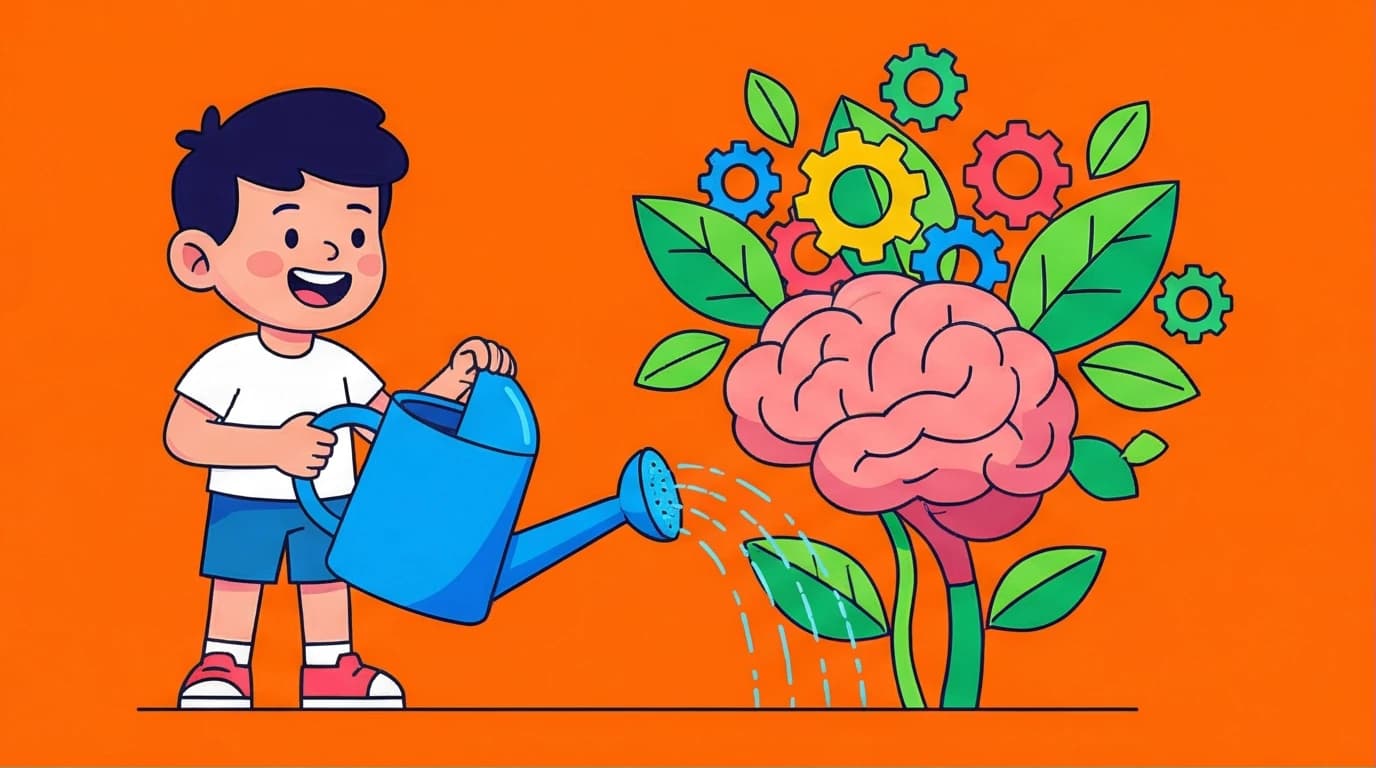
Your child stares at a half-finished math worksheet, erases a hole through the paper, and cries, "I'm just stupid." You quickly jump in with, "No you aren't, you're so smart!" but the meltdown only escalates. This is the exact moment where well-intentioned parenting hits a brick wall. When kids believe their abilities are fixed traits, every mistake feels like permanent proof of failure.
Changing this dynamic requires a fundamental shift in how we talk about success, struggle, and intelligence. Before diving into specific strategies for kids, it's helpful to have a clear understanding of the core concepts that drive this change.
The Science of Struggle: Why "You're So Smart" Backfires
If you want to know how to teach growth mindset effectively, you first have to unlearn the habit of praising talent. For decades, parents and teachers thought building self-esteem meant telling kids how brilliant they were. The research proves the exact opposite.
The famous Carol Dweck praise study perfectly illustrates this trap. Researchers gave groups of fifth graders an easy IQ test. Afterward, half the students were praised for their intelligence ("You must be smart at this"), while the other half were praised for their process ("You must have worked really hard").
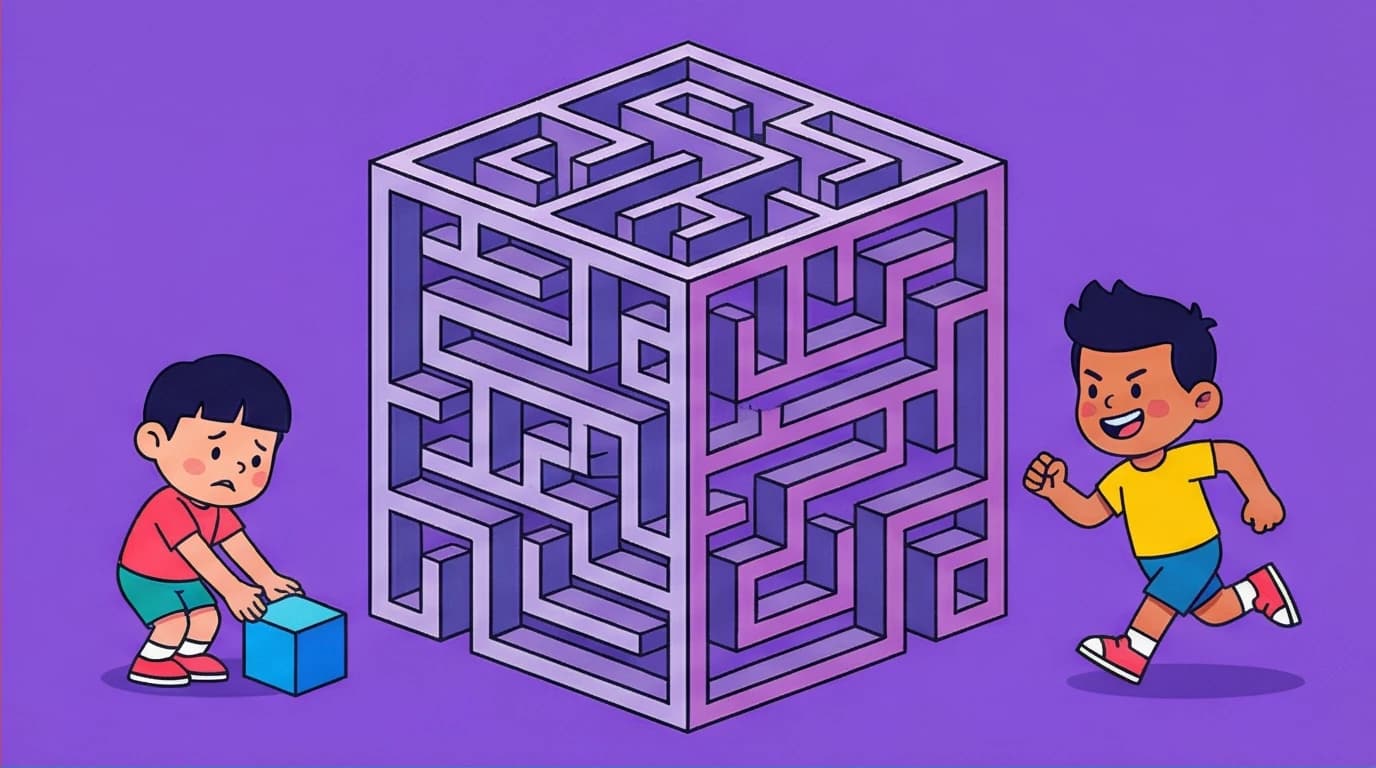
When later offered a choice between a difficult puzzle and an easy one, the results were staggering. The kids praised for being "smart" overwhelmingly chose the easy puzzle. They didn't want to risk looking dumb. The kids praised for their effort chose the hard puzzle. They viewed the challenge as a chance to learn.
Praising effort not intelligence rewires a child's brain to value the journey of learning over the safety of looking perfect. When you tell a child they are "naturally gifted," you accidentally teach them that having to try hard means they aren't gifted anymore.
To truly grasp the profound impact of shifting how we praise our kids, there is no better resource than the original research itself. Dr. Carol Dweck’s groundbreaking work forms the entire foundation of the growth mindset movement. If you want to dive deeper into the psychology of success and learn how to apply these concepts to parenting, education, and even your own professional life, this foundational book is a must-read for your family's library.

Mindset
Carol S. Dweck
 51 Duration
 8 Key Points
 4.6 Rate
As a busy parent, absorbing the wisdom from foundational books like Mindset can feel like another item on an endless to-do list. If you want to grasp these core concepts without needing to find hours for reading, a book summary app can be a great tool.

Get 15-minute summaries of bestselling parenting and psychology books, helping you learn key strategies for fostering a growth mindset on your commute or during a quick break.

Download LeapAhead App now
How to Teach Growth Mindset at Home
You cannot lecture a child into having resilience. A growth mindset for kids is built through daily interactions, specifically how you react to their struggles and their successes.
Change Your Praise Scripts
Stop focusing on the A on the report card. Start focusing on the studying that happened at the kitchen table.
- Instead of: "You got an A! You're a natural at science."
- Say this: "You got an A! I saw you reviewing those flashcards every night this week. Your study strategy really paid off."
- Instead of: "You built that Lego set so fast, you're a genius."
- Say this: "You focused on that Lego manual for a solid hour and figured out that tricky roof part. Great problem-solving."
Introduce "The Power of Yet"
The word "yet" is the most powerful tool in your parenting arsenal. When a child hits a frustration point, they deal in absolutes. They say, "I can't do fractions." They say, "I don't know how to ride this bike."
Append "yet" to the end of their sentences.
- "You don't know how to divide fractions yet."
- "You can't balance on the bike yet."
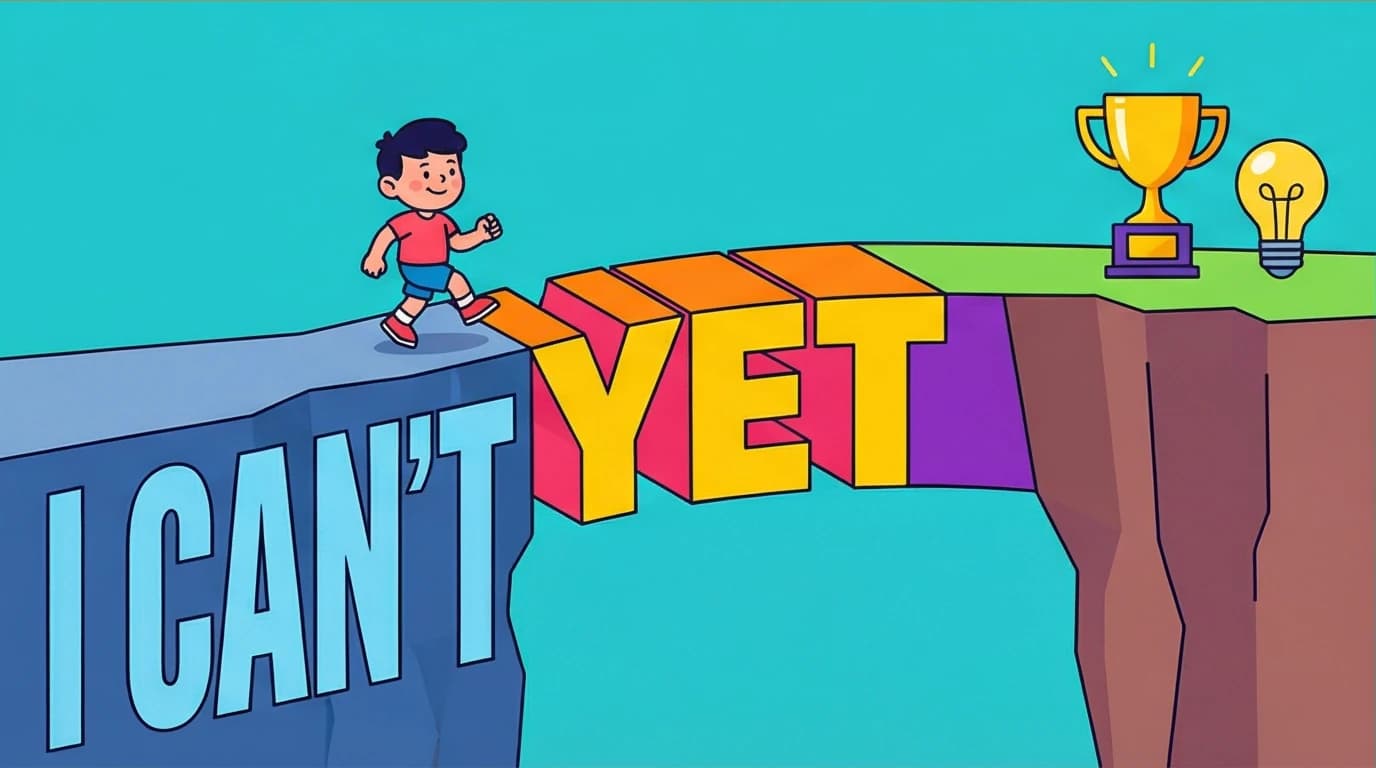
This simple linguistic bridge acknowledges their current frustration while leaving the door wide open for future mastery.
Normalize Your Own Mistakes
Kids watch how you handle failure. If you burn dinner and spend the next ten minutes loudly complaining about how you are a terrible cook, your child absorbs that fixed mindset. Narrate your own struggles out loud.
"I totally messed up this recipe. I guess I didn't read the temperature instructions carefully. Next time, I'll lower the oven heat and check it ten minutes earlier." Model the exact behavior you want them to adopt.
Modeling this behavior is much easier when you're actively cultivating your own resilience. As a parent, working on your own approach to challenges can be the most powerful way to teach your children.
Navigating your child's frustration over a tough assignment isn't just about picking the right words; it requires understanding their developing neuroscience. When a child has a total meltdown because they feel "stupid," their logical brain has essentially shut down. To effectively teach a growth mindset, you first need to help them regulate their emotions. If you are looking for actionable, science-backed strategies to turn daily struggles and tantrums into opportunities for mental growth, this excellent parenting guide is a game-changer.

The Whole-Brain Child
Daniel J. Siegel, M.D., Tina Payne Bryson, Ph.D.
41 Duration7 Key Points4.6 RateFostering a Growth Mindset in the Classroom
For K-12 teachers and school administrators, embedding a growth mindset in the classroom requires moving beyond inspirational posters. It must be woven into grading, feedback, and peer interactions.
The "My Favorite Mistake" Routine
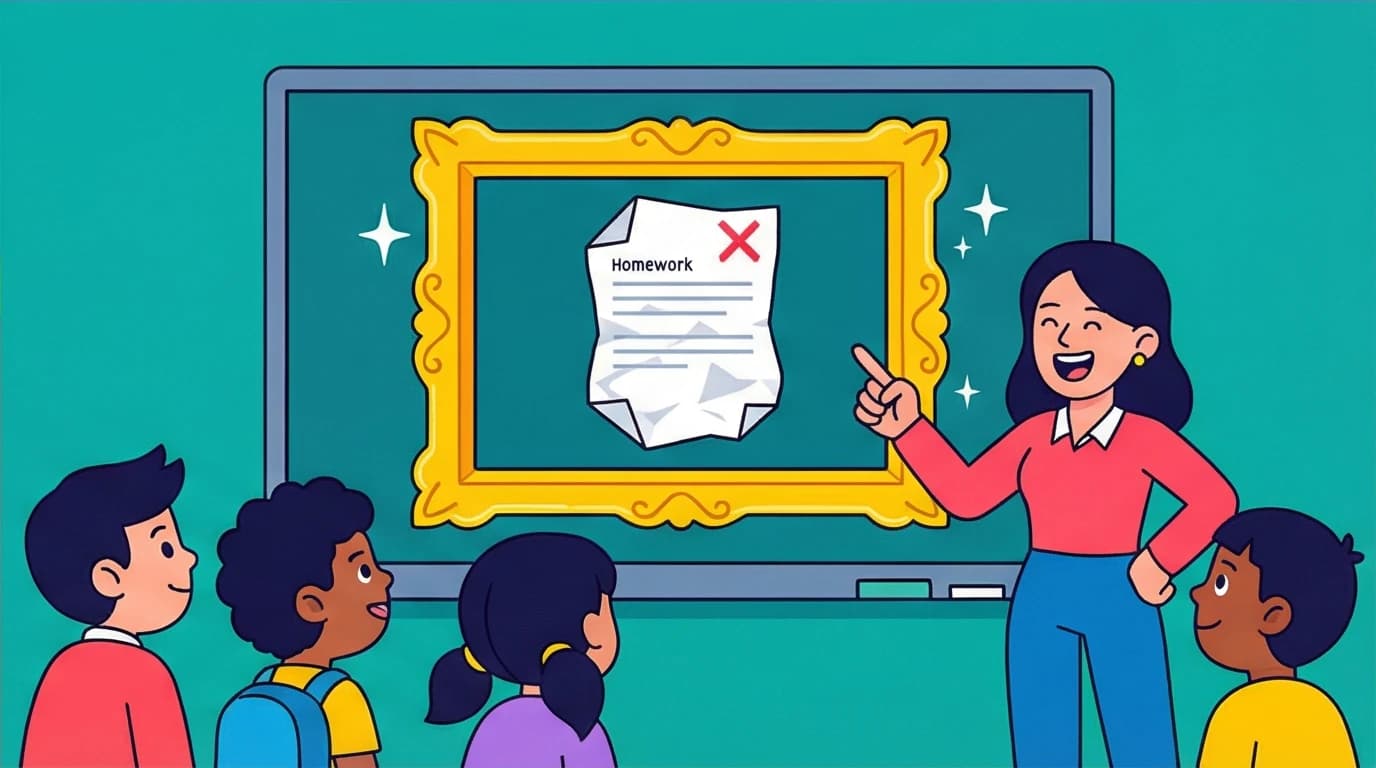
Create a classroom culture where mistakes are treated as data. Start your math or language arts block by showcasing "My Favorite Mistake." Pull an anonymous, common error from the previous day's homework. Present it on the smartboard.
Ask the class: "Why is this an awesome mistake? What was the brain trying to do here, and what can we learn from it?" This removes the shame from being wrong and turns error analysis into a collective, safe puzzle.
Grade for Process, Not Just Product
If you only give points for correct answers, students will quickly abandon a growth mindset to chase the grade. Incorporate process rubrics. If a student gets the wrong answer on a math test but shows three different attempts and outlines a logical strategy, award points for the resilience and the method.
Require students to submit "reflection logs" alongside major projects. Ask them:
- What was the hardest part of this assignment?
- What strategy did you use when you got stuck?
- What would you do differently next time?
Moving away from grades and focusing purely on the learning process can feel intimidating, especially in our highly competitive culture. However, the data clearly shows that character traits like perseverance, curiosity, and self-control are vastly better predictors of adult success than standardized test scores or pure cognitive intelligence. If you want a fascinating look at the hidden mechanics of what truly helps students thrive—both inside the classroom and out in the real world—this insightful read will completely reframe your approach to education.
How Children Succeed
Paul Tough
46 Duration9 Key Points4.6 RatePraise the Strategy, Not Just the Effort
A common misunderstanding of Dweck's work is the idea that teachers should just praise effort indefinitely. If a student is trying the same wrong strategy over and over and failing, praising them for "trying hard" is empty.
Intervene with strategy-based feedback: "I see you are working incredibly hard on this paragraph, but it seems like you're stuck. Let's look at your outline. What is a different approach we can try here?"
3 Dangerous Pitfalls to Avoid
Even with the best intentions, parents and educators often fall into mindset traps. Watch out for these three common errors.
1. The "False Growth Mindset"
Many adults think a growth mindset simply means having a positive attitude. It doesn't. Telling a child "You can do anything if you just believe!" is motivational fluff. A true growth mindset is about connecting hard work, effective strategies, and help-seeking to ultimate success.
Many adults think a growth mindset simply means having a positive attitude. It doesn't. Telling a child "You can do anything if you just believe!" is motivational fluff. A true growth mindset is about connecting hard work, effective strategies, and help-seeking to ultimate success.
2. Shielding Kids from Failure
You cannot develop resilience if you never experience failure. Rushing to bring a forgotten homework folder to school, or intervening the moment a child gets frustrated with a puzzle, steals their opportunity to struggle. Let them experience the natural, low-stakes consequences of making a mistake.
You cannot develop resilience if you never experience failure. Rushing to bring a forgotten homework folder to school, or intervening the moment a child gets frustrated with a puzzle, steals their opportunity to struggle. Let them experience the natural, low-stakes consequences of making a mistake.
3. Using Mindset as a Weapon
Never use growth mindset terminology to blame a child for their struggles. Telling a frustrated student, "You just aren't using your growth mindset," weaponizes the concept. It makes them feel worse. Instead, sit down next to them and say, "This is a tough problem. Your brain is working hard right now. Let's find a new way to tackle it."
Never use growth mindset terminology to blame a child for their struggles. Telling a frustrated student, "You just aren't using your growth mindset," weaponizes the concept. It makes them feel worse. Instead, sit down next to them and say, "This is a tough problem. Your brain is working hard right now. Let's find a new way to tackle it."
For a deeper look into the key ideas that sparked the entire mindset movement, you can explore the main takeaways from the book that started it all.
Avoiding these mindset pitfalls becomes much easier when you understand the mechanics of long-term endurance. Ultimately, fostering a growth mindset is about building grit—that rare combination of passion and sustained perseverance. Whether your child is trying to master a tough math unit or stick with playing the piano through the messy middle, they need to learn how to keep going when the initial excitement fades. If you want to help your kids stay committed to difficult goals, this acclaimed book offers the perfect roadmap.

Grit
Angela Duckworth
18 Duration8 Key Points4.6 RateOf course, reading all these incredible books on parenting and psychology takes time that most parents and teachers simply don't have. If you want to model a growth mindset by continuously learning but struggle to fit it in, an app can help you absorb key ideas efficiently.
Listen to 15-minute summaries of books like *Grit* and *Mindset*, turning your commute or workout into valuable learning time that helps you become a better parent.
Download LeapAhead App now
FAQ
What age should I start teaching growth mindset?
You can start as early as toddlerhood. For 2-to-3-year-olds, it looks like praising them when they keep trying to stack blocks that keep falling over. The vocabulary gets more complex as they grow, but the core principle of rewarding perseverance over immediate success remains the same from preschool through high school.
You can start as early as toddlerhood. For 2-to-3-year-olds, it looks like praising them when they keep trying to stack blocks that keep falling over. The vocabulary gets more complex as they grow, but the core principle of rewarding perseverance over immediate success remains the same from preschool through high school.
How do I help a child who is already deeply stuck in a fixed mindset?
Start small. Do not try to overhaul their entire worldview in one day. Pick one low-stakes hobby or subject they enjoy and praise their process there. Validate their frustration ("I know this feels impossible right now") and gently introduce "yet." You also need to heavily model your own failures and learning processes in front of them so they see it's safe to struggle.
Start small. Do not try to overhaul their entire worldview in one day. Pick one low-stakes hobby or subject they enjoy and praise their process there. Validate their frustration ("I know this feels impossible right now") and gently introduce "yet." You also need to heavily model your own failures and learning processes in front of them so they see it's safe to struggle.
Does a growth mindset mean everyone can be the next Einstein or LeBron James?
No. A growth mindset does not deny that natural talent exists. It simply asserts that whatever your starting point, your abilities can be expanded and improved through deliberate practice. The goal isn't to make every kid a genius; the goal is to ensure no kid gives up on reaching their own maximum potential just because learning gets difficult.
No. A growth mindset does not deny that natural talent exists. It simply asserts that whatever your starting point, your abilities can be expanded and improved through deliberate practice. The goal isn't to make every kid a genius; the goal is to ensure no kid gives up on reaching their own maximum potential just because learning gets difficult.
How long does it take to see a change in my child's attitude?
Rewiring a child's response to failure takes time. You might not see a shift for several months. Consistency is your best tool. If you consistently reward strategy, normalize mistakes, and use "yet," you will gradually notice your child pausing before they tear up a paper, or taking a deep breath before trying a difficult task one more time.
Rewiring a child's response to failure takes time. You might not see a shift for several months. Consistency is your best tool. If you consistently reward strategy, normalize mistakes, and use "yet," you will gradually notice your child pausing before they tear up a paper, or taking a deep breath before trying a difficult task one more time.