


You wake up, and before your feet even touch the floor, a heavy wave of anxiety hits. Your to-do list is already racing through your mind, leaving you exhausted before the day has actually begun. If you are battling burnout, chronic stress, or mental fatigue, a frantic morning only sets you up for survival mode. You do not need another rigid schedule that demands you run three miles and take a freezing shower. You need a way to find your center.
The way you spend your first 15 minutes awake dictates the psychological tone for the next 15 hours. When you are burned out, your brain's alarm system is stuck in the "on" position. We are going to turn it off.

Why Your Mental State Needs an Intentional Reset
When you wake up, your body naturally releases cortisol to help you shake off sleep. This is normal. But when you are dealing with chronic stress, your cortisol levels are already running high.
If your first action is grabbing your phone to check emails or scrolling through social media, you instantly flood your brain with external demands. You surrender your mental space to other people's emergencies. You transition from asleep directly to overwhelmed.
Building a resilient mind requires you to build a buffer zone between waking up and stepping into the chaos of daily life. This buffer does not require hours of free time. It requires intention.
Just as you can reclaim the first moments of your day for calm, you can also reclaim other small pockets of time for growth, even when you're too tired to sit down with a book.


LeapAhead

Absorb key ideas from bestselling self-improvement books in 15-minute audio summaries, perfect for turning a commute or workout into learning time when you're feeling drained.
Once you understand the importance of this mental buffer, you can start designing a structure that works for you.
The Core Pillars of a Morning Mindset Routine for Success
A functional and sustainable morning mindset routine for success relies on three simple actions: grounding your physical body, clearing your mental clutter, and directing your focus.
Anchor Your Body: Morning Meditation for Focus
Burnout fragments your attention. It makes your thoughts scatter in a hundred different directions, visualizing every possible thing that could go wrong today. You cannot organize a chaotic mind using more chaotic thoughts. You have to use your body.

Incorporating a brief morning meditation for focus serves as an anchor. It shifts your nervous system from a sympathetic state (fight or flight) to a parasympathetic state (rest and digest). You do not need to sit in perfect silence for an hour. Five minutes is enough to change the physical chemistry of your brain.
How to execute this realistically:
- Find your spot: Sit somewhere comfortable. It could be a chair in your living room or simply sitting up in bed.
- Close your eyes: Eliminate visual distractions.
- The 4-4-4-4 Box Breathing Method: Inhale deeply through your nose for 4 seconds. Hold that breath for 4 seconds. Exhale slowly through your mouth for 4 seconds. Hold the empty breath for 4 seconds.
- Notice the physical: Feel the weight of your body against the chair. Feel the temperature of the air. When your mind inevitably drifts to your work inbox, gently bring your attention back to counting your breath.
This practice trains your brain to realize that, in this exact moment, you are safe. There is no immediate threat. From this place of safety, focus naturally returns.
If the thought of sitting completely still while your brain runs a million miles an hour sounds more stressful than relaxing, you aren't alone. Many driven professionals feel like they are "failing" at traditional meditation when they can't quiet their thoughts. If you want a no-nonsense, highly practical approach to grounding yourself without the mystical fluff, Meditation for Fidgety Skeptics is a phenomenal read. It breaks down the science of mindfulness into bite-sized, accessible steps that even the busiest, most anxious minds can actually stick with.

Meditation for Fidgety Skeptics
Dan Harris, Jeff Warren, Carlye Adler
 36 Duration
 9 Key Points
 4.6 Rate
Unload the Brain: Intentional Writing
Once your body is calm, you will still have lingering mental residue. Worries, tasks, and frustrations rattle around in your head taking up valuable mental bandwidth. Writing them down forces them out of your head and onto paper.
You do not need a fancy leather-bound book from Barnes & Noble to do this. A simple notebook or even a scrap piece of paper works perfectly. The goal is brain dumping and re-framing.
Using specific morning journaling prompts for success can help you shift from a passive victim of your schedule to an active architect of your day.
Try these three prompts when you feel overwhelmed:
- "What is the heaviest thing on my mind right now?" Let yourself complain for exactly three sentences. Get the negativity out on paper where you can see it.
- "What is one thing I can actually control today?" Burnout makes you feel powerless. Identify one single action you have total authority over. It could be drinking a glass of water, organizing your desk, or taking a 10-minute walk at lunch.
- "What would make today feel like a win?" Do not write a 20-item to-do list. Pick one or two realistic goals. If everything else goes wrong, what is the one thing that will make you feel satisfied tonight?
By writing these answers down, you define the boundaries of your day. You decide what matters and what is just noise.
Writing down your priorities is a great first step, but what happens when absolutely everything feels urgent? Burnout thrives when we treat every task as a top priority, leaving us stretched thin and emotionally drained. If you struggle to separate the vital few things from the trivial many, picking up Essentialism might completely change your trajectory. It offers a disciplined, systematic approach to figuring out what truly matters in your daily life, giving you the permission you need to finally cross the noise off your to-do list for good.
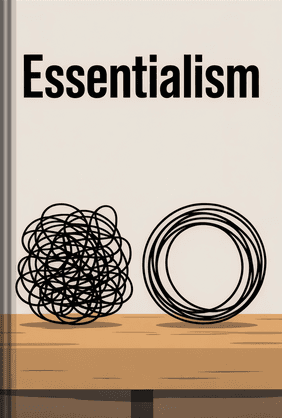
Essentialism
Greg McKeown
32 Duration10 Key Points4.6 RateRewire the Inner Critic: The Power of Spoken Intent
Stress and anxiety come with a very loud inner critic. You might wake up thinking, "I cannot handle this," or "Today is going to be a disaster." If you accept these thoughts as facts, your brain will look for evidence to prove them right all day long.
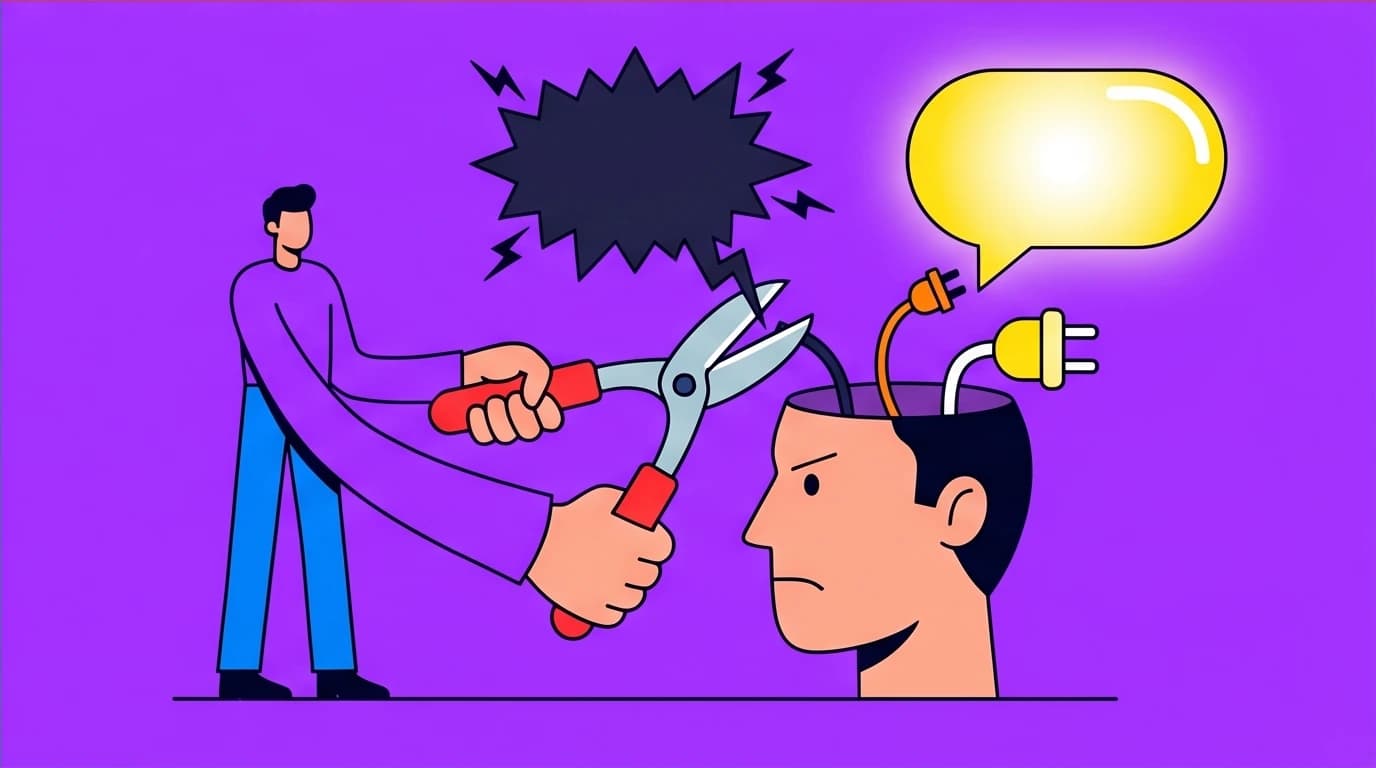
A positive affirmations morning routine is not about toxic positivity. It is not about standing in front of a mirror and lying to yourself by saying "Everything is perfect" when things are actually falling apart. It is about grounded, realistic neuroplasticity. You are consciously offering your brain a different narrative to hold onto.
Examples of grounded affirmations for stressed individuals:
- Instead of "I am invincible," use: "I have the capacity to handle whatever comes my way today."
- Instead of "Today will be flawless," use: "I give myself permission to make mistakes and learn from them."
- Instead of "I will do everything perfectly," use: "My worth is not defined by my productivity. I will do my best, and that is enough."
Pick one phrase that resonates with you. Say it out loud or write it at the bottom of your journal page. Let it color your perspective for the hours ahead.
Taming the negative voice in your head isn't just about feeling better; it's about fundamentally changing how your brain processes stress. That internal monologue can either be your harshest critic or your most reliable coach. If you want to dive deeper into the science of why we talk to ourselves the way we do—and how to harness it—Chatter is a fascinating resource. It provides evidence-based tools to quiet the mental spiral, helping you step back and reframe your thoughts so you can approach your day with genuine confidence.

Chatter
Ethan Kross, Ph.D.
23 Duration10 Key Points4.3 RateStructuring Your Mental Health Morning Habits
Reading about these tools is easy; integrating them when you are tired is hard. You need a system that functions on autopilot.
Creating reliable mental health morning habits requires starting small. If you try to implement a 90-minute routine tomorrow, you will likely fail and feel even more defeated. Let us build a scalable 15-minute framework.
The 15-Minute Blueprint:
- Minutes 0-2: Hydrate and Light. Wake up, turn off your alarm, and do not look at any notifications. Drink a glass of water. Open the blinds to let natural light hit your eyes, which signals your brain to stop producing melatonin.
- Minutes 2-7: Anchor (Meditation). Sit quietly. Do your 4-4-4-4 box breathing. Simply exist without trying to solve any problems.
- Minutes 7-12: Unload (Journaling). Open your notebook. Answer the three prompts. Identify the single most important task for the day.
- Minutes 12-15: Direct (Affirmations). Speak your grounded affirmation. Take one final deep breath. Now, you are ready to look at your phone, start your coffee maker, or wake up your kids.
The "Low-Energy Day" Contingency Plan
Some mornings, 15 minutes feels impossible. Maybe you did not sleep well, or maybe the burnout is particularly heavy. On these days, do not abandon the routine entirely. Shrink it.
If you only have two minutes: Drink water, take three deep breaths with your eyes closed, and say your affirmation once. That still counts. Consistency builds resilience, not intensity.
This 15-minute framework is designed to be flexible. If you're a busy professional or working parent, having a few different rapid-fire options can be a lifesaver on chaotic days.
Common Pitfalls That Ruin Morning Momentum
Even with the best intentions, certain habits will sabotage your mental clarity. Protect your morning routine by avoiding these traps:
The Digital Slot Machine
Your smartphone is designed to trigger dopamine spikes and hijack your attention. When you open social media or news apps first thing in the morning, you allow thousands of strangers to dictate your emotional state. Buy an old-school digital alarm clock from Amazon or a local store. Leave your phone charging in another room overnight.
Your smartphone is designed to trigger dopamine spikes and hijack your attention. When you open social media or news apps first thing in the morning, you allow thousands of strangers to dictate your emotional state. Buy an old-school digital alarm clock from Amazon or a local store. Leave your phone charging in another room overnight.
Chasing Perfection
If you skip a day, the inner critic will tell you that you failed and should just give up. Realize that building a habit is messy. If you miss your morning routine, just try again tomorrow. Zero guilt allowed.
If you skip a day, the inner critic will tell you that you failed and should just give up. Realize that building a habit is messy. If you miss your morning routine, just try again tomorrow. Zero guilt allowed.
Comparing Your Routine
The internet is full of influencers claiming you must drink green juice, read 50 pages of a book, and lift weights before the sun comes up. Ignore them. Your goal is mental resilience, not an aesthetic lifestyle vlog. Do what works for your specific nervous system.
The internet is full of influencers claiming you must drink green juice, read 50 pages of a book, and lift weights before the sun comes up. Ignore them. Your goal is mental resilience, not an aesthetic lifestyle vlog. Do what works for your specific nervous system.
While it's crucial to build a routine that serves your mental health, many people are still curious about the habits of top performers.
Starting your day with intention is the ultimate act of self-preservation. When you commit to a morning mindset routine, you are sending a powerful message to yourself: before I belong to my boss, my family, or my responsibilities, I belong to me. Reclaim your morning, and you will eventually reclaim your life.
Ultimately, mastering your mornings comes down to the systems you put in place, rather than sheer willpower. Trying to overhaul your entire life overnight rarely works, but committing to a tiny, two-minute change can yield massive results over time. If you want to learn exactly how small adjustments compound into life-altering resilience, Atomic Habits is widely considered the gold standard. It provides a highly actionable framework for building good routines and breaking bad ones, ensuring your new morning mindset practices actually stick around.

Atomic Habits
James Clear
26 Duration8 Key Points4.7 RateWhile these books offer profound insights, finding the time to read them all can feel like another item on an already-packed to-do list. If you want to absorb these key ideas without the time commitment, an app can help bridge that gap.
LeapAhead
This app summarizes the key lessons from books like *Atomic Habits* and *Essentialism* into quick 15-minute reads or listens, helping you clear your 'reading debt' and apply new ideas faster.
FAQ
What if I have absolutely no time in the morning because of my kids or commute?
You do not need a perfectly quiet room to do this. You can practice mindful breathing while taking a shower. You can mentally answer your journaling prompts or repeat your affirmations while driving your car or riding the train. The location matters far less than the intention behind the practice.
You do not need a perfectly quiet room to do this. You can practice mindful breathing while taking a shower. You can mentally answer your journaling prompts or repeat your affirmations while driving your car or riding the train. The location matters far less than the intention behind the practice.
I feel more anxious when I try to meditate. What should I do?
This is very common for people experiencing high stress or trauma; sitting still can make racing thoughts feel louder. If silent meditation causes panic, switch to active mindfulness. Focus entirely on the physical sensation of making your morning coffee—the smell of the beans, the warmth of the mug, the sound of the water. This provides the same grounding effect without the silence.
This is very common for people experiencing high stress or trauma; sitting still can make racing thoughts feel louder. If silent meditation causes panic, switch to active mindfulness. Focus entirely on the physical sensation of making your morning coffee—the smell of the beans, the warmth of the mug, the sound of the water. This provides the same grounding effect without the silence.
Do I need to wake up at 5 AM for this routine to work?
Absolutely not. Waking up earlier while sleep-deprived will only make your burnout worse. Sleep is the foundation of mental health. Keep your normal wake-up time, but restructure the first 15 minutes after you open your eyes. The sequence of actions is what creates success, not the numbers on the clock.
Absolutely not. Waking up earlier while sleep-deprived will only make your burnout worse. Sleep is the foundation of mental health. Keep your normal wake-up time, but restructure the first 15 minutes after you open your eyes. The sequence of actions is what creates success, not the numbers on the clock.
How long will it take to notice a difference in my stress levels?
While you might feel a slight sense of calm immediately after the breathing exercises, rewiring your baseline stress response takes time. Most people start to notice a significant shift in how they handle daily triggers after about two to three weeks of consistent morning practice. Stay patient with yourself.
While you might feel a slight sense of calm immediately after the breathing exercises, rewiring your baseline stress response takes time. Most people start to notice a significant shift in how they handle daily triggers after about two to three weeks of consistent morning practice. Stay patient with yourself.