


The alarm goes off. You hit snooze twice, blindly reach for your phone, scroll through a dozen emails, and check social media. Before your feet even touch the floor, your brain is already reacting to other people's demands. You start the day playing defense.
You know you need a system. You want to take control of your schedule rather than letting it control you. But the advice you find online often demands waking up at 4:00 AM for a punishing three-hour marathon of ice baths, journaling, and intense workouts. That approach is a recipe for burnout.
High performance does not require self-flagellation. It requires intention. A structured morning protects your cognitive bandwidth, putting you in the driver's seat of your career and personal growth.
Here is exactly how to design a morning protocol that actually works.
Unpacking the Habits of Highly Productive People
We tend to look at top-tier entrepreneurs, CEOs, and creatives and assume they possess superhuman willpower. The reality is quite the opposite. The true habits of highly productive people are designed to conserve willpower, not drain it.
When you wake up, your brain has a limited reservoir of decision-making capability. If you spend your first 30 minutes deciding what to wear, figuring out what to eat for breakfast, or wondering which task to tackle first, you leak vital mental energy. Highly productive individuals remove these micro-decisions. They script their mornings.
The goal is predictability. You want your first 60 minutes awake to run on autopilot. When the mechanics of your morning require zero debate, you reserve your heavy cognitive lifting for the deep work that actually moves the needle in your career.
You do not need to join the 5 AM club to be successful. Whether your alarm goes off at 4:30 AM or 8:00 AM, the exact time on the clock matters far less than what you do with the first hour after your eyes open.
While waking up at the crack of dawn isn't a strict requirement for everyone, there is undeniable power in claiming the early hours before the rest of the world wakes up. If you are curious about how elite performers leverage those quiet pre-dawn moments to accelerate their personal and professional growth, diving into a structured morning framework can be incredibly eye-opening. For those who want to explore this philosophy further and see if an early-riser schedule fits their lifestyle, there is an excellent guide that breaks down the exact mechanics of a world-class morning.

The 5 AM Club
Robin Sharma
 39 Duration
 10 Key Points
 4.6 Rate
The Mechanics of Building Good Habits Before 8 AM
Many go-getters fail at building good habits because they try to install a massive software update on their lives overnight. You cannot go from waking up at 7:30 AM and rushing out the door to completing a ten-step wellness routine overnight. Your brain will resist the friction.
To bypass this resistance, you need a strategy called morning habit stacking.
Habit stacking takes advantage of the neural networks you have already established. Instead of trying to force a brand-new behavior out of thin air, you attach it to something you already do religiously every single morning.
The formula is simple: After [Current Habit], I will [New Habit].
- Instead of: "I will read more in the morning."
- Try: "While my coffee is brewing, I will read two pages of a book."
- Instead of: "I will figure out my priorities."
- Try: "After I brush my teeth, I will write down my single most important task for the day on a sticky note."

By tying the new behavior to an undeniable trigger—like turning on the coffee maker or stepping out of the shower—you eliminate the need for motivation. The trigger does the heavy lifting. Over time, you stack another habit on top of that one, creating a seamless chain of productivity.
If the idea of getting through your reading list two pages at a time feels slow, you can use that same small window to absorb the core ideas of an entire book.


LeapAhead

This app provides 15-minute audio and text summaries of bestselling books, perfect for fitting powerful knowledge into your morning coffee routine.
Habit stacking is just one piece of the puzzle when it comes to engineering a high-performance day. If you want to dive deeper into the science of behavior change and discover how tiny, everyday adjustments can compound into massive life transformations, it helps to study the mechanics of habit formation. Mastering the psychology behind why we do what we do allows you to build systems that run almost entirely on autopilot. To really nail down your daily routines and make these small changes stick for good, you might want to pick up this definitive resource on the topic.

Atomic Habits
James Clear
26 Duration8 Key Points4.7 RateCore Components of Daily Routines for Success
If you analyze the daily routines for success utilized by top performers, they generally share three non-negotiable pillars: physical activation, mental clarity, and strategic alignment. You do not need to spend hours on these. Ten minutes on each is enough to change the trajectory of your day.
1. Physical Activation: Clear the Brain Fog
Sleep dehydrates you. Your brain shrinks slightly when deprived of water overnight. Before you pour that first cup of dark roast, drink 16 ounces of water. Keep a glass on your nightstand so it is the first thing you see.
Next, seek out light and movement. If possible, step outside. Viewing natural sunlight within the first 30 minutes of waking triggers a healthy cortisol release, signaling to your biological clock that it is time to be alert. Pair this with light movement. You don't need a grueling CrossFit session. A brisk 10-minute walk around the neighborhood, a quick stretching routine, or doing 20 push-ups signals to your nervous system that the day has begun.
2. Mental Clarity: Protect the Input
The most destructive thing you can do to your productivity is looking at a screen in bed. When you check your phone immediately, you flood your brain with dopamine and reactive stress.
Protect your first hour from inbound requests. Do not open email. Do not check Slack. Do not look at the news. This boundary is sacred. You might use this quiet time to listen to an audiobook on Audible while getting dressed, practice a brief meditation, or simply enjoy your breakfast in silence. Keep your mind clear of external noise so you can hear your own thoughts.
3. Strategic Alignment: Define the "One Thing"
Activity is not the same as productivity. You can spend 10 hours replying to emails and accomplish absolutely nothing of value.
Before you open your laptop, identify the day's primary target. Ask yourself: If I could only complete one task today to feel satisfied with my progress, what would it be? Write it down. This gives your day a focal point. When distractions inevitably arise at 2:00 PM, you have a North Star to guide your attention back to what matters.
A well-designed morning routine sets the stage, but the real test comes when you sit down to work. Translating that morning momentum into tangible results requires specific tactics for staying focused in a busy office or remote environment.
It’s incredibly easy to confuse being busy with being productive, especially when your inbox is overflowing. Learning to ruthlessly prioritize that single most important task is the ultimate cheat code for protecting your cognitive bandwidth. When you strip away the noise and focus exclusively on the project that actually moves the needle, you eliminate decision fatigue and skyrocket your output. If you are struggling to cut through the daily clutter and want a proven framework for zeroing in on what truly matters, this next book is an absolute must-read.

The ONE Thing
Gary Keller, Jay Papasan
22 Duration10 Key Points4.5 Rate
The Night Before: The Secret Weapon
A high-performance morning actually begins at 8:00 PM the night before. You cannot expect to wake up energized and focused if you spent the previous evening doomscrolling until midnight.
To set yourself up for a frictionless morning, remove the obstacles in advance.
- Pick out your clothes for the next day.
- Pre-pack your gym bag or set your running shoes by the door.
- Set up your coffee maker so you only have to press a button.
- Write down your "One Thing" for tomorrow before you close your laptop for the night.
These small acts of preparation seem trivial, but they drastically reduce the cognitive load on your morning brain. You wake up to a prepared environment that practically pulls you into a productive state.
Of course, even the best-laid plans can be derailed by a lack of motivation. If you find that you're still struggling to get going despite having a solid routine, it might be helpful to understand the underlying reasons.
By prepping your environment, you free up mental energy for what matters: growth. But even with the best intentions, finding time to read for self-improvement can be a challenge. If your bookshelf is full of titles you mean to get to, there's a smarter way to clear that 'reading debt'.
LeapAhead
LeapAhead helps you master the big ideas from bestselling nonfiction in 15-minute reads or listens, so you can finally make progress on your reading list.
Common Pitfalls That Destroy Morning Momentum
Even with the best intentions, it is easy to derail your progress. Avoid these common traps:
The Overambitious Overhaul
Do not attempt a 90-minute routine on day one. Start with 15 minutes. Pick just two habits—like drinking a glass of water and writing down your priority. Master those for two weeks before adding a 20-minute workout or a journaling session. Complexity is the enemy of execution.
Do not attempt a 90-minute routine on day one. Start with 15 minutes. Pick just two habits—like drinking a glass of water and writing down your priority. Master those for two weeks before adding a 20-minute workout or a journaling session. Complexity is the enemy of execution.
The Smartphone Alarm Trap
If you use your phone as an alarm, it is already in your hand the moment you wake up. The temptation to open an app is almost impossible to resist. Buy a cheap, standalone digital alarm clock. Put your phone on a charger in another room, or at least across the bedroom, so you physically have to get out of bed to turn off the alarm.
If you use your phone as an alarm, it is already in your hand the moment you wake up. The temptation to open an app is almost impossible to resist. Buy a cheap, standalone digital alarm clock. Put your phone on a charger in another room, or at least across the bedroom, so you physically have to get out of bed to turn off the alarm.

The All-or-Nothing Mindset
Some days, you will oversleep. Some days, your kids will wake up sick, or you will have an early flight, or you will simply feel exhausted. Perfectionism kills consistency. If you miss your full routine, execute a micro-version. Drink your water, take three deep breaths, and define your main goal. Do not write the whole day off just because the morning did not go exactly as planned. Adapt and move forward.
Some days, you will oversleep. Some days, your kids will wake up sick, or you will have an early flight, or you will simply feel exhausted. Perfectionism kills consistency. If you miss your full routine, execute a micro-version. Drink your water, take three deep breaths, and define your main goal. Do not write the whole day off just because the morning did not go exactly as planned. Adapt and move forward.
Building a powerful morning requires patience. You are not just changing your schedule; you are rewiring your identity. Start small, protect your focus, and let the momentum of a disciplined morning carry you toward your long-term goals.
While a solid morning routine is a cornerstone of a productive life, it's part of a larger strategy. Understanding various techniques can help you optimize your entire day, not just the first few hours.
Ultimately, the goal of any morning routine is to clear the runway so you can focus on the demanding, high-value tasks that drive your career forward. In our hyper-connected United States culture—where Slack notifications and social media constantly battle for your attention—the ability to concentrate without distraction is practically a superpower. Once you have your morning system locked in, the next step is channeling that pristine mental energy into meaningful projects. If you want to master the art of undistracted concentration and get more done in less time, consider adding this powerful read to your nightstand.
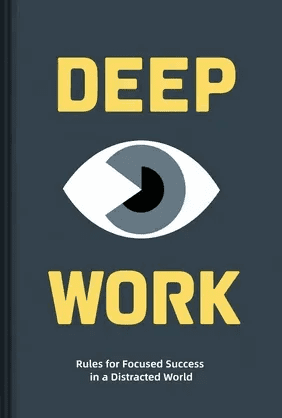
Deep Work
Cal Newport
47 Duration8 Key Points4.6 RateFAQ
Do I need to wake up at 5:00 AM to be productive?
Absolutely not. Productivity depends on how you use your awake time, not the specific hour you roll out of bed. If your natural biological rhythm makes you a night owl, forcing a 5:00 AM wake-up will leave you chronically exhausted. Focus on optimizing the first hour after you wake up naturally, whether that is 6:00 AM or 8:30 AM.
Absolutely not. Productivity depends on how you use your awake time, not the specific hour you roll out of bed. If your natural biological rhythm makes you a night owl, forcing a 5:00 AM wake-up will leave you chronically exhausted. Focus on optimizing the first hour after you wake up naturally, whether that is 6:00 AM or 8:30 AM.
How long should a morning routine take?
An effective routine can be as short as 15 minutes or as long as two hours. The ideal length depends on your lifestyle, commute, and family obligations. The goal is not to fill time, but to prime your mind and body for the day. A focused 20-minute routine consisting of hydration, stretching, and planning is far better than a scattered two-hour routine.
An effective routine can be as short as 15 minutes or as long as two hours. The ideal length depends on your lifestyle, commute, and family obligations. The goal is not to fill time, but to prime your mind and body for the day. A focused 20-minute routine consisting of hydration, stretching, and planning is far better than a scattered two-hour routine.
What if I fall off track with my morning routine?
Never miss twice. Missing one day of your routine will not destroy your progress, but letting a slip turn into a slide will. When life disrupts your morning, acknowledge it without guilt and commit to getting back on your system the very next day. Focus on executing the absolute smallest version of your routine to maintain the habit loop.
Never miss twice. Missing one day of your routine will not destroy your progress, but letting a slip turn into a slide will. When life disrupts your morning, acknowledge it without guilt and commit to getting back on your system the very next day. Focus on executing the absolute smallest version of your routine to maintain the habit loop.
Is drinking coffee immediately a bad idea?
Many neuroscientists recommend delaying your first cup of coffee for 90 to 120 minutes after waking. When you sleep, your brain clears out adenosine (a chemical that makes you feel tired). Waking up and immediately drinking caffeine blocks the remaining adenosine temporarily, which often leads to a harsh afternoon crash. Drink water first, get some natural light, and save the coffee for when you sit down to start your deep work.
Many neuroscientists recommend delaying your first cup of coffee for 90 to 120 minutes after waking. When you sleep, your brain clears out adenosine (a chemical that makes you feel tired). Waking up and immediately drinking caffeine blocks the remaining adenosine temporarily, which often leads to a harsh afternoon crash. Drink water first, get some natural light, and save the coffee for when you sit down to start your deep work.