


You have been sold the myth of the self-made billionaire. Society tells you that sheer willpower, high intelligence, and relentless grit are the only things separating you from extraordinary achievement. But when you look closely at elite athletes, tech founders, and top corporate executives, individual merit alone fails to explain their massive success.
If you are a busy professional or a college student, you need the hard facts without wading through hundreds of pages. This outliers book summary breaks down exactly how environment, timing, and culture engineer the world's highest achievers.
For those who want to grasp the core ideas of books like Outliers and many others but struggle to find the time, starting with the key insights can be a game-changer.

Get powerful ideas from books like Outliers in 15-minute audio or text summaries, perfect for learning on a tight schedule.

Download LeapAhead App now
Outliers Malcolm Gladwell Summary: The Core Premise
An "outlier" is a person or thing situated away or detached from the main body or system. In statistics, it’s an observation that lies an abnormal distance from other values. Malcolm Gladwell uses this term to describe people who reach the absolute pinnacle of their fields—figures like Bill Gates, the Beatles, and elite Canadian hockey players.
Gladwell’s core argument is that we pay too much attention to what successful people are like, and too little attention to where they are from. Success is not a standalone phenomenon. It is an ecology. High achievers are the beneficiaries of hidden advantages and extraordinary opportunities and cultural legacies that allow them to learn and work hard and make sense of the world in ways others cannot.
Complete Outliers Chapter Summary
Gladwell splits the book into two distinct sections: Opportunity and Legacy. This outliers chapter summary extracts the central thesis and primary examples from each critical chapter.
Part 1: Opportunity
Chapter 1: The Matthew Effect
Gladwell examines the rosters of elite Canadian hockey teams. A bizarre statistical anomaly emerges: disproportionate numbers of professional hockey players are born in January, February, and March.
The explanation is structural. The cutoff date for age-class hockey in Canada is January 1. A boy turning ten on January 2 plays alongside a boy turning ten on December 31. At that age, a twelve-month physical maturity gap is massive. The older, bigger kids get selected for all-star teams, receive better coaching, and play twice as many games. Early arbitrary advantages compound into lifelong success. Gladwell labels this "The Matthew Effect," based on the biblical verse: "For unto everyone that hath shall be given."
Gladwell examines the rosters of elite Canadian hockey teams. A bizarre statistical anomaly emerges: disproportionate numbers of professional hockey players are born in January, February, and March.
The explanation is structural. The cutoff date for age-class hockey in Canada is January 1. A boy turning ten on January 2 plays alongside a boy turning ten on December 31. At that age, a twelve-month physical maturity gap is massive. The older, bigger kids get selected for all-star teams, receive better coaching, and play twice as many games. Early arbitrary advantages compound into lifelong success. Gladwell labels this "The Matthew Effect," based on the biblical verse: "For unto everyone that hath shall be given."

Chapter 2: The 10,000-Hour Rule
This chapter introduces the most famous concept of the book. Gladwell asserts that achieving world-class mastery in any complex task requires roughly 10,000 hours of practice.
He uses two main examples:
This chapter introduces the most famous concept of the book. Gladwell asserts that achieving world-class mastery in any complex task requires roughly 10,000 hours of practice.
He uses two main examples:
- The Beatles: Before they invaded America, they played strip clubs in Hamburg, Germany. They were forced to play eight-hour sets, seven days a week. By the time they hit peak fame, they had performed live over 1,200 times—racking up their 10,000 hours.
- Bill Gates: Gates gained access to a time-sharing computer terminal in 1968, in eighth grade. Because of a rare combination of wealthy parents and progressive school funding, he programmed continuously for years before most college students even saw a computer.
While Gladwell popularized the 10,000-hour rule, the original science behind mastering complex skills comes from psychologist Anders Ericsson. If you are fascinated by the exact type of "deliberate practice" required to reach world-class levels, going straight to the source is highly recommended. Ericsson's work breaks down how to structure your training so that your hours actually translate into elite performance.

Peak
Anders Ericsson and Robert Pool
 48 Duration
 10 Key Points
 4.5 Rate
Chapter 3 & 4: The Trouble with Geniuses
Gladwell compares Christopher Langan (a man with an IQ of 195) to Robert Oppenheimer (the physicist who led the Manhattan Project). Both were certifiable geniuses. Oppenheimer succeeded brilliantly; Langan lived a quiet life working on a horse farm and bouncing at bars.
Why? Oppenheimer grew up in a wealthy, culturally connected environment. He developed "practical intelligence"—the social savvy to know what to say, to whom, and exactly how to get what he wanted. Langan grew up in poverty without mentorship, lacking the social capital required to navigate institutions. IQ alone does not guarantee achievement.
Gladwell compares Christopher Langan (a man with an IQ of 195) to Robert Oppenheimer (the physicist who led the Manhattan Project). Both were certifiable geniuses. Oppenheimer succeeded brilliantly; Langan lived a quiet life working on a horse farm and bouncing at bars.
Why? Oppenheimer grew up in a wealthy, culturally connected environment. He developed "practical intelligence"—the social savvy to know what to say, to whom, and exactly how to get what he wanted. Langan grew up in poverty without mentorship, lacking the social capital required to navigate institutions. IQ alone does not guarantee achievement.
The realization that raw intelligence isn't the sole predictor of success often shifts how professionals approach their own development. Instead of relying purely on innate talent, building a resilient, growth-oriented perspective becomes crucial. For a deeper dive into why some brilliant individuals stall out while others thrive through perseverance and passion, exploring the psychology of grit can be a game-changer.

Grit
Angela Duckworth
18 Duration8 Key Points4.6 RateChapter 5: The Three Lessons of Joe Flom
Joe Flom became a named partner at Skadden, Arps—one of the largest law firms in the world. Gladwell shows how Flom’s supposed disadvantages were actually golden tickets. Being a Jewish lawyer in New York in the 1930s and 40s meant getting rejected by prestigious "white-shoe" law firms. Flom was forced to take on hostile corporate takeovers—the "dirty" work elite firms refused. When corporate takeovers surged in the 1970s and 80s, Flom possessed a monopoly on the exact skill the market suddenly valued most.
Joe Flom became a named partner at Skadden, Arps—one of the largest law firms in the world. Gladwell shows how Flom’s supposed disadvantages were actually golden tickets. Being a Jewish lawyer in New York in the 1930s and 40s meant getting rejected by prestigious "white-shoe" law firms. Flom was forced to take on hostile corporate takeovers—the "dirty" work elite firms refused. When corporate takeovers surged in the 1970s and 80s, Flom possessed a monopoly on the exact skill the market suddenly valued most.
Part 2: Legacy
Chapter 6: Harlan, Kentucky
Gladwell shifts from individual opportunities to cultural legacies. He analyzes intense family feuds in the Appalachian Mountains, tracing the violence back to a "culture of honor" inherited from the herdsmen of the Scottish borderlands. This chapter proves that cultural tendencies persist for generations and dictate how we react to challenges.
Gladwell shifts from individual opportunities to cultural legacies. He analyzes intense family feuds in the Appalachian Mountains, tracing the violence back to a "culture of honor" inherited from the herdsmen of the Scottish borderlands. This chapter proves that cultural tendencies persist for generations and dictate how we react to challenges.
Chapter 7: The Ethnic Theory of Plane Crashes
Through the lens of Korean Air's high crash rate in the 1990s, Gladwell introduces the concept of the Power Distance Index (PDI)—a metric of how much a specific culture values hierarchical authority. Korean culture had a very high PDI. Subordinate co-pilots were culturally conditioned not to directly contradict their captains, even when the plane was crashing. Once the airline recognized this and enforced English-only communication (which sidestepped the hierarchical Korean language structure), their safety record transformed completely.
Through the lens of Korean Air's high crash rate in the 1990s, Gladwell introduces the concept of the Power Distance Index (PDI)—a metric of how much a specific culture values hierarchical authority. Korean culture had a very high PDI. Subordinate co-pilots were culturally conditioned not to directly contradict their captains, even when the plane was crashing. Once the airline recognized this and enforced English-only communication (which sidestepped the hierarchical Korean language structure), their safety record transformed completely.

Chapter 8: Rice Paddies and Math Tests
Why do students from Asian countries consistently dominate international math rankings? Gladwell traces it to agriculture. Cultivating rice paddies in Southern China demands roughly 3,000 hours of back-breaking, exact labor a year. It requires a highly precise, "hard work equals direct reward" mentality. This cultural legacy translates directly to the persistence required to solve complex math equations.
Why do students from Asian countries consistently dominate international math rankings? Gladwell traces it to agriculture. Cultivating rice paddies in Southern China demands roughly 3,000 hours of back-breaking, exact labor a year. It requires a highly precise, "hard work equals direct reward" mentality. This cultural legacy translates directly to the persistence required to solve complex math equations.
Chapter 9: Marita’s Bargain
Gladwell looks at KIPP Academy, a successful charter school in a poor New York neighborhood. The school succeeds by recognizing a harsh reality: the achievement gap between rich and poor students widens almost entirely during summer vacation. KIPP essentially adopts the "rice paddy" work ethic, extending school days and shortening summer breaks to overcome the structural disadvantage of poverty.
Gladwell looks at KIPP Academy, a successful charter school in a poor New York neighborhood. The school succeeds by recognizing a harsh reality: the achievement gap between rich and poor students widens almost entirely during summer vacation. KIPP essentially adopts the "rice paddy" work ethic, extending school days and shortening summer breaks to overcome the structural disadvantage of poverty.
Outliers Key Takeaways for Professionals
Extracting the philosophy is only half the battle. Here are the outliers key takeaways you can directly apply to your career, hiring practices, and personal development.
1. Audit Your Timing and Geography
Success often depends on when and where you were born. The tech titans like Steve Jobs and Bill Gates were born around 1955, making them exactly the right age (20-21) when the personal computer revolution began in 1975. Evaluate your current industry. Are you positioning yourself in a sector where your specific background and the current market timing align?
Success often depends on when and where you were born. The tech titans like Steve Jobs and Bill Gates were born around 1955, making them exactly the right age (20-21) when the personal computer revolution began in 1975. Evaluate your current industry. Are you positioning yourself in a sector where your specific background and the current market timing align?
2. Engineer Your 10,000 Hours
If you want to achieve mastery, you need time. But the 10,000-hour rule is fundamentally about resources. You cannot practice for 10,000 hours if you are working three jobs just to survive. To become world-class, you must actively organize your life, secure funding, or join organizations that allow you to focus exclusively on intense, deliberate practice.
If you want to achieve mastery, you need time. But the 10,000-hour rule is fundamentally about resources. You cannot practice for 10,000 hours if you are working three jobs just to survive. To become world-class, you must actively organize your life, secure funding, or join organizations that allow you to focus exclusively on intense, deliberate practice.
Finding the time and mental bandwidth to dedicate to this intense practice is one of the toughest challenges in today's hyper-connected, distraction-filled corporate world. To successfully engineer your own 10,000 hours, you have to master the art of blocking out the noise and focusing intensely on cognitively demanding tasks without constantly checking your phone or email.
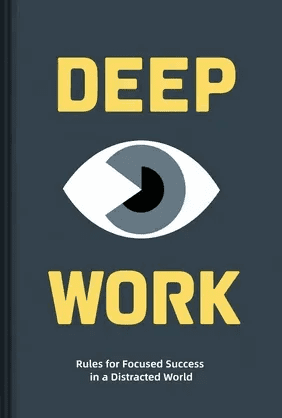
Deep Work
Cal Newport
47 Duration8 Key Points4.6 Rate3. Develop Practical Intelligence
Raw talent is a baseline requirement, but soft skills dictate your ceiling. You must learn how to read a room, advocate for yourself, and navigate complex corporate hierarchies. If you are managing teams, recognize that brilliant employees might lack these skills due to their backgrounds. Mentor them specifically on organizational navigation.
Raw talent is a baseline requirement, but soft skills dictate your ceiling. You must learn how to read a room, advocate for yourself, and navigate complex corporate hierarchies. If you are managing teams, recognize that brilliant employees might lack these skills due to their backgrounds. Mentor them specifically on organizational navigation.
4. Confront Your Cultural Legacy
Understand the unwritten rules of your upbringing. Do you have a high Power Distance Index that prevents you from speaking up in executive meetings? Do you have a "culture of honor" that makes you overly defensive during performance reviews? Recognizing your inherited behavioral patterns is the first step to overriding them when they don't serve your professional goals.
Understand the unwritten rules of your upbringing. Do you have a high Power Distance Index that prevents you from speaking up in executive meetings? Do you have a "culture of honor" that makes you overly defensive during performance reviews? Recognizing your inherited behavioral patterns is the first step to overriding them when they don't serve your professional goals.
Applying these takeaways consistently requires a steady stream of new ideas. If your reading list is piling up, a great way to stay ahead is by absorbing the core lessons from influential books in a more manageable format.
Turn your commute into a productive learning session by listening to key insights from the world's best non-fiction books in just 15 minutes.
Download LeapAhead App now
Objective Outliers Book Review
When evaluating its place on your bookshelf, a fair outliers book review must address both its brilliance and its blind spots.
The book is required reading for managers, educators, and ambitious professionals. It shatters the toxic illusion of the self-made billionaire, replacing it with a far more accurate, empathetic understanding of how human potential is realized. Gladwell’s storytelling is sharp, keeping the pacing brisk. Whether you buy the paperback at Barnes & Noble or listen to the Audible version on your commute, it fundamentally shifts how you view talent.
Critics often target the 10,000-hour rule, arguing that Gladwell minimizes the role of genetic talent. While practice is mandatory, later sports science and psychology studies show that genetic predispositions do dictate the ceiling of that practice. Gladwell himself clarifies that you must have a baseline level of talent to even enter the game (you need to be tall to play professional basketball), but the exact cutoff between "good" and "great" is determined by hours of practice and timely opportunities.
Book summaries are a fantastic way to quickly absorb core frameworks, but they simply cannot capture the rich, narrative storytelling that makes Gladwell's writing so universally acclaimed. If this breakdown has shifted your perspective on how extraordinary achievement is truly engineered in the United States and beyond, reading the full, unabridged text is an absolute must.

Outliers
Malcolm Gladwell
43 Duration8 Key Points4.5 RateFAQ
What is the main point of Outliers?
The main point is that extraordinary success is never just about individual grit or high IQ. It is the product of a unique combination of hidden advantages, cultural background, demographic timing, and accumulating 10,000 hours of practice through highly favorable circumstances.
The main point is that extraordinary success is never just about individual grit or high IQ. It is the product of a unique combination of hidden advantages, cultural background, demographic timing, and accumulating 10,000 hours of practice through highly favorable circumstances.
Is the 10,000-hour rule actually true?
It is a useful heuristic, not a strict scientific law. Researchers like Anders Ericsson (whose work Gladwell cited) noted that 10,000 is an arbitrary number and the type of practice ("deliberate practice") matters far more than just logging hours. However, the underlying principle holds: world-class mastery requires massive, uninterrupted blocks of dedicated time.
It is a useful heuristic, not a strict scientific law. Researchers like Anders Ericsson (whose work Gladwell cited) noted that 10,000 is an arbitrary number and the type of practice ("deliberate practice") matters far more than just logging hours. However, the underlying principle holds: world-class mastery requires massive, uninterrupted blocks of dedicated time.
How can I apply Outliers to my own career?
Stop relying solely on hard work. Focus on finding your "Hamburg"—an environment that forces you to practice intensely. Actively build "practical intelligence" by networking and learning to navigate corporate structures. Finally, look for structural shifts in your industry and position yourself to take advantage of them before the crowd does.
Stop relying solely on hard work. Focus on finding your "Hamburg"—an environment that forces you to practice intensely. Actively build "practical intelligence" by networking and learning to navigate corporate structures. Finally, look for structural shifts in your industry and position yourself to take advantage of them before the crowd does.
Who should read Outliers?
It is highly recommended for parents, educators, business leaders, and college students. If you dictate policy, hire talent, or want to strategically map out your own career trajectory, understanding the structural rules of success is non-negotiable.
It is highly recommended for parents, educators, business leaders, and college students. If you dictate policy, hire talent, or want to strategically map out your own career trajectory, understanding the structural rules of success is non-negotiable.