

You stare at your monitor knowing that quarterly report is due by 5 PM. Instead of writing the first paragraph, you check Slack, refresh your email, and suddenly an hour has vanished. The cycle of putting things off, followed by blind panic as deadlines loom, is mentally exhausting and threatens your career growth.
Delaying critical tasks is rarely about laziness. It is an emotional regulation problem. When a project feels vague, difficult, or boring, your brain perceives it as a threat and seeks immediate comfort through low-effort activities. To break this cycle, you do not need more willpower. You need a frictionless system.
The Reality of Procrastination in the Workplace
Corporate environments are breeding grounds for delayed execution. Ambiguous project descriptions, overlapping priorities, and a constant barrage of communication make it incredibly easy to hide in "busywork" rather than tackling needle-moving tasks.
Understanding why you delay is the first step to fixing the problem. Most professional procrastination falls into three categories:
- Task Ambiguity: You do not know exactly what the first step is, so you do nothing.
- Perfectionism Fear: You worry the output will not meet expectations, so you delay starting until the adrenaline of a looming deadline forces your hand.
- Overwhelm: The scale of the project is massive. The sheer size of a six-month product launch causes paralysis.
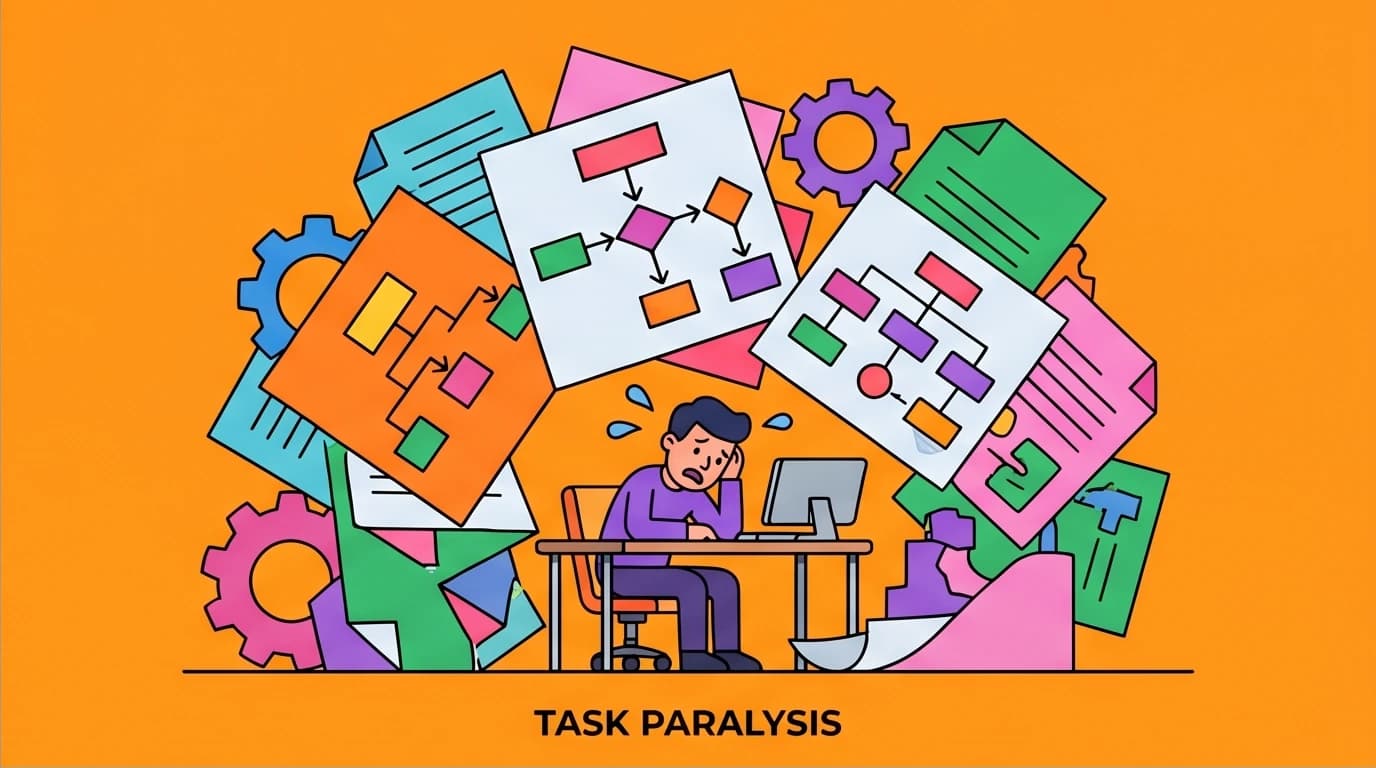
When you recognize these triggers, you can stop blaming your work ethic and start adjusting your workflow.
How to Focus at Work When Everything is Distracting
Modern office culture—whether in a high-rise cubicle or a remote home office—demands constant connectivity. If you want to know how to focus at work, you must first build a fortress around your attention.
Implement Ruthless Workplace Distraction Solutions
You cannot outsmart bad environmental design. If your phone buzzes every three minutes, your brain will constantly break focus. Effective workplace distraction solutions require active boundary setting:
1. Go Asynchronous by Default
Treat instant messaging platforms like Slack or Microsoft Teams as asynchronous tools. Change your status to "Deep Work - Checking messages at 11 AM and 3 PM." Turn off desktop notifications and badge icons. Most "urgent" requests can wait two hours.
Treat instant messaging platforms like Slack or Microsoft Teams as asynchronous tools. Change your status to "Deep Work - Checking messages at 11 AM and 3 PM." Turn off desktop notifications and badge icons. Most "urgent" requests can wait two hours.
2. The "Sight-Line" Rule for Devices
If your smartphone is on your desk, your brain expends passive energy ignoring it. Put your phone inside a drawer or in another room if you work remotely. Out of sight entirely removes the friction of resisting the urge to scroll.
If your smartphone is on your desk, your brain expends passive energy ignoring it. Put your phone inside a drawer or in another room if you work remotely. Out of sight entirely removes the friction of resisting the urge to scroll.
3. Block the Digital Exits
When facing a tough spreadsheet, your instinct will be to open a new tab and check the news. Use website blockers during your core working hours. Denying yourself the escape route forces you to sit with the discomfort of the task until you start.
When facing a tough spreadsheet, your instinct will be to open a new tab and check the news. Use website blockers during your core working hours. Denying yourself the escape route forces you to sit with the discomfort of the task until you start.
If you find yourself constantly battling digital interruptions despite trying to set boundaries, you might need a deeper strategy for managing your attention. Nir Eyal offers a brilliant look at the psychology behind why we get pulled away from our desks and how to design a work life that keeps you focused. His insights on mastering internal triggers are a game-changer for anyone struggling to stay on task in a noisy, modern corporate environment.
Indistractable
Nir Eyal
 23 Duration
 10 Key Points
 4.5 Rate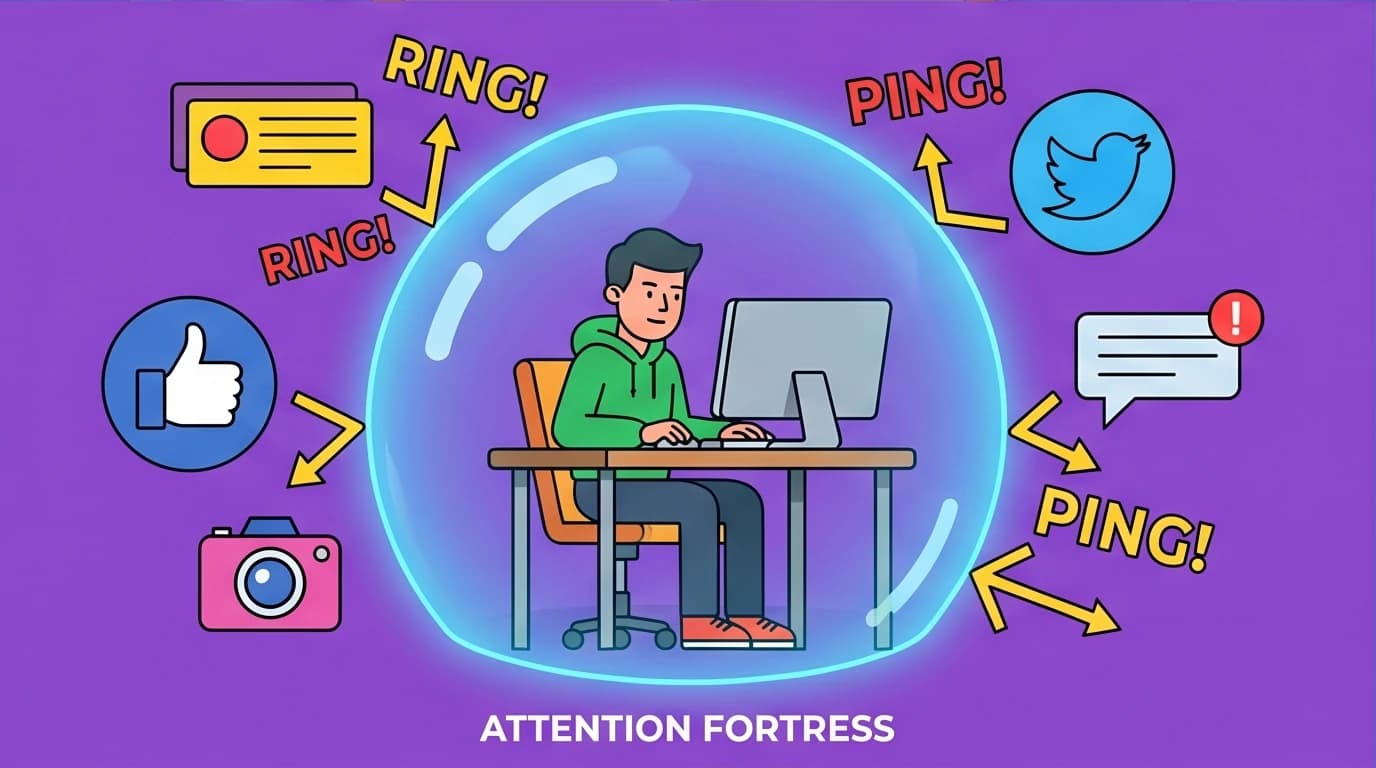
The 5-Minute Activation Threshold
Action precedes motivation, not the other way around. When dreading a task, commit to working on it for exactly five minutes. Tell yourself you can stop after five minutes if you still want to. In most cases, the initial friction of starting is the only real barrier. Once you begin typing, researching, or organizing the data, momentum takes over.
Applying the Getting Things Done Methodology
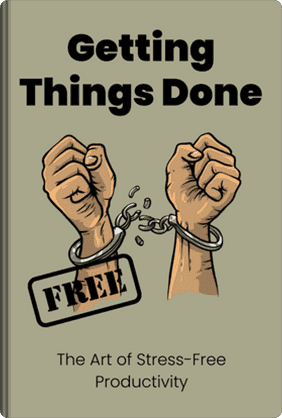
David Allen’s getting things done methodology (GTD) is one of the most effective frameworks for corporate professionals drowning in tasks. The core premise is simple: your mind is for having ideas, not holding them. Holding onto mental to-do lists creates background anxiety that fuels procrastination.
Here is how to apply GTD specifically to stop stalling at your desk:
1. Capture Everything Immediately
Stop using your brain as a storage drive. If your boss asks for a quick summary by Friday, write it down immediately in a trusted system (Asana, a physical notebook, or Apple Notes). When you trust your external system, your brain relaxes, freeing up cognitive capacity for actual work.
2. Clarify the "Next Physical Action"
This is the ultimate procrastination killer. "Plan marketing strategy" is a terrible to-do list item. It is vague and intimidating. GTD demands you define the absolute next physical action.
Instead of "Plan marketing strategy," write: "Draft an email to Sarah asking for the Q2 budget figures." You cannot procrastinate on drafting a simple email the way you can procrastinate on a massive strategy document.
Instead of "Plan marketing strategy," write: "Draft an email to Sarah asking for the Q2 budget figures." You cannot procrastinate on drafting a simple email the way you can procrastinate on a massive strategy document.
3. The 2-Minute Rule
If a task takes less than two minutes to complete—approving an invoice, replying to a scheduling email, organizing a file folder—do it immediately. Do not log it. Do not schedule it. Clearing micro-tasks rapidly prevents them from piling up and causing systemic overwhelm.
While the steps above offer a solid introduction to this methodology, mastering the entire workflow can completely transform your career trajectory. If you want to dive deeper into the exact system that has helped millions of professionals clear their minds and organize their deliverables, checking out David Allen's original guide is highly recommended. It provides a comprehensive, step-by-step blueprint for capturing ideas and executing them without that constant background hum of anxiety.
Getting Things Done
David Allen
43 Duration7 Key Points4.5 RateStrategic Frameworks for High Performance
Fixing your environment and clarifying your tasks will get you to the starting line. To maintain high performance without burning out, you need daily execution frameworks.
Eat the Frog First
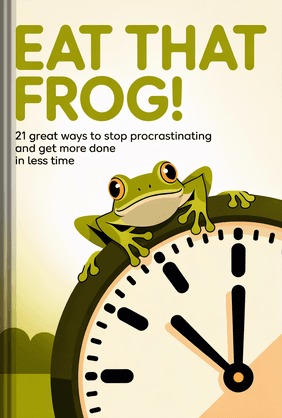
Coined by Brian Tracy, the concept is simple: tackle your largest, most anxiety-inducing task (the frog) first thing in the morning. Do not check emails. Do not attend sync meetings. Spend the first 60 to 90 minutes of your workday executing your most critical priority. Once the frog is eaten, the rest of your day feels lighter, and the urge to procrastinate plummets.
Brian Tracy’s concept of prioritizing your most daunting project is incredibly powerful when put into daily practice. If you are looking for a complete roadmap to breaking down complex assignments and building a habit of relentless execution, reading Tracy’s foundational book on the subject will give you the exact tools you need. It is a quick but profound read that will fundamentally shift how you approach your morning routine and daily deadlines.
Eat That Frog! 21 Great Ways to Stop Procrastinating and Get More Done in Less Time
Brian Tracy
20 Duration9 Key Points4.7 Rate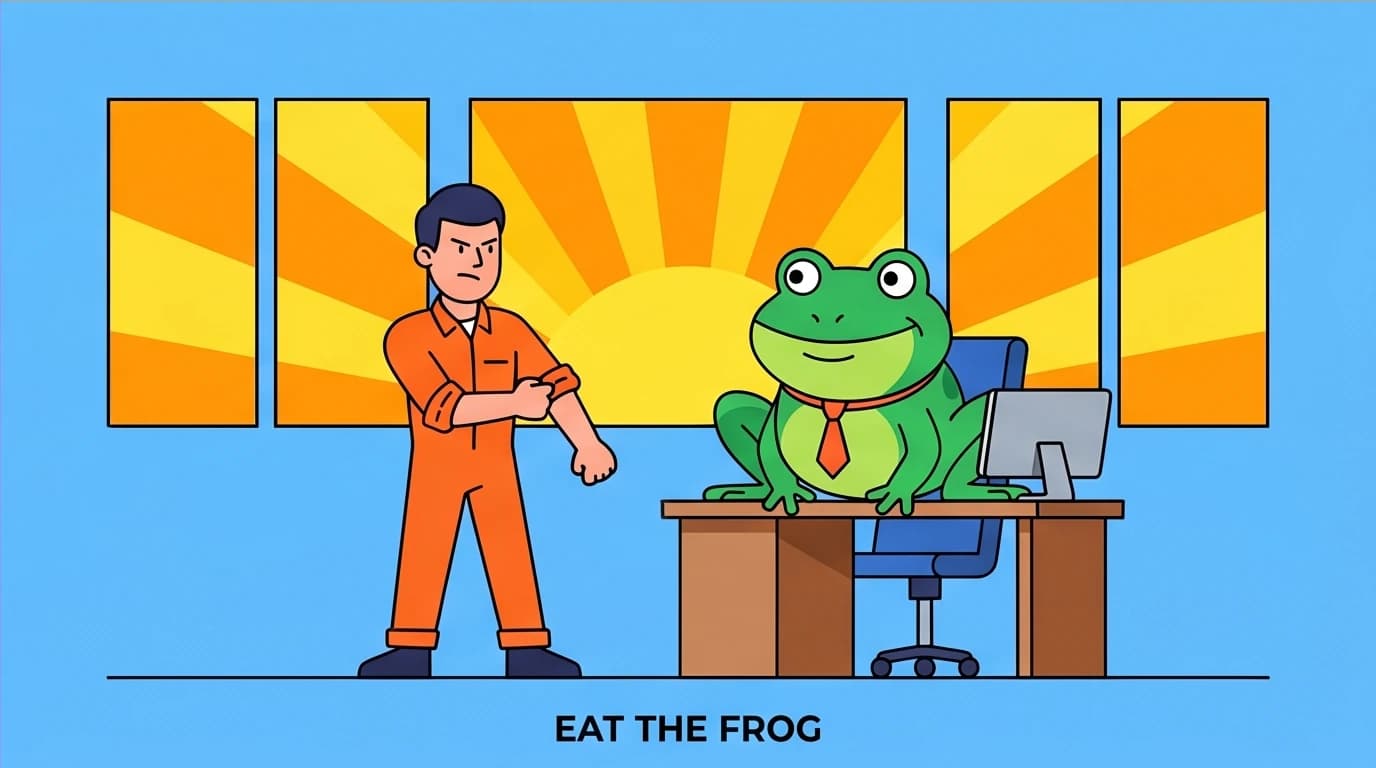
Timeboxing Your Calendar
A to-do list without a schedule is just a wish list. Look at your calendar and assign specific blocks of time to specific tasks.
From 9:00 AM to 10:30 AM, you write the project proposal. During that 90-minute block, nothing else exists. If a colleague asks for a favor, you look at your calendar and say, "I am booked until 10:30, I can look at this at 11:00." Timeboxing transforms vague intentions into concrete appointments with yourself.
From 9:00 AM to 10:30 AM, you write the project proposal. During that 90-minute block, nothing else exists. If a colleague asks for a favor, you look at your calendar and say, "I am booked until 10:30, I can look at this at 11:00." Timeboxing transforms vague intentions into concrete appointments with yourself.
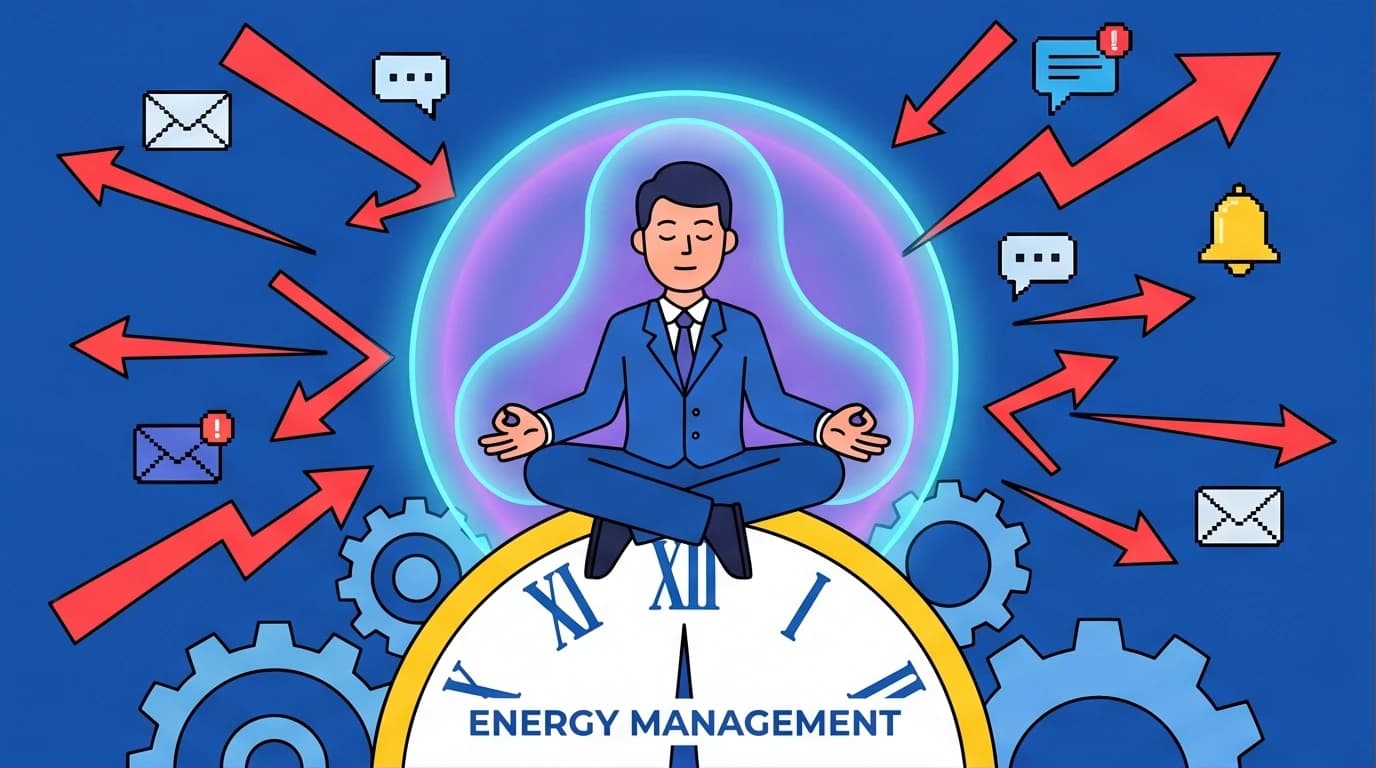
Energy Mapping Over Time Management
Not all hours are created equal. You might have ten hours at your desk, but only three hours of peak cognitive energy. Map your energy levels. If you are sharpest between 8 AM and 11 AM, guard that time fiercely for analytical or creative work. Leave low-energy tasks—like organizing spreadsheets, submitting expense reports, or attending status meetings—for the afternoon slump at 3 PM. Procrastination often strikes when you try to force high-level thinking during low-energy hours.
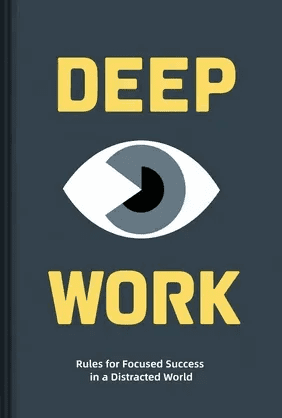
Once you have mastered energy mapping and timeboxing, the next step is maximizing the quality of your focus during those peak hours. Cultivating the ability to perform cognitively demanding tasks without distraction is one of the most valuable skills in today's economy. Cal Newport's groundbreaking exploration of focused concentration is essential reading if you want to push past superficial busywork, tap into your highest level of productivity, and achieve truly meaningful professional results.
Deep Work
Cal Newport
47 Duration8 Key Points4.6 RateWhile diving deep into these books is incredibly valuable, the thought of adding four more titles to your reading list can feel overwhelming—especially when you're already fighting procrastination. For a more accessible way to start applying these powerful concepts, you can get the key insights from these books and thousands more in a condensed format.

Absorb the core lessons from authors like Cal Newport and David Allen in just 15 minutes, turning your commute or workout into productive learning time.
 LeapAhead
Common Pitfalls to Avoid
As you rebuild your work habits, watch out for these subtle traps that look like productivity but are actually procrastination in disguise.
Productive Procrastination: Reorganizing your desk, color-coding your inbox, or watching three YouTube tutorials on productivity software. These feel like work, but they are avoidance tactics. If it does not directly advance your core deliverables, it is procrastination.
Waiting for the "Right Mood": You will rarely feel inspired to audit financial records or draft standard operating procedures. Professionals execute regardless of mood. Rely on your systems, your timeboxes, and your next-action steps, not fleeting inspiration.
The Multitasking Illusion: Switching between drafting a report, answering emails, and listening to a team call guarantees you will do all three poorly. Multitasking fractures your attention and increases the time it takes to finish anything. Single-tasking is the true shortcut.
Reclaiming Your Career Trajectory
Consistently delaying work does more than just cause panic at 11 PM on a Thursday. It chips away at your professional reputation and your self-trust. By implementing these strategies—defining clear next actions, blocking digital escapes, and managing your energy—you transition from a reactive employee to a proactive professional. Overcoming procrastination at work is an ongoing practice of systemizing your day so that doing the right thing becomes easier than putting it off.
FAQ
How do I handle sudden ad-hoc requests that ruin my daily plan?
Assess the true urgency. Most "urgent" requests are just poorly planned emergencies from someone else. If it genuinely requires immediate action (e.g., a critical server outage or a direct request from the CEO), pause your timebox, handle the issue, and return. If it is not a true emergency, capture it in your system, negotiate a deadline ("I can get this to you by tomorrow afternoon"), and stay on your current task.
Assess the true urgency. Most "urgent" requests are just poorly planned emergencies from someone else. If it genuinely requires immediate action (e.g., a critical server outage or a direct request from the CEO), pause your timebox, handle the issue, and return. If it is not a true emergency, capture it in your system, negotiate a deadline ("I can get this to you by tomorrow afternoon"), and stay on your current task.
Is chronic procrastination a sign that I need a new job?
Not necessarily, but it can be a symptom of misalignment. If you apply robust productivity systems and still feel severe resistance to every task, you may be experiencing professional burnout or a fundamental lack of interest in your role. Evaluate whether the procrastination stems from poor habits or a deeper dissatisfaction with your career path.
Not necessarily, but it can be a symptom of misalignment. If you apply robust productivity systems and still feel severe resistance to every task, you may be experiencing professional burnout or a fundamental lack of interest in your role. Evaluate whether the procrastination stems from poor habits or a deeper dissatisfaction with your career path.
What if I work remotely and struggle with distractions at home?
Remote work blurs the boundary between professional and personal life. You must artificially recreate the "office" environment. Establish a dedicated workspace used only for work. Implement a "fake commute"—like taking a 10-minute walk around the block before sitting at your desk—to signal to your brain that the workday has started. Communicate strict boundaries with family members or roommates during your focus hours.
Remote work blurs the boundary between professional and personal life. You must artificially recreate the "office" environment. Establish a dedicated workspace used only for work. Implement a "fake commute"—like taking a 10-minute walk around the block before sitting at your desk—to signal to your brain that the workday has started. Communicate strict boundaries with family members or roommates during your focus hours.
Can listening to music help or hurt my focus?
It depends entirely on the type of music and the task. For deep, linguistically demanding tasks (like writing or analyzing complex contracts), music with lyrics usually impairs cognitive performance because your brain tries to process the words. For these tasks, choose ambient noise, binaural beats, or classical music. For repetitive, administrative tasks, your favorite upbeat music can actually increase dopamine and keep you moving.
It depends entirely on the type of music and the task. For deep, linguistically demanding tasks (like writing or analyzing complex contracts), music with lyrics usually impairs cognitive performance because your brain tries to process the words. For these tasks, choose ambient noise, binaural beats, or classical music. For repetitive, administrative tasks, your favorite upbeat music can actually increase dopamine and keep you moving.