

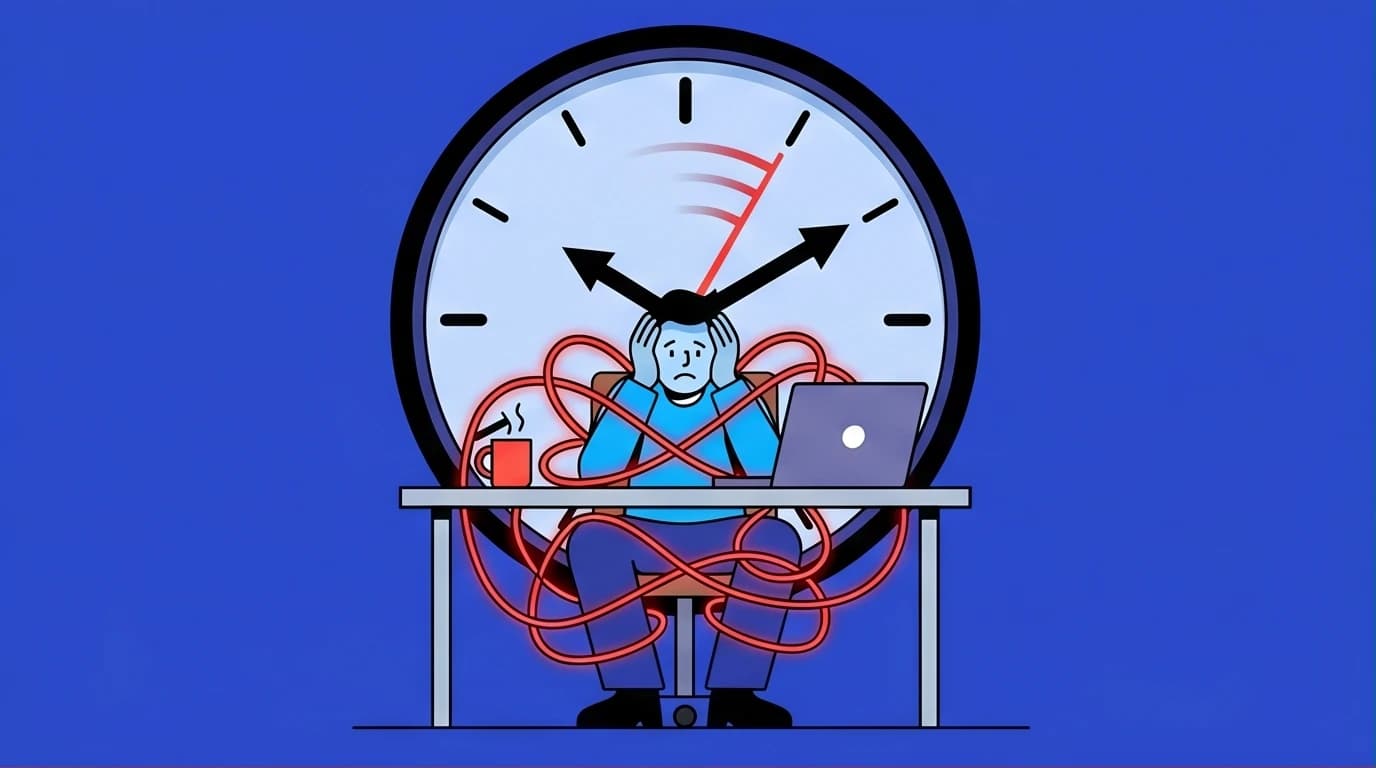
You sit at your desk, fully aware of the deadline looming over you. Instead of opening the document or starting the project, you find yourself organizing your digital files, browsing Amazon, or suddenly deciding the kitchen needs a deep clean. With every passing minute, a heavy, sinking guilt sets in, and you secretly wonder if you are just fundamentally flawed or incapable of hard work.
Is Procrastination Laziness?
The fastest way to stay trapped in a cycle of delay is to label yourself as lazy.
If you are wondering, "is procrastination laziness," the answer is a definitive no. Laziness is characterized by a complete lack of desire to exert effort, accompanied by a feeling of contentment. A truly lazy person does nothing and feels perfectly fine about it.
You, on the other hand, are deeply bothered by your inaction. You want to do the work. You care about the outcome. Yet, you feel paralyzed. That paralysis is accompanied by shame, stress, and frustration. This severe emotional tax proves you are not dealing with laziness; you are dealing with an internal psychological block.
The Psychology of Procrastination: An Emotion Regulation Problem
To understand why you delay important tasks, you have to look at the psychology of procrastination. Research over the last decade has fundamentally shifted how we view this behavior. It is not a time-management issue. It is an emotion-management issue.
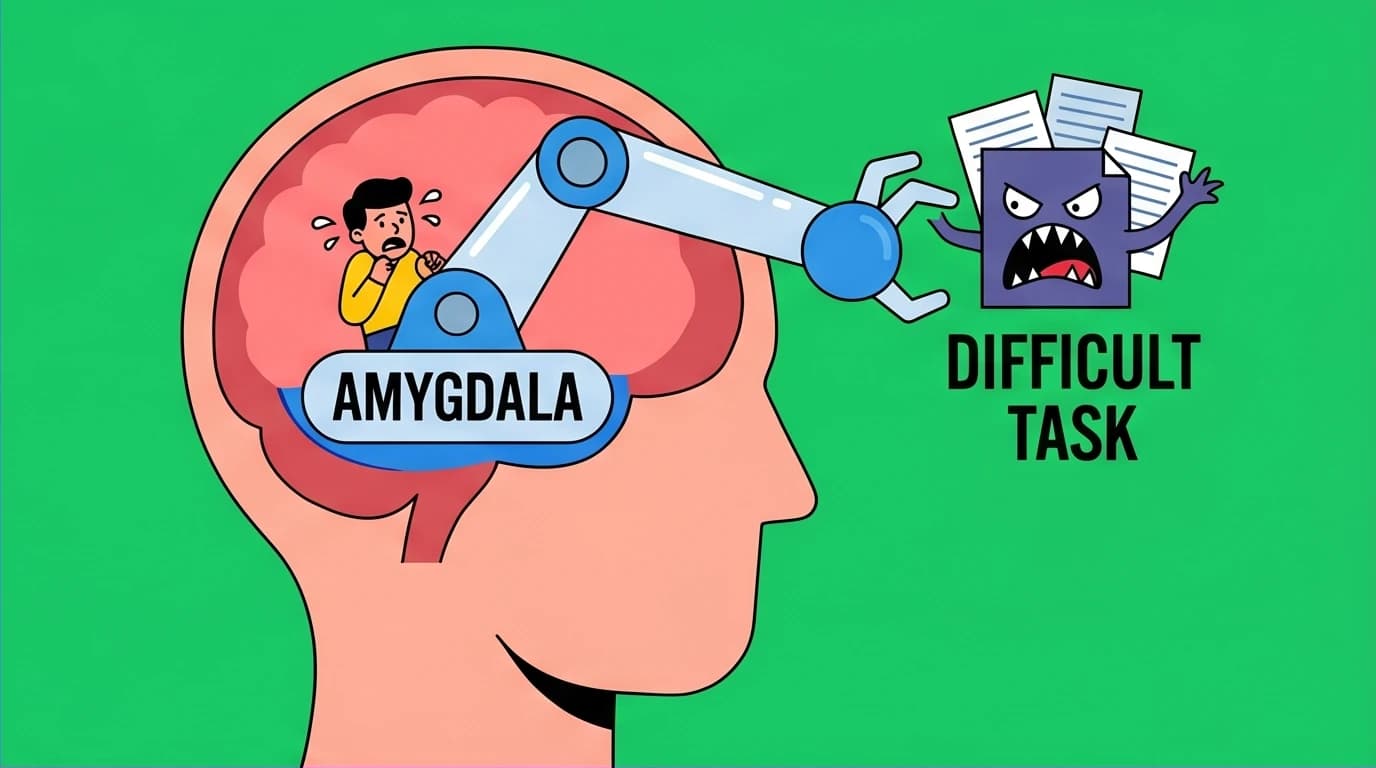
When you think about a task you need to do—like filing taxes, writing a complex report, or having a difficult conversation—your brain quickly assesses the emotions tied to that task. If the task triggers feelings of dread, incompetence, confusion, or fear, your amygdala (the threat-detecting center of your brain) lights up.
Your brain treats this negative emotion as a literal, immediate threat. Its natural evolutionary response is to protect you by removing the threat. How does it do that? By steering your attention toward something safe and rewarding, like scrolling social media, checking the fridge, or reading a book.
You trade long-term success for short-term mood repair. You feel better for exactly five minutes, but the root problem remains, and the guilt compounds.
If you find yourself fascinated by the hidden emotional triggers driving your delays, you might want to explore the science behind it a bit deeper. Understanding the exact neurological and psychological variables that cause you to put things off can be incredibly validating. For a comprehensive look at how our brains calculate the value of working now versus later, there is a fantastic read that breaks down this exact phenomenon. It dives into decades of research to explain why we self-sabotage and how to outsmart our own biological hardwiring.
And if the thought of tackling a full book feels like another task to put off, you're not alone. A great way to absorb these powerful ideas without the heavy lifting is by listening to a summary.


Listen to the core ideas from books like 'The Procrastination Equation' in just 15 minutes, turning your commute or a short break into a productive learning session.
 LeapAhead
The Procrastination Equation
Piers Steel, Ph.D.
 16 Duration
 7 Key Points
 4.3 Rate
The Deep-Rooted Causes of Procrastination
If we view procrastination as a coping mechanism for negative emotions, we must identify exactly what emotions we are running from. The core causes of procrastination usually fall into a few specific psychological buckets.
1. Perfectionism and the Fear of Failure
Many chronic delayers are actually extreme perfectionists. If your internal standard for a project is impossibly high, starting the project feels incredibly dangerous. What if you put in the effort and it still falls short? To protect your ego and your self-worth, your brain simply refuses to start. You subconsciously decide that it is better to fail because you rushed it at the last minute than to try your absolute best and still be rejected.
For recovering perfectionists, letting go of the need to be flawless is often the hardest step. You might be completely unaware of how many invisible, unrealistic rules you have created for yourself until someone points them out. If you are tired of abandoning projects because they aren't turning out exactly as you envisioned, diving into literature on goal completion can be a game changer. One incredibly practical and humorous book tackles this exact pain point, showing you why accepting imperfection—and even planning for it—is the ultimate secret to finally getting things done.

Finish
Jon Acuff
17 Duration7 Key Points4.6 Rate2. Task Ambiguity and Cognitive Overload
If a task lacks clear boundaries, your brain perceives it as a heavy cognitive load. A to-do list item like "Work on business plan" is a massive, ambiguous threat. Your brain does not know what step one looks like, how long it will take, or what success looks like. Faced with this fog, the brain defaults to the path of least resistance: doing nothing.
3. The "Future Self" Disconnect
Brain imaging studies show an incredible phenomenon when people think about their future selves. For many, the neural pathways that light up are the exact same ones that light up when thinking about a complete stranger.
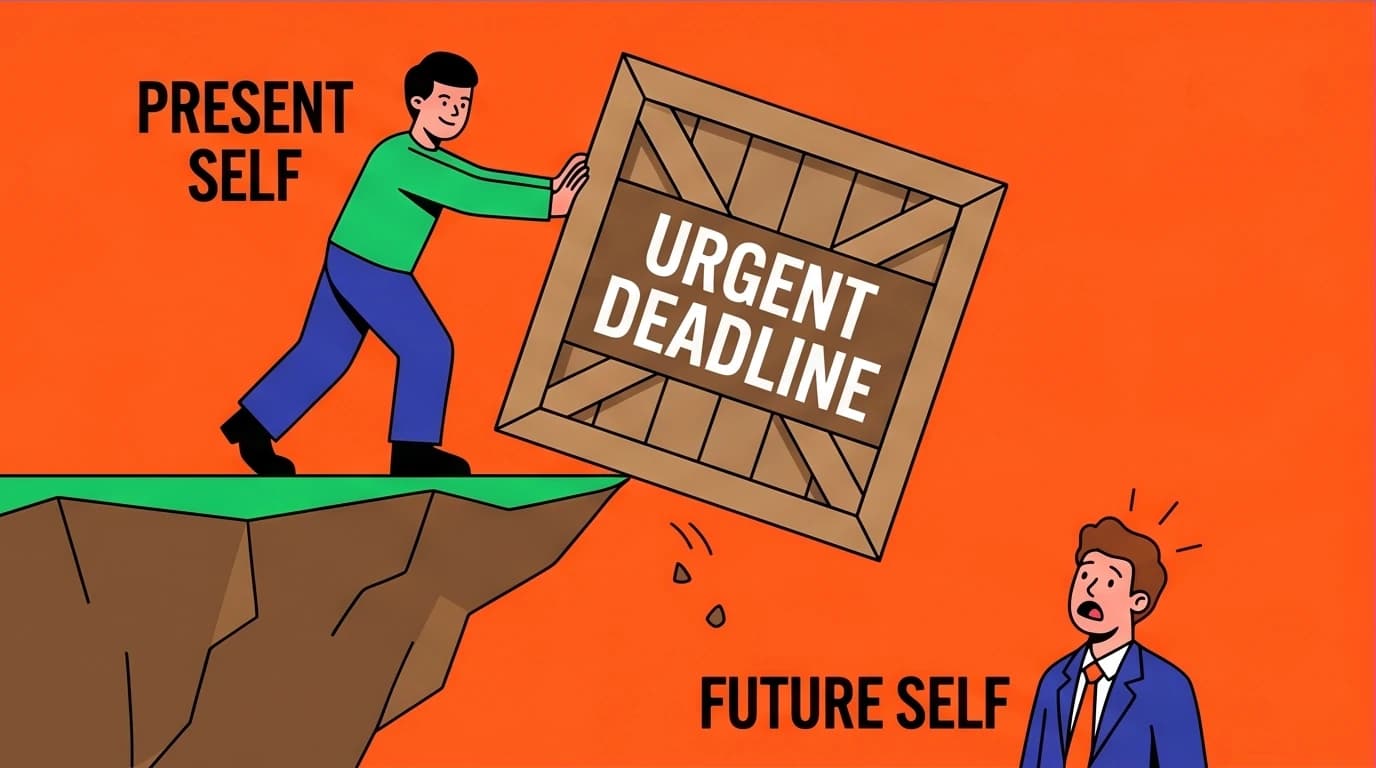
When you delay a task, you are fully aware that someone will have to suffer the consequences of a rushed deadline. But to your brain, that "someone" feels like a stranger. You push the burden onto "Tomorrow You," prioritizing the comfort of "Present You."
When It Becomes Chronic Procrastination
Almost everyone puts things off occasionally. But chronic procrastination is a different beast. It happens when delaying tasks becomes your default operating system, bleeding into every area of your life—from paying bills late to delaying medical checkups and sacrificing personal relationships.
Chronic delayers live in a constant state of low-grade anxiety. Over time, this erodes self-esteem. You stop trusting yourself to keep the promises you make to yourself.
In some cases, this chronic pattern is heavily linked to underlying neurodivergence, such as ADHD (Attention-Deficit/Hyperactivity Disorder). People with ADHD struggle with executive dysfunction, making the activation energy required to start a boring or under-stimulating task feel physically painful. If your delays are severe enough to threaten your job, your health, or your finances, it is worth looking beyond simple emotion regulation and consulting a mental health professional.
When procrastination begins to affect your career, it's crucial to address it head-on with targeted strategies. For those facing this challenge, focusing on the professional environment can make all the difference.
When procrastination escalates from an occasional annoyance into a chronic, daily struggle, it usually means your relationship with work and self-worth has become deeply fractured. You do not just need a new calendar app; you need a fundamental shift in how you talk to yourself and structure your life. If you are looking to break free from the constant cycle of guilt, anxiety, and last-minute panic, consider picking up a behavioral guide designed specifically to reverse this dynamic. The right book can offer strategic, guilt-free methods to rebuild your focus and start trusting yourself again.
The Now Habit
Neil Fiore, Ph.D.
48 Duration8 Key Points4.6 RateMental Frameworks for Change
Knowing the psychology behind your behavior is only half the battle. To break the cycle, you need actionable frameworks that bypass your brain's threat-detection system.
1. Practice Self-Forgiveness
The guilt you feel over past procrastination is the exact negative emotion that will cause you to procrastinate again tomorrow. Studies show that students who forgive themselves for procrastinating before an exam are significantly less likely to procrastinate before the next one. Drop the self-flagellation. Acknowledge the delay, forgive yourself, and wipe the emotional slate clean.
2. Lower the Bar for Entry
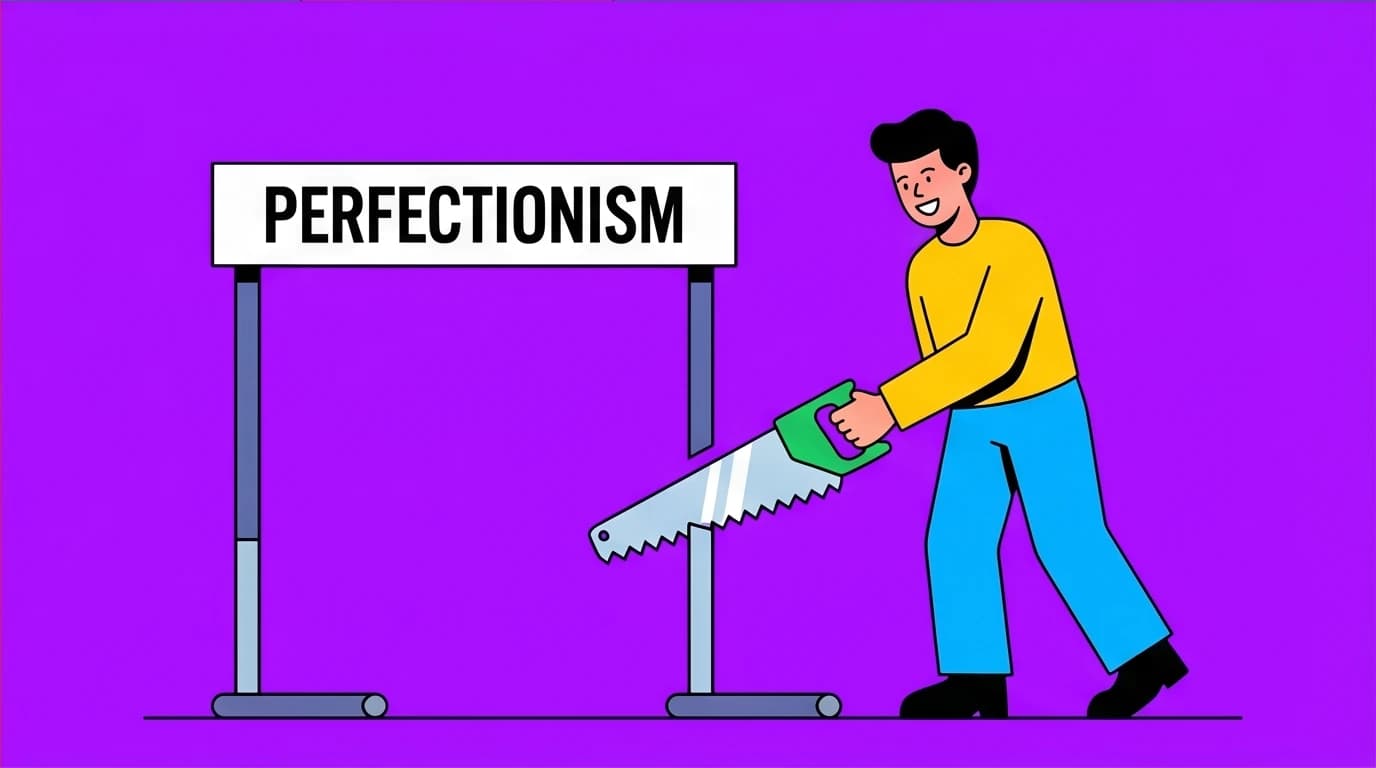
If perfectionism is keeping you stuck, give yourself permission to do a terrible job. Write a rough draft that makes no sense. Run just half a mile instead of three. Read one page of the textbook. By deliberately lowering the stakes, you remove the fear of failure, tricking your amygdala into letting you start. Once you start, momentum usually takes over.
3. Focus on Action, Not Completion
When you focus on finishing a massive project, the cognitive weight is crushing. Shift your entire focus to mere activation. Commit to working on the dreaded task for just five minutes. Tell yourself, "I only have to do this for five minutes, and then I can stop if I want to." Most of the time, the dread is entirely wrapped up in the anticipation of the work. Once you are actually doing it, the emotional threat vanishes.
These mental shifts are foundational, but they work best when paired with concrete systems. To build on this momentum, it can be helpful to implement structured approaches that break down intimidating tasks into manageable steps.
Restructuring your habits around activation rather than completion is a powerful strategy, but it takes practice to master. If you want to learn exactly how to shrink your goals down into manageable, unintimidating actions, exploring the science of behavior design is a great next step. By understanding how to anchor small behaviors to your existing routines, you can completely bypass the brain's threat-detection system. If you want a proven, step-by-step methodology for building lasting momentum without relying on willpower, there is an excellent resource that will teach you how to start remarkably small.
Building these new mental habits often starts with learning from experts, but finding the time to read when you're already drained can feel like another impossible task.
Get key insights from bestselling books on habit formation and productivity in 15-minute audio or text summaries, perfect for learning when you're low on energy.
LeapAhead
Tiny Habits
BJ Fogg, Ph.D.
40 Duration8 Key Points4.7 RateFAQ
Why do I procrastinate even when the task is incredibly easy?
Because the emotional block is completely divorced from the physical difficulty of the task. An easy task, like replying to a two-sentence email, might carry heavy emotional weight if it involves conflict, setting a boundary, or admitting a mistake. You are avoiding the feeling attached to the task, not the labor itself.
Because the emotional block is completely divorced from the physical difficulty of the task. An easy task, like replying to a two-sentence email, might carry heavy emotional weight if it involves conflict, setting a boundary, or admitting a mistake. You are avoiding the feeling attached to the task, not the labor itself.
Can procrastination be cured permanently?
No, because seeking comfort and avoiding stress are hardwired human survival traits. However, it can be aggressively managed. Once you recognize that your desire to delay is just an emotional reflex—like flinching from a hot stove—you can pause, address the underlying emotion, and choose to act anyway.
No, because seeking comfort and avoiding stress are hardwired human survival traits. However, it can be aggressively managed. Once you recognize that your desire to delay is just an emotional reflex—like flinching from a hot stove—you can pause, address the underlying emotion, and choose to act anyway.
Is it possible to procrastinate productively?
Yes. "Productive procrastination" happens when you avoid your main, intimidating task by doing other useful but lower-priority tasks (like cleaning your entire house instead of writing an essay). While your environment gets cleaner, the core anxiety remains unaddressed. It is a slightly better coping mechanism, but it is still a coping mechanism.
Yes. "Productive procrastination" happens when you avoid your main, intimidating task by doing other useful but lower-priority tasks (like cleaning your entire house instead of writing an essay). While your environment gets cleaner, the core anxiety remains unaddressed. It is a slightly better coping mechanism, but it is still a coping mechanism.
How do I know if I need professional help for my procrastination?
If your delays are causing severe real-world consequences—such as job losses, failing grades, massive debt from unpaid bills, or deep depression—you should speak with a therapist or psychiatrist. They can help identify if your behavior is rooted in severe clinical anxiety, depression, or ADHD, which may require specific therapies or medication.
If your delays are causing severe real-world consequences—such as job losses, failing grades, massive debt from unpaid bills, or deep depression—you should speak with a therapist or psychiatrist. They can help identify if your behavior is rooted in severe clinical anxiety, depression, or ADHD, which may require specific therapies or medication.