


You sit at your desk, fully aware of the deadline, yet you physically cannot force yourself to start. It feels like an invisible wall standing between you and your keyboard. Telling yourself to "just do it" only intensifies the mental gridlock.
The Mechanics of Task Initiation Failure
We must separate poor discipline from executive dysfunction. When you stare at a massive, unstructured project, your brain perceives the multi-step nature of the task as a threat. The mental energy required to figure out step one is simply too high.
This often triggers a state closely tied to

adhd paralysis productivity drops. You end up doom-scrolling on your phone or organizing your bookshelf. You choose these alternative actions because they offer an immediate, low-friction dopamine hit. You are not lazy. Your mental transmission is stuck in neutral.If your brain is already seeking short, low-effort rewards, you can leverage that habit for productive learning instead of mindless scrolling.


LeapAhead

This app adapts to a fragmented attention span by summarizing key ideas from bestselling books on productivity and focus into 15-minute audio or text sessions.
To break this cycle, you must remove the burden of choice. You need structured systems that dictate exactly when and how you act, lowering the threshold for action so much that your brain doesn't have time to resist.
Understanding the 'why' behind this avoidance is a crucial first step. If you often find yourself wondering whether your behavior is simple laziness or a more complex psychological pattern, exploring the root causes can be incredibly enlightening.
Core Time Management Techniques for Procrastination
The 2 Minute Rule: Destroying the Activation Barrier
The absolute hardest part of any difficult task is the first 120 seconds. The
2 minute rule is a mechanical hack designed to slip past your brain's alarm system. The rule dictates that you scale down your required effort until the task takes two minutes or less to complete.If you need to draft a ten-page financial report, your only goal is to open a new document and write a single sentence. If you need to clean your entire apartment, your goal is to throw away one piece of trash.
Give yourself full permission to stop after those two minutes. The secret here is physics: an object in motion stays in motion. Once you cross that initial activation barrier, the physical momentum usually carries you forward. Your brain realizes the threat of the task was a mirage. Even if you do stop after two minutes, you have successfully broken the paralysis cycle.
If you found the two-minute rule eye-opening, you might want to dive deeper into how tiny changes can completely rewire your brain's approach to task initiation. Rather than relying on motivation, creating rigid, foolproof systems is the absolute best way to bypass executive dysfunction. For a masterclass in building these frictionless routines, there is one standout book that breaks down exactly how to make good habits inevitable and bad habits impossible. It's an essential read for anyone trying to stop fighting their own brain.

Atomic Habits
James Clear
 26 Duration
 8 Key Points
 4.7 Rate
The Pomodoro Technique: Shrinking Your Time Horizon

Long blocks of unstructured time are a death trap for an overwhelmed mind. The thought of "working for the next four hours" triggers immediate resistance. Deploying the
pomodoro technique procrastination method solves this by shrinking your operational window to an artificial, highly manageable horizon.Set a visual timer for 25 minutes. During this window, you focus entirely on the task. Once the timer rings, you immediately step away for a 5-minute break.
This forces action for two reasons:
- It creates an artificial constraint: 25 minutes feels entirely survivable to an overwhelmed brain.
- It divorces effort from completion: Your goal is no longer "finish the spreadsheet." Your goal is simply "work until the timer goes off." This removes the performance anxiety that fuels avoidance behavior.
While setting a 25-minute timer sounds incredibly simple on paper, the psychology behind why this specific interval works is fascinating. If you want to fully master this method, reading the foundational text from the person who actually invented it is a great next step. It goes far beyond just using a kitchen timer, offering a complete framework for handling interruptions, tracking your progress, and managing burnout without feeling overwhelmed.

The Pomodoro Technique
Francesco Cirillo
19 Duration8 Key Points4.4 RateThe Time Blocking Method: Eliminating Decision Fatigue

Procrastination thrives in ambiguity. If you wake up and think, "I need to work on my presentation today," you have already failed. Your brain will spend the next six hours debating the optimal time to start.
The
time blocking method forces you to treat your own tasks with the same rigidity as a doctor's appointment. You divide your day into distinct chunks of time, assigning a single specific task to each block.A sample morning schedule looks like this:
- 9:00 AM - 10:30 AM: Deep work on the presentation draft.
- 10:30 AM - 10:45 AM: Walk outside.
- 10:45 AM - 11:30 AM: Process emails and Slack messages.
When 9:00 AM hits, you do not decide what to work on. The schedule dictates your behavior. By removing the decision-making process at the moment of execution, you eliminate the friction of getting to work.
Time blocking is especially effective for navigating the demands of a professional environment. However, workplace procrastination often involves unique challenges like distracting colleagues, unclear priorities from management, and the constant pressure of digital communication.
Once you've eliminated decision fatigue through time blocking, the next logical step is figuring out how to maximize the value of those focused blocks. Guarding your attention in a world full of Slack pings and endless notifications is a rare and highly profitable skill. If you are ready to completely transform how you handle cognitively demanding tasks and want to learn how to produce massive results in less time, this is the ultimate playbook for protecting your focus.
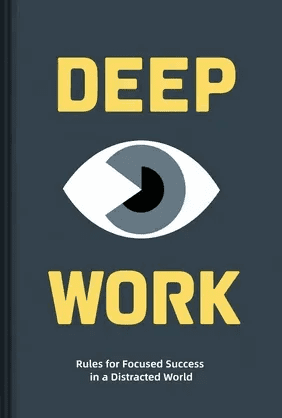
Deep Work
Cal Newport
47 Duration8 Key Points4.6 RateStructuring Your Environment for Inevitable Action
Implementing these
time management techniques for procrastination requires a hostile environment toward distractions. You cannot rely on these methods if your workspace constantly offers an easier escape route.Use Physical Timers
Digital timers on your phone are a liability. Picking up your phone to start a Pomodoro timer invites you to check notifications. Buy a basic, physical kitchen timer or a dedicated visual countdown clock. Put it right next to your monitor.
Digital timers on your phone are a liability. Picking up your phone to start a Pomodoro timer invites you to check notifications. Buy a basic, physical kitchen timer or a dedicated visual countdown clock. Put it right next to your monitor.
Clear the Runway the Night Before
Do not wait until morning to figure out your first task. Write down your primary target the night before. Open the necessary files on your computer and close all unrelated browser tabs. When you sit down the next morning with your coffee, the runway is clear. The only action available is to start working.
Do not wait until morning to figure out your first task. Write down your primary target the night before. Open the necessary files on your computer and close all unrelated browser tabs. When you sit down the next morning with your coffee, the runway is clear. The only action available is to start working.
Embrace the "Ugly Draft"
Perfectionism causes paralysis. Give yourself strict permission to do terrible work during your first 25-minute block. Write bad code. Write ugly sentences. Draw terrible sketches. You can always edit and refine bad work later. You cannot edit a blank page.
Perfectionism causes paralysis. Give yourself strict permission to do terrible work during your first 25-minute block. Write bad code. Write ugly sentences. Draw terrible sketches. You can always edit and refine bad work later. You cannot edit a blank page.
Common Traps That Trigger Relapse
You will eventually fall off the wagon. Knowing the common failure points helps you reset the system faster.
System Over-complication
Spending three hours color-coding a complex digital calendar setup is just another form of procrastination dressed up as productivity. Keep your tools incredibly simple. A cheap pen and a legal pad from Amazon are often far superior to a complex digital dashboard that requires constant maintenance.
Spending three hours color-coding a complex digital calendar setup is just another form of procrastination dressed up as productivity. Keep your tools incredibly simple. A cheap pen and a legal pad from Amazon are often far superior to a complex digital dashboard that requires constant maintenance.
Relying on the "Right Mood"
Motivation is a highly unreliable, fleeting emotion. Stop waiting for the urge to work. Professional execution means relying on your structural boundaries (your timers, your time blocks) regardless of how you feel on any given Tuesday morning. Action precedes motivation, not the other way around.
Motivation is a highly unreliable, fleeting emotion. Stop waiting for the urge to work. Professional execution means relying on your structural boundaries (your timers, your time blocks) regardless of how you feel on any given Tuesday morning. Action precedes motivation, not the other way around.
This principle is especially true for self-improvement. If you're often too exhausted after work to pick up the books recommended here, you can still absorb their core lessons without needing hours of focused energy.
LeapAhead
LeapAhead helps you learn from productivity books like 'Atomic Habits' and 'Deep Work' in short audio sessions, perfect for your commute or when you're too tired for focused reading.
The All-or-Nothing Fallacy
If you miss a scheduled time block at 10:00 AM, do not write off the entire day. Your brain will attempt to convince you that the schedule is ruined and you should just try again tomorrow. Reject this trap. Reset immediately. Pick up the kitchen timer, set it for 10 minutes, and start a micro-task right then and there to regain control.
If you miss a scheduled time block at 10:00 AM, do not write off the entire day. Your brain will attempt to convince you that the schedule is ruined and you should just try again tomorrow. Reject this trap. Reset immediately. Pick up the kitchen timer, set it for 10 minutes, and start a micro-task right then and there to regain control.
Breaking free from the all-or-nothing fallacy and overcoming crippling perfectionism is often a lifelong journey. If you constantly find yourself falling into these emotional traps—waiting for the "right mood" or using productive busywork as an escape—it might be time to rethink your relationship with productivity entirely. For a genuinely empathetic look at why high achievers procrastinate and how to replace that underlying anxiety with guilt-free play and sustainable focus, this classic resource is a must-read before you burn out.
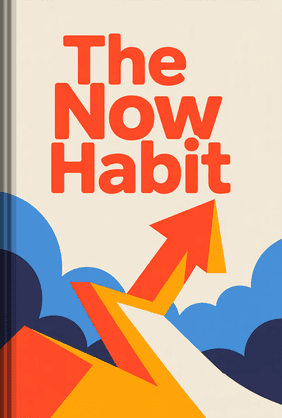
The Now Habit
Neil Fiore, Ph.D.
48 Duration8 Key Points4.6 RateFAQ
What if I cannot even focus for a full 25-minute Pomodoro?
Shrink the window. The 25-minute rule is a guideline, not a law of physics. If your executive dysfunction is particularly severe today, set the timer for 10 minutes, or even 5 minutes. The immediate goal is to build the muscle of task initiation, not to hit an arbitrary number on a clock.
Shrink the window. The 25-minute rule is a guideline, not a law of physics. If your executive dysfunction is particularly severe today, set the timer for 10 minutes, or even 5 minutes. The immediate goal is to build the muscle of task initiation, not to hit an arbitrary number on a clock.
How do I use time blocking if my daily schedule is unpredictable and chaotic?
Block broader categories of time rather than hyper-specific tasks. Create a "Reactive Block" for unexpected emails, phone calls, or putting out fires. Protect just one "Deep Work Block" of 60 to 90 minutes. You do not need to schedule every single minute of a chaotic day; you just need to anchor your absolute non-negotiable tasks.
Block broader categories of time rather than hyper-specific tasks. Create a "Reactive Block" for unexpected emails, phone calls, or putting out fires. Protect just one "Deep Work Block" of 60 to 90 minutes. You do not need to schedule every single minute of a chaotic day; you just need to anchor your absolute non-negotiable tasks.
Can the 2-minute rule actually help with massive, multi-month projects?
Yes. Massive projects are nothing more than a series of micro-tasks strung together. The 2-minute rule forces you to break the project down to its absolute lowest common denominator. You aren't writing a 300-page book in two minutes; you are opening the laptop and typing the title page. That single, tiny physical action shatters the paralysis holding you back from the larger project.
Yes. Massive projects are nothing more than a series of micro-tasks strung together. The 2-minute rule forces you to break the project down to its absolute lowest common denominator. You aren't writing a 300-page book in two minutes; you are opening the laptop and typing the title page. That single, tiny physical action shatters the paralysis holding you back from the larger project.