

You are exhausted all day, but the exact moment your head hits the pillow, your brain decides it is time to panic. Staring at the ceiling at 2 AM while your heart pounds and tomorrow's endless to-do list loops in your head is a special kind of torture. The harder you try to force yourself to fall asleep, the further away rest feels, trapping you in a vicious cycle of frustration and exhaustion.

Mastering relaxation for sleep anxiety is not about simply "trying to relax." It requires a tactical approach to trick your nervous system into letting its guard down. You need concrete methods to break the cycle of panic and signal to your body that it is safe to shut down.
Why Your Brain Won't Shut Off at Night
During the day, work, conversations, and screens distract you from underlying stress. At night, the darkness and silence strip away those distractions. You are left alone with your raw thoughts.
If you are dealing with chronic stress, your body pumps out cortisol and adrenaline. These survival hormones keep you hyper-aroused. Your brain interprets the quiet darkness not as an opportunity to rest, but as a void where it must stay hyper-vigilant to anticipate future threats. This biological misfire is the root cause of racing thoughts at night. To fix it, you have to actively manually override your body's alarm system.
If you constantly feel like your brain is hijacking your bedtime, you aren't alone. Understanding how your mind processes fear and anxiety is the first step toward getting your rest back. A fantastic resource for this exact problem is Don't Feed the Monkey Mind by Jennifer Shannon. It dives deep into how our brains get trapped in cycles of worry and offers practical, easy-to-understand strategies for turning off the mental chatter. It’s highly recommended if you want to stop over-analyzing every little thing before bed and finally reclaim your peaceful nights.
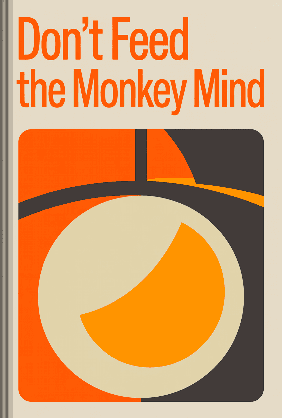
Don't Feed the Monkey Mind
Jennifer Shannon
 21 Duration
 8 Key Points
 4.4 Rate
If the idea of starting a full book when you're already stressed feels like too much, you can absorb its core lessons in a much shorter format.


Get the main insights from books on managing anxiety in 15-minute audio summaries, perfect for learning new coping skills without the pressure of a long read.
 LeapAhead
Immediate Relief: How to Sleep With Severe Anxiety
When you are already in bed and the panic is setting in, preventative measures are useless. You need an emergency brake. Figuring out how to sleep with severe anxiety means knowing exactly what to do when your heart is racing and your chest feels tight.
The 15-Minute Rule (Get Out of Bed)
If you have been lying awake for what feels like 15 or 20 minutes, get up. Lying in bed while anxious trains your brain to associate your mattress with panic rather than sleep.
- Get out of bed and move to a different room.
- Keep the lights dim.
- Do a low-stimulation activity. Read a physical paperback book (pick something light or boring from Barnes & Noble, not a high-stakes thriller). Avoid your phone, iPad, or TV entirely.
- If reading isn't working, listen to a familiar audiobook on Audible with a sleep timer set, or work on a simple jigsaw puzzle.
- Only return to bed when your eyelids feel heavy.
The 4-7-8 Breathing Technique
Anxiety forces you to take shallow, rapid breaths from your chest. You can reverse the panic by forcing slow, deep breaths from your diaphragm. This stimulates the vagus nerve, which directly tells your heart rate to slow down.
- Exhale completely through your mouth.
- Inhale quietly through your nose for 4 seconds.
- Hold your breath for 7 seconds.
- Exhale forcefully through your mouth, making a whoosh sound, for 8 seconds.
- Repeat this cycle four times.
It is truly amazing how much control you have over your nervous system just by changing the way you inhale and exhale. If you want to explore the science behind why techniques like 4-7-8 work so effectively, you might enjoy picking up Breath by James Nestor. This fascinating deep dive uncovers the lost art of proper breathing and explains how small adjustments to our respiratory habits can drastically reduce stress, lower our resting heart rate, and vastly improve our sleep quality. It is a game-changer for anyone dealing with physical anxiety symptoms.
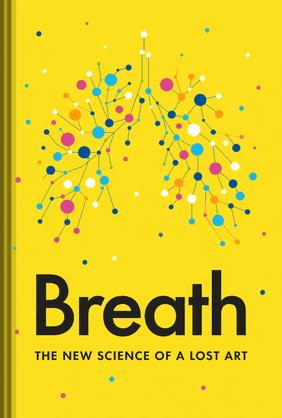
Breath
James Nestor
40 Duration7 Key Points4.6 RateProgressive Muscle Relaxation (PMR)
Anxiety makes you physically tense up without realizing it. PMR forces your muscles to release that built-up tension. Start at your toes. Tense the muscles in your feet as hard as you can for five seconds, then suddenly release. Notice the wave of relaxation. Move up to your calves, your thighs, your stomach, your shoulders, and finally your face. Clench your jaw, then let it go completely slack.
PMR is an effective way to address the physical symptoms of anxiety. If you often carry tension in your shoulders, chest, or stomach, focusing on the body can be a powerful route to relief.
Building a Bulletproof Bedtime Routine for Anxiety
The best way to handle nighttime panic is to prevent it from starting. A structured bedtime routine for anxiety acts as a runway, gradually bringing your brain down from the high altitudes of daytime stress.
The "Brain Dump" Journaling Method
Do not take your worries to bed. About an hour before you plan to sleep, sit down with a pen and paper. Write down every single thing bothering you. List the emails you need to send, the bills you need to pay, and the vague anxieties floating in your head.
Once it is on paper, tell yourself: "The shop is closed. I have documented the problems, and I will deal with them tomorrow." This externalizes your anxiety, so your brain no longer feels the need to keep track of it while you try to sleep.
Once it is on paper, tell yourself: "The shop is closed. I have documented the problems, and I will deal with them tomorrow." This externalizes your anxiety, so your brain no longer feels the need to keep track of it while you try to sleep.
Getting worries out of your head and onto paper is a key cognitive technique. If you find that negative thought loops are a persistent problem, it's worth exploring more targeted strategies.
Writing down your worries is a powerful tool, but sometimes the mental loops are stubborn enough to persist even after you close your journal. If racing thoughts are a chronic barrier to your sleep, Stop Overthinking by Nick Trenton is an excellent read. This book provides a clear, actionable roadmap for breaking out of negative thought spirals and managing the mental clutter that keeps you awake. Trenton offers tangible techniques to help you declutter your mind, making it much easier to let go of tomorrow's to-do list and finally get some shut-eye.
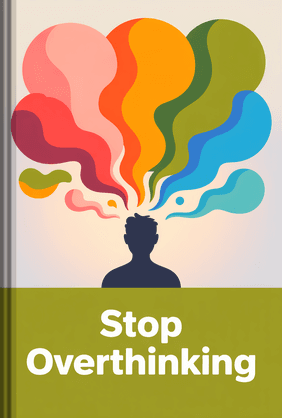
Stop Overthinking
Nick Trenton
50 Duration9 Key Points4.5 Rate
Optimize Your Sleep Environment
Your bedroom must trigger a biological sleep response.
- Temperature: Keep the room cool. Around 65 degrees Fahrenheit is the optimal temperature for sleep. Your core body temperature needs to drop to initiate sleep.
- Sensory input: Invest in blackout curtains to eliminate street lights. If you live near a busy road, run a fan or use a white noise machine to drown out unpredictable sounds that might trigger a startle response.
- Weight: Many people find that a weighted blanket provides deep pressure stimulation, mimicking the feeling of being held. This can drastically lower cortisol levels and increase serotonin.
Digital Curfew
Stop looking at screens at least an hour before bed. The blue light from your phone suppresses melatonin production, but more importantly, the content you consume spikes your dopamine and adrenaline. Doom-scrolling the news or checking work emails right before bed guarantees a spiked heart rate. Replace screen time with a warm shower. The drop in body temperature after you step out of the shower helps signal to your brain that it is time to sleep.
A consistent bedtime routine is a cornerstone of good sleep hygiene. Integrating other small, positive actions throughout your day can further reduce your baseline stress levels, making evenings much calmer.
Sleep Meditation for Anxiety: Calming the Nervous System
If silence makes your mind race louder, you need a substitute focus. A guided sleep meditation for anxiety gives your brain a safe, predictable path to follow, preventing it from wandering into stressful territory.
You do not need to be a seasoned yogi to benefit from this. Use a pair of comfortable sleep headphones and try these approaches:
- Guided Imagery: Instead of focusing on nothing, guided imagery asks you to visualize a detailed, calming scenario—like walking through a quiet forest or sitting by a calm lake. The brain struggles to hold onto severe anxiety while simultaneously rendering a detailed, peaceful mental image.
- Body Scans: Similar to PMR but without the physical tensing. A narrator guides your attention slowly through different parts of your body, asking you to notice sensations and consciously relax each area.
- Binaural Beats: Listening to specific sound frequencies can encourage your brain waves to slow down into the delta state, which is associated with deep sleep.
Dangerous Pitfalls: What Makes Sleep Anxiety Worse
When desperate for sleep, people often resort to habits that actually backfire. Avoid these common traps:
Clock Watching
Turning to look at the alarm clock and doing the mental math ("If I fall asleep right now, I'll get exactly four hours and twelve minutes of sleep") is a massive anxiety trigger. Turn your clock around so it faces the wall. Put your phone face down across the room. You do not need to know what time it is.
Turning to look at the alarm clock and doing the mental math ("If I fall asleep right now, I'll get exactly four hours and twelve minutes of sleep") is a massive anxiety trigger. Turn your clock around so it faces the wall. Put your phone face down across the room. You do not need to know what time it is.
Using Alcohol to "Wind Down"
A glass of wine might make you feel drowsy initially because alcohol is a central nervous system depressant. However, as your liver metabolizes the alcohol a few hours later, it creates a rebound effect. It ruins your REM sleep, causes micro-awakenings, and often leaves you wide awake, sweating, and highly anxious at 3 AM.
A glass of wine might make you feel drowsy initially because alcohol is a central nervous system depressant. However, as your liver metabolizes the alcohol a few hours later, it creates a rebound effect. It ruins your REM sleep, causes micro-awakenings, and often leaves you wide awake, sweating, and highly anxious at 3 AM.
Forcing It
Sleep is like a shy animal. If you chase it, it runs away. If you sit quietly and ignore it, it eventually comes to you. Stop repeating "I need to sleep" in your head. Instead, reframe your goal. Tell yourself, "I am just going to rest my body right now. Even if I don't sleep, lying here with my eyes closed is still restful." Taking the pressure off often allows sleep to sneak in.
Sleep is like a shy animal. If you chase it, it runs away. If you sit quietly and ignore it, it eventually comes to you. Stop repeating "I need to sleep" in your head. Instead, reframe your goal. Tell yourself, "I am just going to rest my body right now. Even if I don't sleep, lying here with my eyes closed is still restful." Taking the pressure off often allows sleep to sneak in.
Navigating the frustrating world of insomnia can feel overwhelming, especially when the harder you try, the worse it gets. If you are ready to completely rethink your approach to nighttime rest, The Sleep Solution by Dr. W. Chris Winter is a must-read. As a neurologist and sleep specialist, Dr. Winter breaks down the complex science of sleep into entertaining, accessible advice. He debunks common myths—like the need to force eight perfect hours—and provides real-world solutions for those nights when your anxiety simply won't cooperate. It is the perfect guide to permanently fixing your relationship with sleep.
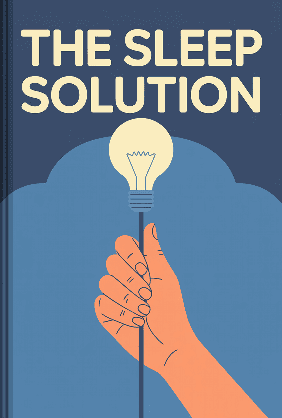
The Sleep Solution
W. Chris Winter, M.D.
41 Duration9 Key Points3.9 RateIt's great to have a list of helpful books, but finding the time and energy to read them all when you're already exhausted can feel impossible. An easier way to get started is by listening to the key ideas.
Tackle your to-read list and learn key strategies from sleep experts by listening to 15-minute book summaries during your commute or other downtime.
LeapAhead
FAQ
What if I wake up in the middle of the night with a panic attack?
Do not stay in bed fighting it. Get up immediately. Go to a dimly lit room and do a grounding exercise. Name five things you can see, four things you can touch, three things you can hear, two things you can smell, and one thing you can taste. This interrupts the panic loop. Sip some water, read a physical book, and only return to bed when your heart rate normalizes.
Do not stay in bed fighting it. Get up immediately. Go to a dimly lit room and do a grounding exercise. Name five things you can see, four things you can touch, three things you can hear, two things you can smell, and one thing you can taste. This interrupts the panic loop. Sip some water, read a physical book, and only return to bed when your heart rate normalizes.
How long does it take for a new bedtime routine to work?
Consistency is the most important factor. It usually takes your circadian rhythm and nervous system about 10 to 14 days to fully adapt to a new routine. Do not give up if the "brain dump" or breathing exercises don't magically cure your insomnia on the very first night. You are retraining years of biological habits.
Consistency is the most important factor. It usually takes your circadian rhythm and nervous system about 10 to 14 days to fully adapt to a new routine. Do not give up if the "brain dump" or breathing exercises don't magically cure your insomnia on the very first night. You are retraining years of biological habits.
Are naps a good idea if I didn't sleep well the night before?
No. If you suffer from sleep anxiety, daytime napping destroys your "sleep drive" (the biological hunger for sleep that builds up during the day). Push through the exhaustion during the daytime so that by the time night falls, your body's physical need for sleep overrides your mental anxiety.
No. If you suffer from sleep anxiety, daytime napping destroys your "sleep drive" (the biological hunger for sleep that builds up during the day). Push through the exhaustion during the daytime so that by the time night falls, your body's physical need for sleep overrides your mental anxiety.