

It is 6:00 AM. Your phone lights up with frantic Slack messages. A key vendor just backed out, your latest product launch is missing its targets, and inflation is eating your profit margins alive. Before your feet even hit the floor, you are already mentally exhausted.
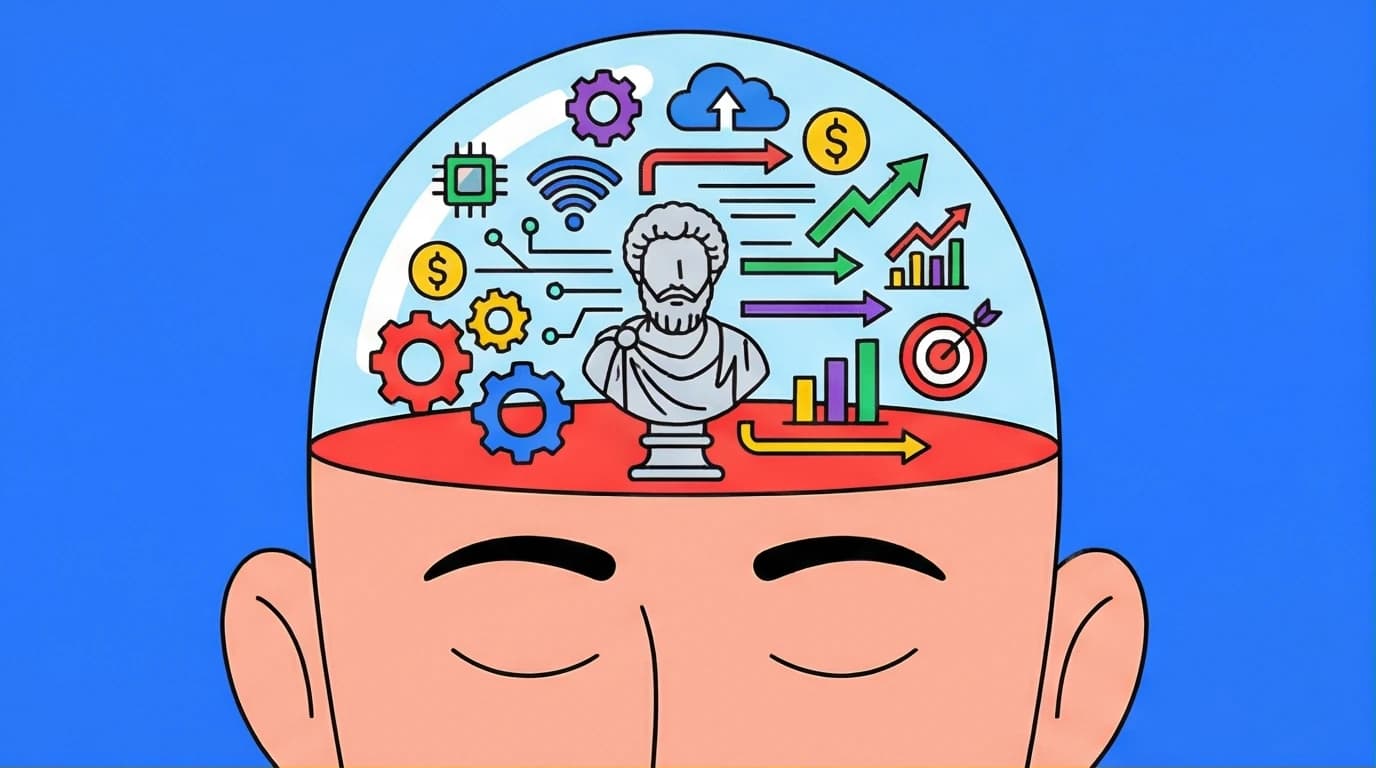
You do not need another productivity hack or a new time-tracking app. You need an upgraded operating system for your mind.
Over 2,000 years ago, Marcus Aurelius faced plague, endless war, betrayal by his closest generals, and the crushing weight of ruling the Roman Empire. He didn't have a therapist or an executive coach. He had a private journal.
Today, that journal is the ultimate playbook for navigating 21st-century chaos. The Stoic lessons from Meditations are not abstract philosophical theories meant for college classrooms. They are battle-tested tactics for staying sane when everything around you is catching fire.
Here is how to extract the exact principles Marcus Aurelius used to manage an empire and apply them directly to your business, your career, and your daily life.
The Ultimate Filter: The Dichotomy of Control
Burnout rarely comes from the actual work. It comes from the emotional energy wasted trying to force outcomes you have zero power over.
Marcus Aurelius wrote: "You have power over your mind—not outside events. Realize this, and you will find strength."
This is the bedrock principle of Stoicism. You must divide your reality into two buckets: what is up to you, and what is not. In the modern business landscape, the lines frequently blur, leading to chronic anxiety.
When looking at Meditations applied to business, the dichotomy of control is your most effective strategic filter.
What you do not control:
- The Federal Reserve raising interest rates.
- The Google search algorithm updating and tanking your site traffic.
- A competitor launching a similar product at a lower price point.
- Whether an investor decides to fund your seed round.
- The bad mood of your biggest client.
What you do control:
- Your operational budget and cash flow management.
- The quality and distinct value of your product.
- How you prepare for the investor pitch.
- The culture you build inside your team.
- Your response to that aggressive client email.
When a crisis hits, stop bleeding energy over the macroeconomic environment. Force your focus entirely into the second bucket. If a major client leaves, you cannot change their decision. You can, however, immediately audit why they left, improve your onboarding process, and direct your sales team to pursue new leads. This shift transforms you from a victim of circumstance into an active problem solver.
If you find yourself constantly drained by trying to manage every little detail, it might be time to systematically eliminate the non-essentials. Learning how to ruthlessly prioritize your time and energy is just as important as knowing what is outside your control. Want to learn more about reclaiming your focus in a chaotic world? This essential read offers a disciplined approach to doing less, but better.
Essentialism
Greg McKeown
 32 Duration
 10 Key Points
 4.6 Rate
Deconstructing the Marcus Aurelius Daily Routine
If you want to understand how to practice Stoicism, look at how you start your day. Modern internet culture obsesses over billionaire morning routines—4:00 AM wake-ups, cold plunges, and $20 green juices.
The Marcus Aurelius daily routine was vastly different. It was entirely about psychological armor.
Every morning, before interacting with a single human being, Marcus performed an exercise known as Premeditatio Malorum (the premeditation of evils). He wrote:
"Begin the morning by saying to yourself, I shall meet with the busybody, the ungrateful, arrogant, deceitful, envious, unsocial."
He did not do this to be a pessimist. He did this to remove the element of surprise.
Think about your standard Tuesday. You already know someone is going to show up late to the Zoom call. You know your inbox will contain at least one unreasonable demand. You know the commute on the 405 freeway or the subway is going to be terrible.
Why do you still let these predictable events make you angry?
Anger usually stems from violated expectations. You expect the world to run smoothly, and when it doesn't, you snap. By mentally rehearsing the frictions of the day over your morning coffee, you strip them of their power. When the passive-aggressive email inevitably arrives at 10:30 AM, you do not spike your cortisol levels. You simply think, Ah, there is the ungrateful behavior I expected. Then, you handle it logically.

Struggling to find time to read Meditations or other Stoic classics? Get the core ideas from bestselling books in just 15 minutes a day and build a powerful learning habit on the go.

Download LeapAhead App now
Marcus Aurelius wasn’t the only ancient thinker who leveraged daily mental exercises to navigate a high-stakes life. To truly master these morning reflections, expanding your perspective to other great Stoic minds is incredibly valuable. If you want to dive deeper into practical, timeless advice on handling adversity and building unshakable mental armor, consider exploring the personal correspondence of another legendary Roman philosopher.
Seneca's Letters from a Stoic
Lucius Annaeus Seneca, Classics HQ
38 Duration8 Key Points4.7 Rate
Turning Obstacles into Accelerants
One of the most famous lines in Meditations states: "The impediment to action advances action. What stands in the way becomes the way."
In modern work culture, we view obstacles as unfair roadblocks. A delayed shipment, a rejected proposal, or a key employee quitting feels like a massive setback. The Stoic leader views the obstacle as the actual training ground.
Imagine you are launching a new software product and your lead developer quits three weeks before the deadline.
The average manager panics, complains to management, and lets the project derail.
The Stoic manager steps back. The obstacle is the missing developer. The opportunity is the chance to audit the codebase, identify single points of failure, and rebuild a more resilient development pipeline so the company is never held hostage by one employee again.
The Stoic manager steps back. The obstacle is the missing developer. The opportunity is the chance to audit the codebase, identify single points of failure, and rebuild a more resilient development pipeline so the company is never held hostage by one employee again.
The obstacle literally dictates your next best move. You do not just survive the problem; you use the problem to build a stronger foundation. This principle completely alters your relationship with stress. Stress stops being a threat and becomes a required mechanism for growth.
It takes a massive mindset shift to look at a failed project or a lost client and see a competitive advantage. However, this exact framework has been used by some of history’s most successful leaders to turn their greatest trials into triumphs. If you are looking for a modern breakdown of how to practically apply this specific Stoic principle to your business and career, this book is an absolute must-read.
The Obstacle Is the Way
Ryan Holiday
44 Duration7 Key Points4.6 Rate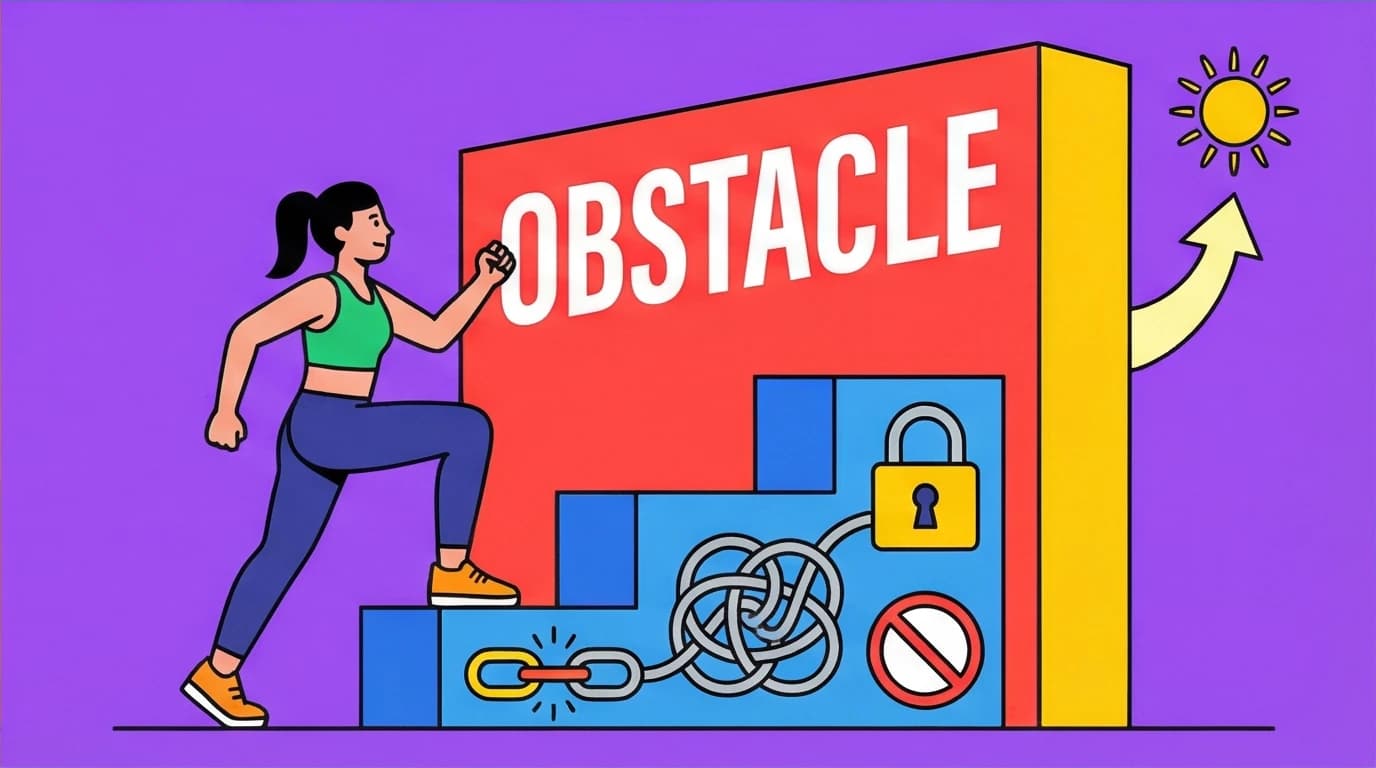
Actionable Rules: Stoicism for Modern Life
Adapting Stoicism for modern life requires cutting out the academic jargon and implementing specific daily habits. You do not need to read thick treatises to reap the benefits. Start executing these four practices today.
1. The Pause (Creating Space Between Stimulus and Response)
We live in an era of instant reaction. Someone attacks your idea in a meeting, and you fire back instantly. An email upsets you, and you hammer out a defensive reply.
Marcus Aurelius trained himself to delay his reactions. He recognized that initial emotional surges are biological, but acting on them is a choice.
The Rule: Whenever you feel a spike of anger, panic, or extreme frustration, mandate a 10-minute pause. Step away from the keyboard. Walk outside. Drink a glass of water. By forcing a gap between the event and your reaction, you allow your rational brain to catch up with your amygdala.
The Rule: Whenever you feel a spike of anger, panic, or extreme frustration, mandate a 10-minute pause. Step away from the keyboard. Walk outside. Drink a glass of water. By forcing a gap between the event and your reaction, you allow your rational brain to catch up with your amygdala.
2. The View from Above (Destroying Ego and Anxiety)
When you are deep in the trenches, a bad quarter or a failed marketing campaign feels like the end of the world. Marcus constantly reminded himself of his own insignificance by zooming out. He would imagine looking down at the Roman Empire from high above, seeing the tiny armies, the small disputes, and the fleeting nature of life.
The Rule: When a problem feels entirely overwhelming, scale your perspective. Think about the size of your city, the country, the planet. Think about the millions of businesses that have started and failed over the last century. Your current software bug or a bad performance review is incredibly small in the grand scheme of things. This doesn't mean your work doesn't matter; it means you can afford to lower the stakes in your head and breathe.
3. Consistent Reinforcement (The 15-Minute Stoic)
Stoic wisdom isn't absorbed in a single reading; it requires constant reinforcement to become your default operating system. But for a modern leader, re-reading Meditations every week is impractical. The challenge is keeping these powerful ideas top of mind amidst daily chaos. This is where modern tools can bridge the gap between ancient philosophy and a packed schedule.
The Rule: Dedicate 15 minutes during a commute, workout, or coffee break to absorb the core ideas of a great book. Using a microlearning app like LeapAhead can be incredibly effective. It offers 15-minute audio and text summaries of over 30,000 nonfiction books, including Stoic classics and modern business strategy.
- Pros: It's an efficient way to build a daily learning habit and reinforce key concepts without needing to set aside hours. The audio format is perfect for multitasking, turning dead time into productive learning sessions.
- Cons: These summaries are designed for core insights, not deep academic study. For a full, nuanced understanding, they can't replace reading the original texts. The experience is also primarily mobile-based, which might not suit those who prefer to learn on a desktop.
4. The Evening Review (The Stoic Ledger)
You cannot improve what you do not measure. Just as a business runs an end-of-day financial reconciliation, the Stoic runs a psychological reconciliation.
The Rule: Keep a cheap notebook from Amazon or Barnes & Noble on your nightstand. Before going to sleep, answer three questions:
- What did I do badly today? (Did I snap at my assistant? Did I panic over a headline?)
- What did I do well? (Did I hold my ground on a tough negotiation? Did I execute the pause?)
- What can I do better tomorrow?
This daily audit prevents bad mental habits from compounding over time.
Turn Stoic philosophy into a daily practice. Absorb the key lessons from Meditations, Seneca's Letters, and hundreds of other self-improvement books with 15-minute audio and text summaries.
Download LeapAhead App now
Setting the intention to do a daily evening review is easy; actually sticking to it when you are exhausted is the hard part. To make this Stoic ledger a permanent part of your life, you need a proven system for behavioral change. If you want to learn exactly how to build resilient daily routines that stick—even when your motivation drops—this guide to habit formation will be your best asset.

Atomic Habits
James Clear
26 Duration8 Key Points4.7 RateThe Trap to Avoid: You Are Not a Robot
The biggest misconception about Stoicism is that it turns you into an emotionless, cold machine. People often confuse capital-S Stoicism (the philosophy) with lowercase-s stoicism (repressing your feelings).
Marcus Aurelius loved his family, grieved the loss of his children, and felt immense pressure. Stoicism is not about killing your emotions. It is about domesticating them.
As a leader, you are allowed to feel angry when a contractor steals from you. You are allowed to feel terrified when revenue drops 30% in a month. The goal is simply to ensure those emotions do not sit in the driver's seat. You acknowledge the fear, put it in the passenger seat, and let logic take the steering wheel.
A modern leader who practices Stoicism is empathetic, deeply engaged with their team, and highly passionate about their vision. They just refuse to suffer over things outside their control.
Building Your Personal Arsenal
Reading Meditations once will not fix your burnout or make you a better CEO. Stoicism is a practice, much like lifting weights. You do not go to the gym once and expect to stay fit forever. You have to put in the reps.
Start small. Tomorrow morning, run the Premeditatio Malorum while brewing your coffee. Expect the friction. When the first crisis of the day hits, identify your two buckets: what you control and what you don't. Ignore the latter. Attack the former.
By grounding your modern ambition in ancient discipline, you build a mind capable of withstanding any market condition, any corporate crisis, and any personal setback.
Ultimately, the best way to understand the power of this philosophy is to read the original source material yourself. Keeping a copy on your desk serves as a powerful daily reminder to separate what you control from what you don't. Ready to upgrade your mental operating system and learn directly from the Roman emperor? Grab your own copy of his private journal and start putting these timeless lessons into practice today.

Meditations
Marcus Aurelius
34 Duration7 Key Points4.6 RateFAQ
What is the best translation of Meditations for a modern professional?
For modern readers, the translation by Gregory Hays (published by Modern Library) is widely considered the best. Hays strips away the archaic "thee" and "thou" language found in older, free versions online. His translation is punchy, direct, and reads exactly like the personal diary of a busy executive. You can easily find it on Amazon or listen to the audiobook on Audible.
For modern readers, the translation by Gregory Hays (published by Modern Library) is widely considered the best. Hays strips away the archaic "thee" and "thou" language found in older, free versions online. His translation is punchy, direct, and reads exactly like the personal diary of a busy executive. You can easily find it on Amazon or listen to the audiobook on Audible.
Will practicing Stoicism make me accept a toxic work environment?
Absolutely not. A common myth is that Stoicism is about passive endurance. Stoicism teaches you to accept the reality of the present moment without whining, but it demands aggressive action to improve the future. If you are in a toxic job, the Stoic response is not to suffer quietly forever. It is to objectively accept the situation, stop complaining about your boss, and immediately channel your energy into securing a better position elsewhere.
Absolutely not. A common myth is that Stoicism is about passive endurance. Stoicism teaches you to accept the reality of the present moment without whining, but it demands aggressive action to improve the future. If you are in a toxic job, the Stoic response is not to suffer quietly forever. It is to objectively accept the situation, stop complaining about your boss, and immediately channel your energy into securing a better position elsewhere.
How much time does it take to see results from Stoic practices?
You will notice a drop in daily anxiety almost immediately—often within the first week of actively applying the dichotomy of control. However, reprogramming your default reactions to high-stress triggers (like an angry client or a sudden financial loss) takes consistent practice. Treat it like a muscle. Six months of daily evening reviews and morning mental preparation will fundamentally change your baseline stress levels.
You will notice a drop in daily anxiety almost immediately—often within the first week of actively applying the dichotomy of control. However, reprogramming your default reactions to high-stress triggers (like an angry client or a sudden financial loss) takes consistent practice. Treat it like a muscle. Six months of daily evening reviews and morning mental preparation will fundamentally change your baseline stress levels.
Do I have to read the whole book to start using these tools?
No. Meditations was never meant to be read cover-to-cover as a narrative. It is a collection of fragmented thoughts and reminders. You can open it to a random page, read one paragraph, and spend the rest of the day applying that single concept to your work. Start with Book 2 and Book 4, which contain some of the most concentrated, actionable advice.
No. Meditations was never meant to be read cover-to-cover as a narrative. It is a collection of fragmented thoughts and reminders. You can open it to a random page, read one paragraph, and spend the rest of the day applying that single concept to your work. Start with Book 2 and Book 4, which contain some of the most concentrated, actionable advice.