


Your chest feels tight. Your thoughts are racing on an endless loop. Your to-do list seems impossible, and you feel entirely overwhelmed. When daily pressure tips into paralyzing anxiety, simply being told to "take a deep breath and relax" is useless.
You cannot think your way out of a physiological stress response. When your brain perceives a threat—whether that is an angry email from your boss or a stack of past-due bills—it floods your body with adrenaline and cortisol. To shut this down, you need practical tools that force your nervous system back into a baseline state.
Here is a comprehensive breakdown of actionable stress management techniques designed to help you regain control, starting with what to do right this second.
While these techniques apply universally, professional pressure often requires a tailored approach. If workplace demands are the primary source of your anxiety, focusing on job-specific strategies can provide significant relief.

Immediate Relief: How to Relieve Stress in the Moment
When you are actively overwhelmed, your sympathetic nervous system is trapped in "fight or flight" mode. Your immediate priority is to activate the parasympathetic nervous system (your "rest and digest" mode).
The Physiological Sigh
This is a breathing pattern discovered by researchers and heavily popularized by neurobiologist Dr. Andrew Huberman. It is the fastest hardwired way to eliminate excess carbon dioxide from your lungs and slow your heart rate.
- Take a deep inhale through your nose until your lungs are almost full.
- Take a second, shorter inhale to fully expand the air sacs in your lungs.
- Exhale slowly and fully through your mouth.
Do this three to five times. You will feel your heart rate drop within 30 seconds.
Mastering your breathing is arguably the most powerful tool you have for instant nervous system regulation. If you are fascinated by how simple alterations in your breathing patterns can radically transform your physical and mental health, there is a wealth of science to explore. Taking a deep dive into the mechanics of breathing can help you unlock even more strategies to lower blood pressure, reduce anxiety, and optimize your overall well-being.
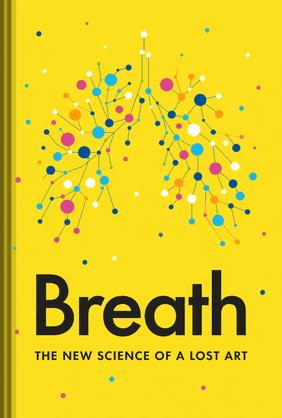
Breath
James Nestor
 40 Duration
 7 Key Points
 4.6 Rate
The Cold Water Reset
Temperature shifts are a highly effective way to interrupt a panic cycle. Exposing your face to cold water triggers the mammalian dive reflex. This biological response forces your heart rate to slow down and redirects blood flow to your vital organs, instantly cutting through mental fog.
- Go to the bathroom and splash freezing cold water on your face.
- Alternatively, grab an ice cube and hold it in your hand until it melts. Focus entirely on the physical sensation of the cold.
The 5-4-3-2-1 Grounding Method
When stress pulls your mind into future hypothetical disasters, you must anchor yourself back in the present room. Look around your immediate environment and identify:
- 5 things you can see (the color of your coffee mug, a tree outside).
- 4 things you can physically feel (your feet on the floor, the texture of your shirt).
- 3 things you can hear (the hum of the refrigerator, traffic outside).
- 2 things you can smell.
- 1 thing you can taste.
This simple checklist demands just enough cognitive bandwidth to break a spiraling thought loop.

Building Healthy Stress Coping Mechanisms
Once you pull yourself out of the immediate red zone, you need reliable stress coping mechanisms to process the residual mental friction. Pushing stress down without processing it just guarantees an explosion later.
The Brain Dump Protocol
Mental overwhelm happens when your brain is trying to hold onto too many moving pieces at once. You fix this by externalizing the data.
Grab a cheap notebook from Amazon, or just open the Notes app on your phone, and write down absolutely everything bothering you. Do not organize it. Do not format it. Just get it out. Write down the emails you need to send, the groceries you need to buy, and the irrational fears keeping you awake. Once the list is on paper, your brain stops trying to memorize it, significantly lowering your baseline anxiety.
Grab a cheap notebook from Amazon, or just open the Notes app on your phone, and write down absolutely everything bothering you. Do not organize it. Do not format it. Just get it out. Write down the emails you need to send, the groceries you need to buy, and the irrational fears keeping you awake. Once the list is on paper, your brain stops trying to memorize it, significantly lowering your baseline anxiety.
This principle of externalizing your mental load is a cornerstone of many productivity systems. By organizing your life and creating clear plans, you can prevent many stressors from ever taking root.
Externalizing your thoughts is incredibly effective because human brains are designed for processing ideas, not storing them. In our modern, fast-paced world, we are constantly bombarded with more data than we can reasonably handle, leading directly to decision fatigue and anxiety. If you want to dive deeper into how your brain manages the endless stream of daily information and learn scientifically proven ways to organize your life, you might want to look into how neuroscientists approach cognitive overload.

The Organized Mind
Daniel J. Levitin
40 Duration9 Key Points4.6 RateStrategic Physical Movement
Exercise burns off excess adrenaline. However, when your stress levels are already peaked, a grueling, high-intensity workout might actually spike your cortisol further. Instead, opt for moderate, steady-state movement.
Walk a mile or two outside. The simple act of moving your body forward while watching your environment pass by creates "optic flow," a neurological phenomenon that naturally quiets the stress circuits in your brain.
Walk a mile or two outside. The simple act of moving your body forward while watching your environment pass by creates "optic flow," a neurological phenomenon that naturally quiets the stress circuits in your brain.
Distraction Through Narrative
Sometimes you need to temporarily disconnect from your own life to let your subconscious untangle a problem. Instead of doomscrolling social media—which only feeds you more stressful micro-stimuli—immerse yourself in a narrative. Listen to an audiobook on Audible, read a chapter of a physical book, or listen to a long-form podcast. Engaging with a structured story gives your brain a safe place to rest.
If even a full chapter feels like too much of a commitment when you're overwhelmed, a shorter summary can offer the same mental break without the pressure.


LeapAhead

Listen to the key ideas from bestselling nonfiction books in just 15 minutes, offering a productive way to disconnect and reset your mind when you're too stressed for a full read.

Practical Ways to Reduce Stress Before It Starts
Prevention is vastly superior to damage control. If you want sustainable ways to reduce stress, you have to look at your daily inputs and strict environment boundaries.
Implement Aggressive Boundaries
You cannot take on everyone's problems. If you are a chronic people-pleaser, your stress is likely a byproduct of over-commitment. You have to build the muscle of saying "no."
When asked to take on a new project or attend an event you do not have the capacity for, use a clear, polite, but firm decline: "I am currently at capacity and cannot give this the attention it deserves." You do not need to offer a lengthy apology or a fabricated excuse.
When asked to take on a new project or attend an event you do not have the capacity for, use a clear, polite, but firm decline: "I am currently at capacity and cannot give this the attention it deserves." You do not need to offer a lengthy apology or a fabricated excuse.
Saying "no" can feel incredibly uncomfortable, especially if you have spent years prioritizing the needs of others over your own mental health. However, without firm limits, your stress levels will inevitably continue to climb. Learning to establish healthy parameters with your coworkers, friends, and family members is a skill that takes practice. If you are struggling to draw a line in the sand without feeling immense guilt, reading a comprehensive guide on communicating your limits can be life-changing.
Set Boundaries, Find Peace
Nedra Glover Tawwab
29 Duration10 Key Points4.5 RateThe Information Diet
The human brain was not evolved to process the tragedies of the entire globe in real-time. If you start your morning by reading the news in bed, you are voluntarily spiking your stress hormones before your feet hit the floor.
- Turn off push notifications for news apps.
- Keep your phone out of the bedroom. Buy a standard digital clock for your nightstand so you do not use your phone as an alarm.
- Limit your social media consumption to a specific 30-minute window each day.
Our devices are deliberately engineered to keep us scrolling, which keeps our stress hormones constantly elevated. Disconnecting from the 24/7 news cycle and social media isn't just about saving time; it is a necessary intervention for your mental health. Creating a healthier relationship with your smartphone can drastically lower your daily anxiety and give you your attention span back. If you need a practical, step-by-step plan to untangle yourself from your device and reclaim your calm, there are some fantastic resources available.
How to Break Up with Your Phone
Catherine Price
45 Duration8 Key Points4.6 RateAudit Your Caffeine Intake
Caffeine mimics the physical symptoms of anxiety. It raises your heart rate, makes you sweat, and makes your thoughts race. If you are highly stressed, drinking a 20-ounce iced coffee is like pouring gasoline on a fire. Cut your caffeine intake in half, and absolutely stop drinking it after 2:00 PM to protect your sleep architecture.
Designing Long-Term Stress Management Strategies
To bulletproof your mind against future overwhelm, you need robust stress management strategies seamlessly integrated into your daily routine. Resilience is not something you are born with; it is a trait you build through consistent habits.
Optimize Your Sleep Environment
Sleep deprivation is the primary driver of emotional fragility. When you sleep poorly, your amygdala (the brain's threat-detection center) becomes hyper-reactive.
Treat your sleep environment with deep respect. Keep your bedroom cool—around 65 degrees Fahrenheit is optimal for most people. Invest in blackout curtains. Stop looking at screens an hour before bed. Your body needs absolute darkness to produce melatonin effectively.
Treat your sleep environment with deep respect. Keep your bedroom cool—around 65 degrees Fahrenheit is optimal for most people. Invest in blackout curtains. Stop looking at screens an hour before bed. Your body needs absolute darkness to produce melatonin effectively.
Box Your Worries
If you are prone to rumination, try "worry boxing." Schedule a specific 15-minute window in your afternoon dedicated entirely to stressing out. During this time, write down everything you are worried about and brainstorm potential solutions. When the 15 minutes are up, close the notebook. If a stressful thought pops up later in the evening, tell yourself, "I will deal with this during tomorrow's worry session." This trains your brain to compartmentalize anxiety rather than letting it bleed into every hour of your day.
Chronic rumination is exhausting. When your brain is stuck on a treadmill of "what if" scenarios, it is practically impossible to relax. The worry box technique is grounded in cognitive behavioral therapy, which focuses on short-circuiting these exact types of unhelpful thought patterns. If you frequently find yourself paralyzed by worst-case scenarios and want to learn how to trick your brain out of its anxious loops, exploring strategies to quiet that inner chatter can provide immense relief.
Don't Feed the Monkey Mind
Jennifer Shannon
21 Duration8 Key Points4.4 RateSeek Professional Frameworks
There is no badge of honor for handling chronic stress alone. If your daily pressures are impacting your physical health, sleep, or relationships, it is time to bring in a professional. Cognitive Behavioral Therapy (CBT) is an incredibly effective, practical framework for identifying the cognitive distortions that fuel stress. A licensed therapist can help you identify your specific triggers and tailor coping mechanisms that fit your exact lifestyle.
Many of these long-term strategies are rooted in changing your mental framework. By focusing on your internal mindset, you can build a durable defense against external pressures.
This article mentions several powerful books, but finding the time to read them all can feel stressful in itself. If you want to absorb their key lessons faster, a book summary app can be a great tool.
LeapAhead
Get actionable insights from books on stress management and personal growth in 15-minute reads or listens, making it easier to build resilience on a busy schedule.
FAQ
What are the 4 A's of stress management?
The 4 A's are a framework for handling stressful situations: Avoid, Alter, Adapt, and Accept. You Avoid unnecessary stress by setting boundaries. You Alter a situation by communicating your needs. You Adapt your expectations and standards to manage perfectionism. You Accept the things you absolutely cannot change, focusing instead on your reaction to them.
The 4 A's are a framework for handling stressful situations: Avoid, Alter, Adapt, and Accept. You Avoid unnecessary stress by setting boundaries. You Alter a situation by communicating your needs. You Adapt your expectations and standards to manage perfectionism. You Accept the things you absolutely cannot change, focusing instead on your reaction to them.
How long does it take for stress management techniques to work?
Immediate physiological techniques—like the physiological sigh or cold water exposure—can lower your heart rate and ease panic within 60 to 90 seconds. Long-term strategies, such as setting boundaries and improving sleep hygiene, typically take two to four weeks of consistent application before you notice a significant drop in your baseline anxiety levels.
Immediate physiological techniques—like the physiological sigh or cold water exposure—can lower your heart rate and ease panic within 60 to 90 seconds. Long-term strategies, such as setting boundaries and improving sleep hygiene, typically take two to four weeks of consistent application before you notice a significant drop in your baseline anxiety levels.
Why do some stress coping mechanisms make me feel more anxious?
If a technique like silent meditation makes your anxiety spike, you are experiencing relaxation-induced anxiety. When your nervous system is used to running on high alert, suddenly sitting still can feel physically dangerous to your brain. If quiet mindfulness makes you panic, switch to active coping mechanisms like walking, stretching, or aggressive journaling instead.
If a technique like silent meditation makes your anxiety spike, you are experiencing relaxation-induced anxiety. When your nervous system is used to running on high alert, suddenly sitting still can feel physically dangerous to your brain. If quiet mindfulness makes you panic, switch to active coping mechanisms like walking, stretching, or aggressive journaling instead.
What is the fastest way to lower cortisol levels?
The fastest way to lower circulating cortisol is through low-intensity steady-state cardio (like a brisk walk) combined with deep diaphragmatic breathing. Movement processes the stress hormones out of your bloodstream, while slow, controlled exhales signal to your brain that the immediate threat has passed.
The fastest way to lower circulating cortisol is through low-intensity steady-state cardio (like a brisk walk) combined with deep diaphragmatic breathing. Movement processes the stress hormones out of your bloodstream, while slow, controlled exhales signal to your brain that the immediate threat has passed.