

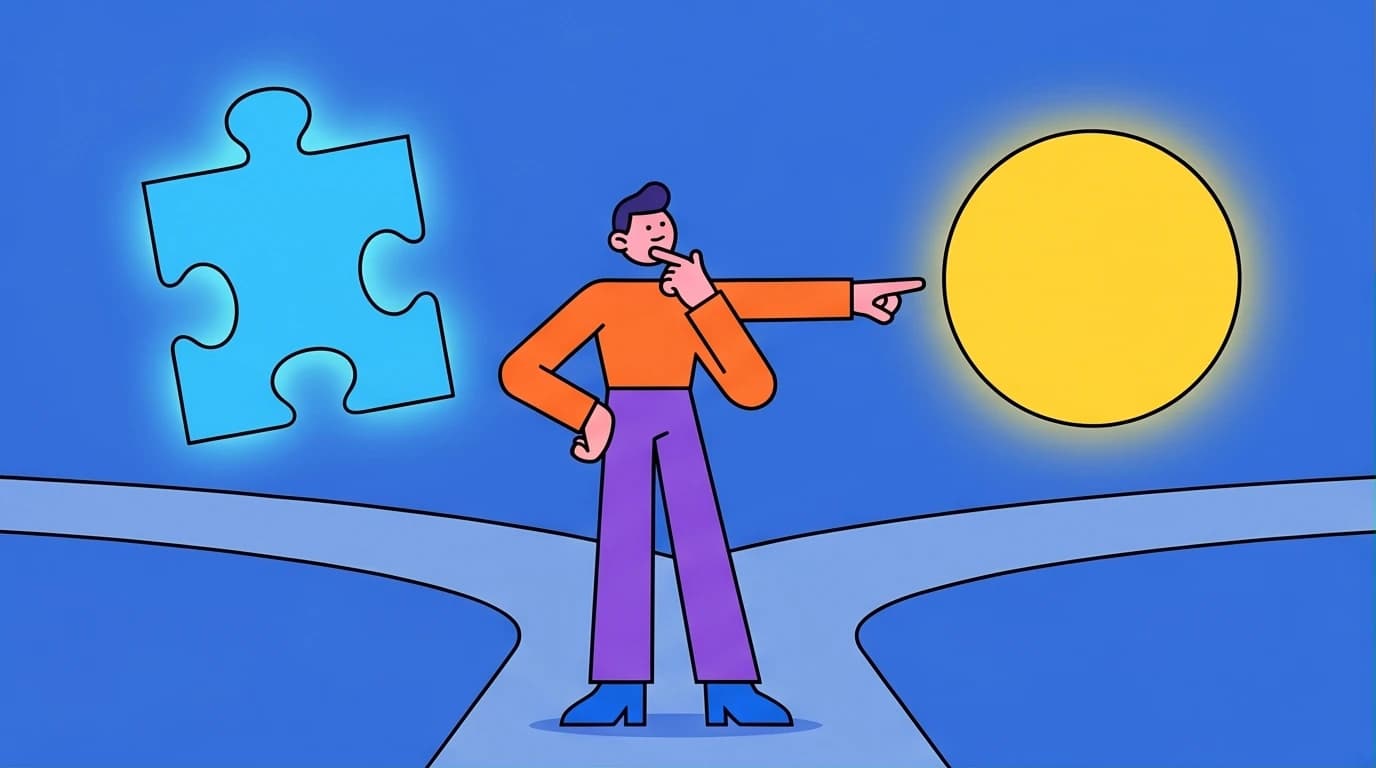
You meet someone new, the chemistry clicks, and suddenly the background noise of your anxiety fades. You feel whole. Then the relationship ends, or the honeymoon phase fades, and you are left staring at the ceiling feeling like a literal fraction of a human being. We are culturally conditioned by movies and music to endlessly hunt for our "other half." But if your baseline strategy for happiness is waiting for another person to fix your loneliness, you are setting yourself up for a cycle of codependency and heartbreak.
The most accurate blueprint for emotional independence does not come from a 300-page clinical textbook. It comes from a minimalist, black-and-white drawing of a circle. Decoding the missing piece Shel Silverstein lesson offers a radical shift in how we approach love, loneliness, and personal growth.
The Cultural Trap of "You Complete Me"
Pop culture loves the idea of the missing piece. It sells the narrative that you are inherently broken or unfinished until a romantic partner steps in. This mindset breeds a specific type of relational anxiety. When you believe someone else is the key to your wholeness, you give them absolute power over your emotional state. You tolerate bad behavior, compromise your boundaries, and slowly morph your identity to ensure they never leave.
Shel Silverstein saw right through this. Published in 1976, his seemingly simple story about a circle missing a wedge-shaped slice is actually a devastating critique of codependent relationships. The circle spends its days singing a sad song, moving slowly, and searching relentlessly for the piece that will make it perfect.
But Silverstein pivots exactly where Hollywood leans in. When the circle finally finds a piece that fits perfectly, everything changes—and not for the better.
This critique of seemingly ideal relationships is a recurring theme in his work. In fact, The Missing Piece isn't his only book that forces readers to question the nature of love and sacrifice. For another perspective on his complex view of relationships, it's worth exploring
Decoding the Missing Piece Shel Silverstein Lesson
To understand the genius of the shel silverstein philosophy, we have to look at what happens when the circle gets exactly what it thought it wanted.
The Cost of a Perfect Fit
Once the circle finds its exact match, it becomes whole. Because it is perfectly round, it begins to roll faster. It rolls so fast that it can no longer stop to talk to a worm or smell a flower. The pace of its new, "perfect" life completely strips away the small joys that once defined its existence. Worse, because it has no gap, it can no longer open its mouth to sing.

Think about your last intense relationship. Did you stop hanging out with your friends? Did your favorite solo hobbies—like wandering through Barnes & Noble on a Sunday morning or running miles on a local trail—suddenly disappear from your routine?
When we rely entirely on someone else to complete us, we lose our individual voice. We move at the speed of the relationship rather than the speed of our own lives. The lesson here is sharp: absolute fusion with another person suffocates your individuality. The circle ultimately realizes this, gently sets the missing piece down, and rolls away, singing its song once again. It chose glorious, imperfect autonomy over stifling completeness.
If you have ever found yourself completely losing your identity the moment a new relationship starts, you are certainly not alone. Breaking out of that cycle of hyper-focusing on a partner's needs while ignoring your own requires a fundamental shift in how you view love. For anyone who resonated with the circle losing its ability to sing and smell the flowers, diving into the mechanics of codependency is incredibly eye-opening. A classic guide in this space offers practical, compassionate steps to stop trying to control or fix others and start taking care of yourself.
Codependent No More
Beattie Melody
 19 Duration
 8 Key Points
 4.6 Rate
The Sequel: Shifting from a Fragment to a Whole
While the first book focuses on the circle, the true masterclass in emotional independence is found in the sequel, the missing piece meets the big o. This book flips the perspective. It follows a wedge-shaped missing piece waiting around for someone to come along and take it somewhere.
The piece tries everything. It tries making itself flashy to attract attention. It tries hiding its sharp corners. Some circles pass by missing too many pieces; others have too many pieces already. It is a brilliant metaphor for modern dating—the endless swiping, the identity shifting, the waiting to be chosen.
Then, the Big O arrives.
The Wisdom of the Big O
The Big O is a complete circle. It has no missing space for the wedge to fit into. When the piece asks if it can roll with the Big O, the response is a cornerstone of self completeness psychology. The Big O says it cannot take the piece with it, but suggests that the piece can learn to roll on its own.

The piece is confused. It has sharp corners; it is not shaped for rolling. The Big O simply states that corners can wear off and shapes can change.
This is the exact moment the shel silverstein philosophy transitions from passive observation to active self-empowerment. The Big O does not rescue the piece. It does not carry it. It simply models what wholeness looks like and invites the piece to do the hard work of growing.
The concept of the "Big O" refusing to rescue the wedge is a powerful reminder that we must champion our own growth. Many of us have been conditioned from a young age to be accommodating, to shrink our needs, and to wait for external permission to live fully. Shedding those societal expectations is a deeply liberating process. If you want to learn more about breaking free from the cages of people-pleasing and societal conditioning to discover your own fully realized self, there is a brilliant memoir and manifesto that serves as the perfect companion for this journey.

Untamed
Glennon Doyle
40 Duration8 Key Points4.3 RateThe Pain of Wearing Down Your Corners
Learning to roll on your own is brutal. In the book, the piece starts to lift itself up and flop forward. Flop. Bump. Flop. It is clumsy. It hurts. But slowly, the repetitive motion of trying to move independently wears down its sharp corners. The edges round out. Eventually, the piece starts to bounce, and then, miraculously, it begins to roll. It becomes its own Big O.
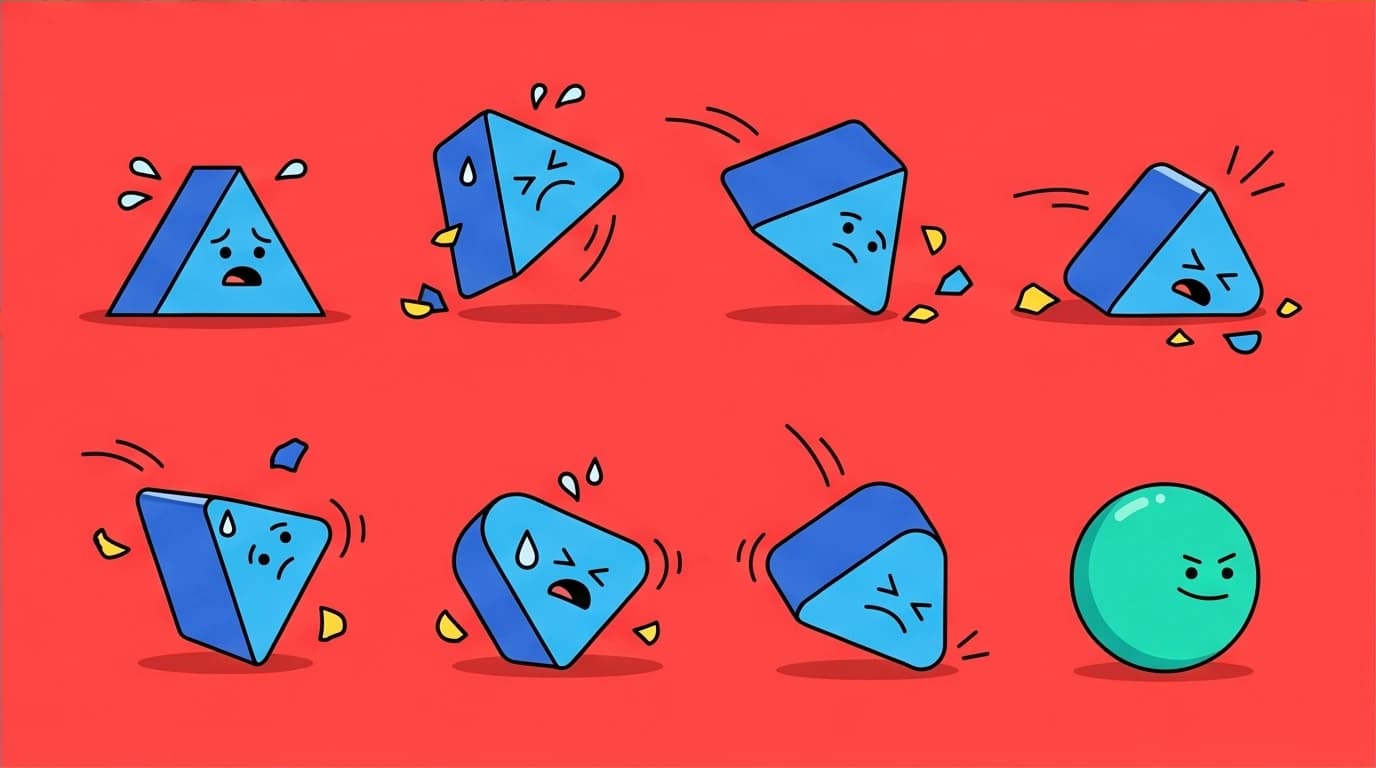
This translates perfectly to the messy reality of doing the inner work. Going to a restaurant alone for the first time feels incredibly awkward. Sitting with your own anxiety instead of immediately texting a toxic ex is painful. Building a life where you are the main character requires scraping your edges against the pavement. But that friction is exactly what builds resilience.


LeapAhead

Doing the inner work is hard, but learning doesn't have to be. Absorb key lessons on self-esteem and resilience in just 15 minutes a day with LeapAhead's audio and text summaries.
Self Completeness Psychology: The Clinical Perspective
Silverstein’s metaphors align flawlessly with modern psychological frameworks. Self completeness psychology centers on the idea that humans must develop a strong, autonomous sense of self before they can form healthy, interdependent relationships.
Enmeshment vs. Interdependence
When two people who view themselves as "missing pieces" get together, they create an enmeshed relationship. They rely on each other for basic emotional regulation. If one partner has a bad day, the other’s day is ruined. There are no boundaries.
Healthy relationships operate on interdependence. This is when two "Big Os" roll side by side. They choose to travel the same path, but they are fully capable of rolling on their own. They do not complete each other; they complement each other. They can still smell the flowers, sing their own songs, and maintain their individual identities while sharing their lives.
This ability to distill complex ideas about identity and growth into simple stories is a hallmark of Silverstein's genius. If this perspective resonates with you, you'll find similar depth when
Transitioning from an enmeshed relationship to a truly interdependent one requires unlearning almost everything Hollywood taught us about romance. When two complete people come together, they do not demand that the other person fill their emotional voids. Instead, they share the love they have already cultivated within themselves. If you are looking to explore how to build a relationship based on mutual respect, freedom, and unconditional love rather than fear and control, exploring the deeper spiritual and psychological facets of true connection can be life-changing.
The Mastery of Love
Don Miguel Ruiz
16 Duration7 Key Points4.7 RateHow to Apply the Lesson to Your Life
Understanding the metaphor is only step one. Transitioning from a waiting piece to a rolling O requires actionable lifestyle shifts.
1. Stop Auditioning for a Supporting Role
Stop altering your personality, interests, or boundaries to fit into someone else’s life. If you find yourself pretending to love certain music, suppressing your career ambitions, or hiding your true opinions just to keep a partner around, you are filing down your corners for someone else’s benefit. Stop waiting to be chosen. Choose yourself.
Refusing to file down your corners for someone else's benefit is much easier said than done. It requires the uncomfortable but necessary skill of setting clear boundaries. Many of us avoid speaking up because we fear conflict or rejection, but maintaining your unique shape means getting comfortable with saying no. If you are tired of overcommitting or shrinking yourself to keep the peace, learning how to effectively communicate your limits is an absolute must. Mastering this skill will protect your energy and help you build a life where you are truly the main character.
Set Boundaries, Find Peace
Nedra Glover Tawwab
29 Duration10 Key Points4.5 Rate2. Embrace the "Flop and Bump" Phase
If you are newly single or actively trying to build independence, expect it to be uncomfortable. You will have nights where the loneliness feels heavy. Let it. Do not immediately download a dating app to numb the discomfort. Go to the movie theater alone. Take a solo road trip. Cook a complex meal just for yourself. The initial clumsiness of doing things alone is exactly how you wear down the sharp edges of dependency.
3. Build a "Whole O" Ecosystem
A complete life is not built on romance alone. It requires a robust ecosystem of friendships, passions, physical health, and intellectual curiosity. Diversify your emotional portfolio. Rely on different friends for different needs. Throw yourself into a hobby that has nothing to do with romantic validation.
4. Adopt a Microlearning Habit
The inner work of becoming a "Big O" requires consistent learning, but it's hard to find the time and energy to read dense psychology books after a long day. If your attention is fragmented, your learning should adapt. Microlearning—absorbing knowledge in short, focused bursts—is a powerful way to stay on track without feeling overwhelmed.
This is where a tool like LeapAhead can be incredibly effective. It's a mobile app that distills the core ideas of bestselling nonfiction books into 15-minute audio or text summaries. Instead of letting your "reading debt" pile up, you can absorb key concepts on self-esteem, boundaries, and emotional intelligence during your commute, a workout, or a coffee break. The app’s strength lies in making personal growth accessible. With features like personalized learning plans, daily goal tracking, and themed collections on topics like "career success" or "improving relationships," it helps you build a consistent learning habit.
However, it's important to know its limitations. LeapAhead provides high-level summaries, which may not satisfy someone seeking deep, academic-level analysis of a topic. It is a supplement, not a replacement, for full-length reading if you need comprehensive detail. Additionally, its mobile-first design is perfect for learning on the go but might feel limiting for users who prefer to study on a desktop.
Best for: Busy individuals who want to consistently learn about personal growth and psychology but struggle to find time for traditional reading.
LeapAhead
Turn your journey to emotional independence into a daily habit with 15-minute book summaries from LeapAhead. Learn the key ideas from bestselling self-help books on the go.
5. Curate Your Reading Diet
Surround yourself with literature that reinforces autonomy. If you are looking to expand on this mindset, prioritize finding yourself books that offer actionable tools. Build a stack on your nightstand or load up your Audible library. Books like Untamed by Glennon Doyle, The Mastery of Love by Don Miguel Ruiz, and The Six Pillars of Self-Esteem by Nathaniel Branden are excellent resources to help you continue rounding out your edges. Check Goodreads for reviews to find the specific psychological angle that resonates with your current phase of life.
As you build that reading stack, it is crucial to tackle the root cause of why we search for missing pieces in the first place: a lack of foundational self-worth. When you genuinely value yourself, you stop accepting relationships that require you to diminish your own light. Developing this level of unwavering self-respect does not happen overnight; it is an active daily practice. One of the most highly regarded books on this topic breaks down the exact psychological pillars you need to cultivate true, unshakeable confidence and emotional independence from the ground up.
The Six Pillars of Self-Esteem
Nathaniel Branden
20 Duration9 Key Points4.5 RateThe Ultimate Shift in Perspective
The hardest pill to swallow about emotional independence is the realization that no one is coming to save you. But it is also the most liberating truth you will ever accept.
When you stop looking for the missing piece, your vision clears. You stop scanning every room and every app for a potential savior. You get your time back. You get your energy back. You realize that the love and security you were desperately trying to extract from other people was something you had the capacity to generate yourself the entire time.
You are not a fragment. You are not a half-finished puzzle waiting for someone to drop the final piece into place. You are capable of moving forward right now, exactly as you are. The friction will hurt at first, but keep moving. You will find your rhythm. You will wear down those sharp edges. And eventually, you will realize you are rolling entirely on your own.
FAQ
Does the Shel Silverstein lesson mean I should stay single forever?
No. The lesson is not anti-relationship; it is anti-codependency. The goal is to become a complete, self-sufficient person (a Big O) so that when you do enter a relationship, you are choosing a partner out of desire and mutual respect, not out of desperation or a need to be "fixed." Two whole people make a far stronger team than two broken halves.
No. The lesson is not anti-relationship; it is anti-codependency. The goal is to become a complete, self-sufficient person (a Big O) so that when you do enter a relationship, you are choosing a partner out of desire and mutual respect, not out of desperation or a need to be "fixed." Two whole people make a far stronger team than two broken halves.
Is "The Missing Piece" actually meant for adults or children?
While categorized and marketed as children's literature, Silverstein's work is widely considered essential reading for adults. The themes of existential loneliness, identity loss in relationships, and self-actualization are often fully grasped only after experiencing adult heartbreak or engaging in therapy.
While categorized and marketed as children's literature, Silverstein's work is widely considered essential reading for adults. The themes of existential loneliness, identity loss in relationships, and self-actualization are often fully grasped only after experiencing adult heartbreak or engaging in therapy.
How do I know if I am acting like a "missing piece" in my current relationship?
A major red flag is identity loss. If you cannot list your own hobbies, if you have abandoned your core group of friends, or if your entire mood dictates strictly on your partner's mood, you are likely operating as a missing piece. If you feel intense anxiety at the thought of spending a weekend entirely alone, it is a sign you need to practice rolling on your own.
A major red flag is identity loss. If you cannot list your own hobbies, if you have abandoned your core group of friends, or if your entire mood dictates strictly on your partner's mood, you are likely operating as a missing piece. If you feel intense anxiety at the thought of spending a weekend entirely alone, it is a sign you need to practice rolling on your own.
What is the fastest way to stop feeling lonely when trying to become independent?
You cannot skip the uncomfortable phase of loneliness. Lean into it by reframing "loneliness" as "solitude." Start small: take yourself on a coffee date, leave your phone in your pocket, and just observe the room. Build distress tolerance. The more you prove to your brain that you can survive and even enjoy your own company, the faster that sharp loneliness transitions into peaceful independence.
You cannot skip the uncomfortable phase of loneliness. Lean into it by reframing "loneliness" as "solitude." Start small: take yourself on a coffee date, leave your phone in your pocket, and just observe the room. Build distress tolerance. The more you prove to your brain that you can survive and even enjoy your own company, the faster that sharp loneliness transitions into peaceful independence.