


You probably picked up a copy of Morgan Housel’s book from Amazon or Barnes & Noble, read through the chapters, and nodded along. The concepts make total sense. But then Monday morning rolls around. You check your Vanguard or Fidelity account, see a market dip, and fight the urge to panic-sell. Or you log onto Instagram, see a friend’s new car, and suddenly feel behind in life.
Reading about financial behavior is easy. Changing it is hard.
Financial success is not a hard science. It is a soft skill. You can be a math genius and still go bankrupt if you lack emotional control. If you want to stop sabotaging your own portfolio, you need a system to translate theory into daily action. Let's break down exactly how to apply The Psychology of Money to your actual life, shifting from abstract concepts to concrete wealth-building strategies.
While this guide focuses on the most actionable lessons, a full overview can provide even more context on Housel's arguments.
Psychology of Money Best Lessons (and How to Execute Them)
Understanding the concepts is step one. Changing how you route your paycheck and manage your urges is step two. Here are the Psychology of Money best lessons, stripped of the fluff and paired with exact actions you can take today.
Lesson 1: No One Is Crazy
Your personal experiences with money make up maybe 0.00000001% of what has happened in the world, but they make up 80% of how you think the world works. A Boomer who grew up with high inflation views stock market risk differently than a Millennial who entered the job market during the 2008 financial crisis.
We all make decisions based on our unique lens. What looks like a crazy financial decision to you might make perfect sense to someone else based on their life experience.
Your Action Plan:
- Stop copying other people's homework. A day trader buying aggressive tech options is playing a completely different game than you are if you are saving for a 20% down payment on a house.
- Define your game. Write down your specific goal on a sticky note. "I am a long-term investor buying index funds to retire at 60." Whenever you get the urge to buy a trendy crypto asset because a coworker bragged about it, read the note. Recognize you are playing different games.
Lesson 2: Luck and Risk are Siblings
Nothing is as good or as bad as it seems. Both luck and risk are hidden forces that guide every financial outcome. Bill Gates was incredibly smart and hardworking, but he also had the sheer luck of attending one of the only high schools in the US with a computer in 1968.
We tend to attribute our own success to hard work, but attribute others' success to luck. Conversely, we judge others' failures as incompetence, but our own as bad luck.
Your Action Plan:
- Focus on broad patterns, not extreme individuals. Do not try to reverse-engineer the success of billionaires. You cannot replicate their exact timing or luck.
- Emulate the boring middle. Instead of trying to find the next Apple in your garage, look at the habits of everyday millionaires. They consistently fund their 401(k)s, buy sensible cars, and stay out of high-interest credit card debt. That is a replicable pattern.
While understanding these broad patterns is a great starting point, there is nothing quite like reading the full case studies that illustrate them. If this article is your first introduction to Morgan Housel’s perspective—or if you've been meaning to finally grab a copy for your nightstand—the complete book dives much deeper into how everyday Americans build lasting wealth while supposed "geniuses" lose it all. It’s a fast, brilliant read that will fundamentally shift how you view your paycheck and your investment portfolio.
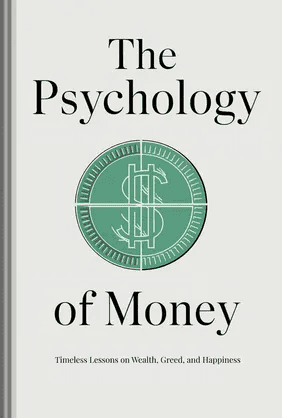
The Psychology of Money
Morgan Housel
 48 Duration
 7 Key Points
 4.6 Rate
If you're still deciding whether to add it to your cart, getting a balanced perspective can help.
And if you want to absorb the core lessons from this book and other financial classics but struggle to find the time, there are smart ways to fit this knowledge into a busy schedule.


LeapAhead

Grasp the key ideas from bestselling finance books in 15-minute audio or text summaries, turning your commute or workout into productive learning time.

Lesson 3: Knowing When You Have "Enough"
The hardest financial skill is getting the goalpost to stop moving. If your expectations rise with your income, you will never feel wealthy. Capitalism is excellent at generating wealth, but it is also excellent at generating envy.
Bernie Madoff had hundreds of millions of dollars perfectly legally, but he wanted more, so he built a Ponzi scheme and lost everything. He lacked a sense of "enough."
Your Action Plan:
- Calculate your survival number. Figure out exactly how much money you need to cover your basic living expenses (rent, groceries, healthcare, utilities).
- Audit your lifestyle creep. Every time you get a raise, commit to automatically routing 50% of that new money directly into investments before you even get used to having it in your checking account. Give yourself permission to spend the other 50% guilt-free.
Figuring out your "enough" number and avoiding lifestyle creep doesn't mean you have to clip coupons or feel guilty every time you buy a latte. In fact, one of the best ways to stick to your long-term goals is to build a system that allows for conscious, guilt-free spending on the things you genuinely love. If you struggle with balancing aggressive savings goals with enjoying your life right now, Ramit Sethi’s practical guide offers a phenomenal roadmap for automating your finances and living a rich life on your own terms.

I Will Teach You to Be Rich
Ramit Sethi
39 Duration8 Key Points4.5 Rate
Lesson 4: Confounding Compounding
Warren Buffett’s net worth is massive, but the real secret is that he has been investing since he was a child. The vast majority of his wealth came after his 65th birthday. Compounding is not intuitive. The human brain struggles to comprehend exponential growth.
You do not need massive annual returns to get rich. You need decent returns sustained over an uninterrupted period of time.
Your Action Plan:
- Leave the accounts alone. The biggest threat to compounding is interrupting it unnecessarily. Do not cash out your retirement accounts to buy a boat.
- Start the clock. If you have cash sitting in a checking account losing to inflation, move it to a High-Yield Savings Account (HYSA) or a broad market index fund today. Time is the only resource you cannot earn more of.
Of course, letting compound interest do its heavy lifting requires you to know exactly where to park your cash. For many, the investing world feels overwhelmingly complex, filled with confusing Wall Street jargon and high-fee mutual funds. If you want an actionable, stress-free strategy to execute this lesson, J.L. Collins breaks down the exact mechanics of investing in broad market index funds. His approach is famous for being incredibly straightforward—perfect for anyone who wants to set up a wealth-building portfolio and then walk away to actually enjoy their life.
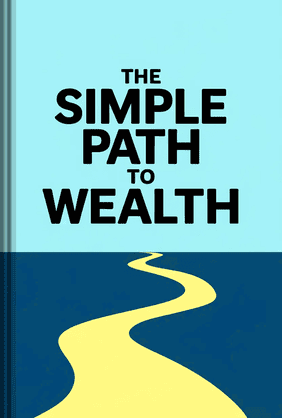
The Simple Path to Wealth
J.L. Collins
41 Duration9 Key Points4.6 Rate
Lesson 5: Wealth is What You Don't See
We judge wealth by what we can see: luxury cars, big houses, designer clothes, first-class Instagram photos. But wealth is actually the money that is not spent. Wealth is the 2012 Honda Civic in the driveway that allowed the owner to max out their Roth IRA for a decade.
Rich is a current income. Wealth is an option you haven't taken yet.
Your Action Plan:
- Beware the Man in the Car Paradox. When you see someone driving a $100,000 car, you rarely think, "Wow, the guy driving that car is cool." You think, "If I had that car, people would think I'm cool." This is a trap. People don't admire you; they admire the object.
- Save for nothing. You don't need a specific reason to save. Save just to build a buffer between you and the unpredictable nature of the world.
How to Apply The Psychology of Money to Your Daily Life
If you are wondering exactly how to apply The Psychology of Money to your day-to-day banking and spending, you need to transition from mindset to mechanics. Good behavior needs guardrails.
1. Build a Margin of Safety
Room for error is the most underappreciated part of personal finance. You need to plan on your plan not going according to plan. You might lose your job. Your roof might cave in. The stock market might drop 30% the year you want to retire.
How to do it: Keep a heavier emergency fund than you think you need. If a spreadsheet says you need 3 months of expenses, aim for 6. That extra cash might not earn a massive return, but its actual ROI is preventing you from selling your stocks at a loss when an emergency hits.
2. Manage Your Ego to Maximize Your Savings Rate
Your savings rate is the gap between your ego and your income. Building wealth has less to do with your income or investment returns, and much more to do with your savings rate.
How to do it: Stop viewing savings as what is leftover after spending. View savings as paying your future self. Automate your investments. Set up a direct transfer from your bank to your brokerage account on the 1st and 15th of every month. If you don't see the money, your ego cannot find a way to spend it.
Relying on sheer willpower to save money every month is a losing game. The most successful wealth-builders completely remove human error—and their own egos—from the equation by making their savings invisible. If you want to master the art of paying your future self first, David Bach’s classic book is a must-read. It outlines the exact step-by-step mechanics of setting up direct deposits and automated investment accounts, proving that a foolproof system will beat an airtight budget every single time.
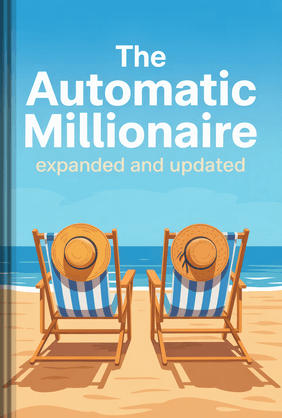
The Automatic Millionaire, Expanded and Updated
David Bach
38 Duration9 Key Points4.6 Rate3. Sleep Over Spreadsheets
There is no single "right" way to invest. The right portfolio is the one that lets you sleep at night. Mathematically, a 100% equity portfolio might yield the highest historical returns. But if a 20% market dip causes you to panic-sell in February, the math is useless.
How to do it: Optimize for peace of mind. If paying off your mortgage early makes you feel secure, do it. Don't let a finance bro on Twitter tell you it's a "bad mathematical decision" because you could have invested the cash at a higher interest rate. Your peace of mind has a high dividend.
Cultivating Wealth Building Habits Morgan Housel Recommends
When you look closely at the wealth building habits Morgan Housel practices in his own life, a clear picture emerges. It is about removing friction and embracing simplicity.
Accepting the Fee
Market volatility is not a fine; it is a fee. When you get a parking ticket, it's a fine—you did something wrong. When you pay an entrance fee at Disneyland, you pay it willingly for the experience. The stock market charges an entrance fee in the form of volatility and uncertainty. Accept the 15% drops as the price of admission for long-term growth, rather than viewing them as a signal that you made a mistake.
Market volatility is not a fine; it is a fee. When you get a parking ticket, it's a fine—you did something wrong. When you pay an entrance fee at Disneyland, you pay it willingly for the experience. The stock market charges an entrance fee in the form of volatility and uncertainty. Accept the 15% drops as the price of admission for long-term growth, rather than viewing them as a signal that you made a mistake.
Pessimistic Planning, Optimistic Execution
Morgan Housel investing advice heavily relies on the balance between optimism and paranoia. Save like a pessimist, but invest like an optimist. Assume the short-term will be chaotic, full of recessions, pandemics, and job losses. But hold a deep-rooted optimism that over the long run, businesses will grow and the market will trend upward.
Morgan Housel investing advice heavily relies on the balance between optimism and paranoia. Save like a pessimist, but invest like an optimist. Assume the short-term will be chaotic, full of recessions, pandemics, and job losses. But hold a deep-rooted optimism that over the long run, businesses will grow and the market will trend upward.
Redefining Independence
The ultimate goal of money is not to buy luxury items. The highest dividend money pays is the ability to control your time. Having wealth means you can choose what you do, when you do it, who you do it with, and for how long. That is priceless. Frame every financial decision around this question: Does buying this give me more control over my time, or less?
The ultimate goal of money is not to buy luxury items. The highest dividend money pays is the ability to control your time. Having wealth means you can choose what you do, when you do it, who you do it with, and for how long. That is priceless. Frame every financial decision around this question: Does buying this give me more control over my time, or less?
Putting these lessons into practice is a long-term game, and staying sharp requires continuous learning. For those who want to keep absorbing these powerful financial mindsets but are too exhausted to read a full book after work, an alternative approach can help.
LeapAhead
Build a consistent learning habit by listening to key insights from the best finance and psychology books, helping you master wealth-building mindsets in minutes a day.
The lessons in The Psychology of Money are foundational, and they pair well with insights from other behavioral finance experts. Once you've mastered Housel's principles, you might be looking for your next great read.
FAQ
What is the single most important takeaway from The Psychology of Money?
The core message is that doing well with money has a little to do with how smart you are and a lot to do with how you behave. Good financial behavior—like patience, avoiding greed, and saving consistently—will consistently beat complex investment algorithms over a lifetime.
The core message is that doing well with money has a little to do with how smart you are and a lot to do with how you behave. Good financial behavior—like patience, avoiding greed, and saving consistently—will consistently beat complex investment algorithms over a lifetime.
How do I figure out my "enough" number?
Your "enough" number is highly personal. Start by calculating your baseline living expenses, adding the cost of the hobbies and experiences that truly bring you joy, and aggressively cutting out expenses meant only to impress others. Once you hit a net worth or passive income that comfortably supports that baseline, you have reached "enough."
Your "enough" number is highly personal. Start by calculating your baseline living expenses, adding the cost of the hobbies and experiences that truly bring you joy, and aggressively cutting out expenses meant only to impress others. Once you hit a net worth or passive income that comfortably supports that baseline, you have reached "enough."
Do I need a high income to apply these wealth-building habits?
No. While a higher income makes saving easier, Housel repeatedly emphasizes that your savings rate is more important than your income. A person making $60,000 a year who saves 20% and avoids lifestyle creep will build more wealth over time than a person making $250,000 who spends exactly $250,000 every year to maintain appearances.
No. While a higher income makes saving easier, Housel repeatedly emphasizes that your savings rate is more important than your income. A person making $60,000 a year who saves 20% and avoids lifestyle creep will build more wealth over time than a person making $250,000 who spends exactly $250,000 every year to maintain appearances.
Is it too late to start applying these lessons if I am older?
It is never too late to optimize your behavior. While you may have less time for compounding to work on your side, you can immediately benefit from defining your "enough," reducing investment risks to match your age, and optimizing your savings rate. Peace of mind and financial stability apply at every stage of life.
It is never too late to optimize your behavior. While you may have less time for compounding to work on your side, you can immediately benefit from defining your "enough," reducing investment risks to match your age, and optimizing your savings rate. Peace of mind and financial stability apply at every stage of life.