


You have probably seen Morgan Housel's book recommended on Goodreads, Audible, or by every financial creator on your feed. You know understanding the relationship between human behavior and wealth is critical, but carving out time to read another 250-page finance book feels impossible with your schedule. You need the exact framework and actionable insights right now to start making better financial decisions today.
If finding the time to read is your biggest hurdle, there's a way to get the key insights from books like this in just a few minutes a day.


LeapAhead

Absorb the core lessons from *The Psychology of Money* and other finance bestsellers in 15-minute audio or text summaries, perfect for your commute or workout.
The book's popularity is undeniable, but you might be wondering if it truly lives up to the hype and is the right choice for your financial journey.
Traditional financial education treats money like a physics equation. It teaches you how to calculate interest rates, balance a portfolio, and measure risk. However, humans do not make financial decisions on a spreadsheet. We make them at the dinner table or in a meeting room, heavily influenced by our personal history, ego, pride, and marketing.
To bridge the gap between financial theory and real-world results, we must examine the behavioral side of wealth.
Since this entire article summarizes Morgan Housel's brilliant framework, there is no better starting point than diving into the source material itself. If this summary resonates with you and you want to truly rewire how you think about risk, luck, and long-term wealth, picking up the full book is a must. It is packed with even more historical anecdotes and actionable advice that will completely change your financial trajectory.
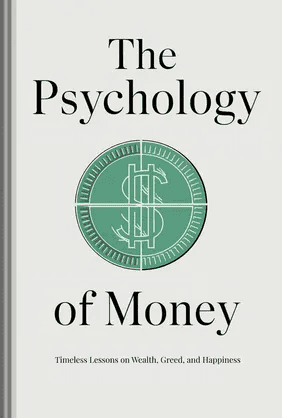
The Psychology of Money
Morgan Housel
 48 Duration
 7 Key Points
 4.6 Rate
The Psychology of Money Chapter Summary: Key Concepts Breakdown
If you are looking for a complete The Psychology of Money chapter summary, you need to focus on the pivotal chapters that drive Housel's philosophy. The book contains 20 chapters, but the most impactful behavioral shifts come from understanding the following core lessons.
1. No One's Crazy
People do crazy things with money, but no one is actually crazy. Your personal experiences with money make up maybe 0.00000001% of what has happened in the world, but they make up 80% of how you think the world works.
Someone who grew up during the high inflation of the 1970s views the stock market and savings entirely differently than a millennial who came of age during the historic bull market of the 2010s. We all make decisions based on our unique models of reality. Recognizing this stops you from judging others' financial decisions and helps you understand your own biases.
2. Luck and Risk
Luck and risk are siblings. They are the reality that every outcome in life is guided by forces other than individual effort.
Housel uses the story of Bill Gates to illustrate this. Gates was incredibly smart and hardworking, but he also attended one of the only high schools in the United States that had a computer in 1968. That is luck. Meanwhile, his brilliant friend Kent Evans, who shared his passion for computers, died in a rare mountaineering accident before graduation. That is risk.
You cannot copy someone else's exact strategy and expect the same results, because you cannot copy their luck. Focus on broad patterns rather than specific individuals when studying success.
3. Never Enough
The hardest financial skill is getting the goalpost to stop moving. Modern capitalism is excellent at two things: generating wealth and generating envy.

Housel highlights the downfall of prominent executives who had millions of dollars but risked everything—their freedom, reputation, and families—to get more. If your expectations rise with your income, you will never feel rich. Learning to say "I have enough" is the only reliable way to protect yourself from taking catastrophic risks.
4. Confounding Compounding
Warren Buffett is widely considered the greatest investor of all time. Yet, his secret is not just his average annual return; it is the sheer amount of time he has been investing.

More than $81.5 billion of Buffett's $84.5 billion net worth (at the time the book was written) came after his 65th birthday. Compounding is not intuitive for the human brain. You do not need the highest returns to build massive wealth. You need decent, consistent returns sustained over the longest uninterrupted period possible.
5. Getting Wealthy vs. Staying Wealthy
There are countless ways to get wealthy, but there is only one way to stay wealthy: some combination of frugality and paranoia.
Getting money requires taking risks, being optimistic, and putting yourself out there. Keeping money requires the opposite. It requires humility, an acceptance that luck played a role in your success, and a constant fear that it can be taken away. Survival must be your primary financial strategy.
6. Tails, You Win
In finance, long tails—the farthest ends of a distribution of outcomes—drive everything.
Look at the S&P 500 or major venture capital funds. The vast majority of market returns come from a tiny fraction of companies like Apple or Amazon. You can be wrong half the time and still make a fortune if you stay in the game long enough to capture the extreme winners.
7. Freedom
The highest dividend money pays is the ability to control your time.
Having the flexibility to wake up every morning and say, "I can do whatever I want today," is the ultimate measure of wealth. Money buys you time, options, and autonomy. A six-month emergency fund gives you the freedom to quit a toxic job. True wealth is simply the independence to choose your own path.
8. The Man in the Car Paradox
When you see someone driving a $100,000 Ferrari, you rarely think, "Wow, the guy driving that car is cool." Instead, you think, "If I had that car, people would think I am cool."
This is the paradox of wealth. People buy luxury goods to gain respect and admiration from others, but others bypass admiring the owner and just admire the object. Wealth cannot buy the genuine respect you are actually seeking.
9. Wealth is What You Don't See
We judge wealth by what we see, because that is the information we have. We see the large houses in the suburbs, the Rolex watches, and the first-class flights.

However, wealth is exactly what you do not see. Wealth is the cars not purchased, the diamonds not bought, the upgrades ignored. Wealth is financial assets that have not yet been converted into the stuff you see. Rich is current income. Wealth is hidden income that provides future options.
If you find the concept of "hidden wealth" fascinating, you might enjoy exploring the classic study of how everyday Americans actually build their fortunes. It turns out that the most financially successful people in the United States rarely drive flashy cars or live in mega-mansions. To understand the actual spending habits and surprisingly modest lifestyles of the truly wealthy, this groundbreaking research is an absolute eye-opener.

The Millionaire Next Door
Thomas J. Stanley, Ph.D., William D. Danko, Ph.D.
48 Duration9 Key Points4.5 Rate10. Save Money
You do not need a specific reason to save. Saving to buy a house or a new car is great, but saving for things you cannot predict is even better.
Your savings rate is more important than your investment returns or your income level. It is the one financial metric you have complete control over. Building cash reserves gives you a margin of safety when life inevitably surprises you.
11. Reasonable > Rational
Do not aim to be coldly rational with your financial decisions. Aim to be pretty reasonable.
Strict rationality dictates that you should always carry a mortgage if the interest rate is lower than your expected investment returns. However, paying off your house might help you sleep better at night. A financial strategy you can actually stick with during a brutal bear market is far superior to a perfectly optimized mathematical strategy that you abandon in a panic.
Psychology of Money Key Takeaways
Reading any comprehensive Morgan Housel book summary reveals a few recurring themes. Here are the core Psychology of Money key takeaways to integrate into your financial life:
- Behavior Over Intellect: You do not need a high IQ to build wealth. You need discipline, patience, and emotional control.
- Time is Your Greatest Asset: Let compounding do the heavy lifting. Start early, avoid interrupting the process, and let your money grow.
- Define Your Game: Day traders, swing traders, and long-term 401(k) index investors are playing entirely different games. Never take financial cues from someone playing a different game than you.
- Embrace Volatility: Market volatility is a feature, not a bug. Think of market drops as the "fee" for long-term growth, not a "fine" for doing something wrong.
- Leave Room for Error: Always maintain a margin of safety. Whether it is keeping extra cash on hand or assuming your investments will return less than the historical average, prepare for things not going according to plan.
These takeaways capture the essence of Housel's philosophy, but much of the book's power comes from his memorable phrasing. His ability to distill complex ideas into simple truths is what makes the lessons stick.
Your The Psychology of Money Cheat Sheet
To transform these concepts from theory into practice, use this The Psychology of Money cheat sheet to audit your current financial habits.
- Automate Your Investments: Remove human emotion from the equation. Set up automatic transfers to your retirement accounts and brokerage accounts.
- Stop Moving the Goalpost: Determine what "enough" looks like for your lifestyle. Write down a specific number and refuse to take unnecessary risks once you reach it.
- Increase Your Savings Rate: Focus less on beating the market and more on spending less than you earn. Your savings rate is your financial shock absorber.
- Buy Broad Index Funds: Accept that picking individual stocks is notoriously difficult. Own the entire market through low-cost index funds and let the few extreme winners drive your returns.
- Evaluate Your Purchases: Before buying a status symbol, ask yourself if you want the object or just the respect you think it will bring. Focus on buying freedom instead of things.
- Build a Cash Buffer: Keep enough liquid cash to survive sudden job loss or medical emergencies without having to sell your investments during a market downturn.
Ready to put these cheat sheet rules into action? While Housel provides the psychological framework, you might be looking for a nuts-and-bolts guide on exactly how to set up those broad index funds and automate your savings. If you want a straightforward, no-nonsense roadmap to implementing a stress-free investing strategy that perfectly aligns with Housel’s philosophy of letting compounding do the heavy lifting, this is the ultimate playbook.
The Simple Path to Wealth
J.L. Collins
41 Duration9 Key Points4.6 RateMorgan Housel Book Summary: Common Misconceptions
When digesting the core messages of this book, people often fall into a few traps.
First, readers sometimes assume Housel advocates for extreme frugality. This is false. He advocates for intentional spending. You should spend money on things that genuinely bring you joy, but mercilessly cut expenses on things meant only to impress others.
Second, people misinterpret "Reasonable > Rational" as an excuse to make terrible mathematical decisions. Housel is not saying you should ignore math. He is saying that if a mathematically optimal strategy causes you so much anxiety that you panic-sell during a recession, it is useless to you. The best investment plan is the one you can stick with during the worst times.
Finally, relying on compounding does not mean you will get rich quick. In an era of viral cryptocurrency millionaires and meme stocks, Housel's approach feels slow. It is slow by design. True wealth is built over decades, not days.
Mastering the psychology of money means accepting that building wealth is a marathon of managing your own flaws, biases, and ego. When you align your behavior with the immutable rules of compounding and survival, time does the rest.
If Housel's approach to behavioral finance has inspired you, you'll find a wealth of similar wisdom in other top-tier personal finance books that focus on mindset and long-term strategy.
To keep building on these principles, you need a consistent learning habit. If your busy schedule is the main obstacle, a microlearning approach can help you absorb key ideas from top finance books without the time commitment.
LeapAhead
Turn your commute into a masterclass on wealth by listening to 15-minute summaries of essential finance books, helping you build a consistent learning habit on busy days.
Housel's point about intentional spending—buying what genuinely brings you joy while cutting back mercilessly on things that don't—is a game-changer for many people who hate the idea of traditional budgeting. If you want to dive deeper into this specific approach, learning how to automate your bills, negotiate your salary, and spend guilt-free on your favorite luxuries, there is a fantastic resource that perfectly complements Housel's mindset.

I Will Teach You to Be Rich
Ramit Sethi
39 Duration8 Key Points4.5 RateFAQ
Do I need a background in finance to understand Morgan Housel's concepts?
No. The entire premise of the book is that complex financial jargon and advanced math are less important than basic emotional intelligence. The concepts are designed to be accessible to anyone, regardless of their prior financial knowledge.
No. The entire premise of the book is that complex financial jargon and advanced math are less important than basic emotional intelligence. The concepts are designed to be accessible to anyone, regardless of their prior financial knowledge.
How does this book differ from other personal finance books?
Most finance books give you prescriptive, step-by-step instructions on where to put your money or how to budget. This book focuses almost entirely on the mental and emotional drivers behind why you spend, save, and invest the way you do.
Most finance books give you prescriptive, step-by-step instructions on where to put your money or how to budget. This book focuses almost entirely on the mental and emotional drivers behind why you spend, save, and invest the way you do.
Does Housel recommend specific investments like stocks or real estate?
Housel does not provide specific stock picks or real estate strategies. He personally uses a high savings rate and low-cost index funds. His guidance focuses on broad behavioral principles—like survival, compounding, and managing risk—that apply across all asset classes.
Housel does not provide specific stock picks or real estate strategies. He personally uses a high savings rate and low-cost index funds. His guidance focuses on broad behavioral principles—like survival, compounding, and managing risk—that apply across all asset classes.
Can these behavioral principles help me if I am currently in debt?
Absolutely. Understanding the "Man in the Car Paradox" and the concept of "Never Enough" are critical first steps to stopping the spending habits that lead to debt. Shifting your mindset to value freedom over material status is the foundation for aggressively paying down debt and building a safety net.
Absolutely. Understanding the "Man in the Car Paradox" and the concept of "Never Enough" are critical first steps to stopping the spending habits that lead to debt. Shifting your mindset to value freedom over material status is the foundation for aggressively paying down debt and building a safety net.