


You know you should save more and invest smarter. Yet, standard financial advice often feels like a dry math lesson that ignores how humans actually make decisions. When the stock market drops or your neighbor pulls up in a brand-new car, your spreadsheet goes out the window. Your financial struggles rarely stem from a lack of intelligence. They come from behavioral blind spots.
You need piercing truths that instantly click—the kind of wisdom you can write on a sticky note, keep at your desk, or share with a friend who is panicking over their 401(k).
Whether you grabbed a hardcopy at Barnes & Noble or blasted through the audiobook on Audible, digesting the core philosophy takes time. To fast-track that process, we have curated the most impactful The Psychology of Money quotes. These aren't just motivational soundbites. They are psychological guardrails designed to keep you from sabotaging your own financial future.
Before diving into these specific quotes, getting a high-level overview of the book's main arguments can provide valuable context for how they all fit together.
And if you want to internalize the wisdom from this book and others like it but struggle to find dedicated reading time, there’s a more efficient way to get started.

Absorb the key ideas from The Psychology of Money and other financial bestsellers in 15-minute audio or text summaries to fit learning into your busy day.

Download LeapAhead App now
The Ultimate Rich vs Wealthy Quote: What You See vs. What Is Real
We live in a culture obsessed with visible success. Social media feeds are flooded with private jets, designer clothes, and luxury vacations. But Morgan Housel draws a sharp, unforgettable line between having money to spend and actually possessing wealth.

If you are looking for the definitive rich vs wealthy quote, this is the one that forces you to rethink everything you see:
"Rich is a current income. Wealth is hidden. It's income not spent. Wealth is an option not yet taken to buy something later."
Why This Matters
When you see someone driving a $100,000 Porsche on the highway, you do not know if they are wealthy. You only know one absolute fact: they have $100,000 less in their bank account than they did before they bought the car—or they are drowning in a massive auto loan.
Being rich means you have the cash flow to finance a lavish lifestyle today. Wealth is entirely invisible. Wealth is the portfolio of S&P 500 index funds you quietly hold. Wealth is the emergency fund sitting untouched. Wealth is the freedom to quit a toxic job because you don't have a massive mortgage hanging over your head.
How to Apply It
Stop using visible luxury as your benchmark for success. The next time you feel the urge to upgrade your lifestyle to impress people, remember that you are sacrificing hidden wealth for visible riches. Building wealth requires the discipline to ignore what everyone else is doing and keep your money working for you behind the scenes.
The Power of Time: The Top Psychology of Money Compounding Quote
Human brains are hardwired to understand linear growth. If you drive 60 miles per hour for two hours, you travel 120 miles. Exponential growth, however, completely breaks our intuition.

Housel uses Warren Buffett as the ultimate case study to explain this concept. While Buffett is praised as a genius stock picker, his true superpower is simply longevity. The most mind-bending Psychology of Money compounding quote breaks it down perfectly:
"81.5 billion of Warren Buffett’s 84.5 billion net worth came after his 65th birthday. Our minds are not built to handle such absurdities."
Why This Matters
People spend countless hours trying to find the perfect stock, the best real estate deal, or the highest-yielding crypto asset. They want high returns right now. But the heavy lifting of wealth creation doesn't come from a single brilliant trade. It comes from uninterrupted compounding.
Another standout quote reinforces this exact principle:
"Good investing isn’t necessarily about earning the highest returns, because the highest returns tend to be one-off hits that can’t be repeated. It’s about earning pretty good returns that you can stick with and which can be repeated for the longest period of time. That’s when compounding runs wild."
How to Apply It
Leave your investments alone. Whether you use Vanguard, Fidelity, or a robo-advisor, the key is to automate your contributions and stop checking your balance every day. You don't need a massive return this year. You need a solid return that you do not interrupt for the next two or three decades. Treat compounding like a slow-burning fire; just keep adding wood and let time do the rest.
If you want to put this compounding philosophy into practice without constantly stressing over market fluctuations, you need a bulletproof investment strategy. Instead of chasing hot stocks or trying to time the market, consider diving into the mechanics of index fund investing. Learning how to capture the stock market's long-term returns through low-cost funds is the ultimate way to let time do the heavy lifting for your portfolio. This classic guide breaks down exactly why leaving your investments alone is the most profitable decision you can make.
The Little Book of Common Sense Investing
John Bogle
 41 Duration
 8 Key Points
 4.6 Rate
Defining True Freedom: Morgan Housel Quotes on Wealth
Ask ten people what their favorite financial goal is, and you will get ten different answers. A house in California, early retirement, or enough cash to start a business. But Housel strips away the material desires and cuts straight to the psychological core of why we want money in the first place.

If you are looking for the best Morgan Housel quotes on wealth, this excerpt defines the entire book:
"The highest form of wealth is the ability to wake up every morning and say, 'I can do whatever I want today.'"
Why This Matters
Money pays the highest dividend when it buys you control over your own time. Many high-income earners trap themselves in a lifestyle that requires them to work 80 hours a week just to pay for things they never have time to enjoy. They trade their autonomy for a paycheck.
"Money’s greatest intrinsic value—and this can’t be overstated—is its ability to give you control over your time."
How to Apply It
Before making a major purchase, ask yourself: Will this buy me more freedom, or will it tie me down? An expensive car requires a high-paying job to maintain. A paid-off modest home gives you the flexibility to take a lower-paying job you actually love. Organize your finances around time, not material possessions.
This is just one of the many actionable principles from the book. To truly change your financial behavior, it's helpful to explore a curated list of the most impactful takeaways.
Reframing your finances around gaining time and autonomy rather than accumulating luxury goods is incredibly liberating. Once you realize that the ultimate goal is freedom—sometimes famously referred to as "F-you money"—you need a practical roadmap to get there. If you are looking to build a portfolio that acts as a fortress around your independence, you'll want a straightforward approach that cuts out the Wall Street jargon. This highly praised roadmap will show you how to structure your savings so you can finally wake up and do whatever you want.
The Simple Path to Wealth
J.L. Collins
41 Duration9 Key Points4.6 RateKnowing When to Stop: The Danger of Moving Goalposts
One of the sharpest observations among the best quotes from The Psychology of Money deals with the concept of "enough." Wall Street is littered with tragic stories of multi-millionaires who committed fraud or took massive, reckless bets simply because they wanted more.
"There is no reason to risk what you have and need for what you don’t have and don’t need."
Why This Matters
Capitalism is excellent at generating two things: wealth and envy. When you reach a financial goal, the natural instinct is to immediately look at the person one step above you and feel inadequate. If you make $100,000, you envy the person making $200,000. If you have $5 million, you envy the hedge fund manager with $50 million.
"The hardest financial skill is getting the goalpost to stop moving."
How to Apply It
Define what "enough" means for you before you start building wealth. Write down your target number and the lifestyle you want to live. Once you hit that threshold, shift your strategy from wealth accumulation to wealth preservation. Accept that someone will always have a bigger boat, and realize that constantly chasing them is a guaranteed recipe for misery.
Surviving the Game: Luck, Risk, and Room for Error
We love to read biographies of successful entrepreneurs and copy their daily routines, assuming we will get the same results. Housel warns us that we frequently underestimate the roles of both luck and risk.
"Luck and risk are both the reality that every outcome in life is guided by forces other than individual effort. They are so similar that you can’t believe in one without equally respecting the other."
Because you cannot control luck or eliminate risk, you must build a financial plan that survives unpredictable disasters.
"The most important part of every plan is planning on your plan not going according to plan."
Why This Matters
Many investors optimize their portfolios for perfect conditions. They assume the stock market will always return 8%, their career will never be interrupted, and they will never face a massive medical bill. When reality hits—like a sudden economic recession or a global pandemic—their optimized plans shatter.
Margin of safety, or room for error, is not a conservative strategy for cowards. It is the exact tool that allows you to stay in the game long enough for compounding to work its magic.
How to Apply It
Keep more cash on hand than you think you need. A six-month emergency fund is great, but a twelve-month fund ensures you never have to sell your investments at a loss during a market crash. Build redundancy into your financial life so you can absorb a hit without wiping out.
Building a financial plan with a massive margin of safety is one of the oldest and most respected strategies in the investing world. You don't have to be a Wall Street insider to understand that protecting your downside is just as important as maximizing your gains. To truly grasp how to construct a resilient portfolio that can weather economic storms, market crashes, and simple bad luck, it pays to learn from the father of value investing himself. This legendary text is the absolute gold standard for learning how to minimize risk and protect your hard-earned cash.
The Intelligent Investor
Benjamin Graham, Jason Zweig
41 Duration8 Key Points4.7 RateFinal Thoughts: Changing Your Mindset
Reading The Psychology of Money quotes is a powerful exercise in realigning your financial compass. Housel’s brilliant framing forces us to accept that mastering money is not about memorizing tax codes or mastering technical chart analysis.
It is about taming your ego, defining your own version of enough, and letting time do the heavy lifting. The next time you feel tempted to make a rash financial decision, revisit these quotes. Let them serve as the ultimate reality check to keep your behavior in line with your long-term goals.
These quotes offer just a glimpse into the profound behavioral shifts required to build lasting wealth. If these concepts hit home, reading the full text is an absolute must. You'll uncover even more fascinating historical stories, psychological case studies, and practical takeaways that will completely transform the way you view your bank account. Grab a copy of the book that inspired these insights to fully master your financial ego, stop moving the goalposts, and secure your long-term financial independence.
Housel's work is a cornerstone of modern behavioral finance. If his approach to money and mindset resonates with you, exploring other authors who tackle similar themes can further solidify these powerful concepts.
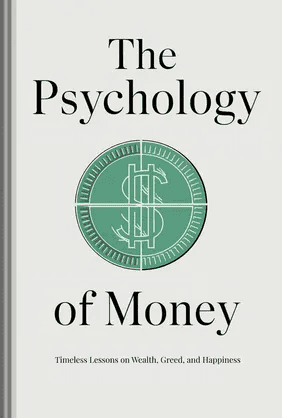
The Psychology of Money
Morgan Housel
48 Duration7 Key Points4.6 RateIf a packed schedule is the main barrier keeping you from these essential reads, you can build a powerful learning habit in just a few minutes a day.
Turn your commute into a masterclass on wealth by listening to the core insights from financial classics, ensuring you never stop learning, no matter how busy you get.
Download LeapAhead App now
FAQ
What is the famous quote about compounding in The Psychology of Money?
The most famous compounding quote points to Warren Buffett's age: "81.5 billion of Warren Buffett’s 84.5 billion net worth came after his 65th birthday. Our minds are not built to handle such absurdities." It emphasizes that the length of time you stay invested is far more important than the annual return you chase.
The most famous compounding quote points to Warren Buffett's age: "81.5 billion of Warren Buffett’s 84.5 billion net worth came after his 65th birthday. Our minds are not built to handle such absurdities." It emphasizes that the length of time you stay invested is far more important than the annual return you chase.
How does Morgan Housel define being wealthy vs. being rich?
Housel defines "rich" as having a high current income and spending it to show off. He defines "wealth" as hidden money—the income you do not spend. Wealth provides you with options, flexibility, and freedom in the future, whereas being rich only provides a temporary visible lifestyle.
Housel defines "rich" as having a high current income and spending it to show off. He defines "wealth" as hidden money—the income you do not spend. Wealth provides you with options, flexibility, and freedom in the future, whereas being rich only provides a temporary visible lifestyle.
What is the main message of The Psychology of Money?
The core message is that financial success is not a hard science. It is a soft skill. How you behave, how you control your emotions, and how you manage your ego matter significantly more than your IQ or your ability to build complex financial models.
The core message is that financial success is not a hard science. It is a soft skill. How you behave, how you control your emotions, and how you manage your ego matter significantly more than your IQ or your ability to build complex financial models.
Why are Morgan Housel’s quotes so popular for investors?
His quotes resonate because they strip away intimidating financial jargon and speak directly to human nature. They validate the anxiety everyday investors feel while offering practical, actionable wisdom that applies to anyone—whether you are making minimum wage or running a Fortune 500 company.
His quotes resonate because they strip away intimidating financial jargon and speak directly to human nature. They validate the anxiety everyday investors feel while offering practical, actionable wisdom that applies to anyone—whether you are making minimum wage or running a Fortune 500 company.