


You are staring at your Amazon cart or browsing the aisles at Barnes & Noble, wondering if you really need another personal finance book. Most money advice is exhausting. It is usually a rigid author yelling at you to stop buying $5 lattes, or a former day trader burying you in complex charts and aggressive tax strategies. You want to get your money right, but you do not have the time or the patience for dry spreadsheets.
In this The Psychology of Money review, we cut through the hype to see if Morgan Housel’s massive bestseller actually delivers a new perspective or just recycles the same old advice packaged in a nice cover.
The Core Premise: Wealth is a Soft Skill, Not Math
When searching for an honest Psychology of Money book review online, you will notice one recurring theme: people are shocked by what the book actually is.
Housel argues that financial success is not a hard science. It is a soft skill. How you behave is far more important than what you know. To prove this, Housel opens the book with a jarring comparison between two real people:
- Ronald Read: A gas station attendant and janitor who lived a quiet, modest life. When he died, he left behind an $8 million fortune. He did not win the lottery; he simply saved what he could and let his money compound in blue-chip stocks for decades.
- Richard Fuscone: A Harvard-educated Merrill Lynch executive who had everything—the massive income, the prestige, the financial education. He borrowed heavily to expand his lavish lifestyle, including an 18,000-square-foot mansion. When the 2008 financial crisis hit, he went bankrupt.
This contrast is the beating heart of Housel’s argument. You can be a certified financial genius and still ruin your life if you lack emotional control. Conversely, ordinary people with no financial background can build immense wealth if they have the right behavioral guardrails in place.

If the contrasting stories of Ronald Read and Richard Fuscone resonate with you, you are already grasping the fundamental thesis of Morgan Housel's brilliant work. Instead of agonizing over complex spreadsheets or stressing about market timing, mastering your own behavioral tendencies is the ultimate financial cheat code. If you are ready to dive deeper into these concepts and completely rewire how you view your savings and investments, grabbing your own copy of Housel's masterpiece is the best next step you can take.
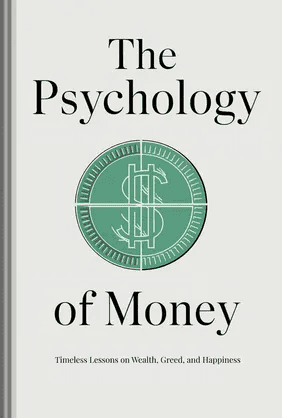
The Psychology of Money
Morgan Housel
 48 Duration
 7 Key Points
 4.6 Rate
The 4 Biggest Mindset Shifts (Without Spoiling the Whole Book)
Housel breaks his book down into 19 short, standalone chapters. Instead of giving you a massive to-do list, he changes the lens through which you view your checking account. Here are the standout lessons.
1. Wealth is What You Don't See
We judge wealth by what we can see: luxury cars, massive houses, designer clothes. Housel points out the glaring flaw in this logic. When you see someone driving a $100,000 Porsche, the only thing you know for sure about their finances is that they have $100,000 less in the bank (or they are drowning in debt). Real wealth is hidden. Wealth is the financial assets that haven't been converted into stuff yet. It is the freedom to quit a toxic job, weather a medical emergency, or retire early.

The idea that true wealth is hidden is a massive paradigm shift, especially in an era driven by social media flexing and lifestyle inflation. If you find yourself fascinated by this concept and want to look at the hard data behind how everyday Americans actually build their fortunes, there is a landmark study that proves Housel's point perfectly. Diving into this classic research will permanently change how you view status symbols and help you confidently embrace the quiet, frugal habits of the truly wealthy.
The Millionaire Next Door
Thomas J. Stanley, Ph.D., William D. Danko, Ph.D.
48 Duration9 Key Points4.5 Rate2. Getting Wealthy vs. Staying Wealthy
These are two entirely different skills. Getting wealthy requires taking risks, being optimistic, and putting yourself out there. Staying wealthy requires the exact opposite. It requires a healthy dose of paranoia, frugality, and the realization that what you have made can be taken away in an instant.

3. Confounding Compounding
Housel uses Warren Buffett to explain the reality of compound interest. Buffett is considered the greatest investor of all time, but his secret isn't just high returns. Buffett's secret is time. He has been investing since he was a child. Housel points out that if Buffett had started investing at age 30 and retired at 60 like a normal person, you would have never heard of him. Good investing isn't necessarily about earning the highest returns. It is about earning pretty good returns that you can sustain for an uninterrupted period of time.
4. Reasonable > Rational
Financial experts constantly push people to be perfectly rational with their money. Housel argues this is terrible advice. You are a human being, not a spreadsheet. For example, math dictates that you should invest an emergency fund in the market to beat inflation. But keeping cash in a savings account lets you sleep peacefully at night. Aiming to be reasonable with your money works much better than trying to be cold, hard, and rational.
Pros and Cons: A Balanced Assessment
The incredibly high Morgan Housel book rating across Amazon, Goodreads, and Audible is not an accident. The book hits a nerve. But it is not perfect for everyone.
The Pros: What Makes It Great
- Bite-Sized Chapters: The 19 chapters are brilliantly short. You can read a chapter in 10 minutes on the subway or while drinking your morning coffee.
- Story-Driven: Housel is a financial journalist, not an accountant. He uses fascinating moments from US history—like the Great Depression, World War II, and the dot-com bubble—to illustrate human behavior.
- Zero Jargon: You do not need to know the difference between a mutual fund and an ETF to understand this book.
- Incredible Audiobook: If you use Audible, the narration is top-tier. At just under 6 hours long, you can easily finish it during a week of commuting.
The book's fast-paced, digestible format is a huge draw for busy readers. If you want to apply this same efficient learning style to other finance classics, an app like LeapAhead can help you grasp the core ideas of bestsellers in just 15 minutes.

Get the key insights from dense finance and psychology books on your commute, turning short breaks into valuable learning opportunities.

Download LeapAhead App now
The Cons: Where It Falls Short
- No Actionable Blueprints: If you are deeply in credit card debt and need a step-by-step mathematical plan to dig yourself out, this book will frustrate you. Housel does not tell you which S&P 500 index fund to buy, nor does he break down the tax advantages of a 401(k).
- Repetitive Core Message: Because the book is a collection of essays (some of which were adapted from Housel's earlier blog posts), a few chapters feel like they are circling back to the exact same point about humility and compounding.
Who Should Read The Psychology of Money?
If you are wondering exactly who should read The Psychology of Money, look at the following profiles.
Read it immediately if you are:
- A chronic over-spender: If you make an excellent salary but somehow have nothing left at the end of the month, Housel’s chapters on ego and the "man in the car paradox" will cure your need to keep up with the Joneses.
- An anxious investor: If market crashes make you panic and check your portfolio ten times a day, this book will inject a massive dose of calm into your life.
- A young adult/recent grad: Gifting this to a 19-year-old gives them the ultimate behavioral advantage before they make their first major financial mistakes.
Skip it (for now) if you are:
- Looking for aggressive tactical strategies: If you already have your money mindset locked down and want to learn about backdoor Roth IRAs, real estate syndication, or advanced options trading, this book will feel too basic.
- In a financial emergency: If you are facing eviction or crushing payday loan debt, you need tactical triage right now, not philosophical musings on compound interest.
If you read the profiles above and realized you actually are looking to aggressively build wealth outside of a traditional 9-to-5 paycheck, you might want to pivot to another foundational finance book. While Housel favors passive index funds and extreme patience, Robert Kiyosaki’s legendary guide takes a fundamentally different angle. It focuses heavily on entrepreneurship, real estate investing, and acquiring cash-flowing assets to escape the rat race. It is a fantastic alternative if you want to actively challenge the conventional path of corporate climbing and penny-pinching.
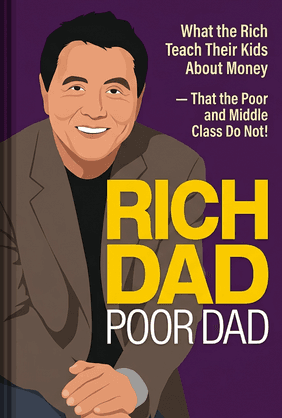
Rich Dad Poor Dad
Robert Kiyosaki
50 Duration10 Key Points4.6 RateHow Does It Compare to Other Finance Books?
A common question is: is The Psychology of Money worth reading if I have already read the classics? Yes, but it serves a very different purpose.
- Vs. I Will Teach You to Be Rich by Ramit Sethi: Ramit gives you the exact scripts to negotiate your credit card fees, the specific banks to use, and a rigid system to automate your money. It is an instruction manual. Housel's book is the philosophy behind why you should follow a system in the first place. Read Housel first for mindset, then Ramit for execution.
- Vs. Rich Dad Poor Dad by Robert Kiyosaki: Both focus heavily on mindset. However, Kiyosaki pushes entrepreneurship and real estate while actively disparaging the stock market and traditional saving. Housel takes a much more grounded, realistic approach for the average American worker, focusing heavily on patience, index funds, and living below your means.
- Vs. The Millionaire Next Door by Thomas J. Stanley: Housel essentially takes the core data of The Millionaire Next Door (that true millionaires drive used cars and live in average neighborhoods) and explains why the human brain struggles so hard to accept this reality.
As mentioned in the comparison above, Morgan Housel provides the philosophical foundation for wealth, but you still need a tactical system to execute your strategy. If you are looking for an incredibly practical, step-by-step instruction manual to automate your finances, negotiate your credit card bills, and build a lucrative portfolio without opening a single spreadsheet, Ramit Sethi's guide is the perfect companion read. It takes the big-picture behavioral concepts you just learned and translates them into actionable, everyday money habits.

I Will Teach You to Be Rich
Ramit Sethi
39 Duration8 Key Points4.5 RateBuilding a solid financial mindset involves learning from multiple perspectives, but finding time to read all these classics can be a challenge. If your to-read list is starting to feel overwhelming, a book summary app can help you absorb the core lessons from all of them without the months-long commitment.
Clear your financial reading list faster by listening to the main takeaways from top money books, so you can start applying the lessons this week, not next year.
Download LeapAhead App now
Final Verdict
Morgan Housel managed to write a book about money that actually feels human. It strips away the shame, the guilt, and the complex math that typically keeps people locked out of the financial world.
Instead of telling you what to do with your money, The Psychology of Money changes how you feel about it. It teaches you that true wealth is not about buying expensive things; it is about buying control over your own time. If you have ever felt intimidated by Wall Street jargon or frustrated by your own spending habits, this book is arguably the highest return on investment you will ever get for twenty dollars.
FAQ
How long does it take to read The Psychology of Money?
The book is incredibly accessible at roughly 250 pages. An average reader can finish it in about 4 to 5 hours. If you prefer listening, the Audible version clocks in at just under 6 hours.
The book is incredibly accessible at roughly 250 pages. An average reader can finish it in about 4 to 5 hours. If you prefer listening, the Audible version clocks in at just under 6 hours.
Do I need to be good at math to understand this book?
Absolutely not. There are practically no equations or complex charts in the book. It reads more like a history and psychology book than a traditional finance textbook.
Absolutely not. There are practically no equations or complex charts in the book. It reads more like a history and psychology book than a traditional finance textbook.
Is The Psychology of Money a good gift for a teenager?
Yes. It is arguably one of the best financial gifts you can give a high school or college graduate. Because it avoids dry financial jargon and relies heavily on engaging stories, it easily holds the attention of younger readers while teaching them the power of starting early.
Yes. It is arguably one of the best financial gifts you can give a high school or college graduate. Because it avoids dry financial jargon and relies heavily on engaging stories, it easily holds the attention of younger readers while teaching them the power of starting early.
Does Morgan Housel tell you what stocks to buy?
No. He does not provide stock picks or specific portfolio allocations. While he briefly mentions in the final chapter that his personal strategy relies heavily on low-cost global index funds, the book focuses entirely on your behavioral approach to investing rather than specific tickers.
No. He does not provide stock picks or specific portfolio allocations. While he briefly mentions in the final chapter that his personal strategy relies heavily on low-cost global index funds, the book focuses entirely on your behavioral approach to investing rather than specific tickers.