

You have seen this book everywhere. It dominates the top charts on Audible, fills the business displays at Barnes & Noble, and sits on the recommended reading lists of countless CEOs. But staring at its massive 500-page bulk, you likely have two immediate concerns. First, you are wondering if it will feel like reading a dry college textbook. Second, you might have heard the rumblings about debunked psychology studies and want to know if the science actually holds up today.
This objective thinking fast and slow review breaks down the exact value of the book in 2024. We will separate the Nobel Prize-winning economic facts from the outdated psychology theories so you can decide if it is worth your time.
The Core Framework: System 1 and System 2
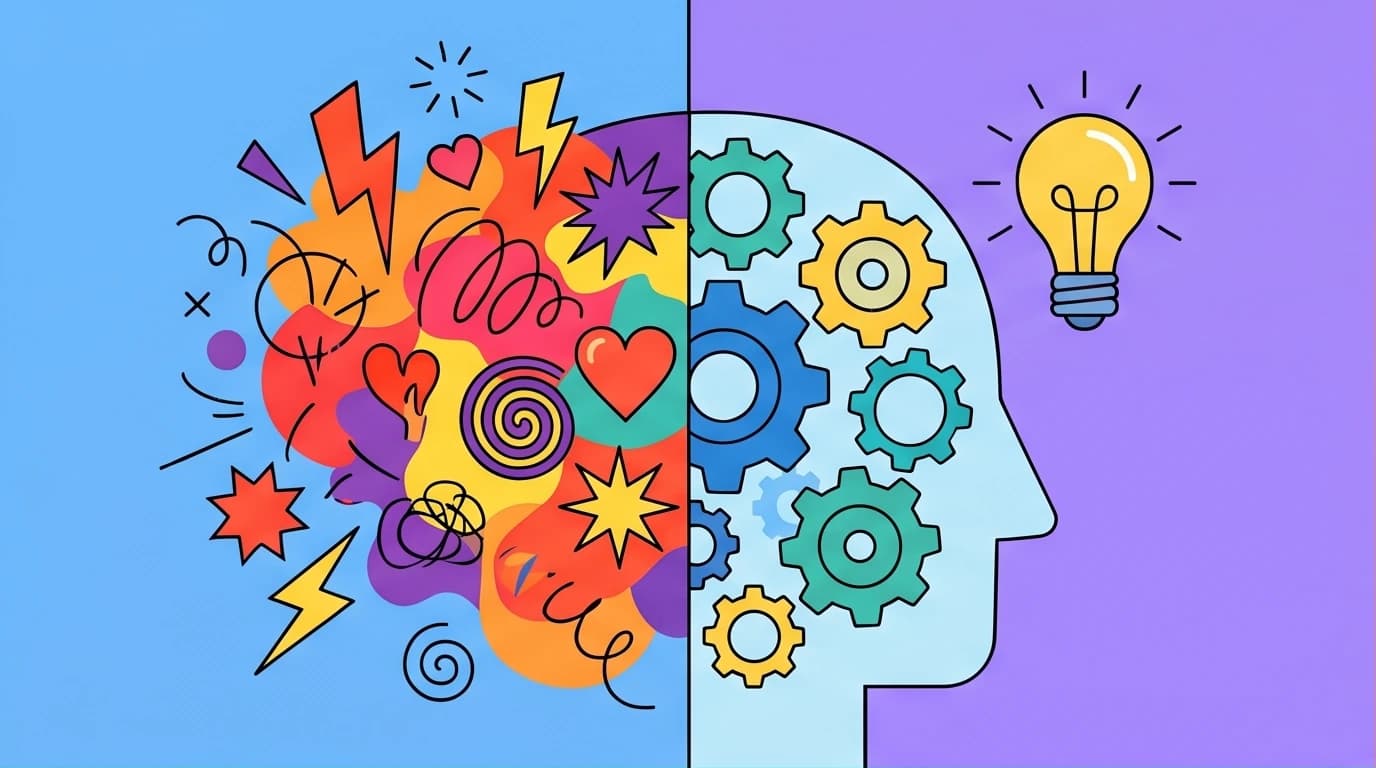
To evaluate the book, you need to understand the basic premise. Kahneman, a psychologist who won the Nobel Memorial Prize in Economic Sciences, structures the entire book around a simple dichotomy of the human mind. He categorizes our thought processes into two distinct operators.
System 1 is fast, intuitive, and emotional. It operates automatically with little or no effort. This is the system you use when you read the words on a billboard while driving 65 miles per hour down the interstate, or when you instantly recognize a friend's face in a crowded room.
System 2 is slow, deliberate, and logical. It requires focused attention and mental energy. You rely on System 2 when calculating your tax deductions, parallel parking in a tight space, or comparing the specs of two different laptops on Amazon.
The central thesis of the book is that System 1 runs the show most of the time. It constantly feeds suggestions, feelings, and impressions to System 2. When System 2 endorses these impulses, they turn into beliefs and actions. The problem arises because System 1 is highly susceptible to cognitive biases. It jumps to conclusions, ignores statistics, and creates a coherent narrative out of thin air.

This framework is brilliant. It gives you a practical vocabulary to identify why you make bad financial decisions, why you judge people unfairly, and why you fall for marketing tricks.
For a more detailed breakdown of these two modes of thought, explore our guide to System 1 and System 2 thinking.
If the idea that our brains are constantly being hijacked by System 1 fascinates you, you will definitely want to explore the wider world of behavioral economics. A perfect companion to Kahneman's foundational framework is Dan Ariely's groundbreaking look at the hidden forces that shape our choices. It serves as a fantastic, highly accessible deep dive into exactly why smart people frequently make illogical decisions—especially when it comes to money, pricing, and everyday consumer behavior.
Predictably Irrational
Dan Ariely
 23 Duration
 10 Key Points
 4.6 Rate
Is Thinking Fast and Slow Hard to Read?
Let's address the most common hurdle for new readers. People constantly look at the page count and ask: is thinking fast and slow hard to read?
The short answer is yes. It is significantly denser than your average pop psychology book.
Kahneman writes clearly, but the material demands your full attention. He routinely presents statistical puzzles, probability questions, and behavioral experiments that require you to put the book down and actually think. If you try to read this right before bed when your brain is tired, you will find yourself re-reading the same paragraph three times without absorbing a single concept.
Many Goodreads reviews criticize the middle section of the book for dragging. Kahneman dives deep into the weeds of base rates, regression to the mean, and probability theory. For readers looking for quick self-help hacks, these chapters feel like a slog.
However, "hard to read" does not mean poorly written. It means the book requires System 2 thinking to process. If you treat it like an investment rather than casual entertainment, the reading experience transforms.
However, if you're intrigued by the ideas but find the book's density and page count a major obstacle, you can still access its core lessons. An app that specializes in breaking down complex books can be a practical way to learn on the go.


Grasp the key insights from dense books like Thinking, Fast and Slow in 15-minute audio or text summaries, perfect for when you're short on time and energy.
 LeapAhead
Actionable Reading Strategy: Do not binge this book. Read one chapter a day. Alternatively, many readers find that listening to the audiobook on Audible makes the dense statistical explanations easier to digest, provided you pay close attention.
The Thinking Fast and Slow Controversy: What Still Holds Up?
If you are a critical reader, you are likely aware that the field of psychology has undergone a massive reckoning over the last decade. Many famous experiments from the 1990s and 2000s failed to produce the same results when other scientists tried to repeat them.
This brings us directly to the thinking fast and slow replication crisis.
When Kahneman published the book in 2011, he cited a wide array of psychological literature to back up his claims about how System 1 operates. A few years later, the replication crisis hit social psychology hard. Several specific studies featured prominently in the book were completely debunked.
The Priming Problem
The thinking fast and slow controversy centers heavily on Chapter 4, "The Associative Machine." Kahneman relied on a concept called "social priming." The most famous example cited in the book is the "Florida effect," an experiment which claimed that college students walked down a hallway significantly slower after being exposed to words associated with old age (like "Florida," "bald," and "wrinkle").
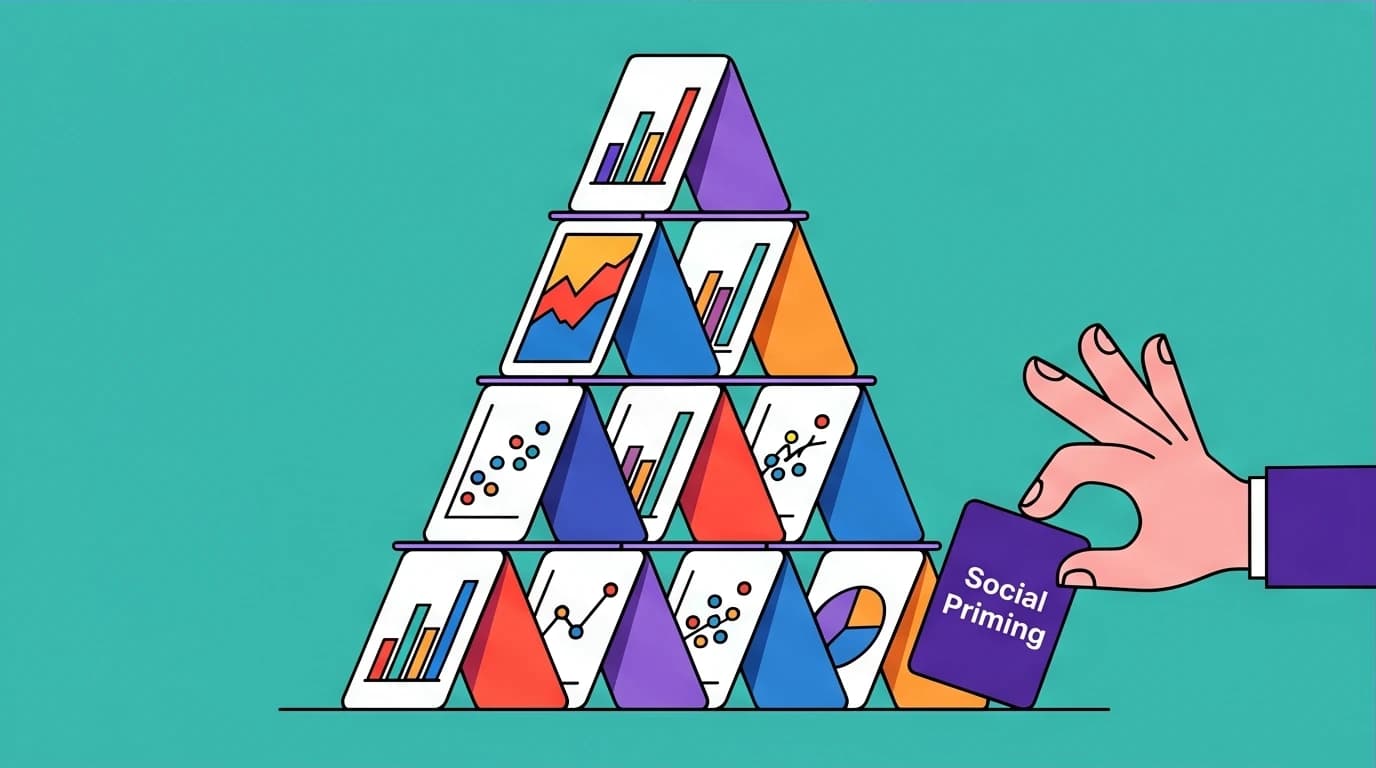
Subsequent rigorous testing by independent labs proved that this effect does not exist. The original study was a fluke. Other priming studies mentioned in the book—such as the idea that seeing images of money makes people more selfish, or that holding a warm cup of coffee makes you view someone as a "warm" person—also failed to replicate.
To his immense credit, Daniel Kahneman did not hide from this. In 2017, he publicly addressed the controversy in blog comments and interviews, admitting he placed too much faith in underpowered studies. He openly acknowledged that the chapter on priming was flawed.
What Survives the Replication Crisis?
Does the replication crisis ruin the book? Absolutely not.
The debunked social priming studies make up only a tiny fraction of the text. The massive, foundational elements of the book—the ones that earned Kahneman his Nobel Prize—are mathematically and empirically bulletproof.
When reading the book today, you can confidently rely on his explanations of:
- Loss Aversion: The psychological pain of losing $100 is roughly twice as intense as the joy of gaining $100. This explains why investors hold onto losing stocks for too long.
- The Anchoring Effect: How an initial piece of information (even a random number) influences subsequent negotiations or estimates. Retailers use this every day by showing an inflated "original price" next to a sale price.
- The Sunk Cost Fallacy: The irrational tendency to continue investing time or money into a failing project simply because you have already invested heavily in it.
- Prospect Theory: How people choose between probabilistic alternatives that involve risk. This completely revolutionized modern behavioral economics.
The core message of the book—that humans are not the perfectly rational actors classical economists thought we were—remains universally accepted.
These concepts form the backbone of modern behavioral economics. To learn more about how they impact your everyday choices, read our guide.
The High-Value Takeaways for Modern Decision Makers
If you push through the dense chapters and look past the flawed priming experiments, the book equips you with a mental toolkit that is genuinely life-changing. Kahneman exposes exactly how our brains take shortcuts.
The Illusion of Validity: You will learn why expert predictions (from stock brokers to political pundits) are often less accurate than simple algorithms. Kahneman proves that confidence is a feeling, not a metric of accuracy. Just because someone sounds incredibly certain on television does not mean they have a grasp on the actual probabilities.
WYSIATI (What You See Is All There Is): This is Kahneman’s acronym for the brain's tendency to build a coherent story from the limited information available, completely ignoring the vast amount of information it lacks. Recognizing WYSIATI helps you step back during a business decision and ask, "What data am I missing right now?"

Experiencing Self vs. Remembering Self: In the final sections of the book, Kahneman tackles happiness. He distinguishes between the self that lives in the moment and the self that keeps score and writes the story of your life. He demonstrates how our memories are heavily skewed by the "peak-end rule." We judge an experience largely based on how it felt at its peak (the most intense moment) and at its end, rather than the total sum of the experience. This insight alone is worth the price of the book for anyone working in customer experience, event planning, or product design.
Understanding how your brain takes cognitive shortcuts is only the first step; the next challenge is actually applying these insights to your daily life. If Kahneman's lessons on probability and the illusion of validity strike a chord with you, learning to make smarter choices under pressure is a natural next step. Former professional poker player Annie Duke offers an incredible framework for embracing uncertainty. Her work brilliantly translates complex behavioral science into practical strategies for making better decisions when you don't have all the facts.
Thinking in Bets
Annie Duke
36 Duration8 Key Points4.6 RateShould I Read Thinking Fast and Slow?
We arrive at the ultimate question: should i read thinking fast and slow?
Your decision should be based entirely on what you want to get out of it. This is not a self-help manual that tells you how to wake up at 5:00 AM or how to get rich quick. It is a rigorous exploration of cognitive mechanics.
You should read this book if:
- You work in marketing, finance, product design, or management and need to understand how people actually make decisions.
- You are willing to dedicate focused time to absorb complex concepts.
- You want to build a fundamental defense against your own irrational biases.
You should skip this book if:
- You want a quick, easy read for a vacation flight.
- You prefer actionable checklists over deep theoretical explanations.
- You are easily bored by statistics, probability, and historical academic studies.
If you fall into the latter category but still want the benefits of behavioral economics, you might consider reading Michael Lewis’s The Undoing Project, which tells the biographical story of Daniel Kahneman and Amos Tversky's partnership in a highly engaging, narrative format. Another great alternative is Misbehaving by Richard Thaler, which covers similar economic ground but is written with a lighter, more conversational tone.
As mentioned in the article above, if you are fascinated by the psychological concepts of System 1 and System 2 but prefer a character-driven narrative over academic statistics, this brilliant biographical account is an absolute must-read. It masterfully chronicles the deep, complicated friendship between Daniel Kahneman and Amos Tversky, showing exactly how their contrasting personalities birthed the entire field of behavioral economics.

The Undoing Project
Michael Lewis
19 Duration8 Key Points3.9 RateAlternatively, if you want to explore the history and application of behavioral economics through a witty, highly conversational lens, Richard Thaler's work is the perfect choice to add to your reading list. Thaler, another Nobel laureate and close colleague of Kahneman, builds seamlessly on this scientific foundation to show exactly how "misbehaving" humans constantly defy the standard, rigid rules of classical economics in everyday life.
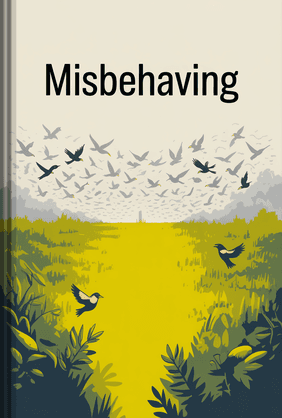
Misbehaving
Richard H. Thaler
53 Duration9 Key Points4.6 RateUltimately, Thinking, Fast and Slow is a landmark achievement. Even with a few outdated psychological citations, it remains a masterclass in understanding the human mind. If you approach it with patience and a critical eye, it will permanently change the way you view your own thoughts.
FAQ
Is it better to read or listen to Thinking Fast and Slow?
Because the book contains numerous statistical puzzles and visual examples, the physical or Kindle version is generally better for retention. However, if you struggle with dense academic text, the Audible version is well-produced and can help you power through the slower chapters. Many readers opt for the audiobook and buy a physical copy to reference the charts later.
Because the book contains numerous statistical puzzles and visual examples, the physical or Kindle version is generally better for retention. However, if you struggle with dense academic text, the Audible version is well-produced and can help you power through the slower chapters. Many readers opt for the audiobook and buy a physical copy to reference the charts later.
Did Daniel Kahneman retract the book?
No, Kahneman never retracted the book. He did publicly acknowledge that Chapter 4, which deals with social priming, relied on weak science that failed to replicate. The rest of the book, particularly the core economic principles like Prospect Theory and cognitive biases, remains highly accurate and scientifically sound.
No, Kahneman never retracted the book. He did publicly acknowledge that Chapter 4, which deals with social priming, relied on weak science that failed to replicate. The rest of the book, particularly the core economic principles like Prospect Theory and cognitive biases, remains highly accurate and scientifically sound.
What is the main takeaway from the book?
The primary takeaway is that our brains operate on two systems: a fast, intuitive system that is highly prone to bias, and a slow, logical system that is lazy and easily exhausted. Recognizing when your fast system is making a mistake is the key to making better financial, professional, and personal decisions.
The primary takeaway is that our brains operate on two systems: a fast, intuitive system that is highly prone to bias, and a slow, logical system that is lazy and easily exhausted. Recognizing when your fast system is making a mistake is the key to making better financial, professional, and personal decisions.
Is this book useful for normal everyday life?
Yes. While it uses complex economic and psychological terms, the applications are purely practical. It teaches you how to avoid bad investments, how to recognize manipulative pricing strategies at the grocery store, and how to stop making assumptions based on limited information.
Yes. While it uses complex economic and psychological terms, the applications are purely practical. It teaches you how to avoid bad investments, how to recognize manipulative pricing strategies at the grocery store, and how to stop making assumptions based on limited information.