

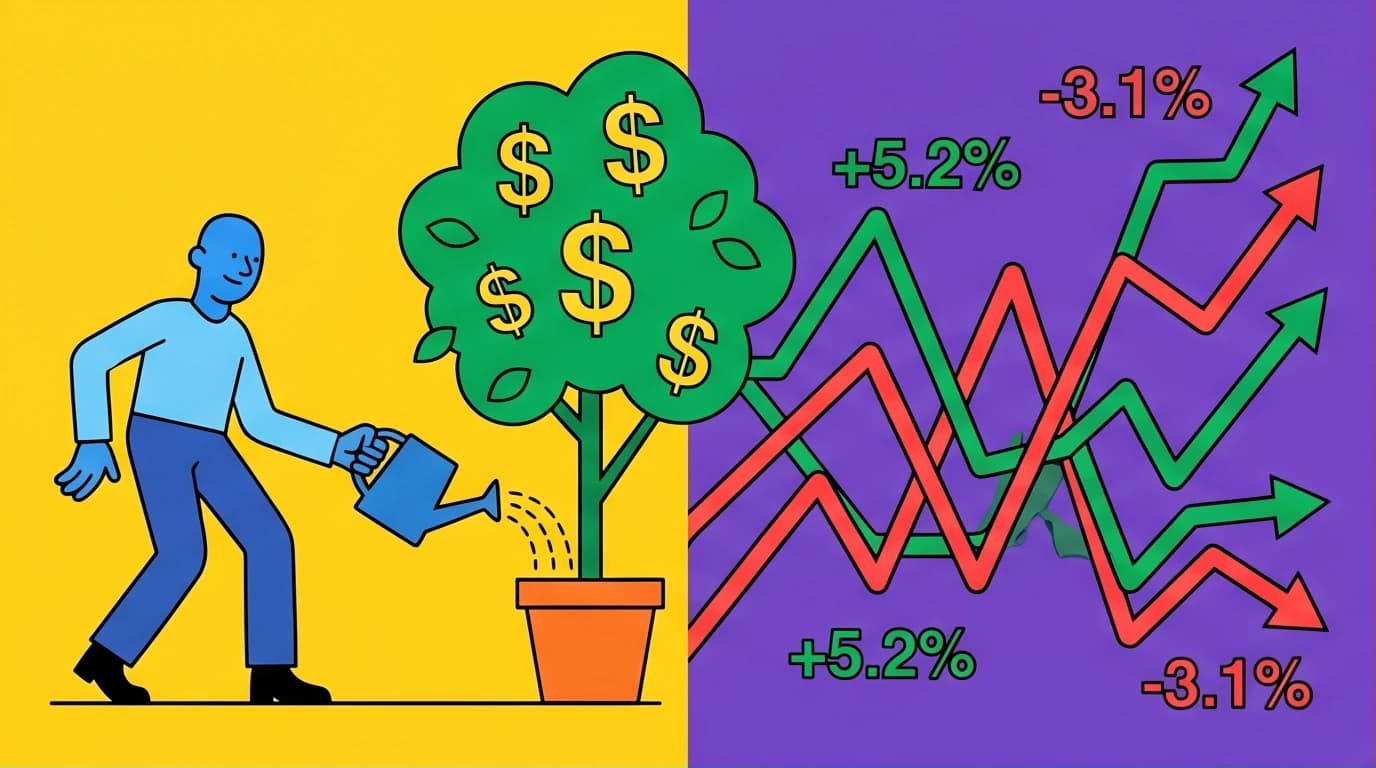
You watch your portfolio swing wildly on the latest earnings miss, a random geopolitical headline, or a sudden tech trend. You are exhausted by the daily anxiety of trying to time the stock market, realizing that day trading feels more like a casino than a wealth-building machine. You need a predictable, battle-tested system to grow your money over decades without losing sleep.
The secret to Wall Street's most enduring fortunes does not rely on complex algorithms or insider information. It relies on a distinct mindset shift: treating stock shares as ownership stakes in real businesses.
The Foundation: The Warren Buffett Benjamin Graham Relationship
You cannot understand modern value investing without looking at where it started. The Warren Buffett Benjamin Graham relationship is the bedrock of everything we know about fundamental analysis today.
In the early 1950s, a young Warren Buffett enrolled at Columbia Business School specifically to study under Benjamin Graham, the man widely recognized as the father of value investing. Graham had just published The Intelligent Investor, a book that laid out a mathematical and psychological framework for beating the market. Buffett became the only student to ever earn an A+ in Graham’s class.
Graham’s approach was born out of the Great Depression. He hunted for companies trading for less than their net working capital—a method famously called "cigar-butt investing." He looked for discarded companies sitting on the street that had one free puff left in them.
While Buffett eventually evolved past the pure "cigar-butt" approach thanks to his partner Charlie Munger, the core philosophy Graham taught him remains entirely unchanged: buy assets for significantly less than they are worth, and let time do the heavy lifting.
Core Benjamin Graham Investing Principles
To execute a reliable value investing strategy, you must reprogram how you view the stock market. Graham established three non-negotiable concepts that every serious investor must master.
1. "Mr. Market" is Your Servant, Not Your Master
Graham invented an allegory to explain stock market volatility: Imagine you are partners in a private business with a manic-depressive man named Mr. Market. Every single day, Mr. Market knocks on your door and quotes a price at which he will either buy your half of the business or sell you his.
When Mr. Market is euphoric, he demands ridiculously high prices. When he is depressed, he offers to sell his stake for pennies on the dollar. Your job is to ignore his mood swings and take advantage of his irrationality. You buy when he is depressed and sell when he is euphoric. The market is there to serve you with opportunities, not to guide your actual valuation of a company.
To truly master the concept of "Mr. Market," you have to realize that investing is less about crunching numbers and much more about managing your own behavior. Wall Street is driven by fear and greed, and the most successful investors are simply those who can keep their emotions in check when everyone else is panicking. If you find yourself checking your brokerage account multiple times a day or feeling anxious about sudden market dips, you need a reset on how you view your money. Learning the behavioral science behind why we make poor financial choices is a fundamental game-changer.


Master the mindset of value investing by absorbing key ideas from bestselling financial books in just 15 minutes a day.
 LeapAhead
The Psychology of Money
Morgan Housel
 48 Duration
 7 Key Points
 4.6 Rate
2. The Margin of Safety
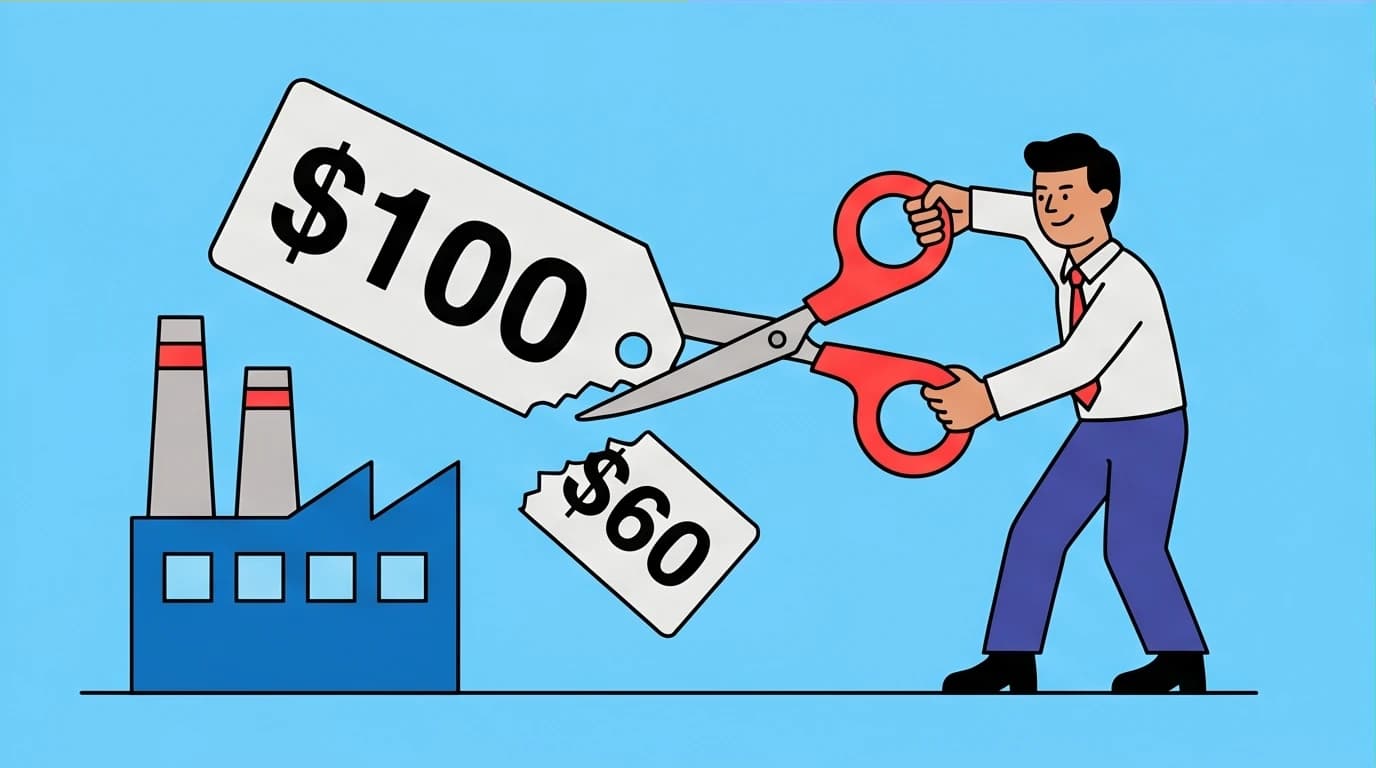
If you think a business is worth $100 per share, you do not buy it for $98. You buy it for $60. That $40 gap is your margin of safety.
Investing involves massive uncertainty. Management makes mistakes, economic recessions hit, and consumer habits shift. The margin of safety acts as a shock absorber against bad luck and bad decisions. If your intrinsic value calculation is wrong by 20%, buying with a deep margin of safety ensures you still make a profit—or at least avoid a catastrophic loss.
3. Intrinsic Value over Stock Price
Stock price is what you pay. Intrinsic value is what you get. Graham taught that a company's intrinsic value is entirely disconnected from its daily ticker price. It is determined by hard assets, earnings power, and dividend payouts. Your primary job as a value investor is to accurately assess the intrinsic value of a business and wait patiently until the stock price falls well below that number.
To fully internalize these foundational pillars, it is helpful to see how they function in practice. Understanding the nuances of Mr. Market's psychology and the mathematical rigor behind the margin of safety is what separates successful value investors from everyone else.
The Evolution: How to Invest Like Warren Buffett Today
If Graham was the architect, Buffett is the master builder. Buffett realized that as his capital grew, buying mediocre companies at cheap prices was not scalable. He modified Graham's approach to fit the modern economy.
If you want to know how to invest like Warren Buffett today, you must pivot from buying "fair companies at wonderful prices" to buying "wonderful companies at fair prices." Here is how you execute that in today's market.
Identify the Economic Moat
A wonderful company possesses a durable competitive advantage, or an "economic moat." This protects its profit margins from competitors.
- Brand Power: Think of Coca-Cola or Apple. Consumers will pay a premium simply for the logo on the bottle or the phone.
- Switching Costs: Once a company integrates software into its daily operations (like Microsoft Office or Salesforce), moving to a competitor costs too much time and money.
- Network Effects: Platforms like Amazon or Visa become more valuable as more people use them.
Demand High Return on Invested Capital (ROIC)
Buffett loves cash-generating machines that require very little capital to grow. Look for companies with consistently high ROIC (above 15% for a decade). This proves management knows how to allocate capital efficiently to generate compounding wealth.
Look for Competent, Honest Management
You want executives who treat shareholder money like their own. Read the annual letters and SEC 10-K filings. Do they admit mistakes? Do they aggressively buy back shares when the stock is cheap? Do they pay sustainable dividends?
Act Only on the "Fat Pitch"
Buffett famously compares investing to baseball, but with no called strikes. You can stand at home plate and watch thousands of pitches (stocks) fly by. You do not have to swing at a tech startup just because everyone else is. You wait for the exact pitch you want—a company you understand perfectly, trading at a 30% discount—and then you swing heavy.
Waiting for that perfect pitch is easier said than done, especially with the constant noise of modern financial media pushing the latest hot stocks. To successfully filter out the distractions, it helps to study the specific metrics and qualitative traits the Oracle of Omaha actually uses to evaluate his acquisitions. If you want a comprehensive breakdown of the exact principles that took Buffett from Graham's classroom to building Berkshire Hathaway into a multi-billion-dollar empire, diving deeper into his proven methodology is essential. It serves as the ultimate blueprint for turning agonizing patience into serious long-term wealth.
The Warren Buffett Way
Robert Hagstrom, Stephen Hoye, et al.
24 Duration8 Key Points4.7 Rate
Common Traps to Avoid
Even smart investors lose money when applying a value investing strategy poorly. Watch out for these hazards.
- The Value Trap: Just because a stock has a low Price-to-Earnings (P/E) ratio does not make it a value stock. It might be a dying business. A declining retailer trading at 5x earnings is not a bargain; it is a melting ice cube. Always verify the company has a future.
- Ignoring the Balance Sheet: High debt destroys value investments. When interest rates rise or revenues dip, debt will bankrupt a business before it ever has the chance to return to its intrinsic value. Stick to companies with low debt-to-equity ratios.
- Impatience: Value investing requires agonizing patience. You might buy a stock at a discount, and it could drop another 20% and stay there for three years before the market recognizes its true worth. If you need the money in the next 12 months, do not put it in the stock market.
Build the habit of consistent learning to avoid common investing traps with daily insights from top business books.
LeapAheadEssential Reading: The Best Value Investing Books
You cannot master this strategy reading short blog posts. To build a billionaire's mindset, you need to study the source material. These are the absolute best value investing books to add to your Goodreads list or pick up from Barnes & Noble:
- The Intelligent Investor by Benjamin Graham: Buffett calls this "by far the best book on investing ever written." Focus specifically on Chapter 8 (Mr. Market) and Chapter 20 (Margin of Safety).
- Security Analysis by Benjamin Graham and David Dodd: This is the 1934 textbook that started it all. It is dense, mathematical, and requires effort to read, but it will teach you how to rip apart a balance sheet.
- The Essays of Warren Buffett: Lessons for Corporate America edited by Lawrence A. Cunningham: Buffett has never written a traditional book. This collection organizes decades of his annual shareholder letters into a cohesive masterclass on corporate governance and valuation.
- LeapAhead: For Absorbing These Ideas on the Go: Let's be honest: dense classics like Security Analysis can feel intimidating, and finding the time to read them cover-to-cover is a major challenge for busy professionals. That's where a micro-learning tool like LeapAhead comes in. This app summarizes the key ideas from thousands of bestselling nonfiction books, including many on finance and investing, into 15-minute audio and text explainers. It’s an effective way to tackle your "reading debt" by grasping the core principles of Graham, Buffett, and Lynch during a commute or workout. While the summarized format is no substitute for the full academic depth of the original texts, it’s an incredibly powerful tool for building a consistent learning habit and reinforcing the foundational concepts of value investing.
- One Up On Wall Street by Peter Lynch: While slightly different from the Graham-Buffett school, Lynch provides incredibly practical advice on how everyday Americans can spot great value investments in their local shopping malls before Wall Street analysts do.
Since Benjamin Graham's foundational text is frequently cited as the absolute bible of value investing, grabbing a copy of this timeless masterpiece is the best investment you can make in your own financial education. The updated edition features brilliant contemporary commentary that applies Graham's original principles to today's incredibly volatile markets. It bridges the gap between historical market crashes and modern tech bubbles, making it easier than ever to grasp the true meaning of a margin of safety before you buy your next share of stock.
The Intelligent Investor
Benjamin Graham, Jason Zweig
41 Duration8 Key Points4.7 RateSimilarly, if you want to complement Graham's deeply quantitative approach with a more accessible, boots-on-the-ground strategy, Peter Lynch's legendary guide is an absolute must-read. Lynch proves that as an everyday consumer walking through an American shopping mall, you actually have a distinct edge over elite Wall Street analysts. By simply paying attention to the retail brands, restaurants, and products gaining traction in your local neighborhood, you can easily spot ten-bagger value investments long before the major hedge funds catch on.
One Up On Wall Street
Peter Lynch
16 Duration7 Key Points4.6 RateBefore we address some common questions, you might be wondering how a book written in 1949 can still hold its own in today's fast-paced, tech-driven market. It's a valid question that many aspiring investors grapple with when they first discover Graham's work.
FAQ
Is value investing dead in the modern tech era?
No. Value investing is simply buying an asset for less than its intrinsic cash-producing value. Buffett himself bought billions of dollars of Apple stock because he recognized its immense cash flow, sticky ecosystem, and consumer brand loyalty were undervalued by the market. The principles apply to technology companies just as much as they do to railroads or insurance firms.
No. Value investing is simply buying an asset for less than its intrinsic cash-producing value. Buffett himself bought billions of dollars of Apple stock because he recognized its immense cash flow, sticky ecosystem, and consumer brand loyalty were undervalued by the market. The principles apply to technology companies just as much as they do to railroads or insurance firms.
How much money do I need to start value investing?
You can start with $100. Most brokerages in the United States now offer fractional shares. The amount of money matters far less than building the habit of analyzing businesses, reading financial statements, and consistently buying undervalued assets over a 20-to-30-year horizon.
You can start with $100. Most brokerages in the United States now offer fractional shares. The amount of money matters far less than building the habit of analyzing businesses, reading financial statements, and consistently buying undervalued assets over a 20-to-30-year horizon.
How do I actually calculate intrinsic value?
The most common method is the Discounted Cash Flow (DCF) model. You project how much free cash flow the business will generate over its lifetime and discount that cash back to its present value using an appropriate interest rate (usually the 10-year Treasury rate plus a risk premium). While the math is straightforward, accurately predicting future cash flows is where the art meets the science.
The most common method is the Discounted Cash Flow (DCF) model. You project how much free cash flow the business will generate over its lifetime and discount that cash back to its present value using an appropriate interest rate (usually the 10-year Treasury rate plus a risk premium). While the math is straightforward, accurately predicting future cash flows is where the art meets the science.
Should I sell a value stock once it reaches its intrinsic value?
It depends on the business quality. If it is a mediocre "cigar-butt" business, sell it immediately once it reaches fair value. If it is a "wonderful company" with a growing economic moat and excellent management, Buffett suggests the ideal holding period is "forever." You let compounding interest do the work.
It depends on the business quality. If it is a mediocre "cigar-butt" business, sell it immediately once it reaches fair value. If it is a "wonderful company" with a growing economic moat and excellent management, Buffett suggests the ideal holding period is "forever." You let compounding interest do the work.