


You open your brokerage account and see tech stocks soaring on AI hype, while algorithms execute millions of trades before you can even blink. You have probably been told by veteran traders that you need to read Benjamin Graham's 1949 classic. But let's be honest: you are wondering if a 600-page book written decades before the internet existed can actually help you today. When companies trade at massive revenue multiples and intangible assets rule Wall Street, questioning old-school financial advice is just common sense.
The short answer is that the underlying philosophy holds up, but the mechanical application does not. To understand why, we need to separate the timeless mental models from the expired math.
If the idea of diving into a 600-page classic feels like too much of a time commitment, a great first step is to absorb its core principles in a more modern format.


This app helps you grasp the key ideas from *The Intelligent Investor* and other finance classics in just 15-minute reads or listens, perfect for busy schedules.
 LeapAhead
The Obsolete Mechanics: Is The Intelligent Investor Outdated?
When asking "is The Intelligent Investor outdated," you have to look at the financial landscape of Graham's era. In the mid-20th century, the United States economy was driven by heavy manufacturing, railroads, and physical infrastructure.
Graham loved tangible assets. He looked for companies trading below their net current asset value—meaning you could theoretically liquidate the company, pay off all debt, and still make a profit. He relied heavily on strict Price-to-Earnings (P/E) and Price-to-Book (P/B) ratios.
If you strictly apply those exact numeric formulas today, you will miss out on nearly every dominant company of the last two decades.
Modern businesses like Apple, Amazon, and Microsoft generate immense wealth through intangible assets: software ecosystems, brand loyalty, intellectual property, and network effects. These elements do not neatly fit into a 1949 balance sheet. A modern tech company might have a high P/B ratio simply because its "assets" are its engineers and its code, not steel mills and warehouses.

If you use Graham's rigid stock-screening criteria in today's market, you will end up with a portfolio full of declining retail chains and dying legacy industries. The formulas are dead. The mindset, however, is not.
Reassessing the Core: Does Value Investing Still Work?
Growth stocks have heavily outperformed traditional value stocks over the past decade. This leads many frustrated traders to ask: does value investing still work?
The confusion stems from a misunderstanding of what value investing actually means. Wall Street often defines "value" as buying cheap companies with low P/E ratios. Graham's true definition of value was simply buying an asset for less than its intrinsic worth.
Value investing still works, but the method for calculating intrinsic worth has evolved. Warren Buffett, Graham's most famous student, realized decades ago that buying a phenomenal business at a fair price is vastly superior to buying a mediocre business at a cheap price.
Today, value investing means analyzing a company's durable competitive advantage, its future cash flows, and its leadership. It means resisting the urge to buy a hyped AI stock at 150 times its revenue just because everyone on Reddit is buying it. The mechanics of calculating the value have changed, but the discipline of refusing to overpay remains your best defense against catastrophic losses.
If you are fascinated by how Warren Buffett adapted Benjamin Graham's classical teachings into a modern fortune, you will want to dig deeper into his specific methods. Buffett famously shifted from buying "cigar-butt" distressed companies to seeking out wonderful businesses with durable economic moats. To master this evolved value-investing approach, checking out a comprehensive breakdown of his strategies is a great next step. This essential read dissects Buffett’s exact capital allocation strategies and shows you how to apply them to your own portfolio today.
The Warren Buffett Way
Robert Hagstrom, Stephen Hoye, et al.
 24 Duration
 8 Key Points
 4.7 Rate
Applying the Benjamin Graham Strategy Today
You do not need to calculate the exact net working capital of a railroad company to use Graham's concepts. Applying the Benjamin Graham strategy today comes down to mastering his two most powerful concepts: "Mr. Market" and the "Margin of Safety."
Taming "Mr. Market" in the Digital Age
Graham introduced an allegory about a manic-depressive business partner named Mr. Market. Every day, Mr. Market knocks on your door offering to buy your share of the business or sell you his. Some days he is wildly optimistic and quotes ridiculously high prices. Other days he is deeply depressed and offers to sell for pennies. Graham's lesson was to ignore Mr. Market's mood swings and only trade when the price works in your favor.
In 1949, Mr. Market knocked once a day via the morning newspaper. Today, Mr. Market lives in your pocket.
He sends you push notifications. He yells at you through financial news networks. He induces panic through algorithmic flash crashes. The psychological pressure to follow the herd is higher now than at any point in history. Understanding the Mr. Market concept is actually more critical today than it was 70 years ago.

It gives you the mental framework to view a 10% market drop as a potential buying opportunity rather than a reason to panic-sell.
It gives you the mental framework to view a 10% market drop as a potential buying opportunity rather than a reason to panic-sell.
Navigating Mr. Market's wild mood swings is much easier said than done, especially when financial media is constantly trying to trigger your fight-or-flight response. The truth is, building long-term wealth has very little to do with how smart you are, and everything to do with how you behave. If you want to build the emotional resilience needed to tune out the noise and hold steady during market corrections, exploring the psychological side of finance is an absolute must. This insightful guide reveals exactly why smart people make bad financial decisions and how to fix your money mindset.
The Psychology of Money
Morgan Housel
48 Duration7 Key Points4.6 RateThe Margin of Safety
You cannot predict the future. Management lies, unexpected pandemics happen, and new technologies disrupt established monopolies.
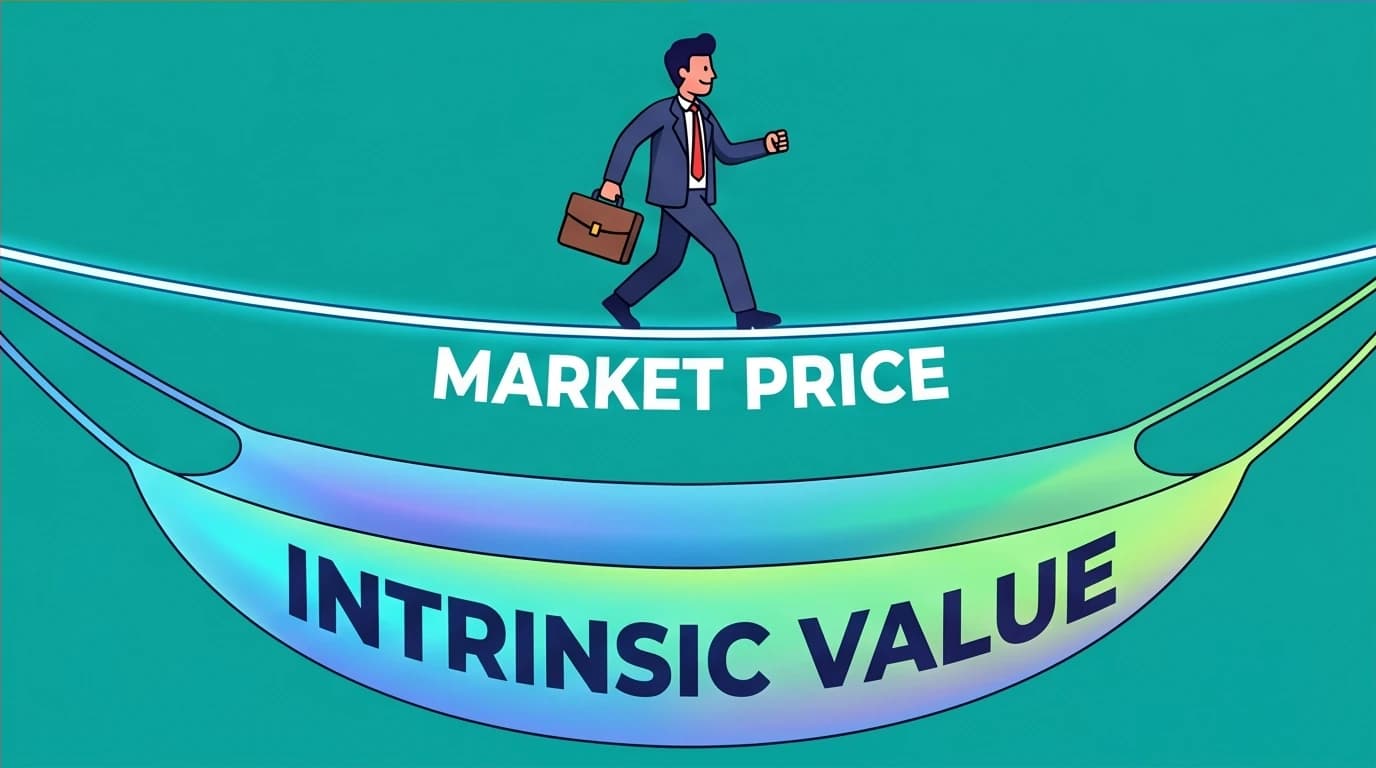
Graham insisted on a "Margin of Safety"—buying a stock at a price low enough that even if your analysis is slightly wrong, or if the economy hits a recession, you are protected from total ruin. In a market where heavily hyped tech stocks are priced for absolute perfection, demanding a margin of safety forces you to ask: "What happens to this stock if the company misses its next earnings target by just five percent?"
Which Version to Read: The Intelligent Investor Revised Edition Differences
If you decide to read the book, do not buy a reprinted version of the original 1949 text without context. You need the modern update.
When analyzing The Intelligent Investor revised edition differences, the standout choice is the 2003 edition featuring commentary by financial journalist Jason Zweig. You can easily find this version at Barnes & Noble or Amazon.
Zweig does something incredibly valuable: he translates Graham's 1949 principles into modern scenarios. After each original chapter by Graham, Zweig provides a commentary chapter that connects the old lessons to the late 1990s Dot-Com bubble and the early 2000s market crash.
Zweig shows how Graham's warnings about speculative new industries perfectly predicted the disastrous rise and fall of pets.com and telecom startups. As a modern reader, you can effortlessly draw a straight line from Zweig's dot-com examples to the recent crypto crazes and AI bubbles. The revised edition bridges the gap between post-WWII industrial stocks and the digital economy.
Since we have established that the revised edition is the absolute best starting point for modern traders, it makes sense to go straight to the source. Jason Zweig's brilliant commentary brings Benjamin Graham’s timeless wisdom into the 21st century, offering the perfect bridge between historical market fundamentals and today's volatile digital economy. If you are ready to build a defensive portfolio and stop falling for Wall Street hype, having this exact edition on your desk is a non-negotiable.
The Intelligent Investor
Benjamin Graham, Jason Zweig
41 Duration8 Key Points4.7 RateActionable Takeaways for the Modern Portfolio
If you want to integrate Graham's philosophy into your portfolio right now without wading through 600 pages, focus on these executable steps:
- Acknowledge Index Funds as the Default: Graham actually championed the idea of passive index investing before index funds even existed. For the vast majority of investors, steadily buying a low-cost S&P 500 index fund is the ultimate realization of Graham's defensive strategy.
- Separate Speculation from Investment: An investment operation ensures safety of principal and an adequate return based on thorough analysis. Buying a coin because a billionaire tweeted about it is speculation. Graham says speculation is fine—as long as you strictly limit it to a tiny fraction of your portfolio that you can afford to lose entirely.
- Optimize for Emotional Defense, Not Maximum Alpha: The primary cause of financial ruin is not bad math; it is bad psychology. Build a portfolio you can hold through a 20% market correction without losing sleep.
The core truth of investing is that human nature does not change. Technology accelerates the speed of trading, but fear and greed still drive the markets. The Intelligent Investor remains required reading not because it teaches you how to calculate book value, but because it teaches you how to conquer yourself.
While conquering your own psychology is half the battle, finding a simple, stress-free vehicle for your investments is the other. As Graham hinted at decades ago, passive index investing is arguably the smartest strategy for the everyday investor. If you want a straightforward, mathematical breakdown of why low-cost index funds consistently beat actively managed portfolios over time, there is no better guide than the one written by the legendary creator of the index fund himself. It is the perfect companion piece to Graham's value investing philosophy.
The Little Book of Common Sense Investing
John Bogle
41 Duration8 Key Points4.6 RateBuilding a strong financial education from books like these is crucial, but your reading list can quickly become overwhelming. If you want to get the key takeaways from these classics without spending months reading, an app can help you fast-track the process.
Use this app to learn the essential lessons from all the books mentioned in this article—and thousands more—through quick, digestible 15-minute summaries.
LeapAheadFAQ
Do I need to read the entire book, or are summaries enough?
You do not need to read the entire book to be a successful investor. The most critical chapters are Chapter 8 (The Investor and Market Fluctuations) and Chapter 20 ("Margin of Safety" as the Central Concept of Investment). Reading these two chapters in the revised edition, along with Jason Zweig's commentary, provides 90% of the book's value for the modern reader.
You do not need to read the entire book to be a successful investor. The most critical chapters are Chapter 8 (The Investor and Market Fluctuations) and Chapter 20 ("Margin of Safety" as the Central Concept of Investment). Reading these two chapters in the revised edition, along with Jason Zweig's commentary, provides 90% of the book's value for the modern reader.
Did Benjamin Graham ever invest in tech stocks?
By modern definitions, no. The technology sector as we know it did not exist during his prime. However, he heavily warned against buying into "glamour" industries simply because they promised rapid future growth, noting that high growth rates rarely sustain themselves over long periods.
By modern definitions, no. The technology sector as we know it did not exist during his prime. However, he heavily warned against buying into "glamour" industries simply because they promised rapid future growth, noting that high growth rates rarely sustain themselves over long periods.
Is Warren Buffett's strategy the exact same as Graham's?
No. Buffett started with Graham's strict "cigar-butt" strategy—buying incredibly cheap, struggling companies for a quick profit. Buffett later evolved, heavily influenced by Charlie Munger, to focus on buying wonderful businesses with durable moats at fair prices, rather than fair businesses at wonderful prices. Buffett outgrew Graham's mechanical formulas but retained his core psychological framework.
No. Buffett started with Graham's strict "cigar-butt" strategy—buying incredibly cheap, struggling companies for a quick profit. Buffett later evolved, heavily influenced by Charlie Munger, to focus on buying wonderful businesses with durable moats at fair prices, rather than fair businesses at wonderful prices. Buffett outgrew Graham's mechanical formulas but retained his core psychological framework.