


Buying stocks based on hype, Reddit threads, or cable news segments almost always ends in severe portfolio drawdowns. You watch your hard-earned money evaporate because you paid a premium for a popular ticker, completely ignoring what the underlying business is actually worth. To stop guessing and start investing strategically, you need a rigid mathematical and psychological framework to anchor your capital.
Defining the Intrinsic Value Benjamin Graham Looked For
You cannot determine if a stock is cheap or expensive just by looking at its share price. A $5 stock can be massively overvalued, and a $500 stock can be a deep bargain. The difference lies entirely in the intrinsic value Benjamin Graham taught his students to calculate.
Intrinsic value is the absolute, quantifiable worth of a business based entirely on hard facts. It strips away market sentiment, future growth hype, and brand popularity. Graham looked at tangible assets, consistent historical earnings, and dividend records. He focused on what a company owned (cash, real estate, inventory) and what it reliably earned, rather than what an analyst predicted it might do in ten years.
If you do not know a company's intrinsic value, you are speculating, not investing.
To truly grasp how to calculate intrinsic value and stop speculating, you should go straight to the source. Benjamin Graham’s foundational text laid the groundwork for modern value investing and remains one of the most respected financial guides ever written. If you want to dive deeper into the exact formulas and philosophies that shaped Wall Street's greatest minds, this is the definitive playbook. It is a mandatory addition to your investing library that will fundamentally shift how you evaluate businesses.
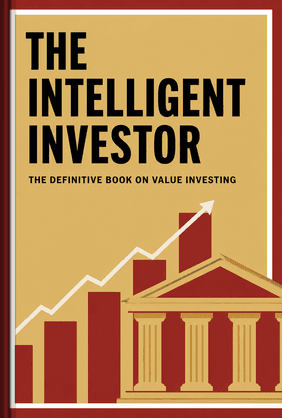
The Intelligent Investor
Benjamin Graham, Jason Zweig
 41 Duration
 8 Key Points
 4.7 Rate
Graham's writing is brilliant but can be dense. If you want to absorb the core principles from this and other investing classics quickly, it's helpful to start with the main ideas.


LeapAhead

Grasp the key lessons from The Intelligent Investor and other financial classics in just 15-minute summaries, making it easier to build your investing knowledge on a busy schedule.
To get a head start on understanding these foundational concepts, you can explore a breakdown of the book's most important lessons.
The Core Defense: The Margin of Safety Benjamin Graham Taught
Once you calculate the intrinsic value of a company, you never pay that exact amount. You demand a discount.
Graham famously used an engineering metaphor to explain this: If you are building a bridge that needs to support trucks weighing 10,000 pounds, you don't engineer the bridge to hold exactly 10,000 pounds. You build it to hold 30,000 pounds. That extra 20,000-pound capacity is your margin of safety.

In the stock market, the margin of safety Benjamin Graham insisted upon absorbs the shock of bad luck, accounting errors, or sudden economic downturns. If your analysis dictates a stock has an intrinsic value of $100 per share, you do not buy it at $100. You wait until it drops to $60 or $70. If your intrinsic value calculation was wrong, the 30% discount protects your capital. If you were right, the eventual price correction back to $100 delivers a massive, low-risk profit.
Mastering Market Psychology: The Mr Market Concept
The biggest threat to your portfolio is not the Federal Reserve or inflation—it is your own emotional reaction to price swings. To combat this, Graham introduced a brilliant psychological tool.
Enter the Mr Market concept.

Imagine you own a private business with a partner named Mr. Market. Every single day, Mr. Market knocks on your door and offers to either buy your share of the business or sell you his share. The catch? Mr. Market is manic-depressive.
On some days, he is wildly optimistic and quotes a ridiculously high price for the business. On other days, he is deeply depressed and offers to sell you his share for pennies on the dollar.
Wall Street operates exactly like Mr. Market. The stock ticker on your brokerage app represents Mr. Market shouting daily prices at you. You have zero obligation to trade with him. The intelligent investor uses Mr. Market's bipolar mood swings to their advantage. When he is panicked and dumping shares at a severe discount, you buy. When he is euphoric and offering massive premiums, you sell. You dictate the terms, not him.
Mastering your mindset is just as critical as running the numbers. Dealing with Mr. Market's wild mood swings requires exceptional emotional discipline, and many investors fail because they let fear or greed hijack their strategies. If you want to understand the behavioral side of building wealth and why smart people make irrational financial decisions, exploring the psychological aspects of investing will give you a massive edge. It is an eye-opening look into how your relationship with money dictates your long-term success.
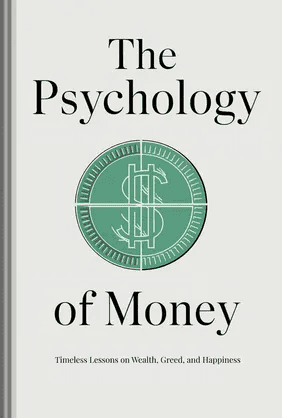
The Psychology of Money
Morgan Housel
48 Duration7 Key Points4.6 RateThe Math: Calculating the Graham Number Formula
Psychology is useless without hard math. To help retail investors find a concrete buy price, Graham developed a specific mathematical boundary to ensure you never overpay for a company's earnings or assets.
The Graham number formula calculates the absolute maximum price you should pay for a defensive stock. The rule dictates that the Price-to-Earnings (P/E) ratio should not exceed 15, and the Price-to-Book (P/B) ratio should not exceed 1.5. Multiplying 15 by 1.5 gives you a baseline multiplier of 22.5.
Here is the exact formula:
Graham Number = √(22.5 × EPS × BVPS)
Graham Number = √(22.5 × EPS × BVPS)
- EPS: Trailing 12-month Earnings Per Share.
- BVPS: Book Value Per Share.
How to execute this today:
- Pull up a company's latest 10-K filing on the SEC EDGAR database or Yahoo Finance.
- Locate the EPS and BVPS. Let's say Company X has an EPS of $4.00 and a BVPS of $25.00.
- Multiply 22.5 × 4 × 25 = 2,250.
- Find the square root of 2,250 = $47.43.
The Graham Number for Company X is $47.43. This is your absolute ceiling. If Company X is trading at $60, you walk away. If it is trading at $30, you have found a potential value play with a built-in margin of safety.
While the Graham Number provides an incredible baseline for finding discounts, his most famous student took these mathematical principles and built a multi-billion dollar empire. Warren Buffett adapted Graham's formulas to account for the qualitative value of exceptional businesses. If you are serious about applying these valuation metrics in today's market, studying how Buffett evolved the margin of safety concept is the perfect next step. It bridges the gap between classic asset valuation and modern corporate growth.
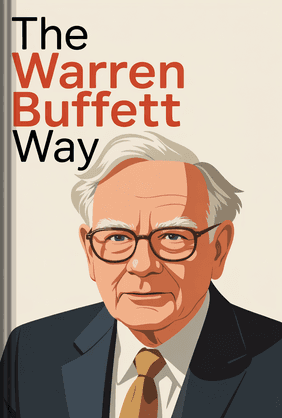
The Warren Buffett Way
Robert Hagstrom, Stephen Hoye, et al.
24 Duration8 Key Points4.7 RateUnderstanding how Graham's principles were adapted by his most famous student is a masterclass in itself. For a closer look at the philosophy that connects these two legends, explore the core tenets of their shared approach.
Choosing Your Path: Defensive vs Enterprising Investor
Graham knew that not everyone has the time or desire to dig through corporate balance sheets. Therefore, he split market participants into two distinct categories. You must honestly assess your resources before picking stocks.
The defensive vs enterprising investor framework dictates your entire strategy:

The Defensive Investor:
You have limited time, low risk tolerance, and no desire to obsess over daily market moves. Your goal is to avoid serious mistakes and achieve an average market return.
You have limited time, low risk tolerance, and no desire to obsess over daily market moves. Your goal is to avoid serious mistakes and achieve an average market return.
- Action Plan: Stick strictly to diversified index funds or a basket of 10 to 30 massive, prominent companies with a long history of uninterrupted dividend payments (think established blue chips). You buy steadily over time (dollar-cost averaging) and ignore Mr. Market entirely.
The Enterprising Investor:
You have the time, financial education, and temperament to outsmart the market. You are willing to put in the hours reading quarterly reports and hunting for mispriced assets.
You have the time, financial education, and temperament to outsmart the market. You are willing to put in the hours reading quarterly reports and hunting for mispriced assets.
- Action Plan: You actively search for "special situations" and bargain issues trading below their net working capital. You run the Graham Number formula on hundreds of mid-cap stocks to find the few anomalies Wall Street has irrationally discarded.
Pick one lane. Disaster strikes when a defensive investor gets bored and tries to make an enterprising, highly concentrated bet without doing the rigorous homework.
If you have decided that the defensive investor path aligns best with your lifestyle, your primary focus should be on low-cost index funds. John Bogle, the visionary founder of Vanguard, revolutionized how everyday Americans invest by proving that simply owning the entire market often beats active stock picking. For defensive investors who want to guarantee their fair share of Wall Street's long-term returns without the stress of analyzing individual balance sheets, his methodology is the ultimate guide to stress-free wealth accumulation.
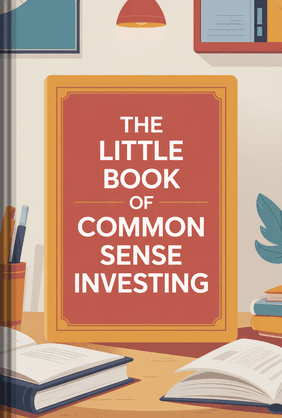
The Little Book of Common Sense Investing
John Bogle
41 Duration8 Key Points4.6 RateBuilding a solid investing foundation involves learning from all these masters, but finding the time to read them all cover-to-cover can be a challenge.
LeapAhead
Absorb the core ideas from the world's best business and finance books in minutes, helping you clear your reading list and apply investing wisdom much faster.
Avoiding the Value Trap
Do not blindly buy a stock just because it is trading below its Graham Number. A cheap stock is often cheap for a catastrophic reason. This is known as a "value trap."
Before applying your margin of safety, check the debt. Graham insisted on a strong current ratio (current assets should be at least twice current liabilities). A company trading below book value but drowning in short-term debt is not a bargain; it is a bankruptcy risk. Always ensure the business model is fundamentally viable before looking at the discount.
While these foundational principles are powerful, many investors question their place in a fast-paced, tech-driven market. This raises a key question about their modern application.
FAQ
Is the Graham Number formula still accurate for modern tech stocks?
Rarely. The Graham Number relies heavily on Book Value Per Share (tangible assets like factories and inventory). Modern tech companies (like Apple or Microsoft) are asset-light; their immense value comes from intangible assets like software ecosystems, patents, and brand power. Applying the Graham Number to pure tech stocks will make them all look massively overvalued. It is best used for manufacturing, retail, and financial sectors.
Rarely. The Graham Number relies heavily on Book Value Per Share (tangible assets like factories and inventory). Modern tech companies (like Apple or Microsoft) are asset-light; their immense value comes from intangible assets like software ecosystems, patents, and brand power. Applying the Graham Number to pure tech stocks will make them all look massively overvalued. It is best used for manufacturing, retail, and financial sectors.
What is a recommended percentage for a safe margin of safety?
Professional value investors typically demand a minimum discount of 30% to 50% below the calculated intrinsic value. If you value a stock at $100, your buy target should be between $50 and $70. The less predictable the company's earnings, the larger the required margin of safety.
Professional value investors typically demand a minimum discount of 30% to 50% below the calculated intrinsic value. If you value a stock at $100, your buy target should be between $50 and $70. The less predictable the company's earnings, the larger the required margin of safety.
Can I mix the defensive and enterprising investor strategies?
Graham explicitly advised against this. Mixing the two usually results in a portfolio that takes on too much risk without enough research to justify it. If you have limited time, put 100% of your capital into a defensive strategy (like S&P 500 index funds). Only transition to an enterprising strategy with capital you have the dedicated time to rigorously manage.
Graham explicitly advised against this. Mixing the two usually results in a portfolio that takes on too much risk without enough research to justify it. If you have limited time, put 100% of your capital into a defensive strategy (like S&P 500 index funds). Only transition to an enterprising strategy with capital you have the dedicated time to rigorously manage.
How do I factor future growth into intrinsic value?
Graham was highly skeptical of growth projections, viewing them as unpredictable speculation. He preferred valuing a company based on its past and present earnings power. If you must factor in growth, err on the side of extreme conservatism, assuming growth rates will revert to an average baseline within a few years.
Graham was highly skeptical of growth projections, viewing them as unpredictable speculation. He preferred valuing a company based on its past and present earnings power. If you must factor in growth, err on the side of extreme conservatism, assuming growth rates will revert to an average baseline within a few years.